Wolves, Weeds, and the Way of Jesus

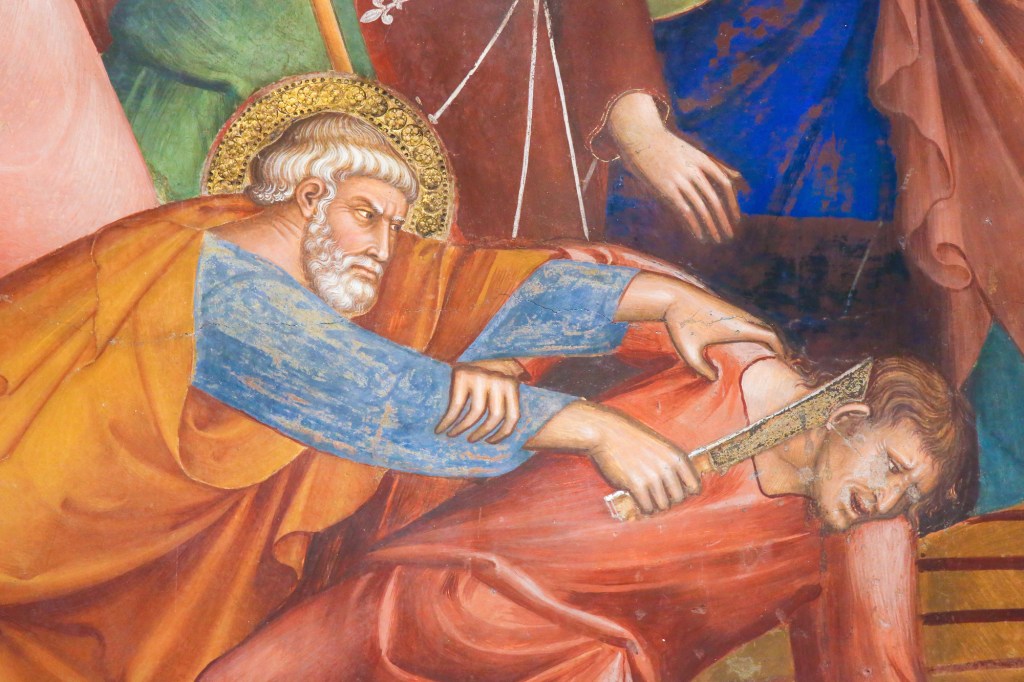
We may be sometimes fooled into listening to the voices of wolves, rather than the voice of the Good Shepherd.


I went to bed last night concerned I was getting things wrong. Specifically, I have been critical of Donald Trump and what he has done since he took office again, and I have been getting push back from many people. It isn’t the many people that concerns me, but my brothers and sisters in Christ who are calling me out on this.

It seems so obvious to me that the things being done are wrong, and the way they are being done is wrong, but other Christians are not seeing it. I prayed to God last night, “If I am wrong, please correct me.”

This morning my daily reading included this verse:

“I am sending you out like sheep among wolves. Therefore be as shrewd as snakes and as innocent as doves.” Matthew 10:16

I was doubting myself last night, so my first thought was to check the context, even though I know it. Sure enough, it was what I remembered:

“These twelve Jesus sent out with the following instructions: ‘Do not go among the Gentiles or enter any town of the Samaritans. Go rather to the lost sheep of Israel. ‘” Matthew 10:5-6 

I have read this passage dozens of times, probably, since I became a Christian over 40 years, but I didn’t realize the context of the sheep among wolves statement made by Jesus until the last year. When I read that passage recently, I said to myself, “Wait a minute! Jesus said that to his disciples when he sent them out to his own people – the Jews.” What!?

He said, don’t go to the Gentiles, and don’t even go to the Samaritans; go “the lost sheep of Israel.” He would later send them to the Samaritans; and he ultimately sent his followers to Judea, to Samaria, and to the ends of the earth.

Of course, he sent them to the lost of sheep of Israel. Maybe not all the people of Israel were lost sheep. Maybe the wolves were only among the lost sheep of Israel.

Surely, the people in the church today are not the lost sheep. The church is filled with the elect. The church is filled with sheep who hear the shepherd’s voice. I believe that is true!

At the same time, I think it is safe to say that not everyone who goes to church is a child of God. The old adage that parking yourself in a garage does make you an automobile is true. Jesus said it this way: “The kingdom of heaven is like a man who sowed good seed in his field. But while everyone was sleeping, his enemy came and sowed weeds among the wheat….” (Matthew 13:24-25)

I am sobered by this. I don’t think that Jesus was saying that all God’s people at that time were wolves. Maybe the wolves weren’t even people. Sometimes, we can take a metaphor too far. He was telling them to be careful, to be circumspect, to remember what he taught them, and not to be lead astray – even among God’s people. We may be sometimes fooled into listening to the voices of wolves, rather than the voice of the Good Shepherd.


This is the story of God and His people. God sent His prophets to His people again and again, and they did not listen. (Jeremiah 26:5) When God commissioned Isaiah, He told Isaiah that the people would hear, but not understand, and they would see, but they would not perceive, and this would continue until the land was in ruins and only a remnant remained. (Isaiah 6:1-13)


Of course, I am not the Prophet, Isaiah. I am a sinful man saved by the grace of a loving God. I have my own faults and biases and sinful tendencies, and I could be wrong. I am acutely aware of this.

Last night before I went to bed, I listened to a pastor talk about the triumphal entry in Luke, and I remember it this morning. I wrote about the triumphal entry last year with some new insights I had gained from a podcast. He hit on the same insights.

Jesus was entered Jerusalem on the colt of a donkey around the time Pontius Pilate entered Jerusalem from the opposite direction, from Caesarea. Picture the incongruity of a full grown man sitting on a colt of a donkey with his legs dragging the ground under the poor little beast. Then picture the Roman ruler of the land came from the opposite direction in a mighty procession with banners and fanfare and a show of force with all the military show of Communist China.

Jesus was coming to die on a cross, but the people greeted him like he was a king who would ascend the throne of David and overthrow the Roman government. They shouted, “Hosanna!” (Save us!) They waived palm branches to herald the Messiah they believed would save them from the Romans like a hammer, and they laid their garments down in submission.

The people didn’t understand that Jesus came to die on a cross. The poignancy of this incongruence is understood best by how the story in Luke ends:

“As he approached Jerusalem and saw the city, he wept over it and said, ‘If you, even you, had only known on this day what would bring you peace—but now it is hidden from your eyes. The days will come upon you when your enemies will build an embankment against you and encircle you and hem you in on every side. They will dash you to the ground, you and the children within your walls. They will not leave one stone on another, because you did not recognize the time of God’s coming to you.'”

Luke 19:41-44

Those people would have said they did recognize the time of God’s coming, right?! They got it right: he was the Messiah! They recognized that Jesus was God’s Messiah promised of old.

In that general sense, they did get it right. Jesus was/is the Messiah, but their expectations of what that meant and what he would do was wrong. They thought he came to conquer, but he came to die.

By the end of that week, the people who waived palm branches and laid their garments down had changed their tune. They wanted Barabbas released, not Jesus.


As discussed in the conversation linked below in the video, they wanted the way of Barabbas – the sword – not the way of Jesus, the cross. They didn’t want a suffering Messiah; they wanted a conquering Messiah. They didn’t want the Lamb of God; they wanted the Lion of Judah.

We aren’t much different than they. For all of our Bibles and bible apps, we don’t even know Scripture as well as they did! Lifeway Research reports that only 36% of Evangelicals read the Bible every day, and only 32% of Protestant, read the Bible every day.

We have our own expectations of the way God should do things, and we tend to lean back into what someone recently called the default stance of the flesh – the appeal of power and influence. But, that isn’t God’s way. Jesus showed us God’s way, and he invites us to follow his way as he followed the Father’s way in this present world.

Paul reminds us,

“But God chose the foolish things of the world to shame the wise; God chose the weak things of the world to shame the strong. God chose the lowly things of this world and the despised things—and the things that are not—to nullify the things that are….”

1 Corinthians 1:27-28

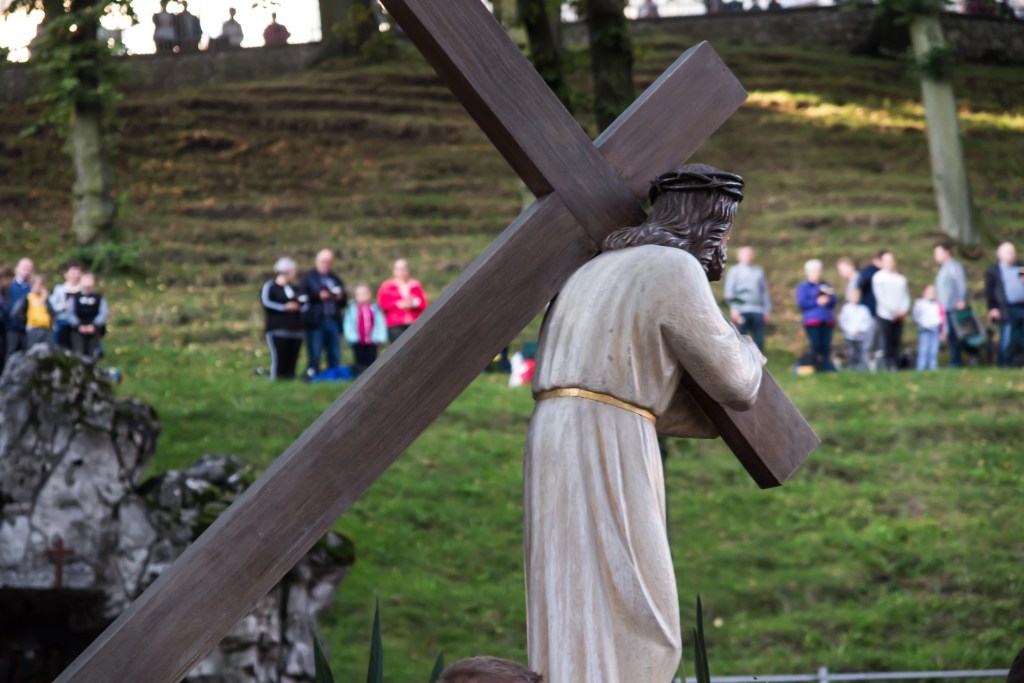
We need to be careful not to be hearers who don’t understand and seers who don’t perceive. We need to be careful to choose God’s way, which is not our way. We need to carry our crosses and not swords.

Does any of this make me “right”? No. But, I am seeking God. I am trying to be true, to know Him, and to be like Him. That is my heart’s desire. I am trying to recognize and honor God in these times and to reflect His heart and character as best as I can understand it.

The lesson of the words of Jesus to be careful of the wolves among the sheep, the lesson of the prophets, and Paul’s reminder that God shames the wise and the strong by choosing what seems to be foolishness and weakness means that I need to resist the default position of the flesh (to rely on power and influence). I need to be grounded in God’s Word and not everything that anyone who is a Christian says. I need to be aware that weeds grow among the wheat and wolfish things appear among the sheep.

Though every man be a liar, yet God is true! (Romans 3:4) The heart of a man is deceitful above all things. (Jeremiah 17:9) This is true of me and my heart if I am not careful and do no guard it. We need each other, and we need to hold each other accountable, not to political ideologies and cultural ways, but to the Word of God and the way of Jesus.


Keeping the Main Thing the Main Thing

How do we faithfully follow Jesus in a divided world?


My daily Bible reading plan this morning began with this simple question:

How do you faithfully follow Jesus in a divided world?

(See the YouVersion plan called Fighting for Unity in a Divided World)

Judging by my social media feed, this question is poignantly apropos. It’s not just “people in the world” I see at odds with each other. I see many people posting memes under the banner of Christ, getting their lobbing verbal grenade’s at “the people in the world” and fellow Christians, alike.

I confess I have difficulty not being blunt, and for that I ask for your grace when I say that the spectacle saddens me. Humans have always lived in a world dominated by rising and falling empires, but Jesus came preaching a kingdom not of this world. Almost 2000 years after Jesus died and rose again to emphasize the Good News he proclaimed, we still fly our empire banners alongside Christ.

It wasn’t always like that, though. For almost three centuries after Jesus died on the cross at the hands of the Roman Empire, his followers proclaimed the Gospel without any influence or power in the world. His followers were mocked, derided, and marginalized, and they suffered cycles of persecution culminating in the Great Persecution.

Beginning in 303, Emperor Diocletian, who established a tetrarchy with Maximian, Galerius, and Constantius (the father of Constantine), issued a series of edicts demanding that Christians comply with traditional (pagan) religious practices. (See Wikipedia) Diocletian presaged the Great Persecution when he took power in 284, purging the army of Christians and surrounding himself with public opponents to Christianity. He led an “activist government” and promoted himself as “restorer of past Roman glory”. (Ibid.) (Making Rome great again?)

Diocletian finally ordered “a general persecution” on February 23, 303. The reign of persecution was short-lived (unless you endured it, I suppose). Constantius, the father of Constantine, restored legal equality for Christians in Gaul in 306, and Maxentius usurped Maximian’s control in Italy and North Africa in the same year with a promise of religious toleration. When Licinius ousted Maximinius in 313, the persecution was formally ended.

The political ebbs and tides of the time (with implications for the church) are reminiscent of our political shifts from right to left to right in recent years. Perhaps, little has changed in that way, yet the change that followed in 313 was unprecedented, and this change set the course of the Church on a path it had never before traversed.

Eusebius, the Christian historian, wrote as a contemporary of Constantine with glowing approval of the events that changed the course of Christianity forever. Eusebius is the person who preserved the details of Constantine’s personal story of conversion to Christianity.

As the story was told by Constantine, he had a vision in 312 shortly before an imminent battle with a challenger to the throne of the Roman Empire, Maxentius, whose army outnumbered Constantine’s. Constantine saw in the sky a giant cross with the inscription, “In this sign conquer!” The vision was followed by a dream that evening in which Jesus purportedly came to him and told him to conquer in his name. Thereafter, Constantine established the cross as the standard for his army and the banner under which the Roman armies marched to battle and conquered in the name of Christ, the lamb of God who died that we might live.


The words of John Dickson have been echoing in my mind since I listened to Episode No. 21 of his Undeceptions podcast.

In the podcast (titled Post Christian) featuring the Australian journalist, Greg Sheridan. John Dickson commented on the approval by Eusebius of Constantine’s use of the cross as a symbol of conquering on behalf of the Roman Empire this way:

“A people used to mockery and social exclusion – and worse – were now invited into the very center of power. And perhaps most bizarrely, the Christian sign of humble self-sacrifice – a cross – was now the formal path – the very symbol – of the Roman war machine. It is so hard to get my head around when I consider what Jesus said about the cross – his cross – and its social implications.”

Juxtaposed to the image of Roman armies conquering under the sign of the cross in the name of Jesus, Dickson recalled the story of James and John, the sons of Zebedee, who asked Jesus asking to seat them on the right and the left of Jesus when Jesus rose to power. These brothers, like many First Century Jews, expected a conquering Messiah. They interpreted the prophets to predict a Jewish Messiah “who would lift Israel above Rome and crush the enemies of God.”

Jesus gave them a response they didn’t expect and likely didn’t understand at the time:

“You don’t know what you are asking,” Jesus said. “Can you drink the cup I drink or be baptized with the baptism I am baptized with?”

Mark 10:38

The other disciples became indignant with James and John thinking, perhaps, they they deserved glory and recognition also. They, like many before and after them, may have viewed religion as a path to power and influence, and they may have been annoyed at the audacity of James and John out of jealousy. At this, Jesus brought them together and set them straight.

“You know that those who are regarded as rulers of the Gentiles lord it over them, and their high officials exercise authority over them. Not so with you. Instead, whoever wants to become great among you must be your servant, and whoever wants to be first must be slave of all. For even the Son of Man did not come to be served, but to serve, and to give his life as a ransom for many.”

Mark 10:41-45
Continue reading “Keeping the Main Thing the Main Thing”

In Response to the State of Our Culture, Do We Carry the Cross or the Sword?

Jesus told us to follow him by picking up our crosses, but many of us today are picking up our swords.


I recently heard Tim Alberta say that some modern evangelicals have picked up a sword, and that sword is Donald Trump. Such a sword is needed for success in a culture war, and a culture war mentality drives the politics of many, if not most, of evangelicals today.

Many evangelicals are concerned, if not fearful, of current cultural trends. People are pulling away from and rejecting traditional Christian values in the US. The change has been rapid (as far as cultural trends go). American society is going the way of Europe and Canada in letting go (and outright rejecting) Christian labels, overtly Christian thinking, and church attendance.

Perhaps, nothing demonstrates the cultural movement away from Christianity in the United States like the book, The Nones: Where They Came From, Who They Are, and Where They Are Going, by Ryan P. Burge. The author says that only five percent (5%) of Americans claimed “no religion” in a 1972 poll. That number rose to over twenty three percent (23%) by 2018. This made “nones” as numerous as Catholics or evangelicals in the US in 2018.

Nones are predominantly young Americans, but this trend does not just affect the nation’s youth, and it has picked up momentum since COVID. Robb Redman reports from various sources on community trends and culture for worshipleader.com, including the following:

  • 70% of Americans were church members in 1999 (Gallup);
  • Less than 50% of Americans were church members in 2023 (Id.);
  • 45 million Americans have stopped going to church in that time;
  • 41% of Americans 39-57 went to church regularly in 2020 (Barna);
  • 28% of Americans 39-57 went to church regularly in 2023 (Id.).

Ryan Burge partnered with Jim Davis and Michael Graham to explore the reasons for this precipitous decline in church membership and attendance and the rise in self-described nones in their recent book, The Great Dechurching. This book has become the topic of much conversation in the short time since it was published. I haven’t read the book yet, so I posed the question, “What are the top five reasons people have stopped going to church, listed from most common to least common”, to two different AI platforms. The results from Bing Co-Pilot are as follows:

  1. Judgmental attitudes (87%)
  2. Distrust of organized religion (74%)
  3. Too focused on Money (70%)
  4. Busy schedules (67%)
  5. Loss of Habit (58%)

The Co-Pilot response summarized studies done by the Pew Research Center, Gallup Polls, the Barna Group, the Public Religion Research Institute and various academic studies to generate this list. I note that the first three reasons people have given for not attending church are issues with the Church I am referring to the Church (capital C) because I don’t know how this breaks down among denominations. The other two main reasons are unrelated to the Church; they reflect personal and societal lifestyle issues.

Chat GPT reported different results, citing some of the same sources (Pew and Barna) and some different sources (General Social Survey and books and articles, generally, including Sociology of Religion by Diana Butler Bass, an academic book). The Chat GPT list is not as straight forward:

  • “A growing disconnection with church teachings or religious beliefs” (about 60%-70%);
  • “Negative experiences, such as feeling judged or encountering hypocrisy” (about 30%-40%);
  • “A perceived irrelevance of church” and disconnectedness of the church to modern issues (about 25%-35%);
  • Busyness, lifestyle, time constraints, and changing priorities (about 20%-30%); and
  • Exploring alternative spirituality and religious practices (about 15%-25%).

Again, the first three (3) (and the most prominent) reasons for not attending church deal with the Church, itself. Worldviews are shifting away from the views held by the Church (which seems to indicate we are losing this “culture war”). The Church is perceived as disconnected from modern life and the modern world and not relevant to it, and the Church is perceived as overly negative and hypocritical.

The one area of overlap is the high percentage of people who list judgmental attitudes, including negative experiences and hypocrisy) as major reasons of not attending church. This is obviously a key issue (ranking 1st and 2nd respectively).

I find this to be highly problematic for the Church because the Paul plainly said the Church should not be (presently) judging the world (according to Paul (See What Business Do We Have Judging the World?)) And, Jesus said we should be known by the love we have for each other.

It seems pretty obvious to me in my own anecdotal experience that the American Church, generally, has some significant issues in this regard. We are not following Paul’s instruction not to judge the world, and we are failing to love each other well.

I recently watched a Gavin Ortlund critique of fundamentalism in the Church today that focuses on these issues. He says it well when he describes a segment of the Church that is focused more on what followers of Christ should against, rather than than what we should be for. When our focus is on the negative, our positive message is likely to be eclipsed and obscured and it lost in the noise.

I realize, of course, that this “indictment” of the Church generally, is a very broad brush. The church I attend does not fit this mold. Most of the Christians I have close relationships with do not fit this mold. We don’t have to look very far or deep on social media, however, to see evidence of judgmental attitudes, hypocrisy, and negativity.

It’s interesting to me that resources Co-Pilot pulled from identify more negatives (distrust of organized religion and too focused on money) in the top three reasons for not going to church, while the Chat GPT sources identified “growing disconnection with church teachings or religious beliefs” and perceived irrelevance of church” and disconnectedness of the church with modern issues. Distrust and money-focused have nothing to do with message, but disconnection with church teachings and a perceived irrelevance with modern issues has everything to do with message (theology).

Exploring alternative spirituality and religious practices (the 5th reason noted by the Chapt GPT response is related to the disconnection responses. I don’t know whether these things are causal or just symptomatic. If people were finding what they were looking for in church, they wouldn’t disconnect and look elsewhere. If their church experience wasn’t negative, they might still be connected.

On the other hand, both sources identify other things that are going on. Busyness, lifestyle, time constraints, and changing priorities are “neutral” pressures that are affecting not just churches, but service organizations, fraternal organizations, and other traditional ways people have gathered together.

We see a spike in this trend of disconnection from Church membership and attendance after COVID (pun intended). COVID seemed to supercharge changes that were already in the works in many areas of life. People were already disconnecting from face-to-face contact with other people with the proliferation of hand-held devices and social media going back at least to 2012. COVID isolated people even further.

Sociologist, Jean Twenge, finds sharp changes in teen behavior and mental health starting in 2012, which she attributes to teen use of smartphones and other hand-held devices. Her findings about the changes in the behavior of teens is a yardstick to measure the pulse of society.


A published interview with Twenge as Time Magazine’s Person of the Week, reports that “Gen Z is in the grips of a historic mental health crisis, with teenagers struggling with record levels of depression, anxiety, and loneliness.” Twenge, who has studied many generations of teens, discovered “big and sudden” changes in Gen Z starting around 2012, when hand-held devices became normalized among teens.

Those changes included, among other things, a doubling in the diagnosis of clinical depression among 12-17 year-olds from 2011 to 2019. At the same time, teens reported significantly less face time with other people corresponding significantly with more screen time. I have heard her say that teen pregnancy is down (which seems to be a good thing) because teens spend more time on their phones in their bedrooms alone than spending time with each other (which is problematic).

So, what does this have to do with Donald Trump and Christians fighting a culture war to try to preserve their power and influence in a society that seems to be pulling away from us? I seem to have wandered far afield, but now I am going to pull it in and get to the point.


It seems our culture needs Jesus more than ever. At the same time, people are do not see the benefits of knowing Jesus. At the very time when people need the grace and love of Christ most, people are being pushed away by judgmental attitudes and negative experiences. As people are struggling with isolation, polarization, and mental health issues, the Church is becoming more irrelevant, disconnected, and inaccessible to them.

Ironically, it seems to me, we are not only losing this culture war, the culture war seems to be the very thing that is pushing people away and isolating them from us. As we are circling our wagons defending ourselves against these “outsiders”, and attacking them from behind our theological walls, we have lost sight of the fact that Jesus sent us out into the world to bring the Gospel to the lost.

We are failing in our most critical mission.

Continue reading “In Response to the State of Our Culture, Do We Carry the Cross or the Sword?”

Where is Our Confidence and Focus?

In Paul’s day, and I suggest in ours, the influences we most need to be concerned about are the religious ones in our own midst!

Depositphotos Image ID: 15807997 Copyright: Kuzmafoto

Paul, the man Jesus “recruited” face to face after His death and resurrection to be the apostle to the Gentiles, was concerned about the purity and integrity of that Gospel. He had every reason to be proud of his accomplishments and heritage as a Jewish Pharisee, a scholar and leader of the highest order, but counted them all rubbish for the sake of the Gospel. Paul did not boast in his accomplishments; he boasted in Christ.

At the same time, Paul was keenly concerned with bad influences creeping in to the little pockets of believers that Paul oversaw and nurtured. We see this concern in most of his letters, including the letter to the Philippians, which I have been reading the last couple of days. Paul says in Philippians 3:2-7:

“Look out for the dogs, look out for the evildoers, look out for those who mutilate the flesh. For we are the circumcision, who worship by [in] the Spirit of God and glory in Christ Jesus and put no confidence in the flesh—though I myself have reason for confidence in the flesh also. If anyone else thinks he has reason for confidence in the flesh, I have more: circumcised on the eighth day, of the people of Israel, of the tribe of Benjamin, a Hebrew of Hebrews; as to the law, a Pharisee; as to zeal, a persecutor of the church; as to righteousness under the law, blameless. But whatever gain I had, I counted as loss for the sake of Christ.”

This got me wondering: Who might Paul be talking about today?

Continue reading “Where is Our Confidence and Focus?”