Our Post Enlightenment, Neo Religious World and the Proof of God

Not all truth is known through scientific inquiry and method.


As often happens with me, the things I have been listening to and reading have converged in a meaningful way. Whether we attribute these “convergences” to God’s presence in our lives or dumb luck, pure happenstance, or “coincidence” is a matter of speculation and faith.

Whatever you want to call it, I take special notice of these things. I pay attention. I take them seriously, and they become signposts on my journey through life.

Perhaps, I am just being a good attorney. I am trained to find harmony and contrast in nuanced fact patterns and to apply legal principals to them. Finding harmonies and contrasts and applying spiritual principals to them operates in the same vein. That’s the way my mind works.


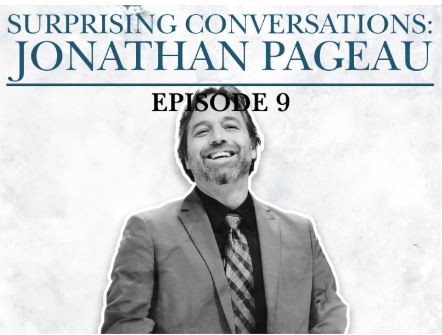
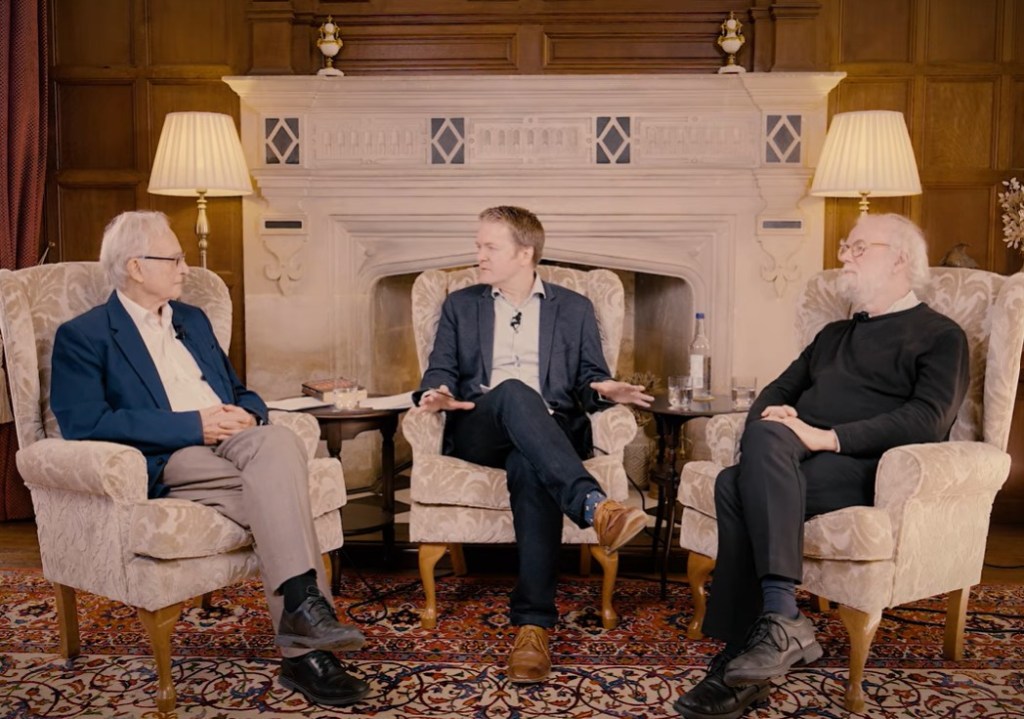
Yesterday, I listened to an interview of Jonathan Pageau by Justin Brierley. Pageau is an interesting character and a critical thinker. His recent conversation with Brierley inspires my writing today.


Raised in Montreal influenced by French Catholicism in a French Baptist Church community, Pageau has moved over to Eastern Orthodoxy by way of 4-year and 3-year stints in the Congo and Kenya. He has an undergraduate degree in postmodern art. He returned from Africa to obtain a degree in Orthodox Theology and Iconology from Sherbrooke University in Quebec. Along the way, Jonathan Pageau has become a cutting edge Christian thinker who is in demand as a speaker.

One line of discussion caught me ear in the interview with Justin Brierley that I want to explore. The subject touches on post-Enlightenment, neo-religious thinking and the proof of God.

Continue reading “Our Post Enlightenment, Neo Religious World and the Proof of God”

Faith, Hope, and Love in These Times

These times are exciting and scary for people

Elon Musk: 100 million people with Neuralink implants in the future | Lex Fridman Podcast

My writing today comes from my quiet time when I read the Bible in the morning. I have been sensing the importance of hope in recent days (or weeks) in the light of the troubling times we live in. It’s easy, even as a Christian, to lose hope in these times. I do.

Just a week ago, I had a conversation with my 31-year old about a great leap in technology being pioneered by Microsoft that could increase technological advancement exponentially. (See Microsoft’s NEW Quantum Chip is Mind Blowing!) Glenn Beck speculates, “If they can put that one chip in your phone, it would make your phone as powerful as the best supercomputer with a server farm the size of the planet earth.”


Or conversation focused on his wife’s concern (and mine) that such a technological advancement may exceed our ability to do good with it. Imagine people having that power at their fingertips….

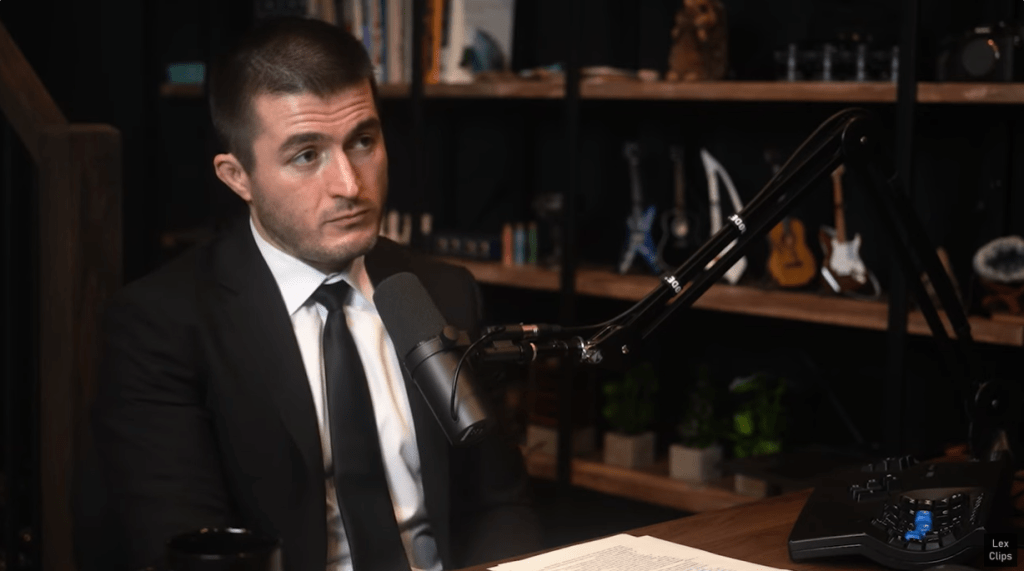
Six months ago, Elon Musk discussed the distinct possibility of fitting 100 million people with Neuralink implants in the future. This device implanted in the brain would allow “superhuman abilities”. It would replace cell phones. We would essentially have computers in our brains.


Musk somewhat presciently said, “The problem will be figuring out what we want….” A person who wants to cause harm could cause greater harm exponentially faster and exponentially more devastating than can be done now with our merely human brains, like going from muskets to a nuclear capabilities.

Lex Friedman commented, with maybe greater prescience, “I think it’s exciting and scary for people because … it changes the human experience in ways that are very hard to imagine.” Interestingly, Musk agreed, “We would be something different.”

This uncertainty suggests we should be cautious with technology that may fundamentally change the human brain. The specter of the availability to change the human brain to make us different in ways we can’t even predict raises similar ethical questions as the ability to clone humans.

Not only should we be circumspect and careful with these things; we need to be cautious about trusting such powerful technology to people with varying worldviews. Do we want a materialist driven people who believe there is no God, nor objective morality, nor any no purpose in life other than what we want it to be to be in control of such technology. What about an Islamic world? Or a Trump and Musk world that is driven by the almighty dollar?

Pick your suspect worldview. I wonder, “Can we handle it?” And, “Are we playing God?” And, “What unintended consequences might we trigger?”

As I write these things, I can hear another voice in my head nagging me to reconsider my cautionary approach. “Wouldn’t it be great to control your world with your mind?!” Imagine how a Neuralink might empower and improve the life of a quadriplegic. It could be used for so much good!

In reality, such technology is likely to be used both for good and to be abused. That is the pattern of humanity. Whether it might be used more for the good than abused is something no one can predict, though it may depend on how slowly, cautiously, and circumspectly we roll it out.

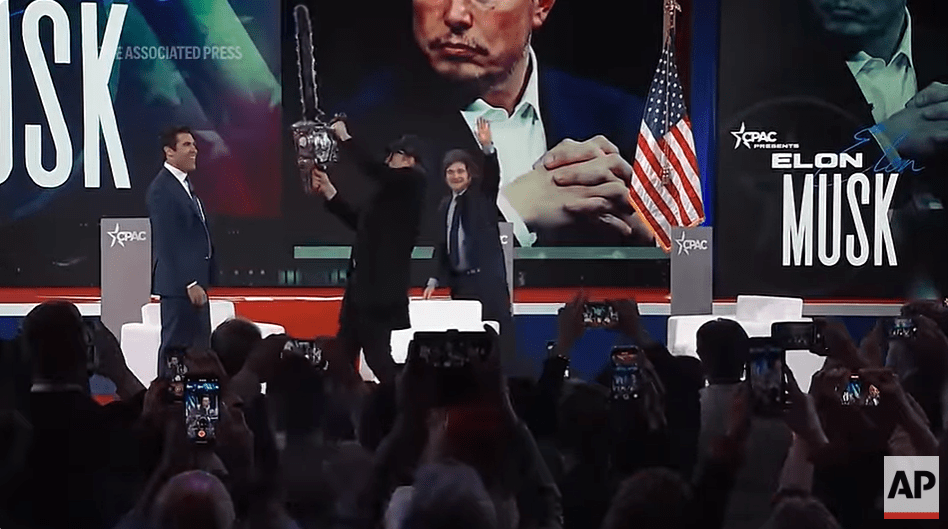
On that score, consider what Elon Musk is doing with the power Trump has given him in the federal government. He has wielded that power with glee like a chain saw massacre. He even boasted about it:

This is the same man who wants to put his technology in your brain.

I might be tempted to think that I am being overly cautious, but recent developments highlight the concerns. Elon Musk has been invited into the inner workings of our government by Donald Trump. He has been given unprecedented access to personal and private information of all people who live in the US. Together they have been freezing funds, firing people, and shutting down programs at an unprecedented rate.

I have likened what they are doing to a corporate Board of Directors for a hospital identifying inefficiencies and wasteful spending and taking a wrecking ball to the hospital with the patients, doctors, and nurses still in it. In weeks, they have have attempted to freeze the expenditure of billions of dollars already committed to operating programs in this country and around the world, and they are gutting and shutting down those programs.

The rashness and imprudence of doing what they are doing is almost unimaginable, and they are doing it because they have the power to do it. Right now, there is no check or balance in the way. They are moving faster than the other branches of government can respond.

We don’t know, yet, what the fallout will be. We are seeing only anecdotal results right now – jobs lost, summary deportations, 50 year contracts terminated with veteran agencies, etc. – in less than two months. Trump and Musk have enthusiastically wielded the power they now have with no apparent thought or care to the lives they have disrupted and the people they have hurt in the name of efficiency because they can.

We have a tendency to run further and faster with technology than our ethical bandwidth can keep up. The industrial revolution led to abuses like child labor and competition among nations that presaged the two great World Wars. Those technological advances made those wars more deadly than ever before – with tanks, guns, planes, toxins, and bombs (conventional and nuclear) – that were more devastating than the weaponry available in prior wars.

The kinds of technological advances Microsoft and Musk are exploring could lead to unimaginable abuses of power. That power will be exponentially greater than what we have now, and it could easily trigger the end of human civilization in the wrong hands.

The technology that fueled the World Wars is nothing like what we have now. The nuclear technology that ended WWII and advancements in technology that exist today could easily end human life on earth in the time it takes to push a button.

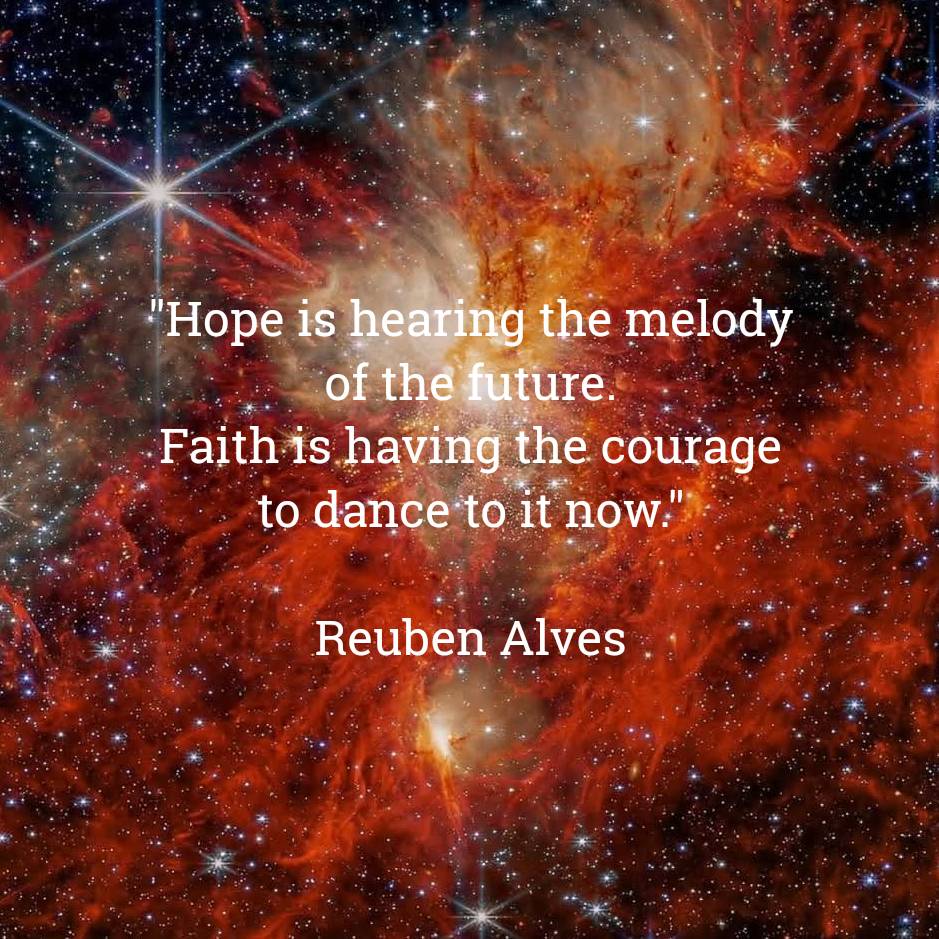
In that context, I read my daily Bible reading plan to today that included a quotation from Brazilian theologian, Reuben Alves, that I have included here. So, I turn now to hope, fueled by faith, and informed by love.


Continue reading “Faith, Hope, and Love in These Times”

St. Augustine on the Literal Meaning of Genesis

How Augustine read Scripture in light of experience and reason.


People cite the great church father, Augustine, in defense of the view that the earth is only thousands (rather than billions) of years old. Indeed, I believe this was (more or less) Augustine’s view, based on the science and knowledge that was available to him in the 5th Century when he lived. Augustine believed the earth was young.

That isn’t the end of our understanding of Augustine, though. To understand Augustine, we might be aided by a basic review of the mythological, philosophical and scientific views that were prevalent in his world at the time.

According to my inquiry on Bing Co-Pilot, the mythology of the time didn’t attempt to date the age of the earth. Science (such as it was) also had not established a position. Philosophy, however, provided two opposing views.

The philosophical camps were led by Aristotle and Lucretius. Aristotle argued that the earth was eternal, and Lucretius argued that the earth formed relatively recently (based on a lack of records prior to the Trojan War). (The Trojan War dates to the 11th or 12th Century BCE.) Thus, the two competing views in Augustine’s day were 1) eternal earth or 2) young earth. There was no inkling in Augustine’s time that the earth might be very old, but not eternal.

Interestingly, Aristotle’s view of an eternal earth shifted to an eternal universe, and that view became the accepted scientific view that lasted well into the 20th Century. This was Einstein’s view when he developed the Theory of Relativity.

The past eternal view of the universe was only debunked and rejected by the scientific consensus in the second half of the 20th Century, and then only very reluctantly. (Even now, some scientists demonstrate a desire to find support for a past eternal universe, but support for that view seems to get thinner and thinner as time goes on.)

In the uncertain stew of mythology, philosophy, and science in the 5th Century, Augustine acknowledged that a literal, 6-day reading of the creation story in Genesis is not an irrational interpretation. That is basically how he put it.

He didn’t endorse that view, however. He thought the better view was that the “days” in Genesis 1 do not correspond to earthly (24 hour) days. Even in his exploration of a “literal” reading of Genesis, Augustine incorporated allegorical nuance.

Augustine did not believe that “literal” and “allegorical” meanings were mutually exclusive, and neither did most of the early church fathers. What Augustine and the early church fathers meant by the “literal” meaning of Scripture was what the people who wrote the original words literally meant and how the audience to whom they communicated understood them.

In this effort to understand what the writers meant, the early church fathers assumed that the original meanings included metaphor, symbolism, and literary devices. None of the early church fathers (that I am aware of) argued for the modern sense of strict literalism in the interpretation of Scripture.

Though most early Christians believed literally in the historicity of the biblical accounts (to use a modern term), they also accepted the richness of allegorical meaning in Scripture at the same time. In fact, the metaphorical meaning of Scripture was assumed to be the deeper, more significant meaning of Scripture.

Augustine (along with Clement of Alexandria and Origen) ultimately rejected the calendar-day view of the Genesis creation story in favor of instantaneous creation with a kind of day/age view of the creation passage in Genesis. The great Jewish theologians, Philo and Hilary of Poitiers also took this view that God created the earth instantaneously.

We should recognize that the day-age view that Augustine and others preferred was probably not the consensus, but it also wasn’t considered heresy. The theology and the philosophy were unsettled, and science had not yet developed as we know it. The Church allowed for robust disagreement on age of the earth, because it was not considered essential doctrine.

I should stop here, at the risk of pointing out something you already know, and look at the meaning of the Hebrew word, יוֹם (yom). This word is translated into the English word, day, in Genesis 1. As with most Hebrew words, yom has many nuanced meanings and applications, both literal and figurative. The various meanings include:

  • Day, as opposed to night
  • Day as a division of time
  • Day as defined by evening and morning
  • Day as in a time (like harvest)
  • Day as in an age or epoch of time

In addition to the definitions, most Hebrew words have both literal and figurative meanings and applications. Thus, Augustine’s position that the days in Genesis can be read to mean an “earthly” or “ordinary” day did not exclude the idea of applying them more figuratively. That duality is consistent with the way Hebrew words and Hebrew language works. This built-in literal/figurative duality of Hebrew words informed the thinking of the early church fathers.

Augustine is famous for preferring allegorical readings and applications of Scripture. In his early two-volume work on Genesis in which he took issue with the Manicheans, Augustine explored the position that the days in Genesis are seven epochs of redemptive history corresponding with seven stages of the Christian life. (See Did Augustine Read Genesis 1 Literally? by Gavin Ortlund citing De Genesis contra Manichaeos 1.23.35-1.25.43, in Augustine, On Genesis, 62-68.)

When Augustine set out to write a “literal” interpretation of Genesis, he didn’t mean what people today might think he meant. Even his “literal” reading of Scripture was not strictly literalist. It was an attempt to understand what the original writers and audiences (literally) meant and what they understood it to mean.


Science in St. Augustine’s day was not advanced enough to weigh in on the age of the earth, but Augustine was a strong proponent of understanding science. The science of his day, for instance, had settled the spherical shape and circumference of the earth. That the earth was round and even the size of the perimeter of the earth was well established and understood among academics since before the time of Christ. (It is purely a myth, for instance, that Columbus had to convince people the earth was not flat.) Augustine’s view of scientific knowledge and its relationship to Scripture is what I want to highlight here.

Continue reading “St. Augustine on the Literal Meaning of Genesis”

Science and Faith in Harmony: A Short Review of Sy Garte’s New Book

A scientist and former atheist explores the the strange light that emanates from the penumbra of science.


In his new book, Faith and Science in Harmony: Contemplation on a Distilled Doxology, Sy Garte makes the following statement:

“[Science] cannot be used to demonstrate the existence of God beyond doubt since it lacks the appropriate methodology and conceptual framework to investigate the divine. But if God exists, we would expect to find things about our universe outside of what we’d expect if there was no God – things that point to a Creator – and that is exactly what we find.”

Science in Harmony: Contemplation on a Distilled Doxology, p. 110

This statement is a good summary of the content of the book.

Sy Garte was a third generation atheist for decades, well into middle age. He is a retired scientist whose upbringing, education, and worldview was defined by materialistic and naturalistic assumptions. He was educated and trained to follow the science, and the science led him to him edges where science could not go.

The penumbra of a reality that was eclipsed to him in those materialistic assumptions emanated from behind those dark edges. He recognized the limits of those assumptions, and his curiosity led him explore the strange light at their edges.

Sy Garte tells his story in the book, The Works of His Hands: A Scientist’s Journey from Atheism to Faith. He followed the science where it led him. When it led him to dead ends where science could not go, he explored where science pointed. The journey took years. His story may not be your story, but it is well worth the read. It may even illuminate your own journey.


His most recent book, Faith and Science in Harmony: Contemplation on a Distilled Doxology, explores “the things that point to a Creator” in snippets of insightful science, poetry and story. He takes the reader to the penumbra and explores the light that shines out from behind it with snippets of science, stories, and unique insights.


Each chapter is short, packed full of a lifetime of insight, science, and faith that emanates from the science to which he devoted his life. The book illuminates a reality that was not accessible by that science alone, but to which that science leads. The book is as readable and accessible as it is intriguing and insightful.

The weaves science into a tapestry of personal stories, anecdotes, examples, quotations, Bible verses, and citations that explore the strange light that emanates from the edges where science meets faith.


Dr. Sy Garte is a biochemist and has been a professor at New York University, University of Pittsburgh, and Rutgers University. He has authored over two hundred scientific publications and four previous books.

Sy Garte has served as division director at the National Institutes of Health and Vice President for Research (acting) at the Uniformed Services University of the Health Sciences. He has also served on the Board of Advisors for the John Templeton Foundation. Sy is the Editor-in-Chief of “God and Nature” magazine and vice president of the Washington, DC, chapter of the American Scientific Affiliation (ASA). He is a Fellow of the ASA.

Sy is now a lay leader and certified Lay Servant in the United Methodist Church. Although retired from active employment, Sy keeps busy writing and evangelizing online and in the church. He also contributes to science and faith journals such as Perspectives in Science and Christian Faith, and keeps a blog “The Book of Works”.

The Chicken or the Egg and basic Assumptions on Origins

The chicken and the egg question confronts the basic assumptions about life


Which came first? The chicken or the egg? This is a school child’s question, but sometimes the most profound questions about life and reality as we know it can be boiled down (to keep with the theme) to simple questions and simple propositions.

Spoiler alert: I am not going to take a position on the chicken/egg controversy. That was just a teaser. The questions I want to address are far more fundamental (though actually related).

The assumptions we make, even the greatest geniuses among us, are pretty simple at their core. And we can’t prove them. We have to take them on “faith”, yet we construct our view of the world and how it works on the basis of those assumptions.

Many people develop those assumptions from an early age without much critical examination. Though our basic assumptions are the filter through which we view everything, and we use those filters constantly to make critical examinations of the world around us, we rarely examine or critique those filters, themselves.

Because our assumptions are the basis on which we reason, do science, and live our lives, we tend to be reluctant to subject them to rigorous examination. Two of the most fundamental filters by which people see the world are diametrically opposed to each other: 1) the assumption that a divine being exists through which the universe was created, and 2) the assumption to no such divine being exists, and all that exists is physical matter and energy.

(A third view is that the divine “entity” is one with matter and energy, but this view can be lumped in with the view that all that exists is matter and energy since this third view equates the divine with matter and energy. Only the first view assumes that divine reality exists separate and apart from matter and and energy and caused it to come into being.

I note that many people try to mix and match these fundamental assumptions. The view that the divine is “one with” and undifferentiated from the matter and energy that makes up the universe is such an attempt, and it runs into problems as a result.)

The assumptions could not be more simply stated: either God exists, or God does not exist. We vigorously defend whichever of these two assumptions we have embraced. We cannot definitely prove either of these assumptions, but we are often loathe to subject them to critical examination.

That doesn’t mean that we don’t “test” them. In some ways, our daily lives are a continual test of those basic assumptions – consciously or unconsciously. As we live our lives, our assumptions are repeatedly put to the test as we apply the filters derived from our assumptions.

I think all people have encountered some disconnection between reality and their basic assumptions. I think we have all struggled with feeling like the world doesn’t make perfect sense – it doesn’t add up according to our assumptions. I submit that is the inevitable state of a finite being who doesn’t know what she she doesn’t know (and, perhaps, never will).

Human beings are nothing, however, if not resilient. We are good at ploughing forward with vague feelings of unease that our basic assumptions are not adding up. We may not always be conscious of this unease. Some people simply shrug their shoulders and resign themselves to it.

“Eat, drink, and be merry” (for tomorrow we die), is the attitude people often hold onto who have reached a state of mental and emotional confusion and resolved it with indifference. Life has a way of confronting that indifference, however, when loved ones die, injustice hits close to home, and the age old question, “Why?!” pushes to the surface like rocks in a New England yard after a hard rain.

I submit that our faith is revealed in the way in which we hold to those assumptions, believing that they will be vindicated, despite the incongruities between those assumptions and the reality that continually confronts us. We put our trust in those assumptions and plow forward, moving the rocks to the edges of our intellectual territory.

Frankly, what else is a finite being to do?

A friend of mine, when I posed the question about the chicken or the egg, said the answer is easy: the egg came first. I don’t know whether he was being facetious or serious, but his confidence illustrates the point that we have faith/trust in our basic assumptions. He can’t prove the egg came first, but he was confident in his assumption.

In the following presentation, Sy Garte unpacks the basic chicken and egg question about the origin of life. Sy Garte is a scientist, a biochemist, who is retired from a career in science. He is published in scientific journals, and he is very familiar with the challenge of unpacking those basic assumptions.

His father was also a scientist. He grew up in an atheistic household that was hostile to the idea of God. He assumed that no God exists, and the world consists only of matter and energy into his 40’s.

At that point, he changed his mind on his basic assumptions. It was science that led him to question his basic assumptions and, eventually, to examine them rigorously. He came away from that rigorous examination with a new set of basic assumptions that, he says, make much more sense of science and reality.

If you are interested in his story, he wrote a book about his journey from a purely materialistic view of the world to the view that God exists: The Works of His Hands: A Scientist’s Journey from Atheism to Faith. But that isn’t the subject of my writing today.

I write today on the subject of our basic assumptions, and how they affect the way in which we approach the world. I hope you will take the time to watch the following presentation, which demonstrates how those basic assumptions affect our thinking. The presentation is only about 27 minutes long with Q & A at the end.

He presents the chicken and the egg question in two syllogisms. The first one is the assumption he grew up with and which formed the basis of his views for over 40 years:

As noted above, he was led to reexamine his basic assumptions through science. First, it was physics that posed a challenge to his basic assumption that no God exists. Much later, his beloved biochemistry led him further down the path. The second syllogism is the one he know assumes:

I have often thought of the importance of perspective for finite beings such as humans. Our individual and collective perspectives are unique and fixed in time and space to a very small connection with the universe. We are parochial with our perspective, and we tend to be adverse to other perspectives breaking in on our little corners of the universe. But, the universe is vast, and we should not be so fearful or defensive as to shield ourselves from other perspectives.