Absurdity in a World Without God

I am reading A World Without God by Chris Palmer. In Chapter 7, in the section titled, “The Indifferent Universe,” the protagonist describes the death of a five-year-old boy from a mysterious plague.
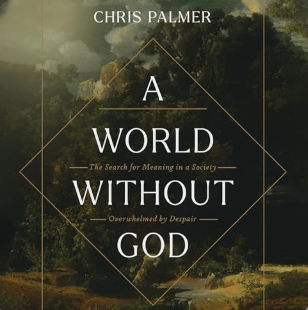

The section opens, saying, “The death of a child has a way of undoing everything…. [including t]he scaffolding we use to make sense of the world.” The protagonist wandering through fictional Novemberton recalls Albert Camus and his “stubborn refusal to look away from the raw edge of things,” and he finds comfort in Camus’ refusal to rescue meaning from chaos.


A strange comfort it seems to be that humans like things we can understand. We want to understand the world and to reduce it to terms we can grasp. We have an innate desire in us for meaning and understanding, and we are unsettled when meaning and understanding elude us.

Some things are obvious but we don’t want to see them. Camus was willing to acknowledge what most of us can’t seem to grasp: that the universe is utterly indifferent to us. He was not just willing to acknowledge it; he was willing to resign himself unreservedly to it.

Most people can’t or are not willing to do that. The death of a child for no reason is absurd, says the protagonist. Most of us are inclined to agree, but why?

Children sometimes die. We all know that it happens, yet it shocks us each time. The death of a child, the sudden death of a husband, father, and provider for his children, and the mass casualties of an earthquake or a flood evoke the same shocked response.

We cannot help but think the world has gone mad. The world has become absurd.

The protagonist in A World Without God praises Camus for exposing “the mismatch between the human heart and the mute mechanics of the universe.” The human heart longs for meaning – or for a particular king of meaning – but the universe seems to defy that meaning in things like the death of a child.

It seems clear to me that perspective is crucial to meaning. If I do not know English, I could not read the book I am reading that is written in English. I have to approach the book from the perspective of the English language to understand it.

From our perspective, the world makes no sense. We want the world to correspond to us but it doesn’t. If we are at the center of the world, it makes no sense. The world seems “utterly indifferent,” indeed, when we consider the death of a 5-year old child to plague, the death of a father and provider for his family, or the mass casualties of an earthquake or a flood.

It seems tragically factual that the world is utterly indifferent to us, but we are not indifferent to that fact. Thus, it seems “absurd” to us.

The problem is our perspective. We seem to expect (or at least desire) that the world should embrace us, coddle us, tend to us. We find it shocking – absurd – that the world is so indifferent. Because the world does not exist the way we want it to exist, we call it absurd and fail to find the meaning in it.

If I see myself in the world at its center, and the world makes no sense to me, perhaps I am not at the center of the world. If I find it absurd because it doesn’t bend toward me, perhaps I am looking at the world from the wrong perspective.

By what metric do we declare the world absurd?

I think all people have some sense that Camus is right about the absurdity of pain and death from our shared perspective as people seeking meaning with ourselves at the center. From that perspective, the world is absurd because it does not bow to the way we desire the world to be.

People praise Camus for being brutally honest and willing to accept the stark truth of that reality. But it seems to me that the absurdity lies in thinking that the world should bend to my desires and that the world should have the meaning I ascribe to it. Perhaps, the absurdity lies in my thinking it is so.

A human being recognizing the great tragedy of the death of a five-year-old just beginning to blossom in the world means something. Why do we find that so unsettling? Frankly, so absurd. That fact – the fact that we are disturbed by it – is the clue to the meaning we long for.

If the world just is, if the world is simply and utterly indifferent, why do we care? Why do we label it absurd? And why, if we think it absurd, would we resign ourselves to go no further in our thinking, but to accept the absurdity of it?

The very fact that it matters, the very fact that we care, the very fact that we find it absurd, is staring us right in the face.

Of course, we want a world that bends to us. Of course, we want a world that cushions our fall, that soothes our pain, that comforts us in our discomfort. But it ain’t so.

What we want is the world to be our god – a god that is subservient to us. When we (repeatedly) “discover” the world does not bow to our wishes, we protest, we lament, we become undone.

But why?! If that is the way it is, why are we always so undone about it. Why not just accept it – not as absurd – but as the way it is. Why do we not simply shrug?

The fact that we are so unsettled by the fact that world does not bow to us, does not comfort us, does not yield the meaning we desire out of it, should suggest to us that we are missing something. To come to the brink of that realization, to come to the very edge of it—and go no further—is the absurdity.

If life seems absurd from the perspective of human beings at the center, perhaps, we need a new paradigm.

Continue reading “Absurdity in a World Without God”
You Have Been Warned! (In the best way possible)

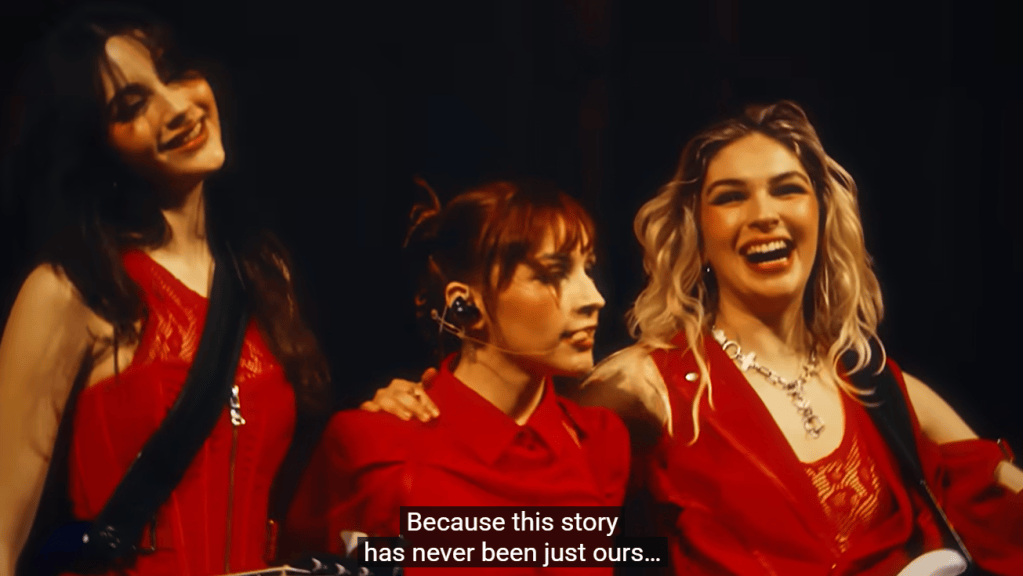
The Warning, three sisters from Mexico who dared to dream big.


I love and appreciate music. I used to be a classic rock guy but my horizons have been expanded, and I mostly listen to contemporary music these days. I played guitar for a number of years and even led worship, but that was B.C. (before children). I was also a board member for a music foundation that built out and operates a venue for live music. I even booked the venue for about a year before COVID.

In the process of booking the music venue, I was constantly searching out new music. I focused on people writing and performing their own music. I looked for artists with a good enough following to fill a 200-seat venue but not so big that they were priced out of our range. I booked many, many acts, some of which have outgrown our space. At least one musician I booked went on to play for crowds of tens of thousands.

I tend to gravitate toward new folk, “new grass,” Americana, and indie rock, but I appreciate good music of all kinds. I go to live shows outside of my listening sweet spot to support young artists and appreciate their music. I like people who are not what I expect them to be, musicians who are authentic and who defy stereotypes. I also like a good story

All of these characteristics define a young group out of Monterrey, Mexico called “The Warning.” I will say now, “You have been warned!” which became their catchy promotional phrase when they were young – and not without reason. I can relate from experience that their rabbit hole is deep and winding!

The Warning is comprised of the three Villarreal Velez sisters who were raised by good parents who love music and introduced them to classical piano lessons, music of all genres, and Rock Band (the video game) when they were young. Daniela and Paulina began playing Rock Band when they were 8 and 6. They played it for hours and were driven to get perfect scores. Daniela (Dany) always played guitar and Paulina (Pau) insisted on the drums. Their little sister Alejandra (Ale) was “just a baby” (3) as she watched her older sisters play.

The girls became rockers and begged their father to buy them the real instruments they were playing on the video game. He obliged, signed them up for music lessons, and told them they had to give it at least 6 months. He had difficulty finding someone willing to give a 6-year-old drum lessons – a very small 6-year-old at that. The parents, Monica and Luis, captured their journey on video, part of which is the source material for a short documentary, Mayday in the Making, embedded below.


The girls took to that challenge their father gave them in the same way they were driven to achieve a perfect score in Rock Band. They shifted from piano lessons to guitar and drum lessons, and they practiced constantly.

Ale developed the same love of music as her older sisters, watching them play rock band and taking classical piano lessons herself. Though she was originally drawn to the harp, she fell in love with the bass guitar, and she began bass guitar lessons at 7 or 8 years old.

The sisters didn’t take long before they realized they could start playing music together, and they became a band. In fact, Ale had only been taking bass lessons for two months when they performed together for the first time in front of a live audience at a school Christmas celebration. Their father built them a state-of-the-art studio in the basement, which I imagine was half for sound containment and half to support his blossoming musical prodigies.

This may seem like an odd article on this website, but I do have a page devoted to music with perhaps a dozen articles I have written on music/faith themes. I have been inspired to write about the Warning, but I need to step up the stage first (pun intended) with an introductory article.

Continue reading “You Have Been Warned! (In the best way possible)”

Looking Back at 13 Years of Navigating By Faith

“In their hearts humans plan their course, but the LORD establishes their steps.”


As another year closes out, I look back on my journey of faith and thought that is captured in this blog. The blog doesn’t capture all of my journey. Some things remain private, and some things remain undeveloped and unpublished. Of the things I have put out into the sunlight of the blogosphere, though, I hope they have been helpful, encouraging, and challenging, if not interesting.

I usually launch right into the top ten articles (or so) of the year in review, but I want to take a moment to review where I have been and where I am going. The numbers tell a surprising story (to me), but I realize the numbers might be boring to you, so I will try to keep that part brief.

I expect that the substance of the journey may be more intriguing to the reader, but the substance is also more difficult to capture and to summarize. I will do my best.

By the Numbers

I started this blog in September of 2012 with 20 articles that garnered under 500 views. The top article on attributes of success had just over 100 views, 5 likes, and 3 comments. About 180 of the readers came through Facebook. Those early attempts at writing are somewhat embarrassing to me (so no links are provided).

I wrote over 100 articles each year from 2017 through 2021, with the high water mark being 149 articles in 2017. My writing has slowed in the number of articles I have written over the last 4 years as the words per article have increased (peaking at an average of 1908 words per article in 2025)

In 2025, I have published only 57 articles all year, but viewership for the blog is projected to top out around 110,000. That is nearly as many readers as the blog had from 2012 through 2021 combined.

The top article this year was viewed over 23 times more than all the articles published in 2012. In the fact, the top article in 2025 was viewed more times (11,790) than all the articles in any year prior to 2020 (11,016 in 2020).

The climb from 500 views to 110,000 views was not a sudden thing. Readership increased with jumps and plateaus through 2019, with a peak of just over 11,000 in 2018. In 2020, readership jumped over 20,000 views, which I attribute to the pandemic. People were limited in their activities. They stayed inside, and they read more. Perhaps, people were more contemplative because of the psycho-emotional impact of COVID.

I was excited about the increase in readership in 2020 and the increase again to 30,000+ in 2021 as the world began to emerge from the clutches of COVID. With the world getting back to “normal” in the following two years, readership settled around 30,000 views each year for several year.

Just last year, in 2024, the views skyrocketed over 61,000. The upward trajectory has continued in 2025 with projected views on pace to top 110,000.

The sudden increase in readership has taken me totally by surprise. I have not done anything differently than I was doing before, as far as I know. Perhaps, my writing is developing in ways that I do not realize. I do tackle more difficult subject matter and get into greater depth, but I would assume that might turn some people away.

I began writing out of a sense of obedience to God. I felt compelled to make use of the gifting He has given me. My main goal was to be faithful, and that focus continues to be a driving force.

I have tried to stay true to the theme of the blog, which is “navigating by faith.” I try to write out of my own experience, to write in keeping with my own thought and faith journey, and to write as I sense God is leading me.

My Faith Journey

In 2012, I was coming out of a long, slow regression in my faith. Perhaps, others might call what went through a deconstruction. That long, difficult segment of my like journey of my life set the stage.


I wandered for more than two decades in a spiritual malaise. My faith became stagnant. I stopped seeking. I stopped reading the Bible. I stopped praying with purpose. I eventually stopped going to church. I was shrinking back from God.


My priorities had shifted from a spiritual focus to career and providing for my family. The cares and concerns of the world overtook me as I pulled back from spiritual seeking and devotion to God. I moved with my family back to the area where I grew up, and I found myself attracted to and tempted by former ways of thinking and way of life.

As I look back, I can say that I had accumulated baggage that was holding me back and stifling my spiritual growth. I had accumulated theological structures that God needed to strip away. That “deconstruction” was long and painful as I languished in spiritual ruts for over 20 years.

I came to a point at which I had nothing to cling to but God and His mercy. I didn’t even know if He would “take me back” when I came face to face with the realization that the spiritual life within me was in danger of petering out completely, like a pilot light flickering in a cold windy place. I turned to God, and I said, “Where else will I go? Only you have the words of life.”

In that moment of surrender, God had mercy on me. With no illusions of grandeur that characterized my early Christian walk, I sought God and embraced faithfulness. Around that time, I began to sense that God wanted me to write. He didn’t overwhelm me, with it but it was persistent, like the nudging of a gentle wind.

I noticed, and I flirted with the idea for many months before I finally relented in my heart to do it. I set up an account in WordPress, and I began to write in September of 2012. The summary of the last 13 years tells the rest of the story.

Continue reading “Looking Back at 13 Years of Navigating By Faith”

Keeping it Real On the Path to Wherever I am Going

The sense of loss and the emptiness of having traveled so far just to get to this place can be overwhelming.


I have been writing now for about twelve years on this blog. I started it because I am a professional writer (of sorts), and I wanted to use the talents God gave me for something bigger than me.

I became a Christian in college, and that conversion diverted me from any career path I might have wandered down. I should emphasize the wandering, because I wasn’t very career-minded to begin with. I was a truth seeker, and I still am.

I thought I would go into “ministry”. That’s all I really wanted to do, but I wasn’t on a track for ministry. It was a very secular college with very traditionally secular guidance to provide. I was a crazy Christian convert who was reading the Bible and believing it.

I became a student leader of the campus InterVarsity group. We had virtually no oversight. That group of fledgling college students, like myself, was my discipleship group

I was certain about one thing: that God existed, and He had changed me. I didn’t know much of anything else.

I gravitated toward a local independent, Charismatic church about 40 minutes away. I would go to church there many Sundays, but I was a college student preoccupied with the things college students did. I mentored with the head pastor for a short time, but not long enough to make much of a difference.

I didn’t trust my college advisors because they didn’t believe the Bible like I did. I should have gone to seminary, but I didn’t because the apostles who stood up on the day of Pentecost and preached powerfully and eloquently in various tongues to the crowds in Jerusalem were unlearned men. I wanted to be like them.

These words Paul spoke to the Corinthians heavily influenced me: The Gospel is foolishness to those who are perishing (1 Corinthians 1:18); and God makes foolishness the wisdom of the age. (1 Cor. 1:20-21) I thought I didn’t need a seminary. In truth, I was afraid that a seminary would try to conform me by the wisdom of the age.

I should have paid more attention to what Paul said to the Corinthians: Greeks look for (worldly wisdom), but the Jews demand signs. (I Cor. 1:22) I wanted signs. It turns out that Paul was right. Worldly wisdom and demanding signs are both misguided paths.

I went off to the East Coast chasing after a church, the legend of which I heard from the man who become my best friend in college. Maybe the best friend I have ever had. A true brother in the Lord, Jesus.

We encouraged each other in that season of our lives. We both had become Christians after leading wild, existentially-angst-filled lives in our youth. We came to the kingdom of God with baggage (who doesn’t?), but we knew that Jesus had the words of life, and we were all in.

I packed my bags for a summer counseling job in a Christian camp on the south side of Like Winnipesaukee like Abraham leaving behind his homeland for the promised land. I didn’t believe I was ever coming back. Only God knew my intentions at the time.

After camp ended and I helped to close it up for the next camping season, I moved a half hour north into the last communal house left over from the Jesus People movement that swept this tourist area in the late 60’s and early 70’s. That movement of the Holy Spirit caught a bunch of migrant hippies in its current and deposited them downstream from wherever they thought they were wandering into Christian communal living.

Those communes were a legend I only heard snippets about when I arrived, but the communal spirit was still in the air. I loved it. I embraced that communal spirit for the next 40 months, and I plugged into the life of that church.

I grew up as person and as a young Christian during that time in many ways. The church was edgy. It was brash. It tried to be authentic. It dared to think big, and I ate it up. But, it wouldn’t last. (It disintegrated and splintered into many fragments not long after we left it.)

I still wanted to be in ministry, though I had no vision. I thought it would just happen. I had heard that a man’s gift makes room for itself. (I think that is in a Proverb somewhere.) But it wasn’t happening for me. I was also young and impatient and impetuous.

I had always longed for love and intimacy. I was a romantic dreamer. I was heavily influenced by Disney stories of life lived happily ever after, but I knew nothing of the promise those stories offered. I still don’t.

I married on a whim, encouraged by “a word spoken over me” that I didn’t understand, but I acted anyway. That determination to act was pivotal.

Just over 40 years have past. I have been married, now, for 39 years. It would be 40 years in November, but my wife left me almost two years ago, and I don’t think we are going to make it to 40.

I am not sure exactly where I am going here today, other than the need I feel to keep things real. I don’t usually focus so much on myself, but I have gotten used to writing to work out the thoughts in my head, and today those thoughts involve trying to make some sense of my life.

Continue reading “Keeping it Real On the Path to Wherever I am Going”

The Top Ten Articles on this Blog in 2024


I have written and posted fewer articles this year than any year since the first full year of this blog (2013). In fact, I posted only one more article in 2023 than I did in 2013. I have focused more on my work, operating a legal clinic, involvement in the nonprofit, Administer Justice, locally and nationally, and I have been distracted by personal circumstances in my life that have made 2023 difficult for me.

Though I have published only 52 articles this year (not counting this one), more than 29,500 people viewed articles on the blog this year. In 2022, I posted 73 articles to 30,614 viewers, and I posted 107 articles for 30,751 viewers in 2021. Thus, people have continued to visit Navigating By Faith in similar numbers though I published less than half the number of articles in 2023 as I did in 2021.

Though I had one third fewer views in 2020 (20,084), a foursome of article I wrote in 2020 led the way in most viewed articles this year. 2020, of course, was the dreadful year of COVID. COVID gave us all the time and cause to reflect.

The most viewed articles on NBF in 2023 reflect what was going through my head in 2020. The two most read articles in 2023 came out of my daily Bible reading in 2023. One article, which has become the most read article ever on NBF, was inspired by politics, conspiracy theories, Donald Trump, and the Evangelical preoccupation with end times eschatology. The other, which is the most read article in 2023, was simply inspired by Scripture.  

Perhaps, the popularity of The Redemption of Korah: the Sons of Korah (with 3645 views) is a positive reflection on where we are now compared to 2020.  It is a story of the great theme of redemption that permeates the Bible from beginning to end. It is a story of hope and of God’s loving kindness and our appropriate response in gratitude for the faithfulness of God and His mercy, which new every morning.

The article, Who Were the Sons of Issachar? And What Might They Mean for Us Today?, dominated the blog when I wrote it in 2020. It quickly became the most read article, outpacing every other article written since I started NBF in 2012. It continued as the top article in 2021 and 2022, but it comes in second (which 3014 views) in 2023.

I wrote this article in my angst and internal conflict over the enthusiastic support Evangelicals were giving Donald Trump (including good friends of mine) in the months leading up to the last presidential election. My friends were sending me “inside” information, podcasts, and “prophetic words” celebrating the inevitability of a Trump reelection.

I grew up spiritually in Charismatic circles. Though I saw some things there that trouble me, like a sometimes hyper focus on spiritual gifts and what I would now label errant theologies (like the prosperity Gospel), I am keenly aware of Paul’s admonition not to despise prophecy.

When my best friend from 40 years ago cautioned me lovingly to “understand the times” like the sons of Issachar, I was even more troubled. I dug into the passage in 1 Chronicles where men from every tribe of Israel risked their livres to join David in the wilderness as he hid from paranoid King Saul, including “the sons of Issachar who understood the times and knew what Israel should do”.

Did I misperceive what God is doing in the world today through Donald Trump? Was I on the verge of being left behind in my reticence to be uncritical of him? Had I grown insensitive to the Holy Spirit? Was I living in apostasy? Was I fooling myself to be so critical of the “Christian” support for Trump?

When my very good friend seemed to suggest that I was missing the boat, I took it to heart. “Understanding the times” has been become a Christian buzzword for being in tune with the Holy Spirit in the assessment of culture, politics, and what is happening in society. Writing is my way of working through what I believe God is saying to me, and this article, more even than most, is “prophetic” in that way. I can only pray and remain open and humble with hope that God is working in and through me in my writing.

The next two most read articles in 2023 also grew out of the solitude and reflection that characterized 2020. They relate to the last article to the extent that Evangelical flirtation with the power and influence promised by Donald Trump threatened (and did, I believe) damage the credibility of Evangelicals in the world.

What is an Evangelical if not a proclaimer of the Gospel? My criticism of enthusiastic Evangelical support for Donald Trump was carried by my concern for our witness for Christ to a wayward world he came to save. Our uncritical support of the brash, uncaring, pompous, and insensitive blusterer in Chief focused my mind and heart on how we should present ourselves to the world and seek lost sheep as Jesus did.

God Meets Us Where We Are (with 2126 views) comes out of reflection on my own past where God found me on a journey for truth and meaning. I was not so jaded by the world (and Christians in the world) that God was unable to use them to propel me along the path to Him. For this reason, I believe we must ever be sensitive enough to “where people are” and meet them “there.

In this vein, Paul became a Jew to the Jews, and he became a Greek to the Greeks. He quoted pagan poets and philosophers to pagans. If we divorce ourselves from the world in which we live, we lose our connection to people and our ability to connect with them. Just as God “met me” where I was in my early 20’s, He is “there” meeting people where they are today, and He invites us to join Him.

Fourth on the list (with 952 views) is Apologetics: What It Means for Our Speech to Be Seasoned with Salt. I don’t think I need to explain the obvious connection to how we conduct ourselves in the world – not the least of which is our speech! How we say things is as important as what we say. “Let your speech always be gracious.” (Eph. 4:6)

Fifth on the list of most read articles (with 557 views) is a throwback to a favorite subject: CS Lewis on the “True Myth”. I am a longtime Lewis fan, and I have long contemplated his conception of the “true myth” (which really comes from Tolkien). For Lewis, who was steeped in ancient myths, the redemption story in the Bible is the true “myth” as to which all other mythic stories in the world are only shadowy echoes.

Tuning In To God’s Frequency (497 views) and The Message in the Earliest Creeds in the New Testament (463 views) are the oldest articles in the top ten most read articles for 2023. Both were written in 2016. Tuning into God’s Frequency is an exercise in fleshing out how nature (in the form of a tuning fork) resonates a lesson in how we relate to God: we must “tune” ourselves to God’s frequency God to know Him. (It doesn’t work the other way around.)

The Message in the Earliest Creeds lays to rest a trope that was popular once in the academic world: that the message of the resurrection of Jesus arose as legend in the second or even third centuries. The academics who developed this thesis, claimed that early followers of Jesus didn’t claim that he rose from the dead; the resurrection idea developed generations later. Sadly (for them), modern scholars can point to many creeds throughout the New Testament that date back to the generation followers of Jesus who knew him, and they all focus on one thing: resurrection.

The article, Is Saul Among the Prophets? On Prophecy and a Heart for God (333 views), continues the theme of modern prophecy in light of the Old Testament. Saul was not known for his piety, or his ability to prophecy. Thus, the rhetorical saying developed in ancient Israel, “Is Saul among the prophets?” No, Saul was not a prophet, but he did prophecy (twice), and the instruction I see in that is what I develop in this article.

The ninth most read article in 2023 (312 views) is the only one written in 2023: Joe Rogan Interviews Stephen Meyer on Intelligent Design. Joe Rogan, who seems to be flirting reticently with Christianity, interviewed Stephen C. Meyer, who wrote the best book I read this year, Return of the God Hypothesis”, in one of the most intriguing and poignant discussions I encountered all year.

Is God a Hard Taskmaster? (with 301 views) rounds out the ten most read articles on Navigating By Faith in 2023. It deals with God’s character and our relationship to Him in the gifts each one of us has been given by God. How we use those gifts (and whether we use them at all) is a measure of our relationship to God.

I am amazed that so many people are reading Navigating By Faith, even though my article output has waned. I enter 2024 with some uncertainty and the loss of motivation that accompanies interruption and uncertainty. I hope to return to some stability in the coming year and to find my balance again.

I have found it increasingly difficult to write as I have in the past. I look forward to finding new motivation and inspiration to allow me to pull on threads that I continue to see in my daily Scripture reading and meditation as I try to live intentionally in this modern world.

I am thankful for the people who read, comment on, and share articles that I have written. I would like to think that I would write them whether anyone reads them or not. I began writing out of obedience to God (and to respect the abilities God has given me), but I realize I do not write in a vacuum. I am ever thinking about who might be reading what I write, and I endeavor to be true to what God has laid on my heart as I seek and explore the truth of God’s world the best that I can.

If anything I write resonates with you, please like what you read, share it, and leave your comments. If what I write doesn’t resonate or seems off to you, please feel free to comment also. I am certain that I don’t always get it right, and I don’t always communicate as well as I would like. Your comment challenge me to rethink sometimes and do communicate better.

Finally, I pray that God’s light will shine ever brighter in this dark world in 2024 and that I can be a vessel of that light. God equates Himself with one thing, and only one thing in Scripture, and that is love. Faith and hope are great, but the greatest of all is love. May we all learn to love God and to love our neighbors more in 2024!