How Can God Judge Good People: Approaching the Solution

 (c) Can Stock Photo

(c) Can Stock Photo

One of the nagging problems that people have with the Bible is the notion that God will judge people that we might consider good (as in better than me). That does not sit well with me, of course. Because we do not fully understand the issue, we fire off the accusatory question: if God is good and loving, how can He condemn good people to hell?

Part of the problem with the question is that we may not accurately understand the problem. The Law (morality) was not given to us so that we might measure up to it; the Law was given to us to show us that we do not measure up! In fact, the very point is that we do not measure up, and we cannot measure up.

Goodness and badness are not really the point; moral standards, the Law, only expose the problem. A moral standard is completely incapable of accomplishing what we need; it only reveals that we need help.

Thus, when the Pharisees boasted of their good actions, Jesus raised the ante: He said that even thinking bad thoughts is sin! When the rich young ruler asked what he needed to do to be saved, Jesus told him to go sell everything – something Jesus knew he could (would not be willing) to do. The point of the Law is to bring us to the realization that we cannot measure up on our own.

If we are trying to measure up and “be good” in order to get to Heaven, we have failed to understand the problem. We cannot even begin to understand the solution if we fail to understand the problem.

The problem is that we are set against God in our sinfulness. Our nature is set against God’s nature. While everything else in the universe was created to be finely-tuned as God intended, by the choice God gave us, we deviated from plan. This choice gave us the possibility of having a relationship with God, our Creator, but it also set us up for corruption as we inevitably would go our own way, being imperfect creatures, and not gods (let alone God).

We wanted to be like God and, so, became opposed to Him. In this way, we introduced corruption (sin) into the world that resulted in death (and all that leads to death – decay, degeneration, disease, etc.)

Transformation is what we require to be able to have fellowship with God and to enter in to His Heaven. But, we cannot achieve that transformation ourselves. In fact, we are completely incapable of it on our own.

Continue reading “How Can God Judge Good People: Approaching the Solution”

The Story of Norma McCorvey (aka Jane Roe)

The Story of Norma McCorvey (aka Jane Roe) is a redemption story. Jane Roe, of course, is the name of the plaintiff used in the case that challenged the Texas abortion law. It went all the way up to the US Supreme Court, and, in 1973, Roe v. Wade overturned all the state laws that made abortion illegal.  Continue reading “The Story of Norma McCorvey (aka Jane Roe)”

The Sign of Jonah

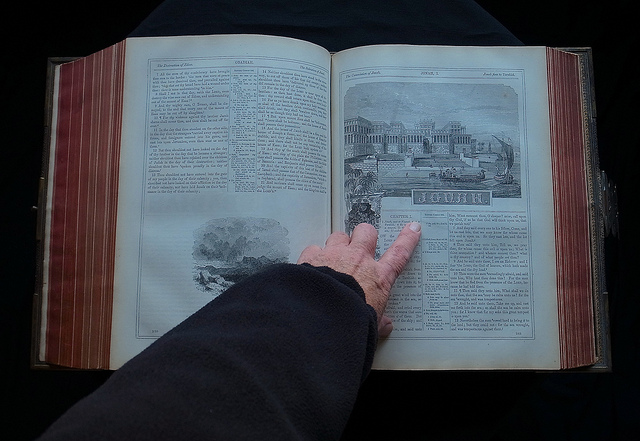
The Sign of Jonah by George Redgrave

“An evil and adulterous generation seeks after a sign[i]; and a sign will not be given it, except the sign of Jonah.” (Matthew 16:4)

Jesus spoke of the sign of Jonah twice. The ironic thing is that everywhere Jesus went, he performed signs and wonders. What were those people looking for?!!

The “problem” for the religious leaders was that Jesus challenged their religious dogmas, and He did it on purpose! Continue reading “The Sign of Jonah”

Revisiting Life and Death: The Gospel from Beginning to End

We can have every choice (but eternal life) without God, or we can let go of every other choice to choose God (and gain eternal life).

Chris Frayley On Rock at River Bend


“O death, where is your victory?

O death, where is your sting?”

These familiar phrases from 1 Corinthians. 15:55 (quoting Hosea 13:14) jumped out at me as I read them again. Of course, I know that God has swallowed up death in victory through the resurrection of Jesus Christ! But, what does that really mean for us?

This statement is the tip of the iceberg, and it occurs to me that we cannot understand without remembering and contemplating “how we got here”. Therefore, we must go back to the beginning. Continue reading “Revisiting Life and Death: The Gospel from Beginning to End”

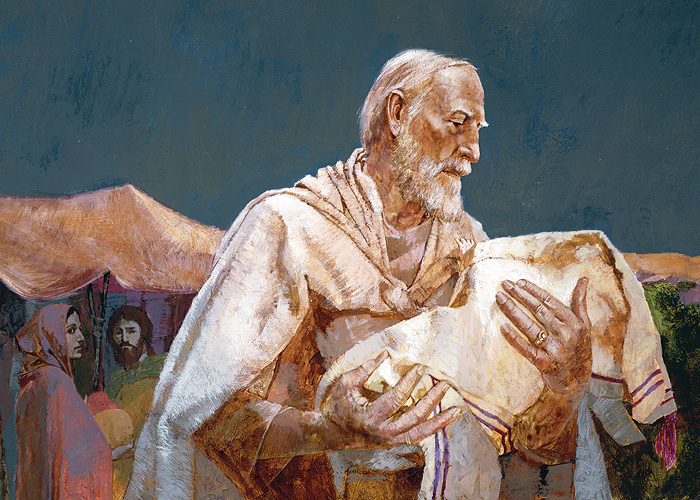
Abraham and the Love of God

The pagans knew their place in the world, the utter separateness between them and the creative force of the world and the fearful sense of a being so much greater than us that might as soon squash us as let us live. That creative force it turns out, however, loves us and desires relationship with us.

abrahamAbraham, by Sufjan Stevens, ends with these words:

    Abraham

  Put off on your son

Take instead the ram

   Until Jesus comes

Abraham lived around 2000 B.C.E. in Mesopotamia. (Answersingenesis) Child sacrifice was common practice in that time in that area of the world to appease the gods that people thought existed. It would not have been a foreign concept to Abraham for God to ask him to sacrifice his son. That practice was part of the life and culture of the time in which Abraham lived.

The request, however, would have been particularly difficult for Abraham to honor. God had promised him a son. God promised that Abraham’s child would populate the earth as the stars in the sky. Abraham was already old and past normal child rearing age when God made these promises.

The request by God for Abraham to sacrifice his son would have hit Abraham hard. It would have made no sense. It flew in the face of the promises Abraham thought God made to him. Continue reading “Abraham and the Love of God”