God’s Caring and Purpose in the Midst of Pain and Suffering

God is not cold or uncaring or unaware of our pain and suffering. Yet, He has a plan, and He intends to carry it out.


“No one has ever seen God, but the one and only Son, who is himself God and is in closest relationship with the Father, has made him known.” (John 1:18 NIV)

John is talking about Jesus, of course. The progression in the beginning of John’s Gospel goes like this: In the beginning was the Word; the Word was with God; the Word was God; all things were made through the Word; in Him was life; and the Word became flesh and dwelt among us. (John 1:1-4, 9, 14) Then, John makes the statement I have recited above. No one has ever seen God but the one and only Son, who is God.

The Greek word that is translated “one and only Son” in the New International Version of the Bible is monogenés, derived from the world monos, meaning one of a class (one of a kind) and genos, meaning only of its kind. A more literal translation of the word would be “only begotten”.

The beginning of the Nicene Creed[1] captures the idea as follows:

We believe in one God,
      the Father almighty,
      maker of heaven and earth,
      of all things visible and invisible.
And in one Lord Jesus Christ,
      the only Son of God,
      begotten from the Father before all ages,
           God from God,
           Light from Light,
           true God from true God,
      begotten, not made;
      of the same essence as the Father.
      Through him all things were made.
      For us and for our salvation
           he came down from heaven….

These thoughts arise today in the context of a discussion between the great Anglican scholar, Tom (N.T.) Wright[2], and Justin Brierley[3], the Unbelievable? Podcast and Ask NT Wright Anything host out of the UK. They were talking about the corona virus threat that is plaguing the world.

Among other things, Tom Wright (who is an historian) observed that a pandemic like the corona virus is not unique in the history of the world. The Justinian plague is believed to have killed as many as 25 million people (6th century), the Black Death killed probably double that in the 14th century. The Italian Plague (1629-31), Great Plague of London (1665-66) and Great Plague of Marseilles (1720-22) took millions of lives in Europe, and the Third Plague Pandemic killed about 15 million people, hitting China and India the hardest.[4]

After a discussion of how Christians should respond to the threat (in the same manner as they always have – with compassion and self-sacrifice, helping those in need), Justin prompted Tom by asking him for a five minute response to the hard question: why does God let things like plagues happen?

Tom Wright’s response recalls articles I wrote on March 22, 2020 (Change of Perspective: From the God of Moses to Jesus) and on March 28, 2020 (Perspective in the Reminder of Our Own Mortality). In the first article, I addressed the seeming incongruity between the picture of God we see in the Old Testament compared to the person of Jesus we meet in the New Testament. In the second article, I sought some perspective on the bad things that are happening in light of God’s revealed purpose in creating us and the world in which we live.

Tom Wright’s brief response (focusing on the raising of Lazarus from the dead) sits right in the middle. Right where we live. Let me explain.

Continue reading “God’s Caring and Purpose in the Midst of Pain and Suffering” →

Another Look at God In Light of the Evil in the World (Postscript)

The sufferings of this present time are not worth comparing with the glory that is to be revealed to us.

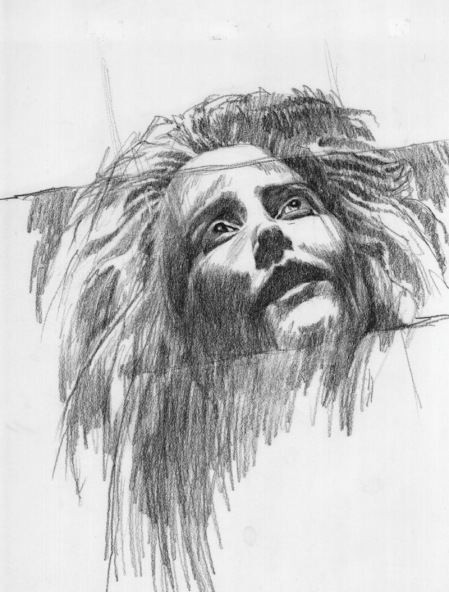
Self Portrait by Joni Eareckson Tada

This is a postscript to a series of blog posts that, frankly, could go on. It follows what was to be the conclusion of a series on the problem of evil – Another Look at God in Light of the Evil in the World (Part 4). Why does evil occur and God doesn’t prevent it? If God is God, and He is all-powerful and all-loving, why does He allow evil, pain and suffering?

I do need to bring this to a conclusion, but I have some “final” thoughts. I also have some experiences to relate: not mine, but of someone who knows pain and suffering better than I.

But first, we have to admit that, if God is God, and if He cares, and assuming He could prevent the pain and suffering in the world, why doesn’t He? It’s a legitimate question!

If Jesus didn’t rise from the dead, I believe we would not be talking about him still in the 21st Century. There would be no point in Christianity whatsoever. He would have fallen into obscurity as just another idealistic dreamer whose fate, like all the other ill-fated dreamers who ever lived, seals our doom as a people, as a species on this planet.

But if Jesus did rise from the dead, no over feat in the history of mankind is more important or more significant. We can’t just dismiss it.

Continue reading “Another Look at God In Light of the Evil in the World (Postscript)” →

Another Look at God In Light of the Evil in the World (Part 4)

God is intimately acquainted with the pain and suffering we experience. The God of the cross who knows and understands our suffering can be trusted.


I have tackled the problem of evil – why is there pain and suffering in the world if God is good and all-powerful? – in a series blog posts, beginning with an introduction, followed by Part 1, Part 2 and Part 3. The impetus for the blog posts comes from the explore God discussion that was happening at over 800 churches in the Chicago area over the winter of 2019. The series of blog posts was more specifically inspired by the discussion of The Problem of Evil and Suffering on Veracity Hill between Kurt Jaros, the host, and John Peckham from Andrews University

The problem is easy enough to state, but it’s difficult to resolve, if, indeed, there is a resolution. Although not every religion maintains that God is personal, volitional, all-powerful and all-good, the problem of evil. Not every world religion faces the problem head on. Buddhism, for instance, posits that evil doesn’t really exist; it’s an illusion.

I have been exploring a Christian response to the problem, but it’s all pretty academic unless and until we are overwhelmed by evil, pain and suffering in our own lives. At the point of real evil, pain and suffering, an academic response doesn’t seem to satisfy.

Just last week, in the midst of thinking through the issues and writing the blog series, a tragedy of overwhelming proportions happened right in the city where all my kids went to school. An apparently disgruntled employee on the cusp of being fired from his 15-year position at a local manufacturing plant in Aurora, IL, opened fire on employees in the plant, killing five of them and wounding six other people, including six police officers responding to the alarm that went out. The youngest victim was a 21-year old college intern who started his internship in the HR department that day.

When a person is reeling from pain and suffering that hits close to home, especially from such a senseless, intentional and indiscriminate act of violence, the academic answers ring hollow and fall flat.

Without letting go of any of the attributes of God that are revealed in the Bible, we can work through the problem intellectually and logically to a solution, as I have tried to do in the summary that is contained in the previous blog posts. In some ways this solution is like the theory of gravity for Christianity. We can understand it, but knowing the cold, “scientific” facts are no consolation after falling off a cliff.

What remains, after we have worked through an intellectual solution to the problem, is the emotional, existential weight of the problem of evil. This is where we live. The weight of the problem of evil is hard to shake, quite frankly, when the pain and suffering becomes personal. When we come face to face with evil, pain and suffering in the world in our personal lives, an intellectual response isn’t enough.

This is exactly when people turn to religion and to God for comfort and answers…, or turn away. If all that Christianity has to offer is an academic response, what is the use?

Continue reading “Another Look at God In Light of the Evil in the World (Part 4)” →

Another Look at God In Light of the Evil in the World (Part 3)

The Bible describes an ongoing cosmic conflict. Why the conflict of beings opposing God if He is all-powerful?


I have been blogging on the problem of pain. (See the Introduction, Part 1 and Part 2). This is “the” problem, with a capital “P” for the Christian who maintains, based on biblical revelation, that God is all-powerful and all-good. If God is so powerful, why can’t He stop the evil? If God is so good, why doesn’t He stop the evil? Either God isn’t all-powerful, or He isn’t good, or (ultimately) the God of the Bible doesn’t exist.

I am working my way through the puzzle, putting the pieces in place. You will have to read through the previous posts to catch up (if you want to). The piece of the puzzle I want to explore next is the cosmic drama that is evident in the Scripture.

Jesus refers to Satan as the ruler of this world. So Satan most have some authority and jurisdiction over the world. If God is really God, the authority of the Devil to do what he does must have give by God.

But why?! If the question isn’t simply rhetorical, there must be a purpose? Why would an all-powerful God allow restraints on His power to allow opposition from a being He created?

Before I try to answer that question, I want to dive into the evidence of this conflict that we see in the Scripture. then I will look for clues as to why that conflict would be allowed by an all-powerful God.

Continue reading “Another Look at God In Light of the Evil in the World (Part 3)” →

Diamonds and Coal and the Pressures of Life that Shape Us by Our Reactions to Them

We don’t choose our circumstances, but we can choose how we respond to them.


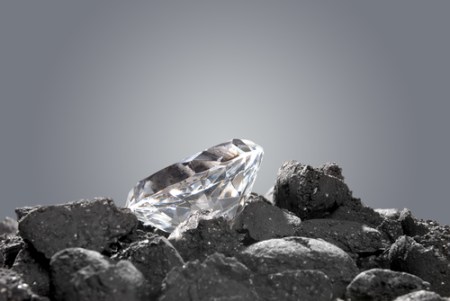
Diamonds and coal are made from the same substance, carbon.[1] They are both formed by heat and pressure, but the results are very, very different. We can learn some very poignant things from diamonds and coal that I will explore in this piece.

The properties of the two substances are interesting, and very different, though they form from the same substance. Coal is relatively soft. Coal burns and provides a source of energy, but it is not a very clean source of energy because coal is full of impurities.

Diamonds, on the other hand, are relatively hard – one of the hardest substance that exist. Diamonds have few impurities, and diamonds won’t burn. Diamonds can be used for cutting hard metals and similar uses because they are so hard and immutable.

Coal is readily available. It is soft and combustible. Coal is dirty and rubs off everywhere. Coal is really only useful for burning. Appropriately, a coal in the stocking has become cliché for an unwanted “gift”.

Diamonds are clean, translucent, rare and beautiful. Diamonds are highly valued for their own sake. So much, that we wear them on our fingers and around our necks as adornment for special occasions. They are also highly useful in all kinds of industrial applications.

Interestingly, diamonds and coal are both formed by heat and pressure. The difference is only in degree and location.

Coal is formed relatively near to the surface of the Earth, while diamonds are formed deep within the Earth. Diamonds are formed under tremendous heat and pressure over a long period of time. Coal forms relatively quickly under less heat and less pressure.

The result is that coal is full of impurities. Coal is still combustible, though it is formed under heat. Diamonds, on the other hand, undergo so much heat and so much pressure, that they are no longer combustible. All the impurities have been burned away.

I have heard that diamonds form from coal, but they don’t. Though diamonds and coal do form from the same substance – carbon – one doesn’t form from the other.

Carbon can be formed into diamonds, or it can be formed into coal. It’s one or the other. Coal never forms into diamonds, and diamonds never form into coal. The paths for the two elements are completely different, and the difference in the process under which they form results in two completely different elements – though they form from the same basic substance.

These facts that I have taken some time to gather in relation to diamonds and coal prompt some very poignant thoughts, beginning with the question: Would you rather be a diamond or a lump of coal? How do the processes of the formation of diamonds and coal, and nature of diamonds and coal, instruct us?

Continue reading “Diamonds and Coal and the Pressures of Life that Shape Us by Our Reactions to Them” →