The Problem with Christian Nationalism

As finite human beings, we all have a deficiency of perspective.


I was listening to the podcast, Apollos Watered hosted by Travis Michael Fleming, recently when NT Wright made a very simple, but poignant, statement:

“One of the most fundamental things about Christianity is that it is for everyone.”
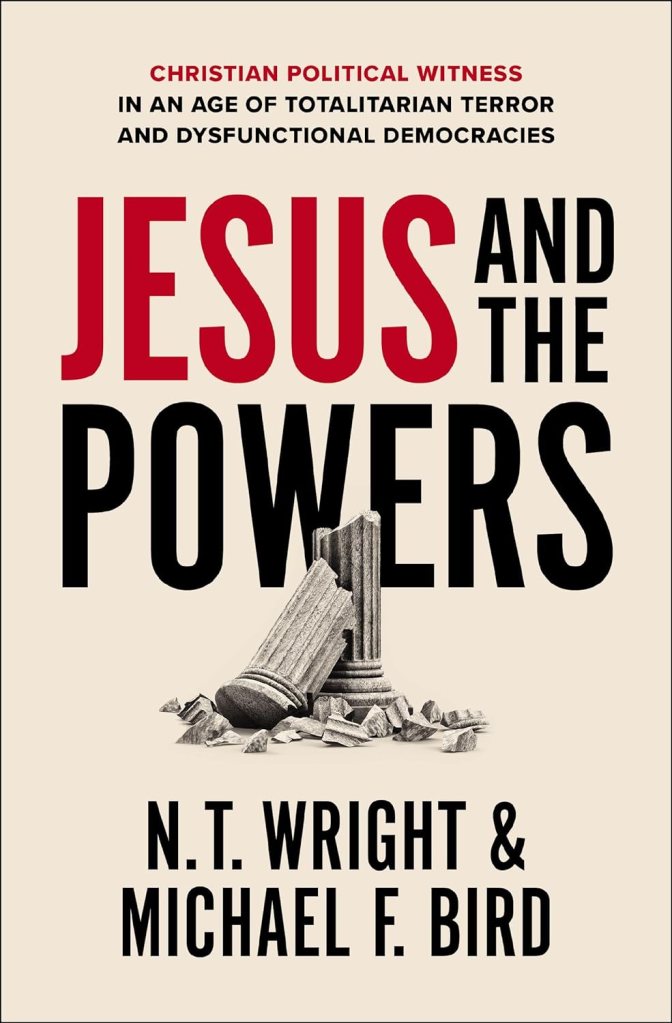
NT Wright, of course, is from the UK. He just authored and published a book with Michael F. Bird, that is called JESUS AND THE POWERS, Christian Political Witness in an Age of Totalitarian Terror & Dysfunctional Democracies.


The context in which he made this comment was a discussion on Christian nationalism. Christian nationalism is currently a hot topic in the United States, though we are hardly the first nation that has religious, nationalist tendencies. England had such a period in its history.

The nation of Israel had arguably the most provenance to think that way. After all, Israel was a nation of “God’s chosen people”. God became incarnate in Jesus in the 1st Century, and He “came to His own” – His chosen people. Before moving on to the point I am inspired to write about today, I want to focus on how God’s chosen people reacted to God becoming flesh and walking among them.

The Apostle, John, tells us in the first chapter of his Gospel that they, tragically, “did not receive him!” (John 1:1-11) They did not recognize God who had become flesh and was standing right in front of them!

That stunning fact should cause us to ask, “Why?” How is it that God became flesh, and He walked among the very people He chose, and they didn’t recognize Him?

We might excuse them on the basis that we have the Holy Spirit, and they didn’t. We might be tempted to think that we would respond differently today because of that advantage. But then again, they had God in human flesh!

We might assume that having the Holy Spirit makes us different than them. Perhaps, that is true. Theoretically, a person who actually has the Holy Spirit and who actually lives by and listens to the Holy Spirit does seem to have advantage.

Of those who have the Holy Spirit, do we actually live by and listen to the Holy Spirit? All of the time? Even most of the time? I can’t answer that question for you, but I think it is a question worth asking ourselves.

NT Wright is a prolific and influential theologian. He has written key works on Paul and Romans. His insights are particularly relevant and poignant as such an expert who has no dog in the political and cultural “war” that rages in the United States of America.

Such a simple statement: “Christianity is for everyone.” Who would not agree with that statement? Jesus said he came for everyone who believes. Paul said there is no Jew nor Gentile; and we are all one in Christ.

In the 1st Century Jewish world, only two groups of people existed: Jews and everyone else. The Jews called everyone else Gentiles. What Paul means, therefore, is that everyone in the world is unified in Jesus Christ. This should be our reality as Christians, right?

Paul said that Jesus tore down the wall that divided the two groups of people in the world, and he made the two groups one. He reconciled all people to himself through the cross. (Ephesians 2:14-16)

The danger of Christian nationalism in the United States (or anywhere) is that some Christians may see themselves as uniquely Christian, uniquely privileged by God, and they may conclude that their own nation that they consider to be Christian is uniquely, divinely authorized by God. That attitude can lead to us to see other people as less uniquely blessed and less divinely privileged.

This is dangerous because we are tempted to view ourselves as better than others. We may even excuse some of our ungodly behavior because we are a Christian nation that has divine authority in the world.

This attitude can hinder us from seeing our own faults and weaknesses that are unique to our culture. We are apt not to see the planks in our own eyes while we focus our attention on the specs in others’ eyes, assuming ourselves to be better than others.

We might also tend to focus on maintaining our privileged position we believe God has given us to the exclusion of other people. We might be tempted to focus on our own good while we should be focusing on helping our neighbors, including our foreign neighbors – and even our enemies.

Jewish people in the 1st Century had this kind of attitude, and it blinded them from seeing who Jesus was – the Messiah they had been waiting for – because they thought he was only their Messiah, and he would liberate only them. They weren’t prepared for a Messiah who came to liberate the whole world!

Though “God’s own” didn’t receive Him, “Yet to all who did receive him, to those who believed in his name, he gave the right to become children of God….” (John 1:12) We might be so familiar with the following verse that we miss the scope of God’s focus:

“For God so loved the world that he gave his one and only Son, that whoever believes in him shall not perish but have eternal life. For God did not send his Son into the world to condemn the world, but to save the world through him.”

John 3:16-17

God’s focus is the world – the whole world. He even gives us a sneak peak at His end game through the same Apostle, John:

“After this I looked, and there before me was a great multitude that no one could count, from every nation, tribe, people and language, standing before the throne and before the Lamb.”

Revelation 7:9

With Christian nationalism, however we might define it, our perspective is too narrow. The danger is that we focus too much on us when God is focused on the world.

Religious people wanted to kill Jesus in his hometown because he challenged their views as God’s privileged people. They became angry with Jesus when he talked about Elijah visiting and blessing the Canaanite woman in Sidon to the exclusion of all the widows in Israel. They were enraged when Jesus said that Elisha healed the Samaritan war general of leprosy rather than people in Israel who had leprosy. They were so incensed by Jesus pointing these things out that they tried to throw him off a cliff! (Luke 4:24-29)

Christian nationalism of any kind flirts with unhealthy pride in national identity. Pride and identity associated with anything other than Christ has a tendency to warp us inwardly and to diminish our sense of primary identity in Christ. Thus, Christian nationalism can lead us to diminish our love for God, as well as our love for our neighbors.

When we think too highly of ourselves, we value our own culture and ways of looking at and doing things more than we should.  When we think too highly of ourselves and value our own ways too much, we also tend to devalue others and the ways of other people. Thus, Christian nationalism can lead us to diminish our love for others.

As finite human beings, we all have a deficiency of perspective. Each individual and cultural perspective is limited, which is why Isaiah said:

“For my thoughts are not your thoughts,
    neither are your ways my ways, declares the Lord.
For as the heavens are higher than the earth,
    so are my ways higher than your ways
    and my thoughts than your thoughts.”

Isaiah 55:8-9

In short, we do not have the perspective of God. His perspective is far greater than ours. This is true individually, of course, but it’s also true of humankind. It is equally true of people groups, cultures, and nations.

Continue reading “The Problem with Christian Nationalism”

A New (Old?) Take on Inerrancy

The Bible is the book God wanted us to have, and He wanted us to have it the way it is.


I did the research and wrote a thesis in college in support of the concept that Scripture is inerrant. I have mentioned this before. I was not a religion major in college only because I did not turn in my thesis.

I didn’t turn it in because I was having a hard time getting to where I wanted to go using Scripture and the scholarly work that was done up to the early 1980’s. I could not support my thesis with integrity, so I shelved it and did not return to the subject for almost 40 years!

I had a high view of Scripture then, and I have a high view of Scripture now. I read the Bible daily for personal guidance and edification. I believe the Bible is the inspired Word of God (which I can support from Scripture itself. (2 Timothy 3:16-17))

I believe, like the Moody Bible Institute, that the Old and New Testaments are divine revelation from God. The original autographs were verbally inspired by the Holy Spirit. The revelation is God’s self-disclosure recorded in human language. God is the source of it.

I stop, though, in going further to say that every word is true, and the Bible is free from error. The very statement begs the questions: which version? Written in which language? And other questions.

I agree with the Moody statement that the Bible is the supreme source of our knowledge of God and of salvation through Jesus Christ. I agree that it is “our indispensable resource for daily living”. I agree, also, that humans are left to interpret the Bible, and our interpretation is guided by “our reception and understanding of that which God revealed”.

I stop short of saying that God “recorded” Scripture, because we all know that it was written down by men. This difference distinguishes the Bible from the Quran and the Book of Mormon, both of which are claimed to have been dictated to men in a trance-like state.

I agree that “revelation is a divine act”, and “interpretation is a human responsibility”. I agree that our interpretation is fallible, but I must admit the possibility that the writing down of the Bible may, also, be fallible.

I say these things not to argue with anyone about the reliability of Scripture, and I do not desire to make a mountain out of a molehill. I go far down the road on my confidence in the reliability and trustworthiness of Scripture. I have written on the subject many times, and I have even given presentations on the topic.

I also recognize that I am fallible and must remain humble in my approach, so take what I say with a grain of salt and make your own determinations. I share my thoughts for what they are worth.

When I was in college sitting in a World Religion class, reading the Bible for the first time in my life, I was struck by a thought that I believe to this day came from the Holy Spirit (along with others). My professor was liberal and progressive, so I can’t “blame” it on him.

It occurred to me that, if God is real, and the God of the Bible is the creator of the universe, then He could orchestrate His communications to humans in a way that they could understand them and preserve the important points for posterity. If God is sovereign, He can do that.

I believe the Bible is the book God wanted us to have.

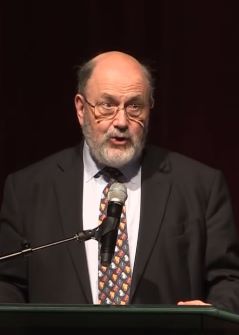
NT Wright

I still believe that, but I also like the way NT Wright puts it: “I believe the Bible is the book God wanted us to have.” I can buy that! Other things NT Wright says about the character of Scripture also make sense to me, so I will mix his words with mine in the remainder of this piece.

Continue reading “A New (Old?) Take on Inerrancy”

Some Thoughts on Miracles and God’s Presence in the World

Reasonable, intelligent people with impressive degrees, credentials and accomplishments exist on both sides of the God equation

NT Wright commented recently on the modern, western notion that God is largely absent and distant from the world He created. Every once in a while He “reaches in” and does something extraordinary, and we call that a miracle.

There are people in the west who still believe that God is active in the world, but western society is more characterized by a view that is God aloof, if He exists (and the western world is more or less aloof toward God). We tend to forget that much of the rest of the world does not share our view.

I believe this view of God and of miracles goes back to the Enlightenment and Deism that gained popularity in the last three centuries or so. Deism is the theology that grew out of the Enlightenment, applying Enlightenment ideals of rationalism, order and a reliance on scientific method. Deists believed that God exists, but He does not intervene and is not active or present in the world.

Deist thinkers conceived of the world like a watch that is wound up and left to run on its own. This thinking harmonized well with trends in scientific thought at the time. Darwin and others before him began to see no need of God to explain the laws of nature because scientific inquiry revealed those laws of nature to be true, dependable, and capable of explanation without reference to supernatural agency. Deism kept God in the picture, but relegated Him to bystander status.

Many Enlightenment thinkers worked consciously and intentionally to shrug off any implication of the supernatural in the study of the natural world. Science, after all, is the study of the natural world. With the discovery of laws like the law of gravity, there was plenty for scientists to do without contemplating a Law Giver.

The definition of science now excludes inquiry of or appeal to anything other than “natural” explanations. Though “science” once meant knowledge, generally, it now means only knowledge of natural things and natural processes (which by definition excludes consideration of supernatural things).

Many modern scientists are materialists, meaning that they believe that nothing exists but the natural world – space/time, matter and energy (whatever that is). They believe nothing exists beyond the natural world, and, therefore, they say that science is the study of all reality. They assume, therefore, that nothing exists that cannot be explained by science.

In this worldview, they conflate the facts that science reveals with reality. On the Deist and Enlightenment view, miracles are an aberration. Indeed, the very definition of a miracle is something that is highly improbable or extraordinary, something unexpected and inexplicable on the basis of natural or scientific laws.

Deism is largely a theology of the past, but the Enlightenment lives on in the modern, materialist who makes no room whatsoever for a transcendent God or anything supernatural (beyond nature). God is excluded from the materialist worldview by definition. Any apparent aberration to natural laws and material things is an unknown merely awaiting a natural explanation.

Miracles in a Deistic world are so rare as to be highly unlikely. Miracles in a modern, materialist worldview are impossible. They simply don’t happen.

This is the faith of the modern materialist – that every phenomenon known to human experience has a natural explanation. We stopped looking for God because we saw order in nature and that God is of no consequence to the study of natural laws. From a determination that God is aloof is a short walk to the conclusion that God does not exist.

Wright makes the observation that the Bible has no word like miracle. The closest we get to it might be the phrase, “signs and wonders”. Many people in the Ancient Near East saw God (or gods) in everything. The Enlightenment posited that this was due to a lack of explanation for most things that we now identify in natural laws, and many modern people now cannot see God at all in anything.

Scripture reveals a God who is far from aloof. That idea, though, is increasingly a foreign concept in the modern, western world. The God revealed in the Bible is known both by His “faithfulness” and His presence, investment and activity in the world, but many modern people have written off those notions.

The idea that God is faithful has been replaced with the understanding of natural laws. We believe our understanding of the way natural laws work has supplanted God. God was a construct we invented when we didn’t have explanations for natural phenomena, but now that we understand natural phenomena we have no need for the concept of God.

Even as a Christian, a person who believes in God, I have been influenced by the western world in which I grew up. NT Wright’s observation that the concept of a miracle is a western concept, not a biblical one, leads me to put my thoughts into print as I work out the tension between biblical revelation and my western mindset.

Continue reading “Some Thoughts on Miracles and God’s Presence in the World”

On the Intersection of Differences and Unity in the Body of Christ

Esau McCaulley interviewed NT Wright on his Disrupters podcast last year. NT Wright is a British New Testament scholar of some renown who became McCaulley’s mentor at St. Andrew’s University in Scotland. McCaulley made a comment after the interview that prompts my writing today. He said,

“I feel like I am a mix of a bunch of things. I have this kind of British, evangelical side, and I have this kind of African American church side, and strangely they have coalesced in ways I didn’t expect.”

N.T. Wright Forces an Overdue Conversation on the Disrupters Podcast 2-3-22

McCaulley was raised Southern Baptist in the deep south, so their relationship is intriguing to me. The conversation between Wright and McCaulley is interesting and rich. The fact that they come from unique and diverse backgrounds permeates the discussion as they explore the things that unite them.

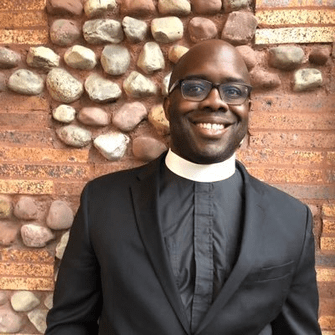
Esau McCaulley is a New Testament scholar in his own right, due in no small part to the influence of NT Wright. He has written one book on Galatians, and he is now writing a second. McCaulley also became an Anglican priest, but his heritage and unique experience, personally and communally, as a black man in America remain central to his identity.

The close relationship between these men from very different backgrounds and from different areas of the world has me thinking about the church in the United States and the global Church. I recently heard someone comment on an unfortunate, unforeseen, and unintended consequence of the Reformation. That consequence was the fragmentation of the Church.

The post-Reformation church fragmented into dissenting groups, and some of those dissenting groups fragmented further into groups of people who spoke English, French, and other European languages. Over time, the fragmentation rippled out from Europe to the New World and beyond.

The Reformation splintered into many “protestant” groups, and that fragmentation exploded in the New World where Lutherans, Presbyterians, Methodists and others splintered apart from each other into various and distinct groups, and many more new denominations sprung up. The fragmentation continued along cultural, doctrinal, ethnic, ritualistic, racial, governmental, language and other lines.

Today in America we can find a mind-boggling number of separate church bodies aligned in linguistic, ethnic doctrinal, geographic, and cultural huddles of believers that keep largely to themselves based on language, ethnicity, race, heritage, doctrine, worship preference, governmental protocol, and other things.

This fragmentation is still evident in the United States, and churches in the United States have been accused of being more segregated than the rest of the country (which is still pretty segregated).

The intersectionality (to use a very loaded term) of the disparate backgrounds, experiences and heritage of Wright and McCaulley, and their ongoing relationship remind me of the need for unity in the Church. We need to come together. We need to talk.

We need each other.

Continue reading “On the Intersection of Differences and Unity in the Body of Christ”

On Working to Establish a Biblical Orientation on Issues of Race

Christianity transcends all the natural barriers to human relationships.

Although the dust has settled (somewhat) on racial tensions since the maelstrom that was kicked up in the wake of the George Floyd killing in Minnesota, no one should think that the issue has been settled or will go away without some resolution. The country, including the church community, is divided on the facts, and issues, and measures that should be employed to resolve the racial tension. Even people of good will are uncertain on how to move forward.

A predominant worldview has emerged in academia that is filtering down into local communities that frames the issue and potential resolution in terms of oppression. This worldview divides the world into the oppressed and their oppressors. The people who hold to that narrative are aggressively pushing for change.

They push the people they are define as the oppressors in the racial tension. The people defined as the oppressors are white and predominantly “Christian” in name (at least). As with the laws of nature, so with the laws of natural human tendencies: when someone pushes, people being pushed naturally push back.

So it is today that the predominantly white, Evangelical Church in the United States is feeling the pressure of the desire and demand for change to address the racial disparities and tensions in our world, and we are tempted to reflexively push back against that pressure.

But how should we respond?

I have written on the differences between Critical Race Theory and biblical justice. We should recognize that the worldview based on the CRT framework is not biblical, though many of our brethren of color and more progressive white Christians have embraced it.

I submit, though, that CRT has come to prominence in the African American churches and among progressive white churches because the Church, generally, has left a vacuum, and “nature abhors a vacuum”. We have failed to recognize and address in a biblical way the deep and lasting pain of racism that continues to exist in a society that only recognized equal rights for African Americans in my lifetime.

The failure of the Church to address racial issues left room for a completely secular and unbiblical approach to sweep in. So, other than acknowledge our failure, what do we do now?

Continue reading “On Working to Establish a Biblical Orientation on Issues of Race”