
Still Influenced by the Flesh: Jealous Much?

To avoid jealousy and dissension we need unity in the basics of our faith


The following words were Paul’s assessment of the Corinthians when he wrote to them in the letter we call 1st Corinthians:

“[Y]ou are still influenced by the flesh. For since there is still jealousy and dissension among you, are you not influenced by the flesh and behaving like unregenerate people?”
1 Corinthians 3:3 NET

Paul admonished the Corinthians for having jealousy and dissension among them. What Paul meant in that phrase (jealousy and dissension) may not be exactly as you imagine, however. Of course, I will explain.

First of all, though, we need to understand that Paul wrote this letter to the Christians at Corinth. He was writing to people who were born again who were “still influenced by the flesh” , causing those Christians to behave “like unregenerate people”.

Christians today are also still influenced by the flesh, and we sometimes act like unregenerate people. And, that’s not okay!

God’s plan for you is to be conformed to the image of Jesus Christ (Romans 8:29) who is the “the exact representation of [God’s] being”. (Hebrews 1:3) God had same plan for the Corinthian Christians, and He has the same plan for all Christ followers today.

If I have time and focus enough, I will make this a series. Today, though, I want to focus on the influence Paul specifically identified the Corinthians – jealousy. (If you read the whole letter, you find that jealousy wasn’t the only issue, but it’s the one Paul leads with.)

The word translated as jealousy in this verse is ζῆλος, ου, ὁ (zelos), meaning eagerness, zeal, rivalry. (Biblehub) It is an onomatopoeic term that mimics the sound of water bubbling over from heat. It may even derive from the Greek world, zéō (“to boil”).

Zeal comes from the same root word (), which means “hot enough to boil”. This word can be used in the positive or the negative. It can be used metaphorically with many emotions such as boiling anger, burning love, burning zeal, etc.

A person who burns with zeal for God is exhibits a positive form of zelos, but a person who burns with zeal for idols exhibits a negative form of zelos. Burning passion for one’s spouse can be good (unless it gets possessive), but burning passion for someone else’s spouse is not good.

Paul pairs zelos with ἔρις, ιδος, ἡ (eris) in the verse quoted above, which means strife and is often translated as contention, strife, wrangling, or quarreling. It means to have a contentious spirit. Thus, zeal (zelos) with a contentious spirit (eris) is how Paul assesses some people in the church in Corinth.

That kind of zeal is caused by the influence of the flesh. That kind of zeal, Paul says, is unregenerate behavior, and needs to stop. So, what is Paul specifically talking about?

Paul is talking about the quarreling among them over who they follow: “One of you says, ‘I follow Paul’; another, ‘I follow Apollos’; another, ‘I follow Cephas’; still another, ‘I follow Christ.'” (1 Cor. 1:12) He comes to the point again in Chapter 3 when he says, “Are you not acting like mere humans? For when one says, ‘I follow Paul,’ and another, ‘I follow Apollos,’” are you not mere human beings?”

Stop and think about that for a moment…. Don’t we still do that in the 21st Century, too? Paul says that this kind of attitude is worldliness; it is acting like “mere infants in Christ” (1 Cor. 3:1); it is acting as of we are unregenerate.

If we are going to take Paul (and God) seriously, we should not allow ourselves to burn with a contentious spirit that leads to dissension with fellow Christians. With that in mind, let’s take a deeper dive into what I believe Paul is saying.

Continue reading “Still Influenced by the Flesh: Jealous Much?”
On the Intersection of Differences and Unity in the Body of Christ

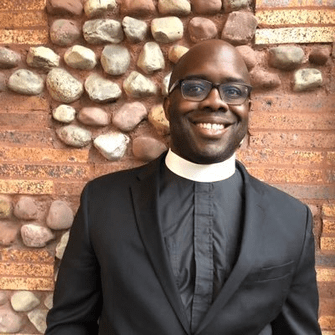
Esau McCaulley interviewed NT Wright on his Disrupters podcast last year. NT Wright is a British New Testament scholar of some renown who became McCaulley’s mentor at St. Andrew’s University in Scotland. McCaulley made a comment after the interview that prompts my writing today. He said,

“I feel like I am a mix of a bunch of things. I have this kind of British, evangelical side, and I have this kind of African American church side, and strangely they have coalesced in ways I didn’t expect.”

N.T. Wright Forces an Overdue Conversation on the Disrupters Podcast 2-3-22

McCaulley was raised Southern Baptist in the deep south, so their relationship is intriguing to me. The conversation between Wright and McCaulley is interesting and rich. The fact that they come from unique and diverse backgrounds permeates the discussion as they explore the things that unite them.

Esau McCaulley is a New Testament scholar in his own right, due in no small part to the influence of NT Wright. He has written one book on Galatians, and he is now writing a second. McCaulley also became an Anglican priest, but his heritage and unique experience, personally and communally, as a black man in America remain central to his identity.

The close relationship between these men from very different backgrounds and from different areas of the world has me thinking about the church in the United States and the global Church. I recently heard someone comment on an unfortunate, unforeseen, and unintended consequence of the Reformation. That consequence was the fragmentation of the Church.

The post-Reformation church fragmented into dissenting groups, and some of those dissenting groups fragmented further into groups of people who spoke English, French, and other European languages. Over time, the fragmentation rippled out from Europe to the New World and beyond.

The Reformation splintered into many “protestant” groups, and that fragmentation exploded in the New World where Lutherans, Presbyterians, Methodists and others splintered apart from each other into various and distinct groups, and many more new denominations sprung up. The fragmentation continued along cultural, doctrinal, ethnic, ritualistic, racial, governmental, language and other lines.

Today in America we can find a mind-boggling number of separate church bodies aligned in linguistic, ethnic doctrinal, geographic, and cultural huddles of believers that keep largely to themselves based on language, ethnicity, race, heritage, doctrine, worship preference, governmental protocol, and other things.

This fragmentation is still evident in the United States, and churches in the United States have been accused of being more segregated than the rest of the country (which is still pretty segregated).

The intersectionality (to use a very loaded term) of the disparate backgrounds, experiences and heritage of Wright and McCaulley, and their ongoing relationship remind me of the need for unity in the Church. We need to come together. We need to talk.

We need each other.

Continue reading “On the Intersection of Differences and Unity in the Body of Christ”

Balance Between Scripture and Spirit

Reaching for one without letting go of the other

ChristianPics.co

I feel compelled by the Holy Spirit (I hope) to explain myself a bit. Please forgive me if this gets into a little self-conscious rambling.

I have touched recently on some important doctrinal issues without really addressing them in a doctrinal way. That is intentional, but that leaves me a little self-conscious about it.

I have brushed past many doctrinal issues in this blog, and some of them are themes that I come back to quite often. Recently, I have veered dangerously close to issues like the inerrancy of the Bible and Bible hermeneutics, though I have not used words like that, other than to acknowledge at some points those rocks that exist in the turbulent waters.

I often reflect on the sovereignty of God and the free will of man. I often reflect on atonement, redemption, salvation and similar themes, though I don’t often use those words. Anytime we speak of the cross, the specter of those doctrinal ideas arises.

I am usually not all that conscious about doctrine in the sense of academic formality or denominational purity. This also is intentional, though it isn’t intended in any rebellious, skeptical or heretic away.

What I always aim for is “mere Christianity”.

Continue reading “Balance Between Scripture and Spirit”