God Meets Us Where We Are: But Will You Know Him When You Meet Him?

If your eyes are unhealthy, your whole body is full of darkness


About 5 years ago, I wrote God Meets Us Where We Are. I was impressed then (and I still am) that God who created the Universe stoops to come to us. I was also impressed that finding God is not so much about our seeking, but about our opening up to God Who is ever present to us, but never overbearing.

God seems hidden to many people. If we do not really want to see Him as He is and to embrace Him for Who He is, we may never know He is “there” at all.

When we act contrary to God’s character, our sin hides God from us. (Isaiah 59:1-2) The Prophet, Micah, says God “hides his face” from people, even when they cry to Him, because of the evil, the bad, the harm we do. (Micah 3:4)

The “evil” Micah is talking about in this chapter is injustice – the way we treat other people. The “leaders of Jacob” to whom he was talking were taking advantage of their own people for their own benefit. When people do that, they will cry out to God, but God will not respond.

CS Lewis called God the Great Interferer in his autobiographical book, Surprised by Joy. He didn’t want God to exist. He didn’t want to be interfered with. “He wanted to be left alone, and unconsciously knew that if he denied the existence of some Ultimate Authority, then he himself would be that very authority in his own life. Thus, he could live his life according to his own desires.” (Christ the Great Interferer)

When we live to satisfy our own desires, often at the expense of others, we act out of character with God, and we are blinded by the thrust of our own actions from seeing God. He allows our conduct to separate us and hide us from Him because God does not reward our bad behavior.

“The eye is the lamp of the body. If your eyes are healthy, your whole body will be full of light. But if your eyes are unhealthy, your whole body will be full of darkness. If then the light within you is darkness, how great is that darkness!”

Matthew 6:22-23

God desires us to know Him as He is and to desire to be like Him. When we acknowledge our wrong ways (sin) and turn (repent) from them, God is quick to meet us “there”. When we confess our sins, He is just and faithful to forgive us! ( 1 John 1:9)

That is what He is waiting for, but we must come to Him honestly. He isn’t handing out “get out of jail cards” for free. He wants us to desire Him and to desire to be like Him; He isn’t interested in appeasing your conscience for the moment so you can feel better about what you have done and what you will do in the future.

God has given us each other as the testing ground. As Micah indicates, how we treat others determines whether God is hidden to us. Jesus said as much in the Parable of the Sheep and the Goats. “‘Truly I tell you, whatever you did for one of the least of these brothers and sisters of mine, you did for me,'” (Matt. 25:40) and “‘Truly I tell you, whatever you did not do for one of the least of these, you did not do for me.’” (Matt. 25:45)

It seems to me that God designed the world as He did because God desires relationship with people who desire Him, and He provides us a testing ground for that relationship in other people. God will not force Himself on anyone who does not want to know Him – at least for the time being.

There will come a day when our lives end in the natural course or by circumstance that God does not control. Having set His universe in motion, He rarely interferes. Too much interference would frustrate His purposes.

There will also come a day when the time for human seeking is over, when this Project Earth has come to its appointed end, when the time for ultimate redemption and the perfection of God’s purposes is at hand. At that time – when all people see “the Son of Man coming in a cloud with power and great glory” (Luke 21:27) – it will be too late for any seeking

As the Apostle Paul said, “I tell you, now is the time of God’s favor, now is the day of salvation.” (2 Corinthians 6:2) The writer of Hebrews repeats three times for us: “Today, if you hear his voice, do not harden your hearts.” (Hebrews 3:7-8; 3:15; and 4:7)

God is with us now, and the time of His favor – to seek Him and find Him – is now. There are no guarantees for anyone. In fact, the only guaranty is that our time will end: either at our own natural or untimely death or when day of the Lord comes and the time for choosing is over. Do not harden you heart. Now is the day of your salvation.

Why Doesn’t God Reveal Himself to Me?

Have you prayed, and God didn’t respond?


I have heard many people say that they would believe in God if God revealed Himself to them in clear, undeniable ways. Richard Dawkins, the New Atheist, said that God would have to write a direct message in the sky before he would believe (and then, he added, he would still assume that he was hallucinating or something else before believing it).

Young children tend to believe in God innately. This is true whether children are raised in religious homes or non-religious ones and in countries that are predominantly religious and in countries that are not. Even atheist sociologists have observed this phenomenon that some people have called “universal design intuition.” (See Universal Design Intuition & Darwin’s Blind Spot)

Since the Enlightenment, the general assumption in scientific and academic circles is that children outgrow naïve faith and civilizations do too as they advance in knowledge and sophistication. Thus, the modern assumption is that we outgrow faith in God as people and societies mature.

There is some truth to that assumption as we can see anecdotally (maybe in your own life or in the lives of people you know) and from the history of Western Civilization, with evidence of declining religious belief. Still, 81% of people in the United States in 2022 believed in God (or a higher power) (as reported in a Gallup poll), and the number increased to 82% in 2023 (according to a Pew Research poll).

We have all heard about the “Great Dechurching” – the 40 million Americans who used to go to church, but no longer do. We have also heard about “the rise of the nones“, the increase in the number of Americans who are atheist, agnostic or religiously unaffiliated, which increased precipitously from 16% in 2007 to 30% by 2022!

The nones include people of every age, but the highest percentage of nones are Gen Z and millennials. These age groups have largely grown up not going to church, yet, Bible sales surged in 2024 by 22% (after years of declining sales), and that surge is attributable to first time purchasers among Gen Z and Millennials. (See Bible boom: Why are people buying so many Bibles?; and US Bible Sales Jump 22% in 2024, Driven by First-Time Buyers and New Versions: Circana BookScan)

The hint of a spiritual renewal in the West isn’t limited to young Americans. Justin Brierley has reported on and written a book about the Surprising Rebirth of Belief in God in the UK. (See The Surprising Rebirth of Belief in God: Why New Atheism Grew Old and Secular Thinkers Are Considering Christianity Again) Agnositics and atheists, at least in the UK, are rethinking their positions on Christianity in noticeable numbers.

While Brierley’s thesis is largely based on anecdotal evidence, the volume of his anecdotal evidence is impressive. He has been hosting dialogues between atheists and Christians regularly since the mid-2000’s, and his data comes from a combination of atheists who have recently cozied up to the idea of God and religion and former atheists who unabashedly believe in God now.

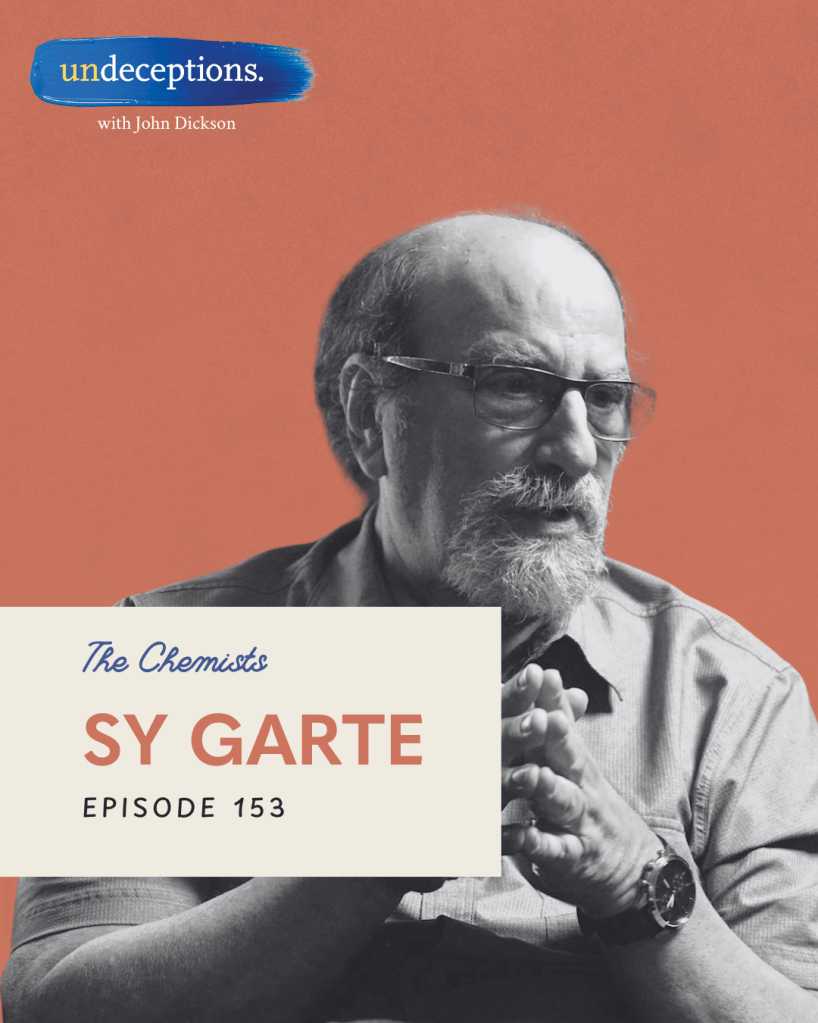
My writing today is inspired by one such former atheist, a bio-chemist with a robust career in science, who became a believer in his middle age. Sy Garte wrote a book about his journey from atheism to faith, The Works of His Hands: A Scientist’s Journey from Atheism to Faith, in which he explains how a combination of science and his experience led him to believe.

The science opened his mind to the possibility of God. His study of religions, philosophy, and theology led him to an intellectual acknowledgement of the likelihood of God, but his experience and willingness to embrace it brought him in the door to faith in God.


In a recent interview with John Dickson on the Undeceptions podcast, Sy Garte provides some advice to listeners who believe science holds all the answers to reality and truth by insisting that nothing in science contradicts the Bible.


If you read his whole story, he explains how science suggested the possibility of God to him, but he also emphasizes the importance of experience in belief. His acknowledgement of the role of experience, I think, is important, and it is underappreciated.

Skeptics and believers, alike, discount experience. A skeptic might chalk experience up to fantasy, a desire to believe, a disconnection with reality, or similar thinking. A believer might question the experiences of people who arrive at unorthodox beliefs based on their experiences.

Clearly, experience must be tempered by facts, science, and sound reasoning, but Sy Garte maintains that experience is good evidence, nevertheless, primarily for the one who has the experience. In doing so, he acknowledges the objection by the person who hasn’t had such an experience, and his response to the person who hasn’t had an experience with God is what I want to focus on today.

Continue reading “Why Doesn’t God Reveal Himself to Me?”

By Faith We Know God and Our Place in the World

God is greater than the creation He made, that God is timeless, and He will outlast the creation as it is and as we know it

M74, nicknamed the Phantom Galaxy, as seen by the James Webb Telescope

In my daily reading today, I read these verses from the Letter to the Hebrews:


“In the beginning, Lord, you laid the foundations of the earth, and the heavens are the work of your hands. They will perish, but you remain; they will all wear out like a garment. You will roll them up like a robe; like a garment they will be changed. But you remain the same, and your years will never end.” 

Hebrews 1:10‭-‬12 NIV


These words were written in the 1st century, and they recall the words in Genesis that were written many hundreds, maybe even thousands of years before:

“In the beginning God created the heavens and the earth.”

Genesis 1:1

The statements written in the letter to the Hebrews and in Genesis, long before that, were all written before the revelations of modern science.

We argue today over the passages in Genesis about the creation of the world, whether God did it in seven days or over seven periods of time. Some people say we should take Genesis “literally” (whatever that means), and other people say that the creation account in Genesis is simply poetry and should not be taken literally. There are many people in between, and many people who do not believe or take the Bible seriously either way.

Yet, whether these words are intended to be read as a literal, seven day creation event, seven periods of time, merely a poetic conception or otherwise, they express by faith an understanding that God created the world we live in – “the heavens and the earth”. They also expressed an understanding that God is greater than the creation He made, that God is timeless, and He will outlast the creation as it is and as we know it.

Whatever you believe about the description of creation in Genesis and elsewhere, the understanding is accurate: that the earth and the greater universe as we know it will not remain the same. It is subject to entropy governed by the Second Law of Thermodynamics. In poetic words, “[The Heavens and the Earth] will wear out like a a garment…. like a garment they will be changed.” In more philosophical terms, the Apostle, Paul, says:


“[T]he creation was subjected to futility….”

Romans 8:20


We don’t need to have a sophisticated scientific understanding of the Second Law of Thermodynamics to realize that the universe is, in a sense, winding down and wearing out, that it is “subjected to futility”. The earth, which is such an incredibly minute part of the universe, will not support the life that teams on it very far into the future.

We live in a very narrow band of time in which creatures such as ourselves can thrive on planet earth, sandwiched between ice ages and other inhospitable fluctuations and epochs space and time. Out time will pass like a flower that blooms one day and is gone the next in relation to the full space/time continuum.

Regardless of any Herculean efforts we give on our part to preserve the environment of this planet as we know it, the laws of the universe guarantee that life will no longer be supportable on planet earth, or anywhere in the universe for that matter, at some point in the future. It is inevitable.

It is remarkable to me that the writers of these ancient texts understood this fact by faith, though they had no hint of the science behind it. Knowing nothing of the Second Law of Thermodynamics, they understood nevertheless that this world will wear out.

They also had faith that the God who created it is the constant. Ignorant of the science, they nevertheless perceived and understood the reality of God, His creation and their place in the world.

Though modern science seems to reveal that our universe had a beginning, just as these ancient writings stated, many modern people who have the aid and benefit of science fail to see or acknowledge the creator. This is not a failing of science, though; it’s a failing of faith.

Though science provides many benefits, science is not essential for our faith or relationship to God. All the science in the world is not sufficient to gain us knowledge of God, as it necessarily rests on faith. At the same time, we can have none of the knowledge and understanding of science and still know God and our place in the world.

I love science, as it reveals the wonder of a universe that God made understandable and searchable by us. By faith we grasp all the reality we need to know, but science reveals majesty and wonder and appreciation of the greatness of our God all the more.

By faith, we also understand that God loves us. We understand that there is more to reality than the physical, space/time continuum. We perceive that God had a purpose in subjecting the creation to futility:


“For I consider that the sufferings of this present time are not worth comparing with the glory that is to be revealed to us. For the creation waits with eager longing for the revealing of the sons of God. For the creation was subjected to futility, not willingly, but because of him who subjected it, in hope that the creation itself will be set free from its bondage to corruption and obtain the freedom of the glory of the children of God. For we know that the whole creation has been groaning together in the pains of childbirth until now. And not only the creation, but we ourselves, who have the firstfruits of the Spirit, groan inwardly as we wait eagerly for adoption as sons, the redemption of our bodies.”

If God Desires All People to Know Him, Shouldn’t All People Know Him?

On logical syllogisms, the hiddenness of God, and unimaginable treasure


Many people make logical arguments that begin with assumptions about God. The latest one I saw was a syllogism beginning with the following premise: God desires all humans to know Him…. As the syllogism goes, it states that all people do not know God, and it ends with the conclusion: “Therefore God does not exist.”

The critical thing about syllogisms on the existence of God is that initial premises make some assumptions about God. Immanuel Kant famously developed a logical syllogism proving that God exists; then he turned around and developed a logical syllogism proving God does not exist. Both syllogisms were well-constructed, and the conclusions logically flowed from the initial premises.

That’s the thing with logic: we need to set the initial assumptions, and the conclusions are dependent on those assumptions. Logic can be abstracted from reality and still make sense.

The exact thermology of the (premises) assumptions are critical. If the assumptions are inaccurate or poorly stated, our conclusions will be false, no matter how logical they are.

In this case, the express assumption is that God desires for all humans to know Him. the syllogism makes some sense, but only if we add one word that seems to sneak in without being stated.

Implicit in this premise is that God desires only for humans to know Him, and He has no other desire, purpose or goal. If the initial premise is that God desires only for humans to know him, that God has no other desire, purpose, or goal for humans, then the logic follows.

If God’s only desire, purpose, and goal is for humans to know Him, He could so dominate and overwhelm us that we would have no choice but to know and acknowledge Him. The fact that people do not know God, would prove, on this syllogism, that God doesn’t exist.

We have to ask, though: Is that really God’s only desire, purpose, and goal for humans – to know that He exists? I don’t think so. Such a purpose would be simplistic. And for what purpose?

If God is really God, God is (at least) as complex as the universe He created. Taking note of the sublime nuances of physics, quantum mechanics, biology and chemistry, we should assume God is (at least) as sublime and nuanced as the world He made with these characteristics.

Does it make sense that God has one singular desire, purpose, and goal for humans? Is the entire thrust of creation summed up by an unconditional desire by God for humans to know Him and acknowledge His existence?

The problem with logical syllogisms is in the initial assumptions. We have to presume to know the mind and purposes of God. If we are wrong, even if God really does exist, we will come to the wrong conclusion.

As finite, limited creatures of an infinite Creator of the universe, we do not have the capability of knowing on our own why God created the world such as it is and what His purposes are. I believe we have no capacity to know these things apart from God revealing them to us.

The Bible purports to be that revelation from God to man, so let’s take a look at what it says. If we are going to be “scientific” about the Bible, we shouldn’t come to it with preconceived notions. We should consider what it says on its own merits and come to our own conclusions.

Continue reading “If God Desires All People to Know Him, Shouldn’t All People Know Him?”

The Story of Abraham and Isaac Revisited: Here I am!

I set the stage for digging deeper into the story of Abraham and Isaac in The Story of Abraham and Isaac Revisited: Introduction. Abraham’s faith is the lesson we all learned in Sunday school. Faith is the basic place we start, but Abraham’s faith is only scratching the surface of the story.

We often view this story as simply a test of Abraham’s faith, which it is, but it’s much more than that. This story is not simply about Abraham’s faith, because what we learn through Abraham’s faith may be just as important, if not more important.

Think about it: Does God need to test Abraham to know who he is? God already knows what kind of man Abraham is. He knows our thoughts from afar and the words we speak even before we say them! (See Psalm 139) That should give us a clue that there is more to this story, so let’s go back and see what else there is to see.

Many decades before, we are told that Abraham believed God, and his faith was credited to him as righteousness. When God called Abraham to leave his country, his people, and his father’s household – which was his legacy – and God said He would make a great nation of Abraham’s descendants, Abraham left – though he didn’t even knowing where he was going! Though he was 75, Abraham responded with faith and went. (Gen. 12:1-4)

Many years and adventures later, Abraham was still childless, living in the land God showed him, and Abraham still believed the promise God made to him, though he had nothing to show for it. Abraham’s faith was already counted to Abraham as righteousness, but the promise Abraham believed was not yet realized. (Gen. 15:1-6)

Isaac was not born to Abraham and Sarah until Abraham was 100 years old, a quarter century after the initial promise was made. (Gen. 21:1-7) All the while, Abraham had faith. The story of Abraham and Isaac is not just a story about Abraham’s faith, but about how God is revealed through Abraham’s faith.


Though the story begins with the statement that God was testing Abraham, it doesn’t say God was testing Abraham’s faith. (Gen. 22:1) Perhaps, God tested Abraham, at least in part, to show Abraham (and us) who God is!

I will explain, but first we need to understand something of the Ancient Near East culture Abraham lived in. A key element of this story is the fact that child sacrifice was a common and universal practice in the Ancient Near East.

Abraham would have been intimately familiar with how people understood the gods of his culture. They were considered unpredictable, arbitrary, and capricious, demanding allegiance and sometimes even child sacrifice to be appeased.

What Abraham may have sensed, but didn’t fully understand, was that his God was not like the other Ancient Near East gods. The character of God, as revealed to Abraham, would have been a complete paradigm shift from what he and his culture believed about gods.

In our western mindset, we might expect God to announce at the outset who He is: we might expect Him simply to tell us. In a more eastern mindset, we they expected to discover truth through their lived experience and the lived experiences (stories) of other people.

Similarly, it seems, God doesn’t simply tell us who He is; God desires to show us. To “know” God is not simply an intellectual exercise; it is a lived experience. Thus, all of Abraham’s life is an example for us, and we learn who God is through Abraham’s lived experience (and our own).

God reveals Himself to Abraham experientially through Abraham’s faith, and He reveals Himself to us through Abraham’s story and our own faith. If you haven’t read the introductory article yet, I encourage you to do it now at the link above.

With this basic understanding, I encourage you to read Genesis 22:1-14. Then, we get into the details of the story.

Continue reading “The Story of Abraham and Isaac Revisited: Here I am!”