The Bible, Christ and Culture: Biblical Critical Theory as a Framework for Critiquing Culture

Letting the Bible frame and critique culture requires us to be aware of our cultural milieu


I am listening to a discussion of a new book by Christopher Watkin, Biblical Critical Theory: How the Bible’s Unfolding Story Makes Sense of Modern Life and Culture, dealing with culture on the Truth over Tribe podcast. Watkin’s premise for the book is that we should use the Bible to frame our critique of culture, but the reality often is that we frame and interpret the Bible through our cultural lens.
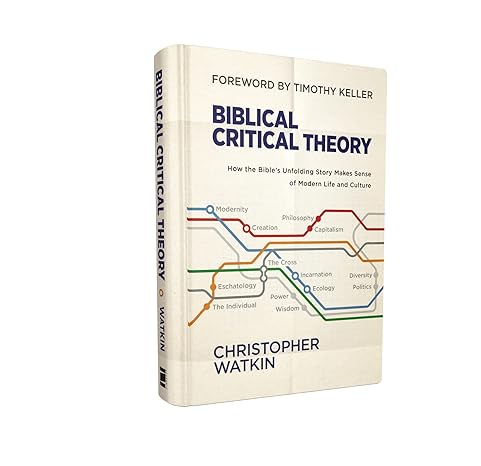
As an aside, I love the title of the book. “Critical theory” is part of our modern cultural vocabulary and milieu. Though many Christians recoil from the invocation of that term, it is the language of our times Watkins uses it to capture the attention, and he uses it as a springboard to take us back to the Bible, which I think is brilliant.


The discussion on the podcast focuses on the definition and meaning of culture, starting with the reality that culture pervades most of our lives and our thinking. Watkin notes that we see God working in and through cultural environments in the Bible, yet the thrust and message of Scripture is multicultural (and countercultural).

What appears to be exclusive is revealed to be inclusive. God works in the cultural milieu, but the message is not bound by it nor bound to it.

A multicultural theme is baked right into the fabric of Scripture, including the influence of three different languages that make up the biblical writings. This theme is borne out by the glimpse God gave John of the end of the Story. If we lift our eyes to see the horizon for all Christians off in the distance, this is what we see:

I looked, and there before me was a great multitude that no one could count, from every nation, tribe, people and language, standing before the throne and before the Lamb. They were wearing white robes and were holding palm branches in their hands.

Revelations 7:9

Our destination, the mansion with many rooms that Jesus spoke about, is filled with multicultural people worshipping God from every nation tribe and tongue crying out in unison, “Holy, Holy, Holy is the lamb!” From this we see that God does not negate culture or ethnic differences. (He confused our languages and scattered us after all.)

But, we also have to recognize that the trajectory of Scripture and God’s plan revealed in Scripture brings us to unity in Christ. Jesus broke down the walls of division (Eph. 2:14), and the thing that unites us is Jesus.

Watkin cautions that Scripture is not entombed in culture, but it takes root in culture. It spreads out to all cultures: Jesus told the disciples to spread the message in Jerusalem, Judea, Samaria, and to the ends of the earth. Thus, the Gospel speaks to all cultures, calls people out of all cultures, and provides the promise of redemption to all cultures.

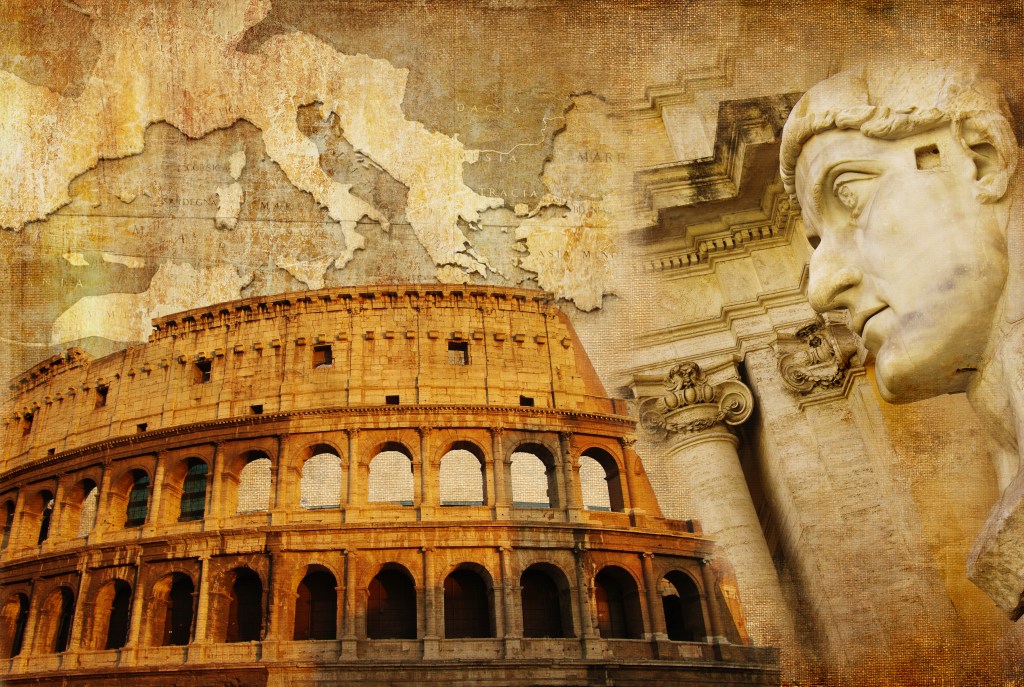
Indeed, Christianity began as a near, middle eastern movement which spread into the Roman Empire: north, south, east, and west. It spread into the culture of northern Africa and southern, central, and northern Europe, It spread to Asia minor and further east. This spread happened extremely quickly, within a generation of the death of Jesus, and it continues to spread today. The center of Christian growth today is predominantly in the southern Hemisphere.

The roots of Christianity go back to Abram, whose family heritage and land was rooted in the area known today as Iraq. Abram traveled west to Asia Minor, and then south into the Levant at God’s calling and this promise:

“I will make you into a great nation,
    and I will bless you;
I will make your name great,
    and you will be a blessing.
I will bless those who bless you,
    and whoever curses you I will curse;
and all peoples on earth
    will be blessed through you
.”

Genesis 12:2-3

The emphasis added is mine. From the beginning, God called Abraham to be a blessing to all peoples on the earth! Paul picked up on this theme when he said:

Understand, then, that those who have faith are children of Abraham. Scripture foresaw that God would justify the Gentiles by faith, and announced the gospel in advance to Abraham: “All nations will be blessed through you.” So those who rely on faith are blessed along with Abraham, the man of faith.

Galatians 3:7-9

and

 So in Christ Jesus you are all children of God through faith, for all of you who were baptized into Christ have clothed yourselves with Christ . There is neither Jew nor Gentile, neither slave nor free, nor is there male and female, for you are all one in Christ Jesus. If you belong to Christ, then you are Abraham’s seed, and heirs according to the promise.

galatians 3:26-29

Jesus is the seed (descendant) of Abraham through whom this promise is spread to all peoples of the earth. The center of Christianity began in the Middle East, but it quickly found cultural centers in northern Africa, Asia Minor, and southern and eastern Europe. For much of the history of the church, Europe became the center of western Christianity, but Christianity flourished in in all parts of the world.

Christianity and its roots grew up embedded in culture. Christianity was born at the crossroads of culture where east, west, north, and south met with overlays of Hebrew, Babylonian, Persian, Greek, Roman, and Egyptian influences (to identify the major ones). Thus, culture is part of the story

Watkin cautions, though, that people who are immersed in their own culture don’t realize how influenced they are by it. Like a fish in water compared to a bird in the air, we don’t recognize how different our cultural environment is compared to people in other cultural environments.


This is the challenge for us today, just as it was a challenge for all generations, in all times, and in all places before us. We need to be absorbed in Scripture and allow the Holy Spirit to critique and frame our culture through Scripture, and not the other way around.

Continue reading “The Bible, Christ and Culture: Biblical Critical Theory as a Framework for Critiquing Culture”

Separating the Church from Babylonian Morality in the Race Discussion

If we fall into a politically partisan conversation, the Gospel takes a back to secular politics.

The following thoughts and observations come from and are inspired by a conversation between Preston Sprinkle and Dr. Ed Uszynski. (See Episode 877: Race, CRT, and Evangelicalism of Theology in the Raw.)

Sprinkle and Urszynski are in agreement that Christians generally are doing a poor job of grappling with the issue of race in the United States. Most Christians are vocal in their criticism of secular solutions, but few Christians are really engaging with the underlying issues.

Critical Theory, CRT and Marxist ideology and terminology are fueling the discussion in the secular culture. Identity politics, systemic racism, police brutality is the language commonly used in the secular world to frame the discussion. Whether Christians are condemning these concepts or aligning with them, Christians are not offering much in return.

In the podcast, one the two men (I can’t remember which) said that we should have different language inside the Church. We should have Gospel language that addresses injustice.

“We should have a theological understanding of the concept of justice…. We should be immersed in care and concern for vulnerable populations, regardless of color, regardless of gender, regardless of background. We should be robustly able to think about what it means to care for the least of these, to watch out for people who are being taken advantage of…. That’s a biblical idea that we should be deeply immersed in theologically and biblically.”

That, however, isn’t happening in most Christian circles. People who are engaging in the conversation are engaging in it with the secular terminology and don’t recognize that we need to separate ourselves from that secular perspective. We are defining ourselves in relation to secular concepts, rather than driving the conversation from a biblical perspective with biblical concepts and biblical terminology.

Christian are either adopting CRT in church, which is the primary, secular approach, or Christians are rejecting CRT without offering a Gospel orientated alterative. People address CRT (by opposing it), but they are largely not addressing or effectively engaging the race conversation on a theological level.

“We have done a horrible job, generally, in embracing, and believing and obeying the rich theological theme of what the Kingdom of God is designed to look like and how it is designed to function in terms of its multiethnic backbone.”

Continue reading “Separating the Church from Babylonian Morality in the Race Discussion”

Distinguishing Biblical Justice from Social Justice I

Self portrait of beautiful girl in shanty town.

As Board member of the predominantly evangelical ministry, Administer Justice, a faith-based legal aid organization, I am concerned for Justice. That’s what the ministry is about.

Some skepticism is apparent among evangelicals and other conservative (or orthodox) Christians, however, about the biblical propriety of justice. To be more accurate, the concerns lie with the idea and movement that is labeled “social justice”, but the caution bleeds over into a focus on justice, itself.

Forgetting, for the moment, that a form of justice has been promoted that is divorced and disassociated from orthodox, conservative Christianity, is there any question that our God is a just God.

“His work is perfect, for all his ways are justice. A God of faithfulness and without iniquity, just and upright is he.” (Deuteronomy 32:4)

“Righteousness and justice are the foundation of your throne; steadfast love and faithfulness go before you.” (Psalm 89:14).

God is intimately and preeminently concerned about justice and expects us to “do justice”.

“Learn to do good; seek justice, correct oppression; bring justice to the fatherless, and please the widow’s cause,” (Isaiah 1:17)

“He has told you, O man, what is good; and what does the Lord require of you but to do justice, and to love kindness, and to walk humbly with your God?” (Micah 6:8)

And this biblical sense of justice isn’t just limited to the exhortations of prophets in the Old Testament. Jesus was very clear in His view of justice when he said,

“But woe to you Pharisees! For you tithe mint and rue and every herb, and neglect justice and the love of God. These you ought to have done, without neglecting the others….” (Luke 11:42)

Lest we risk being counted among the Pharisees, we need to take his words to heart. We should not neglect to do justice. We should get about doing the justice God commands us to do.[i]

At the same time, the phrase, “social justice”, carries with it connotations that we rightfully consider with caution. Though we can agree on many of the evils that are the targets of social justice – hunger, poverty, human trafficking, abuse of the elderly and so on – there are some key differences we should recognize between mere “social justice” and biblical justice.

For one thing, secular social justice focuses only on the here and now; whereas biblical justice focuses both on the here and now and eternity. The secular notion of social justice that is based on “civil rights” and “human dignity” has its roots in the idea that all people are made in the image of God, but it has been severed from those roots.

Social justice divorced from the idea of a just God is “grounded” in a currently persuasive social construct created by people that is not rooted to an eternal or timeless truth. That means there is no assurance that the same construct will continue to be persuasive in 500 years, or 100 years, or even 50 years.

But it goes deeper than that. I am not going to attempt a definitive treatise of the differences. I am going to highlight some basic differences with the help of J. Warner Wallace[ii] with the hope of bringing a little clarity that will help Christians take seriously God’s call for us to do justice without getting “off the path” into the secular weeds.

Continue reading “Distinguishing Biblical Justice from Social Justice I”

Critical Race Theory from a Christian Perspective


I have been writing to encourage the evangelical church, in particular, to speak up and get involved in doing justice as God would have us do it. (Here and here.) We have been champions of proclaiming the Gospel, but we haven’t exactly been champions of doing justice.

My goal isn’t to shame anyone into jumping onto a cultural bandwagon, but to focus on God’s heart that is characterized by justice and our role in participating in God’s purposes. If we want to be involved in following Jesus as he followed the Father, I think we need to do justice.

He has told you, O man, what is good; and what does the Lord require of you but to do justice, and to love kindness, and to walk humbly with your God.

Micah 6:8

There is no condemnation for those who are in Christ, but God calls us to do justice.

At the same time, we need to be mindful, always, of truth. Biblical justice has a vertical element and a horizontal element: man to God and man to man. We need to be aligned in both directions with God and His character.

Critical race theory has become a viable contender in the modern cultural arena for defining injustice and prescribing how to fight it. Critical race theory, by its very nature, attempts to control the discussion. As Christians, though, we need to keep our focus on the Gospel as we wade into the fray.

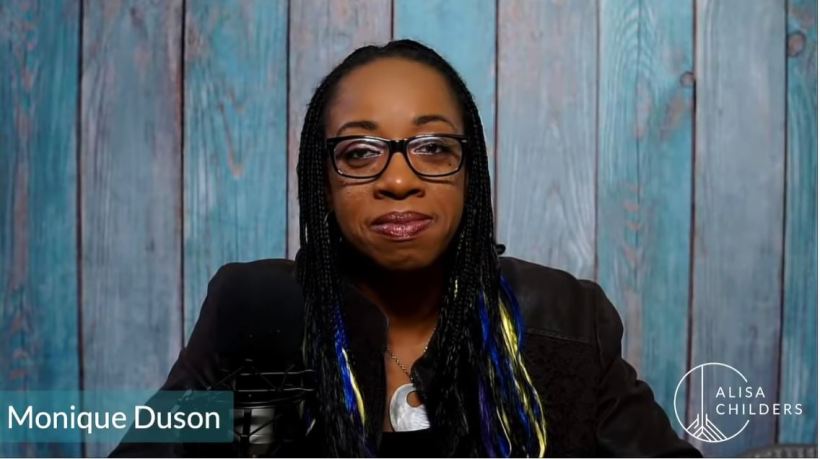
In this article, I summarize a conversation between Alisa Childers and Monique Duson on Race, Injustice, and the Gospel of Critical Race Theory. (The full interview is embedded at the end of this article.) I have been meaning to write on the subject of the difference between Gospel justice and social justice (which often devolves into justice without the Gospel), for well over a year. This, I think, is a helpful introduction to the subject.

I will address critical race theory (CRT) here, and I will follow with some thoughts on need for the evangelical church to be actively involved in doing true (biblical) justice.

Background.

Monique Duson grew up with critical race theory in south LA. The ideas that drive critical race theory (CRT) were her frame of reference before she even had a label for them. She was nurtured and educated by it. Her world was defined by an us-against-them orientation: whites against blacks.

She didn’t really know the philosophy or the foundations that under-girded that framework until she attended college at Biola University, a Christian institution. Even there, she recalls, she really didn’t question it or put it into a Gospel perspective.

In fact, she had always assumed “the Gospel” in the United States of America was a white concept that was part of the oppression of white power structures. She didn’t realize this construct comes from CRT, and she didn’t realize the historical Gospel isn’t “white” until after college when she was challenged to research it.

As she learned that Jesus wasn’t white and the culture in which the Gospel first introduced wasn’t white, Monique came to realize, “The Gospel we have perceived isn’t white Protestantism.” The Gospel predated the European influences that eventually spread the Gospel to the New World.

Because of Monique’s background and personal experience with critical race theory, she is uniquely able to identify where CRT and biblical notions of justice and the cure for injustice diverge. The rest of this article focuses on CRT as another gospel that is different than the true Gospel that Jesus preached.

Continue reading “Critical Race Theory from a Christian Perspective”

Comments on Freedom and the Clash of Ideas

If any speech or expression is deemed unworthy of protection on the basis of its content, no speech or expression is safe.


“The clash of ideas is the sound of freedom.”  (Lady Bird Johnson)

I grew up in the 1960’s and 1970’s, bring born at the very end of 1959. My young, impressionable mind recalls the assassination of JFK, Robert Kennedy and Dr. Martin Luther King, Jr. I remember watching the riots during the Democratic National Convention in Chicago, the Kent State protest and shooting, the footage of the Vietnam War and the Nixon impeachment on the nightly news.

The world seemed a chaotic place, no less than it does today, on this 4th day of July, 2020.

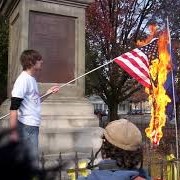
In the 1960’s, the dissident voice championed First Amendment rights that included the freedom of assembly and freedom of speech. I remember that freedom cry as a child superimposed over news footage of a burning US flag. The patriot in my young heart was equally shocked by the flag burning and impressed by the necessity of the freedom that allowed that flag to burn.

In law school, I learned the nuances of the jurisprudence that grows out of our US Constitution in which the First Amendment is enshrined. The clash of ideas is so sacred in our constitutional framework that it allows even the idea of abolishing that very framework to be heard.

In the 21st Century, many things have changed, while somethings have remained the same. Many of the dissident ideas from the 1960’s have become mainstream, and more “conservative” voices have become dissident. I am no longer shocked by the burning of the flag (and, perhaps, the point of burning a flag is no longer poignant for the same reason).

The angst of the 1960’s of my youth has been replaced by the angst of the 21st Century of my middle age. The reasons for my angst are much different, yet very much the same at their core. I have grown and changed in my views, but the emotional strain of the human condition remains.

I fear, at times, that the framework that protected the freedom to burn US flags in the 1960’s might, itself, be destroyed in my lifetime, or the lifetime of my children, by the fire of ideas that are antithetical to that freedom.


The ideas in colleges and universities around the country that seem to dominate those institutions promote the silencing of dissident voices. Speaker engagements are canceled as the loudest voices want not even a whisper to be heard in opposition.


One theme of the dominant social, philosophical and political ideologies that thrive on college campuses today is that certain voices should be silenced, while other voices should be magnified – a kind of totalitarianism of ideas. This worldview would destroy the foundation of the First Amendment if the First Amendment is not held firm.

I am shocked by this new predominant view as I was once shocked by the burning of a US flag. The shock stems not from the evils in society this ideological view aims to address, as I find some common ground in those concerns. I am shocked that the proposed remedy involves weakening the most fundamental freedom that protects freedom itself – the freedom of ideas and the right to express them.

The idea of “hate speech”, as well-intentioned as it sounds, is inimical to a framework of freedom that protects the clash of ideas. Nowhere is freedom more necessary to be protected, than at the intersection of ideas and the right to express them. One person’s hate speech is another person’s freedom of expression.

If we allow the idea of hate speech into the fabric of First Amendment jurisprudence, we threaten its very foundation. What we characterize as “hate” today is subject to change with changing societal norms tomorrow. No speech is safe from the label of “hate” if labels are allowed to silence speech.

While such a worldview has some appeal and laudable goals, it cannot be advanced by the abolition of freedom of speech. Yet, I realize at the same time, that freedom, real freedom, protects even those ideas that are antithetical to freedom and demands that they be heard.


As shocked as I was in my naïve youth to watch the US flag burn in the streets of America, I understood the importance of allowing that expression to be heard. That I am no longer shocked by that expression is of no consequence.


In fact, freedom of speech is nowhere more vital than the protection of speech that is offensive. Favored speech doesn’t need protection.  If any speech or expression is deemed unworthy of protection on the basis of its content, no speech or expression is safe.

Continue reading “Comments on Freedom and the Clash of Ideas”