Ode to the Church and to God Who Watches Over the Foreigner

O Church, remember who you are,
Called to love, to heal, not to bar.


Once, in Eden’s light, they walked,
In fear, mistrust, and pride they balked.
Their own way looked better than God’s,
So He cast them out to the odds.

Though God walled them out, yet He stayed near,
He watched them roam this earthly sphere.
He clothed their shame knowing His plan,
To redeem them from the dusty land.

When Abraham heard the voice divine:
“Go to a land that I’ll make thine.”
He wandered there, a stranger still,
Seeking the City of God’s will.

From Abraham’s loins a nation grew,
In Egypt enslaved, four centuries through.
Bound and broken, crushed and torn,
Yet God’s eye watched, where hope was worn.

And when they were freed by God’s hand,
The law that God, would make command:
“Be kind to the stranger, love them as you—
For once you were aliens too.”

The psalmist sang of a just cause
To guard the stranger one must because
God watches over the oppressed and poor,
His mercy flows to the foreigner.

The prophets warned with fire and might:
“Do not oppress, do not fight
The alien, the widow, the orphaned heart—
Deprive them not, lest from God you part.”

Then Jesus was born, in flesh, divine,
Refugee Son, in a troubled time.
To Egypt He fled, a stranger, a child,
God in the dust, both meek and mild.

He preached a kingdom for all men,
Every race and tongue and kin.
That he would save from cursed yeast,
According to how we treat the least.

And John envisioned a great throng,
From every tribe, with one great song.
Before the Lamb, all men unite,
Bathed in mercy, robed in white.

Yet now, the largest Church on earth,
Wielding wealth, claiming new birth,
Builds walls to keep strangers away,
Turning the poor from its doorway.

Refugees wander, oppressed and unseen,
Deprived of justice, crushed between
A gospel of love and hands that deny,
While heaven looks down, and angels cry.

O Church, remember who you are,
Called to love, to welcome, not bar.
For the walled-out Christ still calls to you,
“Whatever you’ve done, you’ve done to Me too.”

Come, O Church, to the narrow way,
Where love shines bright at break of day.
Lay down your walls, take up your cross,
And count the cost, not gain or loss.

Follow the One who bore your shame,
Who calls you now by His great name.
For hope is found in His pierced hands,
Where grace flows wide for all the lands.

The stranger waits, the orphan cries,
Will you reflect the Savior’s eyes?
Do justly, love mercy, walk humbly with God
Love deeply, with the gospel on your feet shod.

For Christ alone is our living hope,
A lifeline strong, a Savior’s rope.
Come back to Him, and walk His way,
Till all are gathered on that final day.

The Temptation of a Kingdom in this World

The kingdoms of this earth cannot be conflated with the Kingdom of God.

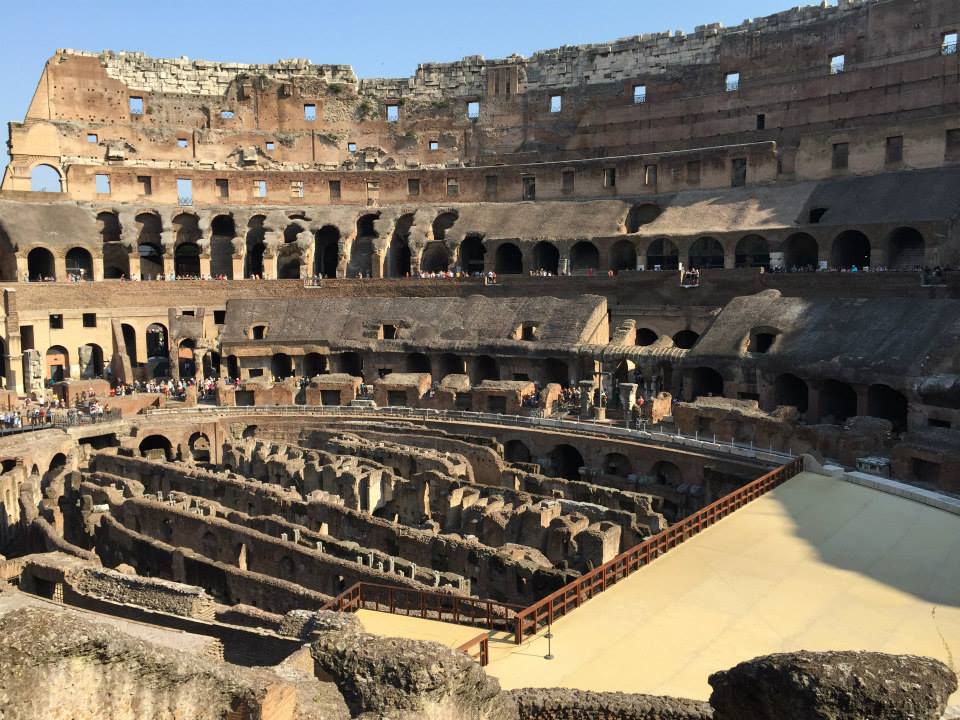
Photo Credit to Tim Butterfield

I see so many things in my daily reading of Scripture that are relevant to what is going on in my life, the things that I am talking to people about, and wrestling with myself. Today, is no different, including the following passage from Matthew from a friend who sends daily versus to people on a text list:

“The devil took [Jesus] to the peak of a very high mountain and showed him all the kingdoms of the world and their glory. ‘I will give it all to you,’ he said, ‘if you will kneel down and worship me.’ ‘Get out of here, Satan,’ Jesus told him. ‘For the Scriptures say, ‘You must worship the Lord your God and serve only him.””

Matthew 4:8-10

The relevance of this passage today relates to conversations I have had with people and articles I have written that touch on the popular infamy of so-called “Christian nationalism”. I put the phrase in quotation marks because people mean different things by it. The definition of Christian nationalism aside, I believe that the preoccupation with nationalism by some people who identify as Christians in America is unhealthy and askew.

The American Church has traditionally been very patriotic. Not that patriotism is necessarily wrong, but we have to be careful, as with all things that might compete for our allegiance and devotion to God. I have seen an unhealthy focus on the United States as a new Israel. I also believe we focus too much, sometimes, on protecting our comfortable status quo, when God may be trying to shake things up.

I won’t rehash the many times I have written about the admonition from Jesus to welcome strangers, which would seems like it should be a no-brainer for a Christian nation. The issue of abortion should also have more consensus as well. In truth, we are more a Christian nation in name in the 21st Century, than in practice.

For that reason, I understand the desire and effort to take over the political landscape for Christ.

I was once very much behind that effort. Not that I am necessarily against it now, but my understanding of Scripture and how we should operate in the world has shifted my view.

Ultimately, it doesn’t matter how relatively righteous or just the United States of America is compared to other nations of the world. We can debate whether the United States is the new Israel, but the United States of America is not the Kingdom of God.

The United States is not even like Israel, which God established in the land of His promise for His purpose. His purpose was to grow out of its soil a people and a culture through which, at the right time, He could enter into the world as God incarnate. We should not forget that God “came to His own, and His own did not receive Him”. (John 1:11)

Not even the nation of Israel is the Kingdom of God. The Zealots of the time realized to their chagrin that Jesus did not come to establish God’s kingdom as the nation of Israel. In fact, the Kingdom of God won’t be established on earth (as it is in heaven) in our lifetime, or the lifetime of anyone until the day Christ returns.

The Kingdom of God is present, but the Kingdom of God is growing organically like a mustard seed, affecting the world like leaven, buried like treasure hidden in a field or a pearl hidden in an oyster beneath the sea. The kingdom of God is expressed through the salt and light of believers who are intimate contact with the world, if, indeed, we retain our saltiness and our light can be distinguished from the darkness of the world.

When the time comes for the Kingdom of God to be established as Jesus spoke, God will establish it, and it will be established as a new heavens and a new earth. A new Jerusalem will come down and be established on earth. (Revelation 21:1-5)

Meanwhile, the kingdoms of this earth cannot be conflated with the Kingdom of God, no matter how righteous or just we feel a particular Kingdom might be.

I am reminded of these things in this passage from Matthew where Satan tempted Jesus with all the kingdoms of this world if Jesus would just bow down to him. Jesus flatly refused him, saying that he would only worship God alone. If we had the same mindset in our lives today, I doubt anyone what accuse a Christian of nationalism.

Ultimately, “the kingdom[s] of the world [will] become the kingdom of our Lord and of his Christ, and he shall reign forever and ever.” (Revelation 11:15) That day has not yet come, however. When that day comes, God is the one who will establish it.

Meanwhile, We should not be tempted to conflate any kingdom in this world with the Kingdom to come. A passage from my own daily Bible reading is right on point. Jesus said in the context of the end times:

“Heaven and earth will pass away, but my words will not pass away.”

Matthew 24:35

Caste Systems, Nationalism, and True Christian Faith

The thing about a speck in someone’s eye is that it seems like a plank to the one with the speck.

I’m listening to Unbelievable? | Hinduism, Caste & Christianity: Joseph D’Souza and Kancha Ilaiah Shepherd. The following statement by Anglican, Joseph D’Souza, caught me up: “The caste system in India has poisoned the church in India just as racism poisoned the church in the West.”

Joseph D’Souza is an Indian Christian, but he stands as an outsider in India, which is increasingly being driven by a right wing movement to preserve India’s Hindu heritage and power against the threat of Christianity, in particular. Thus, I find it ironic, and convicting, that he finds a parallel between India’s caste system and racial disparity in “the west.”

Kancha Iliah Shepherd, the other participant on the podcast, was born of the Dalit class in India – one step above the untouchable caste/class. Against all odds, and the rules of the caste system, he became educated, and he wrote a book, Why I am not a Hindu, critiquing the caste system.

On the podcast, he questioned what Hinduism has to offer the lower castes who can not receive the education of the Braham caste, cannot learn to read and write the language of the Hindu gods (Sanskrit) and cannot serve in Hindu temples? Why be a Hindu unless one is born a Braham?

D’Souza observed that many Dalit and untouchables in India are becoming Christian because of Christian doctrines, such as the doctrine that all men and women are made in the image of God; God is Creator of all people; and there is no distinction among people (no Jew or Gentile, no slave or free, no man or woman) in Christ.

Though the Hindu nationals have succeeded in passing a law against “forced conversion”, D’Souza says that no one in India is forced to convert to Christianity. People convert because they want to. The church, in fact, stands against the idea of forced conversion.

The present Hindu nationalist movement seems to be partly to blame for Christian conversions because of its adherence to the caste system. The lower castes find in Christianity a God who does not perpetuate a caste system, who made all people equally in His image, and who makes no distinction between people on the basis of caste, birth rights or nationality.

Shepherd adds that God cannot be a nationalist. If there is one true God, He is God of all people in all places, nations and stations in the Earth. Shepherd said this as an Indian of the Dalit caste in India speaking against the Hindu conservative resurgence that forbids lower castes from becoming priests while maintaining a strong Hindu nationalist position.

If we look at the world through the eyes of these Indian men, we can gain some understanding and insight to be applied to our Christian walk in the United States. We can begin to understand why Christian nationalism is heresy and why Christian tolerance, ambivalence, and apathy for racial disparity in the US is poison in the church.

Continue reading “Caste Systems, Nationalism, and True Christian Faith”

The Church and the Reality of the Immigration Crisis for the Strangers Who Come to US

I previously wrote about how the current immigration crisis in the US involves the Church on both sides of the border. Here, I will share the experience of John Garland, a San Antonio, TX pastor who juggles cooperation with the government authorities and Christ’s call to welcome the stranger, feed the hungry, and minister to those in need.

From Garland’s perspective, the Church (capital C””) is at the center of the immigration crisis. The Church is involved on both sides of the border, as most of the people attempting to enter the US are Christians. Meanwhile, the Church on this side of the border is torn about how to respond.

In the previous article, I discuss the three issues that characterize the public focus on immigration, and I address each of those narratives from a biblical, Christian perspective. In this article, I want to put a human face on the immigration crisis, as told by Garland, and invite the Church on this side of the border to wrestle with the immigration crisis from a biblical position.

Matt Soerens, who works with World Relief, reports that only twelve percent (12%) of evangelicals polled by World Relief have developed a view on immigration that is informed by Scripture. That figure is not speculation. It is the self-assessment of evangelicals who were polled on the subject.

For people of the Word of God, this is disheartening news. It suggests most that most Evangelical Christians’ views on immigration are shaped by the news media and politics, not by Scripture.

For this reason, I believe that Evangelicals have a critical need to ground their views on immigration in God’s Word, as Paul urges:

Do not conform to the pattern of this world, but be transformed by the renewing of your mind. Then you will be able to test and approve what God’s will is—his good, pleasing and perfect will.” (Romans 12:2)

In my previous article, I provided some quick Scriptural responses to the three concerns that characterize the public narratives (focusing on the law, lack of resources and resistance to change). I have already written extensively on immigration through a Scriptural lens, therefore, I am not going to try to restate or expand much on what I have already written.

Rather, I want to implore the church from the heart as I filter the immigration crisis through the eyes of John Garland on the front lines. I want to dig deeper into the Christian principle of rendering unto Caesar what is Caesar’s without failing to render unto God what is God’s.

I want to parse out what it means to give our priority attention to the weightier matters of the law, unlike the Pharisees who tithed their dill, comin and mint, but neglected to do justice and love mercy.


He has told you, O man, what is good; and what does the LORD require of you but to do justice, and to love kindness, and to walk humbly with your God?

This is the word of God through the prophet Micah (Micah 6:8)

Continue reading “The Church and the Reality of the Immigration Crisis for the Strangers Who Come to US”

The End of Stubborn Piety, and a New Beginning.

“[R]ising anxiety, suicide, and deaths of despair speak to a profound national disorder….”

Donald Trump with Jerry Falwell, Jr. at Liberty University in Virginia

I just read Three Decades Ago, America Lost Its Religion. Why? By staff writer for the Atlantic, Derek Thompson. I find The Atlantic to be full of insightful articles, even when I don’t wholeheartedly agree with them. This article is no exception.

Thompson recalls those enlightened 19th century pundits who predicted the death of God and advances in “scientific discovery and modernity” that would lead to widespread atheism. Thompson is a skeptic, himself. While Europe has largely gone the way the pundits predicted, The United States has resisted that prognostication – at least until recently.

Thompson blames “America’s unique synthesis of wealth and worship” and “stubbornly pious Americans” for the United States not going with the flow of the Enlightenment ascent of man from the superstitious dark ages into the light of science and reason.

While the rest of the western world has been drifting away from religious affiliation, and religion altogether, the United States seemed impervious to those forces working on the rest of the western world – until recently. Things began to change in the United States in the 1990’s, and that trend continues.

The article borrows heavily from Christian Smith, a sociology and religion professor at the University of Notre Dame, for figures and figurings of the reasons why. The shift is clear, though, and the statistics bear it out, that religious affiliation and interest in religion in the United States is waning and going the way of the rest of the western world.

“According to Smith, America’s nonreligious lurch has mostly been the result of three historical events: the association of the Republican Party with the Christian right, the end of the Cold War, and 9/11.” Smith goes on to provide some explanation for how these “events” have triggered the change. He says,

“The marriage between the religious and political right …. disgusted liberal Democrats, especially those with weak connections to the Church. It also shocked the conscience of moderates, who preferred a wide berth between their faith and their politics.”

Thompson’s article got me thinking. He is right about the trend away from religion in the United States. We don’t need data to tell us that. The “nones” are increasing while the committed believers are decreasing. That these observations come from “outside the camp” doesn’t make them false.

Thompson’s explanations for the reasons why this is may be more of a mixed bag. He (naturally) views the changes through a naturalistic lens. He may be right about some of the cause and effect, but he (naturally) isn’t likely to see the more spiritual side of those things.

I “grew up” spiritually during the mid to late 80’s when the marriage between religion and the political right was consummated. I fell out of step with it, and lost track of it, when I went to law school in 1988. Apparently the honeymoon went well.

I count myself (even today) as an evangelical (though I search for a different label). My spiritual upbringing included the experience of the courting of the religious right of the Republican Party. (Or was it the other way around?)   

Law school, however, challenged even my most sacrosanct connections, and the cares and concerns of fatherhood and providing for a growing family distracted me from other relationships. It was all I could do to hold onto God during this time, and the truth is that He mostly held onto me.

Perhaps, that was a blessing in disguise, as I didn’t grow into the religio-politico affiliation that seems to characterize a large segment of the evangelical church today. I am a more distant observer of that relationship today, so I think I have some objectivity left.

I agree (partially) with Thompson’s assessment that the congruence of the religious right and the political right changed the political landscape. It also changed the religious landscape. Perhaps, more than we might care to acknowledge.

Continue reading “The End of Stubborn Piety, and a New Beginning.”