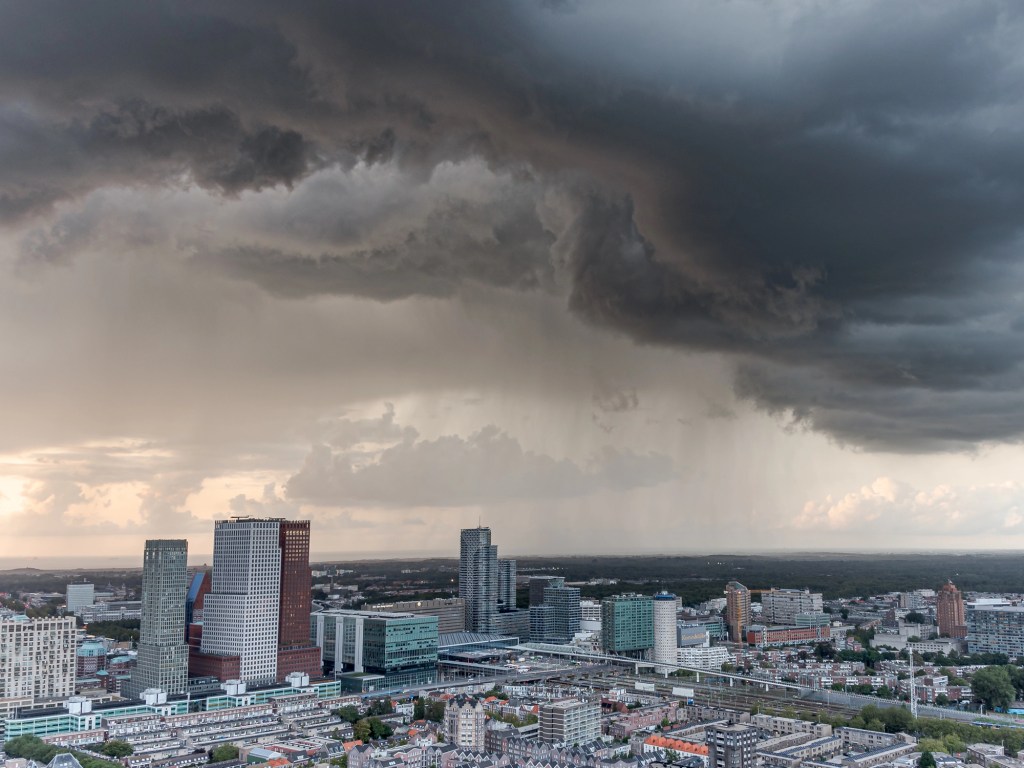
I recall today the Flying Fickle Finger of Fate award from Rowan and Martin’s Laugh In back in 1968. When I was 8 years old, Laugh In was a hip variety show of biting political humor that was mostly lost on my young mind. The award was a dubious honor ceremoniously presented each week to public figures, corporations, and government agencies for ridiculous “achievements”.
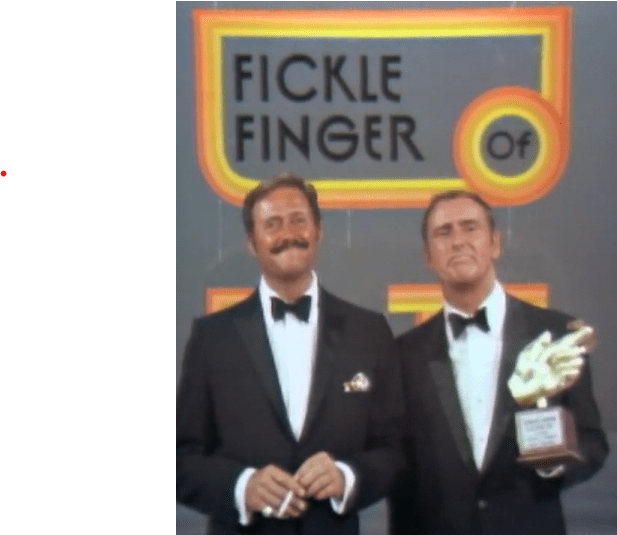
The Fickle Finger of Fate suggests the unpredictable and arbitrary nature of luck or destiny. As finite human beings, we don’t control our fates, and we cannot know the twists and turns that await us in the future.
The award has an ironic backstory. Star Trek was moved from the coveted 7:00 PM spot to the dreaded 10:00 PM “death slot” by NBC to make room for Laugh In. The hip, comedic variety show, however, was popular only for a relatively a short stint from 1968 to 1973 and has largely been forgotten by all but impressionable young minds.
Star Trek, on the other hand, went on to become an iconic science fiction series. It was ahead of its time, and it became a hit in off-network syndication, inspiring sequels and movies for almost 50 years.
Fate is certainly a fickle thing. Driven by polls and ratings to attract the largest audience, NBC obviously did not foresee the lasting success of the Star Trek brand. They also did not expect the short-lived lifespan of their cutting edge variety show that replaced Star Trek.
As Christians, we don’t believe in fate, of course. We don’t believe in random chance. We believe in God who designed and ordered the universe and established our place in it.
The future, however, is equally unknowable to us. As the writer of Ecclesiastes said thousands of years ago, “God set eternity in the heart of man, but not so that he can know the end from the beginning.” (Ecc. 3:11). The Prophet Isaiah said it this way,
“’For my thoughts are not your thoughts,
Isaiah 58:8-6
neither are your ways my ways,’
declares the Lord.
‘As the heavens are higher than the earth,
so are my ways higher than your ways
and my thoughts than your thoughts.'”
God famously, but lovingly, rebuked Job for insisting on understanding things he could not fathom. As with Job, we are invited to have faith and to trust God, but we have more reason for hope and trust than Job, because we know our redeemer lives. He rose from the dead!
We understand that God can be trusted because of His willing demonstration of love for us in emptying Himself to become a man and laying down His life for us. We have no option but to trust Him, but we know we can trust him because of His love for us that He demonstrated on the cross.
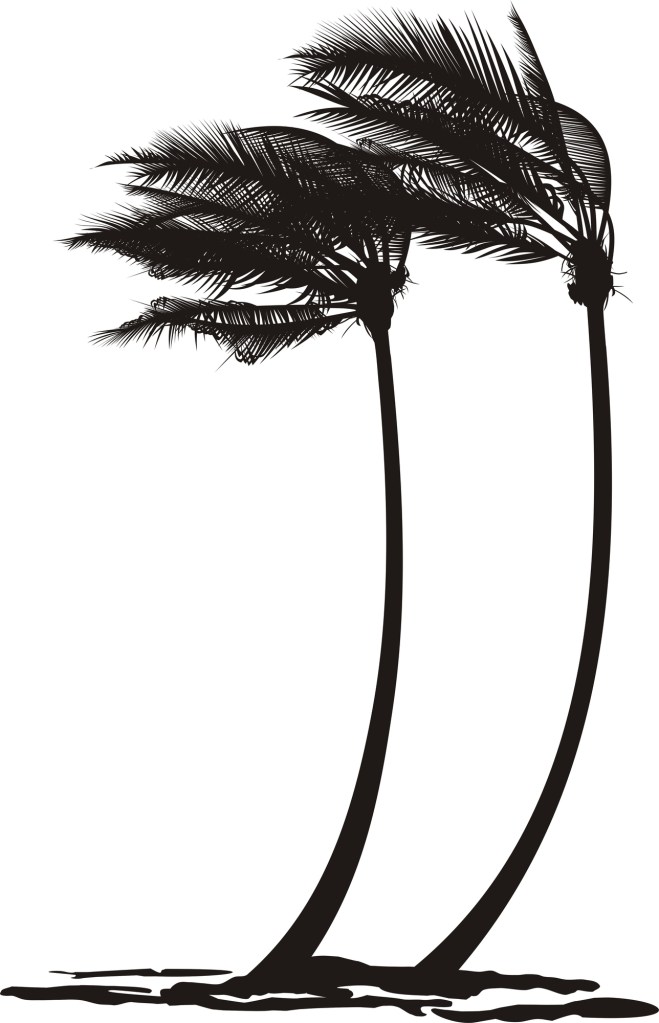
Still, we easily are easily swayed and influenced by external pressures. We may think that we understand the times when we are only blowing in the shifting winds of “fate” (powers and principalities that want to blow us off course).
Paul says these powers and principalities are operative in the world. They are “spirits of the age” that play us like instruments if we are not grounded in the Word of God and led by His Holy Spirit.
Jesus used the phrase, reed blowing in the wind, when he addressed a crowd that went into the wilderness to see John the Baptist: “Did you you go to see a “reed swayed in the wind?” (Matt. 11:7-18)
John the Baptist was not just a curiosity. He was not a fleeting personality (like Rowan & Martin) with no lasting importance or purpose. He was the messenger of the Messiah, foretold by the prophets preparing the way for Jesus, the suffering servant who would take away the sins of the world. John was an agent in God’s eternal plan, and Jesus was (and is) the key figure in that plan.
Though he was foretold by the Prophets, no one knew exactly how things would unfold – not even God’s own people. In fact, they didn’t recognize God’s Messiah or receive him when he came. (John 1:11). Crowd of common people were drawn to Jesus, but smarter and more prestigious religious leaders were not.
Many have come, and many have gone. Many have claimed to be the harbingers of promise and special knowledge in their times, but many have proven wrong in their predictions.
The reality is that we do not know what we do not know. We must ever remain open to letting God’s Word shape us and direct us, and we must ever remain attentive to allow the Holy Spirit to guide us in applying His Word in our times.
Even now, smart people – including learned, religious people – believe and act as if they know the times. It is the same in every age and every generation, but we are easily swayed and blown by the winds of fate and human influence that seek to drive the course of history not always in ways that are aligned with God’s plan and purposes. To that generation, and to ours, Jesus said:
“They are like children sitting in the marketplaces and calling out to others:
Matt. 11:16-17
‘We played the pipe for you,
and you did not dance;
we sang a dirge,
and you did not mourn.’”
Human tendency is to trust ourselves. The smarter we are, the more we trust in our own ability to figure it out. Perhaps, this explains why so many scientists and PhD’s are atheists. Perhaps, this is why so many of the religious leaders in the time of Jesus were blind leaders of the blind. Perhaps, we are susceptible to the same error.
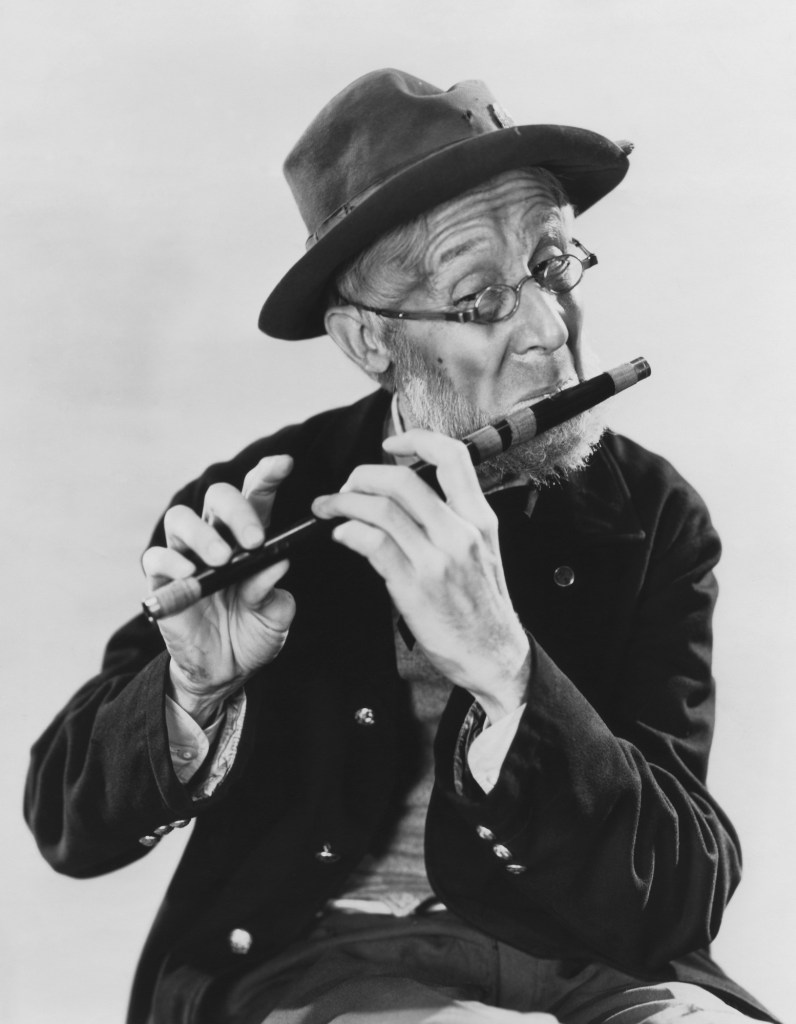
We don’t know the end from the beginning. We don’t know God’s thoughts unless He reveals them. God doesn’t dance to the tunes we play. Our tunes are often just riffs on the spirits of our age changing as those spirits change their tunes that we follow.
I reflect on these things as I think through changes in the winds influencing the evangelical church in my lifetime.. We need to be grounded in the Word of God and in tune with the Spirit of God. (See Hearing the Voice of God for Today) if we are not, we become reeds blowing in the wind.
A few weeks ago, I created a short list of issues on which Evangelicals (my tribe) have swayed in the political winds during my lifetime. I have done some research to confirm and correct my intuitions, and that exercise has confirmed my suspicions that we have, indeed, been reeds blowing in the political winds over the last 60 years. Following are just a few examples.
Continue reading “On the Flying Fickle Finger of Fate and Reeds Blowing in the Wind”





 Navigating by Faith