Coming Together In Christ and Putting Our Political Differences Aside

The black and white reality of our differences and commonalities.

I have been writing about and trying to convey a certain perspective on racial tensions in the United States and the response of the American Church to those tensions, but I fear I haven’t done the subject justice. An article I read today on the Resurrecting Orthodoxy blog[i] clarifies some of my thoughts and prompts this article. The author’s subject is the book by Esau McCaulley, Reading While Black: An African American Biblical Interpretation as an Exercise in Hope. (I have the book and intend to read it myself.)

To be clear, when I speak of the “American Church”, I am really thinking of my own tribe – the evangelical church in the United States. My tribe are the people who the political pundits label “white evangelicals”. I don’t like the label, but these are “my people”.

That doesn’t mean that “we” don’t have African Americans, Mexicans and Latin Americans, and other ethnicities in our churches. We do. We are predominantly white, though, in the evangelical circles in which I have grown up as a Christian since my college days.

Regardless of the pews where people sit on Sundays and who sits next to them, political pollsters separate “white evangelicals” from their black counterparts. This distinction has bothered me because it suggests a false dichotomy.

Theologically, we agree on primary beliefs. The article on Reading While Black describes those beliefs as follows:

“(1) The importance of a ‘born again’ experience, (2) The demonstration of the Gospel in missionary and social reform efforts, (3) The upholding the authority of Scripture, and (4) The stress on the sacrificial death of Jesus as what makes redemption possible.”

On this point, Joel Edmund Anderson, the author of the article says:

“… I couldn’t help thinking as I read the book that the book’s title is actually misleading, for I didn’t see McCaulley’s black ecclesial interpretation of the Bible to really be a black interpretation at all. It was a faithful Christian interpretation.” (Emphasis in the original)

This observation underscores the main point of my article today: white Christians and black Christians agree many things at the heart of faith. We agree on the necessity of being born again, the missionary nature of the Gospel, the authority of Scripture, and the redemption from sin through the sacrificial death of Jesus on the cross.

We don’t agree, though, on politics, and we vote very differently. Polls clearly show that white evangelicals voted about 80% in favor of Donald Trump, while black “evangelicals” voted just the opposite – about 80% against Donald Trump.

It’s tempting to try to explain that difference away on the basis of conservative and progressive/liberal ideologies and miss the clear common ground in our biblical beliefs. It’s also tempting to blame this difference on race alone. Race surely is a key distinctive. But why?

Continue reading “Coming Together In Christ and Putting Our Political Differences Aside” →

Decompressing from Politics, Storming the Capitol Building, and the Church in America

Does anyone think the “QAnon shaman” is really representative of Christians?

Crowd of Trump supporters marching on the US Capitol on 6 January 2021. Creative Commons License

I think many Americans have been trying to decompress from the events that took place on January 6th. The long, tense build up to the electoral college vote count, the persistent claims of fraud and a stolen election, the rally and then the sudden alarm of people storming the Capitol Building are being replayed now in the impeachment hearing.

Legal retribution is grinding forward. The Biden/Harris duo were confirmed, took over the White House and issued a flurry of executive orders, but we can’t put the genie back in the bottle. The ripple effect of the events that preceded the inauguration seethe and heave under the surface.

A majority of Americans condemn the outburst of misplaced patriotism that spilled into the Capitol Building and onto the congressional chamber floor. Most were horrified by it. It looks even worse in retrospect.

I recently heard someone emphasize that Trump lost by 7M votes. That seems like a hefty number, but consider that almost 75M people voted for him. Almost half the country voted for Donald Trump.

How do we move forward? How does the church move forward? (Divided as it, not much unlike the unchurched)

Our human penchant for sweeping generalization in times like these misses the nuance and complexity that fill out the truth. I think about these things as I listen to an interview of Sarah Posner on the podcast, Sacred & Profane, titled Render Unto Q.

Posner wrote the book, Unholy, WHY WHITE EVANGELICALS WORSHIP AT THE ALTAR OF DONALD TRUMP. She speaks in the interview about the New Right, Moral Majority and New Apostolic Reformation as precursors from the 1970’s and 80’s to what she calls “worship at the altar of Donald Trump” today.

I was involved in the New Apostolic Reformation during that time period, though we didn’t have a label for it. I remember the influence of politically minded religious leaders and religiously minded political leaders during those times.

I am now an outsider to the New Apostolic movement, but I was once an insider. I have friends who are still actively involved in current iterations. As I listen to the interview, many of the things Posner says ring true, but I can bring a little nuance into the dialogue from my own experience.

Sarah Posner has studied these things closely, and is somewhat a subject matter expert on the involvement of evangelicals in politics. She has a far more nuanced understanding than most people, so her comments bear some consideration. I will summarize some of Posner’s observations and add my own, especially where I can add some clarity from my own experience.

Part of the problem with critiques of what happened on January 6th is trying to understand the strange mixture of forces that came together in the storming of the Capitol. They have long been stewing together in a weird kettle of different fish.

As with any stew, the individual ingredients take on a singular flavor, given time, and this stew has been marinating for quite a while. To the extent the church is close enough to this stew to take on its flavor is concerning.

Continue reading “Decompressing from Politics, Storming the Capitol Building, and the Church in America” →

Jesus, Is Still Shaking the Church Like He Shook the First Century Religious Leaders

Righteousness and justice are the foundations of God’s throne. They are the building blocks of His character.

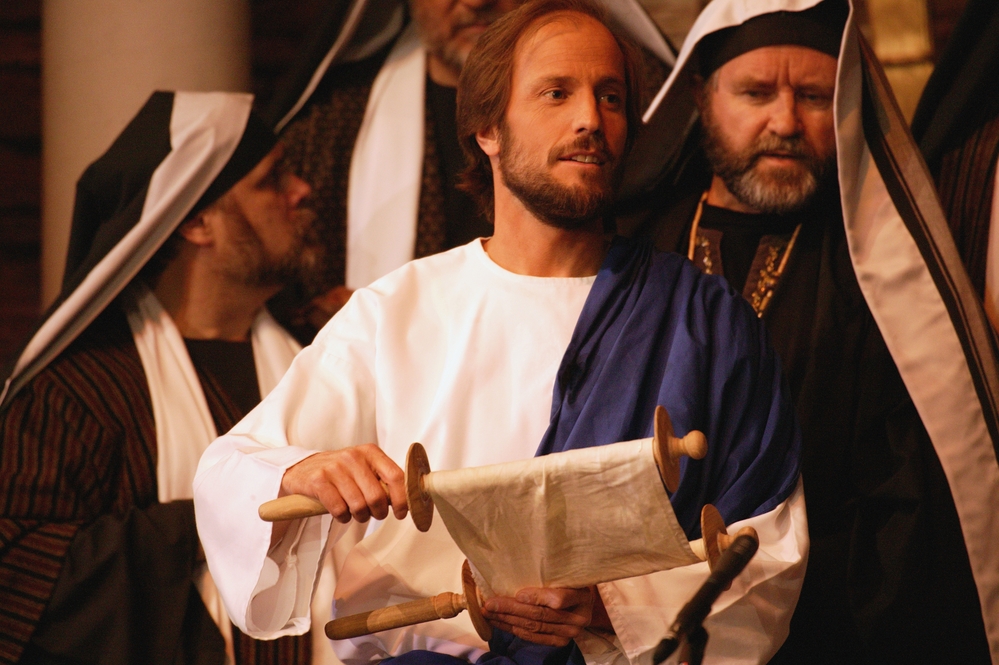
I wrote about A Mic Drop Moment in First Century Galilee back in March of 2020, referring to the passage in Luke 4 in which Jesus read from the Isaiah Scroll in the synagogue in Galilee where he announced his public ministry. I have been focused on that passage since the spring of 2019, when I was drawn to it for a talk on doing justice.

I am still continually drawn to that passage. I intended to write more about justice when I wrote that piece in March of 2020, but it wasn’t until July that I actually got around to it. (See Evangelicalism and Injustice Part I, Evangelicalism and Injustice Part II and The Need for the Church to Address and Injustice, for example.)

The world changed dramatically between March 2020 and July 2020. COVID shut down commerce and isolated people. The George Floyd killing happened in June, and we were embroiled in nationwide unease and unrest. The need for justice in a spiritually dry and parched world was quite evident, then, as the scabs of centuries of racial injustice were torn open and bleeding.

The focus of my writing has been on my fellow evangelicals. They way I have phrased this introduction may strike discord among my church family (or so I imagine as I write this).[i] I am convinced, however, these things are centrally important to God and how the body of Christ lives out the Gospel in the world.

Righteousness and justice are the foundation of God’s throne. Mercy and truth go before Him. (Ps. 89:14)

If we want to get closer to God, to know Him better and to be like Him in this fallen world, we need to focus on these: righteousness and justice. They are the twin pillars of God’s character.


This morning, Jeff Frazier’s sermon at Chapelstreet Church in Batavia, IL was on the same passage in Luke 4 that I have been reading periodically since 2019.[ii] I focus on a particular emphasis today that prompts this article, but let me set the scene first.

The entirety of the passage is found at Luke 4:16-30.  I encourage you to read it now or read my mic drop description of it (as if Jesus read from the Isaiah scroll in a neighborhood church today).

The key points for this article are that Jesus went to his home synagogue and read from the Isaiah scroll to his “own people” who knew him well. When Jesus said the messianic message of that passage was being fulfilled in their hearing, the people asked him, “Aren’t you Joseph’s son?”

Still, they spoke well of him and marveled at his “gracious words”. (Luke 4:22) Then Jesus made them uncomfortable by foretelling that they would taunt him and reject Him, adding, “[N]o prophet is acceptable in his hometown.” (Luke 4:23-24)

I imagine the synagogue went quiet quickly. They probably looked at each, thinking or saying things, like,

  • What is he saying?
  • Did I just hear him right?
  • Weren’t we just saying how he has grown up into a fine young man?
  • Did  he just accuse us of rejecting him?
  • We haven’t done anything!
  • We weren’t even thinking those things!”

But Jesus didn’t stop there. He turned the heat up a notch! This is where things really got dicey in his hometown synagogue. This is the point I am seeing in this passage today – something for us to think about in the American Church today.

Jesus referenced two passages of Scripture and two stories of revered Hebrew prophets. His citation to Scripture may not have raised eyebrows. It was the application of them that riled up his synagogue audience.

Continue reading “Jesus, Is Still Shaking the Church Like He Shook the First Century Religious Leaders” →

The Story of Abraham and God’s Redemption of all Mankind – Part 3

God works through the hot mess of our choices to accomplish His purposes.

I am covering some ground in the story of God’s redemption of mankind through Abraham and his progeny. This is a story of God redeeming people because of their faith (trust in God), not for their morality. It’s also a story of God accomplishing His purposes through people despite their messiness.

Abraham and Sarah were childless for 25 years after God gave Abraham promises that He would give Abraham a land for his descendants who would be numerous and that God would bless all the nations through them. On the basis of those promises, Abraham left his ancestral home and journeyed to “a land God would show him”. 

Through those 25 years, Abraham and Sarah continued to live their lives. The moved many times over those years, in and out of the land of Canaan, which is the land God promised to them.

Abraham wavered at times. At one point, when God visited Abraham, Abraham questioned God, saying, “[Y]ou have given me no offspring….”, and telling God (as if He didn’t know), “[T]he heir of my house is Eliezer of Damascus.” (Gen. 15:2-3)

God God didn’t waiver, though. He renewed the promise, saying, “This man shall not be your heir; your very own son [out of your loins] shall be your heir.” (Gen. 15:4)

Years went by. Abraham and Sarah had been in Canaan for 10 years already (Gen. 16:3), and Abraham was 86 years old. (Gen. 16:16), Sarah got impatient and offered her Egyptian servant, Hagar to Abraham, they conceived, and Hagar gave birth to Ishmael. (Gen. 16:1-4)

We find out that this wasn’t God’s plan either, but He let 13 more years go by before letting Abraham know. Abraham was 99 years old when God visited again!

God said again, “I will make you very fruitful; I will make nations of you, and kings will come from you” (Gen. 17:6); and, “The whole land of Canaan, where you now reside as a foreigner, I will give as an everlasting possession to you and your descendants after you.” (Gen.17:8)

How would Abraham have taken that?

God had made this same promise since Abraham stood in Haran imagining the land God was promising him and the descendants he would have, but that was 25 years ago! Abraham was now 99, and Sara was 90. The likelihood that the two of them would have a child together was slim to none.

Thirteen years prior, Abraham had a son. His name was Ishmael. Surely, Abraham thought by that point that Ishmael was the fulfillment of God’s promise, but it wasn’t so.

After almost 25 years, God finally gave Abraham some missing details:

“As for Sarai your wife, you are no longer to call her Sarai; her name will be Sarah. I will bless her and will surely give you a son by her. I will bless her so that she will be the mother of nations; kings of peoples will come from her.” (Gen. 17:15-16)

Abraham’s response isn’t surprising:

“If only Ishmael might live under your blessing!” (Gen. 17:18)

Abraham had not only come to accept that Ishmael was the fulfillment of God’s promise; Abraham had embraced it. Abraham undoubtedly loved Ishmael, despite his abrasiveness. Thus, his response to God’s new direction was, “What about Ishmael?!”

Why did God wait 25 years from the time He first promised to fill the land with Abraham’s descendants to give Abraham all the details? Why did God let Abraham sleep with Sarah’s servant and have another son first? Why did God wait 13 more years before letting Abraham in on the additional details?

I’m not sure I know the answers. It was obviously God’s plan, though, to fulfill the promise to Abraham through Sarah, his half-sister, the daughter of Abraham’s father, Terah. God also wasn’t done with using the line of Terah in this story.

Continue reading “The Story of Abraham and God’s Redemption of all Mankind – Part 3” →

How Does a Living God Relate to a Pagan World?

We have our gods, though we don’t give them names or ascribe human personalities to them.

My thoughts today are based on the story of Paul and Barnabas while they were in Lystra, a city in central Anatolia, part of present-day Turkey. While Paul was speaking, his gaze came to rest on a man listening to him speak who was “crippled at birth”.

Paul saw the man had faith, so he loudly told the man to stand up. (Acts 14:8-10) The man sprang up, and the crowd was awed, saying, “The gods have come down to us in the likeness of men!” (Acts 14:11)

The people in Lystra were pagans. They worshiped Roman gods and, perhaps, other gods as well. They started calling Barnabas Zeus and Paul Hermes and began making preparations to worship them.

When Paul and Barnabas realized what was happening, they were appalled! They rushed into crowd, saying, “Don’t do that! We are just men like you!” (Acts 14:14-15 (paraphrasing)). Then, Paul addressed his pagan audience like this:

“[W]e bring you good news, that you should turn from these vain things[i] to a living God, who made the heaven and the earth and the sea and all that is in them. In past generations he allowed all the nations to walk in their own ways. Yet he did not leave himself without witness, for he did good by giving you rains from heaven and fruitful seasons, satisfying your hearts with food and gladness.”

Acts 14:15-18

This is, perhaps, the first sermon preached in the early church to people who are not Jews. The pagans did not believe one God. They didn’t understand Mosaic Law, the concept of sin or the prohibition against worshiping idols considered to be false gods.

Thus, Paul didn’t address them as he did his Jewish audiences. He didn’t appeal to Mosaic Law, or accuse them of sin, or call them to repent.

Just as the Gospel is good news to the Jews, it is good news to the pagan Gentiles. The message, however, is different. Paul urged them merely to “turn from vain things to a living God”!

By “vain things” Paul meant their gods, the idols that the pagans worshiped. Instead of calling them idols, as he would have done to a Jewish audience, he referred to them descriptively by their character – their worthlessness, emptiness and utter inability to accomplish anything.

We have a hard time relating to idol worship in the 21st Century. Idol worship is so Bronze Age! Our ancestors long ago stopped believing in gods and sacrificing to them, right?

Tim Keller, in his sermon, The Gospel for the Pagan, paints a different story. These pagans were not so different from us.

In a polytheistic society, of course, people worshiped and sacrificed to a variety of gods. There was no supreme god. People had to decide what gods to worship. Thus, people chose gods to worship based on how those gods could help them.


A a merchant might sacrifice to the god of commerce. A farmer might sacrifice to the god of agriculture. Other people might sacrifice to the god of art and music, or love and beauty, or a combination of gods, depending on what was most important to them.

Keller says that sacrificing to the god(s) of choice was, in effect, worshiping the things people valued most. By sacrificing to the gods of commerce, agriculture, art and music, love and beauty, etc., they were worshiping whatever it was the god represented.  Whatever a person sought help for was the thing from which they sought meaning in life, hope and fulfillment.

Thus, says Keller, “vain things” (idols) are things that “promise fulfillment, but leave you empty”.

We may think of ancient pagans as a brutish and unsophisticated lot, but we are no different than they in the sense that we sacrifice for the things we think will fulfill and satisfy us. The only difference is that we have dispensed with the representative gods.

The person who values career, or accomplishment or being respected by peers as a matter of first priority will sacrifice for those things. The person who thinks that love, romance and family are the highest forms of meaning will devout primary attention to those things. The person who loves art and music will sacrifice for those things and from them seek meaning and fulfillment.

We aren’t that different, really from our pagan ancestors, though we might scoff at the idea of gods, as in idols. We have our gods, though. We just don’t call them names or ascribe human personalities to them.

Paul’s message to the pagans in Lystra was, “These are worthless things!” They can’t fulfill you. Only the Living God can do that. His message has more application to us in the 21st Century than we might think at first glance.

Continue reading “How Does a Living God Relate to a Pagan World?” →