The Reconciliation of Science and Religion

By Brooke Ekstrom
By Brooke Ekstrom

The reconciliation of science and religion may seem unlikely to some. Though the Renaissance period grew alongside the Reformation, and advancements in science during that time were largely pioneered by men of faith, science began to deviate from faith during the Enlightenment period. I suppose that the divergence of science and faith that began in the Enlightenment period is somewhat like the Protestant movement separating from the Catholic Church.

As one grew alongside the other, however, and both having roots in the same soil, it is inevitable that separation cannot be complete or total.

To the chagrin of modern materialists, the connection cannot and will not be severed.

Many atheists would of course embrace the idea that science can falsify religious claims. However, if this is the case, then religion may fall within the purview of science. The claim that religion and science may overlap is a claim that atheists have fought vigorously in the courts to reject. The reason for this is that if science can falsify religious claims, then it is also conceivable that it can give evidence for the truth of religious claims.

It is also maintained that science deals only with the physical world as its subject matter. While this is a methodological statement, many believe that science only deals with the physical world because that is all that exists. However, this is not a statement of science; instead, it is a philosophical statement that can neither be verified through the senses nor falsified through reason. Alvin Plantinga, J.P. Moreland, and several other philosophers of science have written extensively on this understanding of science. The problem with this materialistic criterion is that it fails its own test. That is, definitions are not physical, concepts are not physical, and meaning is not physical, and these things are what the materialist uses to define science. Therefore, if definitions, concepts, and meaning exist, then not everything that exists is physical.

Of course one could believe that non-physical reality exists, but claim that science merely deals with the physical attributes of the world. That is all well and good, but would merely suggest that religion and science do not talk to each other. Yet, as shown above, one could clearly use science to show certain religious beliefs to be false. And, as I also mentioned earlier, if one can used scientific fields to disprove religious claims, science may also be used to justify the beliefs of many religious claims.

From the blog post, Is Science the Enemy of Religion?, written by Shannon Holzer.

Science and Societal Consensus on Fetal Life

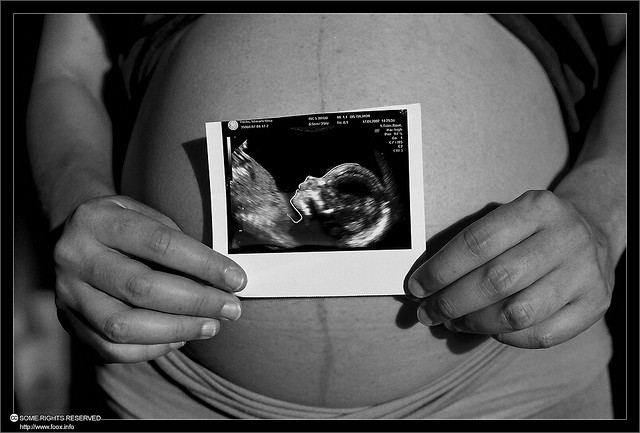
Pregnancy by Michael Foox


I don’t like the headlines that are over sensationalized. Rubio Crushes CNN Host for His Ignorance about Human Life, is an over sensationalized headline. The annoying headline detracts from the content, which gets to the core of the pro-life and pro-choice debate, and is important.

I will say, first of all, that I have not been very much engaged in this debate for over 30 years, and I say that to my shame. I have thrown up my hands over the callousness that I see in our country on the issue of human life. The Rubio/Cuomo dialogue underscores that callousness. I am sorry that I have stayed on the sidelines.

Cuomo says that science cannot say when human life begins. Rubio says that human life begins from conception. If we were looking at those two arguments in a vacuum, with no preconceived notions, with no thought to the consequences of the argument, where do you think science would come out? Continue reading “Science and Societal Consensus on Fetal Life”

What of Rupert Sheldrake?

Brooke Elkstrom Lake Sunset 2


This piece is a bit afield for me. I am embedding a “banned TED Talk” given by Rupert Sheldrake, a Cambridge, Harvard educated, scientist and bane of the scientific community. What of Rupert Sheldrake?

He is not a Christian, though he reportedly says the Our Father every day. Dr. Sheldrake “evolved” from a biochemist and cell biologist to a plant physiologist and eventually to a researcher in the field of parapsychology.[5] He is known for his “morphic resonance” concept.[6] He is the darling of New Age adherents, not Christians. He is also labeled a “heretic” by his scientific fellows.

So why would I include a piece on Rupert Sheldrake in a Christian-orientated blog site? Continue reading “What of Rupert Sheldrake?”

Theology, Science, Dreaming and Waking

Pitting the scientific myth against the theological Christian myth

76900149_2ab4dc13e3_o


I am a great fan of C.S. Lewis. Not that I agree with everything he has written, I love his genius and insight that is marked by a truly Renaissance journey through all of the great classical literature, philosophy and rational, scientific discourse. He approaches Christianity from the opposite shore and provides a view that most churchgoers would never otherwise get.

I recently read his short essay (Is Theology Poetry?) that is published with the Weight of Glory and other addresses by Harper One. In classic Lewis style, he starts off with a very obscure, nuanced question (that few, if anyone, would even think to explore) and, from the seeming pedantry and narrow beginning, he opens up the discourse about half way through into a sweeping view of an eternal truth that is absolutely breathtaking. Continue reading “Theology, Science, Dreaming and Waking”

The Bible is More Reliable than the Law of Thermodynamics

canstockphoto25350327

Consider[i] the story of astrophysicist, Hugh Ross. He was a child prodigy raised in a secular, non-religious home in a secular community. He read all the books on science in his local library and knew he wanted to be an astrophysicist at an absurdly early age.

At 9 years old, he brought home a book on creation myths from the library. It summarized 100 different creations stories from different cultures around the world, and wrote all of them off based on the science he already knew.

At the age of 17, he read through the first few chapters of Genesis for the first time. He was surprised to recognize elements of the scientific method and some congruity with the scientific record. Listening to him describe his observations and conclusions while reading the creation story in Genesis for the first time are truly remarkable. 

Continue reading “The Bible is More Reliable than the Law of Thermodynamics”