Why did Paul Go to Corinth with a Demonstration of the Spirit’s Power?

“My speech and my preaching were not with persuasive words of wisdom but with a demonstration of the Spirit’s power….”

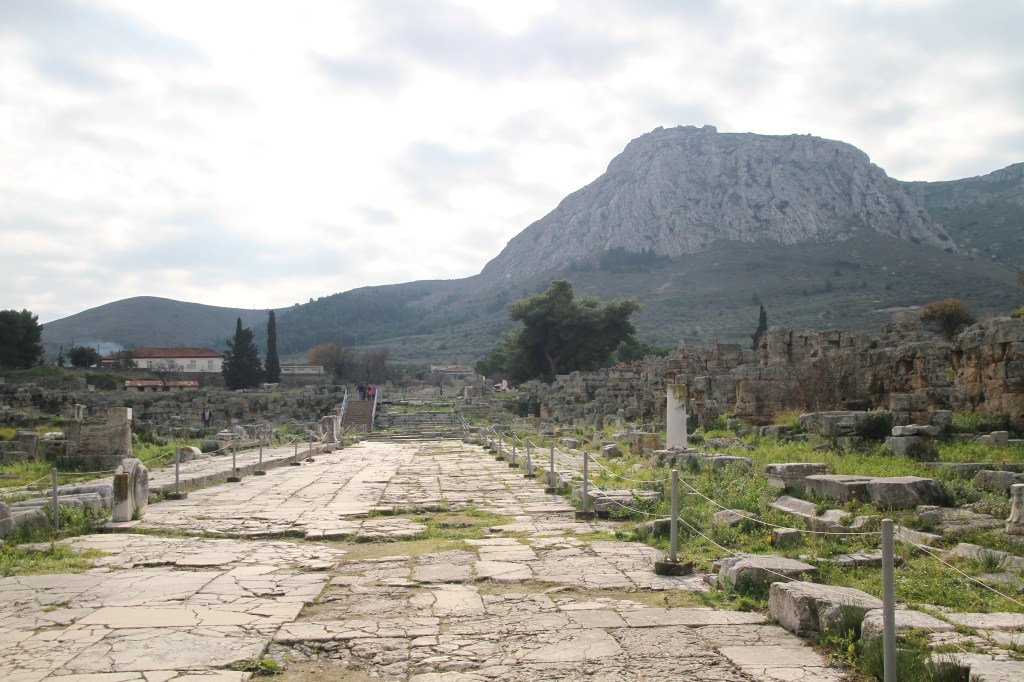
Ruins of Ancient Corinth in Peloponnese, Greece

Over the couple weeks that I was paying attention to what happened at Asbury University in Wilmore, KY (and other places now too), and considering the people criticizing it or cautioning us about it, I have prayerfully considered the matter. I have written about the “Asbury revival” a handful of times, so I am not going to rehash what I have written.

I continue to mull over the seeming positive development of 20-somthings worshiping, publicly confessing sins, praying for each other, and exalting the name of Jesus while people have been critical of what was happening and questioning God’s involvement in it. At the same, I have been drawn in my daily Bible reading to the concern Paul expressed in most of his letters for unity in the body of Christ.

This focus that has been impressed on me as I read the Bible and meditate on it predates the Asbury thing by many months, but it is directly relevant to it. The lack of unity in the American Church stands in sharp contrast to Paul’s emphasis on unity in the body of Christ. Our lack of unity has been publicly demonstrated in the vitriolic responses to the “He gets us” commercials aired during the Super Bowl and now to the Asbury “revival”.

Paul’s first letter to the Corinthians is all about unity and order in the local body of believers in Corinth. At the same time, the Corinthian Christians seemed to lack no shortage of what we might call the “outpouring” or “movement” of the Holy Spirit. None of Paul’s letters deals more with “the spiritual gifts” than this one.

I need to comment that the free exercise of the spiritual gifts, and God moving in peoples’ hearts and minds do not necessarily go hand in hand, as we will see, Paul also did not discourage the Corinthians from using the spiritual gifts.

This is the problem, though: while the spiritual gifts were demonstrably evidenced in the Corinthian church, they Corinthians were not producing an abundance of the fruits of the Spirit among. This lack of the fruit of the Holy Spirit was the problem in Corinth.

As a key indicator of that lack of fruit, Paul focused on their quarrelsome cliques: one group followed Paul, another group followed Apollos, and other groups of people claimed to follow Cephas, or simply Christ. That local body was being torn apart by arguments over who they should follow and other aspects of the Christian life, like whether they should be eating food sacrificed to idols. Meanwhile, they were ignoring other problems in their midst like sexual sin, relational issues, and other things.

They exhibited the spiritual gifts abundantly. Those exhibitions of spiritual gifting might be called today a “movement” or “outpouring” of the Holy Spirit, but the fruit of the Holy Spirit was lacking. Whether the Spirit was “moving” or people were simply exercising gifts given by the spirit are two different things.

I have experienced that incongruity myself. A lack of harmony between a hyper focus on the spiritual gifts and a lack of unity, faithfulness, maturity, and holiness in the local body of Christ has caused many to pull back from Charismatic and Pentecostal forms of Christian expression. Me included.

We sometimes fail to appreciate the difference between the gifts of the Holy Spirit and the fruits of the Holy Spirit. We think that a demonstration of the gifts of the Holy Spirit means that we are blessed by God, and everything we do is approved by God, but that isn’t necessarily true.

If those two things went hand in hand, Paul would have had no issues with the Corinthian church, because the Corinthians experienced a liberal “outpouring of the Spirit” characterized by prophecy, speaking in tongues, miracles, etc. Though the Corinthian church was demonstrably Charismatic (or Pentecostal), it was woefully lacking in unity and personal holiness.

Having acknowledged that, we need to notice that Paul’s issue with the Corinthians wasn’t (primarily) their misuse (or ineffective use) of the spiritual gifts. The more serious concern was their prideful, boastful, quarrelsome lack of unity and toleration of sin in their midst.
Something else occurs to me that I hadn’t noticed before, and this is the focus of my writing today. The Corinthians were Greek, of course. Paul famously says to the Corinthians that Greeks demand wisdom, while Jews (his people) demand signs.

Both of these things are forms of error, but the Corinthians, being Greek, were particularly prone to err along the lines of their particular, cultural bias. They valued discourse, argument and persuasive oratory. Thus, Paul said,


“When I came to you, brothers and sisters, announcing the mystery of God to you, I did not come with brilliance of speech or wisdom. I decided to know nothing among you except Jesus Christ and him crucified. I came to you in weakness, in fear, and in much trembling. My speech and my preaching were not with persuasive words of wisdom but with a demonstration of the Spirit’s power, so that your faith might not be based on human wisdom but on God’s power.”

1 Corinthians 2:1‭-‬5 CSB

Paul says he did not come with brilliance of speech or with persuasive words. He came with “a demonstration of the Spirit’s power”. As I will show below, Paul’s focus is on the Greek tendency to err in demanding “wisdom”, not the Jewish tendency to demand “signs” (though the Corinthians experienced no shortage of “signs”). This is interesting to me in the light of the Asbury University phenomenon.

Continue reading “Why did Paul Go to Corinth with a Demonstration of the Spirit’s Power?”
What Laws Must a Christian Follow?

The tension between the Law and the Gospel and how they relate to each other is the key to understanding Christianity.


The themes of law and grace are central to Christianity. Sorting them out gets to the very heart of the gospel message. Yet, many people inside and outside of the Christian community are unclear on what laws Christians must follow, what laws are no longer applicable, and why.

Someone recently posted the following question to a group to which I belong on social media:


I get the message of we are not under the law but under grace. But if we live through Christ we will follow the law. How do we know what law to follow? Does this go as far back as to not mix fabrics? 

Obviously everyone says we’re no longer under the law, but ”faith without works is dead” so I am confused. 

How do we know which laws to follow?


Human tendency is to want a list of rules to follow so we can check them off. The rich young ruler demonstrates that human tendency when he came to Jesus one day and asked, “Teacher, what good thing must I do to get eternal life?” (Matt. 19:16)

We also have a tendency to want to quantify rules, and to simplify them to make them easier to follow. Perhaps, that is what motivated someone to ask Jesus, “Teacher, which is the greatest commandment in the Law?” (Matt. 22:36)

Or we go the other direction: we add rules on top of rules on top of rules to make sure that we don’t miss anything. The Pharisees demonstrated this approach in how they handled the commandment to observe the Sabbath. The created a list of “work” that was forbidden including, among other things: sowing, plowing, reaping, binding sheaves, threshing, winnowing, selecting, grinding, sifting, kneading, and baking bread; twelve similar activities related to the preparation of clothing, from shearing sheep to sewing; and seven activities related to preparing the carcass of a deer for food or leather. (See What are some Sabbath Observance rules that the Pharisees made?)

Moses started with ten commandments. By the time the books of Moses were completed, there were 613 commandments! (Though not everyone agrees on exactly what they are.)

The Torah (the Five Books of Moses – Genesis, Exodus, Leviticus, Numbers & Deuteronomy) focused on laws. That focus carries through the entire Old Testament. Though the laws are often more prominent in the breach, than in the observance thereof!

The same focus continued into the New Testament. We see it in the question asked by the rich young ruler and the Pharisees’ questions to Jesus. We see it in the tension between Paul and Peter that threatened to divide the early church over whether believing Jews must follow the Law and what laws believing Gentiles must follow.

This is the tension between the Law and the Gospel. If we understand only one thing about the Gospel message, the relationship of the Law to the Gospel might be the most important thing! I have written about it often, including How the Moorings of the Gospel Were Secured.

For the sake of brevity, I won’t summarize everything here. You can click in the links in the last two paragraphs to get an overview from the articles linked there. Understanding what Jesus meant when he said he didn’t come to abolish the law, but to fulfill it is critical.

If you are not a Christian, or you are a Christian, but you are not sure you understand these things, please do not just gloss over them. The tension between the Law and the Gospel and how they relate to each other is the key to Christianity.

It was the focus of almost all of Paul’s writings. It is the major theme in Romans, Galatians, Ephesians, Hebrews and the other epistles. Take some time now to wrestle with it. Don’t stop until it makes sense to you!

Hopefully, the rest of my thoughts in this piece will help.

Continue reading “What Laws Must a Christian Follow?”

Taking the Hand of God, Literally; How We Read the Bible


Heaven is my throne, and the earth my footstool. What sort of house will you build for me? says the Lord, or what will be my resting place? Did not my hand make all these things?

Acts 7:49‭-‬50 CSB

I have thought and written about the fundamentalists and the atheists of the world who, ironically, approach the Bible in the same way. Both groups of people read the Bible in a wooden, inflexible, literal kind of way. (See Sam Harris Podcast with Bart Ehrman – Part 2 – Wooden Fundamentalism)

This passage above gets me thinking about these things again. The passage quoted above is from Steven’s address to the Jewish leaders who had him stoned after calling them stiff-necked like their ancestors in the desert (among other things).

Steven recited the Jewish history to them, including the Ark of the Covenant that was created to hold the Ten Commandments and the Tent of Meeting that was carried through the desert and set up where they stopped as a place for God’s “presence” to “dwell” among them. The Tabernacle with the Ark of the Covenant became the inner sanctum of the Tent of Meeting. These structures the people carried with them became the place they would meet with God.

David desired to build God a home, a permanent place for the Ark of the Covenant and Tabernacle, and Solomon accomplished David’s dream. David knew, however, that God does not live in a temple made by human hands. Solomon, David’s son who built the Temple, acknowledged the same thing when he dedicated the Temple:

“But will God really dwell on earth? The heavens, even the highest heaven, cannot contain you. How much less this temple I have built!

1 Kings 8:27

They understood that the Tabernacle, the Tent of Meeting, and the Temple were symbolic. These physical structures and the activity organized around them and in them were meant to point to a metaphysical reality of much greater substance.

It’s ironic that David, a man after God’s own heart, knew these things, but the people of God generally often did not. David was a man after God’s own heart, but the Israelites on the whole were often stiff-necked, as Stephen said.

I find it ironic that people who try to interpret and apply the Bible in the most literal way fall on opposite ends of the spectrum. Fundamentalists and atheists both tend to interpret the Bible literally. They are the two sides of the same interpretive coin. The only difference is that one side believes every part of it, and the other side believes none of it.

At the end of the passage quoted above, the Lord poses the rhetorical question, “Did not my hand make all of these things?”

Does anyone literally believe that God’s hand made the universe? I suppose we should ask, also, “Does God have only one hand?”

I would venture to guess that everyone understands this phrase to be allegorical. Yet, there are so many things in the Bible that people try to take and apply literally that are, perhaps, not as obviously allegorical.

I’ve heard the counter statement that we cannot pick and choose the things we believe out of the Bible. We must believe every word of it, or reject all of it. This is the fundamentalist/literalist approach – all or nothing. Never mind that a verse like the one quoted above is clearly not intended to be taken literally!

Not to pick on “fundamentalists” (whatever that term might mean), but those people we tend to label with that term tend to push a very literal interpretation of Scripture. They, in a sense, double-down on the “facts” stated in the Bible and attempt to believe “everything”. Many atheists dig in on the same literal way of interpreting the Bible, but they believe none of it. They both approach the Bible the same way, but one believes 100% and the other believes 0%.

Continue reading “Taking the Hand of God, Literally; How We Read the Bible”

Are Near Death Experiences Real?

I recently listened to episode #47 on the podcast by the Dr. Michael Guillen in which he explored the latest scientific research on near death experiences (NDEs). Michael Guillen is a former Harvard physics professor. You can listen to the half hour episode through Spotify at this link:

I have written on the research by Gary Habermas on NDEs. I chased down a rabbit hole to follow the NDE of an atheist. I also did a candid piece on what NDEs prove and what NDEs do not prove. My fascination with NDEs continues in this article with some of the basic conclusions Dr. Guillen notes from his look at NDEs.

He acknowledges from the start that scientific study of NDEs provides few clear answers. Even defining something as seemingly simple as death has become more difficult, rather than simpler, over time. We have gotten so good at reviving people that people we once thought were dead have been brought back to life.

Most people today define death synonymously with brain death. When brain activity ceases is when death is declared. Even patients who cease brain activity, however, sometimes go on living in fashion. Circulation and breathing may continue, the body may continue to regulate temperature, and the body may continue to excrete urine and feces for instance.

Determining the exact time of death is not an exact science. Dr. Guillen calls death “the ultimate mystery”. Death has been the focus of poets, writers, prophets, and scientists for centuries. For millennia, civilized societies have built elaborate rituals around death and the hope of life after death. Recent scientific studies have begun to shed some light on death.

Continue reading “Are Near Death Experiences Real?”

How Do We Demand Signs and Miss What God is Doing in the World?

The Gospel records a three year period of time in which Jesus seemingly performed miracles, signs and wonders everywhere he went. Perhaps, the accounts in the Gospels give us an impression that doesn’t correspond to the reality because they recount the many miraculous things he did, but they don’t describe all the times in between.

It seems strange, given all the miracles, signs and wonders that Jesus did that the Pharisees and Sadducees came to Jesus one day to test him by asking him to show them a sign from heaven. (Matt. 16:1) Perhaps, they wanted him to do it on command, like a science experiment to prove himself.

Perhaps, they had only heard of the things Jesus did, but they hadn’t actually seen him do anything. Perhaps, they didn’t trust the accounts of the common people Jesus seemed to prefer to hang out with. They were more gullible and less discerning.

Attitudes like that haven’t changed much in 2000 years. The Sadducees and Pharisees were more learned. The Sadducees didn’t believe in supernatural occurrences, miracles or demons. The Pharisees did believe in those things, but they were skeptical. The two groups had very different worldviews, but they were aligned in their skepticism.

When these elite religious leaders asked Jesus for a private performance – “a sign from heaven” – he refused. And, he said this:

“An evil and adulterous generation seeks after a sign[i]; and a sign will not be given it, except the sign of Jonah.” 

(Matthew 16:4)

The fact that these two groups, one that believed in the supernatural and one that didn’t, were aligned in their skepticism suggests that their “problem” with Jesus was that he challenged their dogmas. They doubted the fact that he did miracles, signs and wonders because of the content of what he was saying.

And, Jesus seemed to revel in provoking them on those differences!

The Pharisees (who believed in the supernatural) determined that healing on the Sabbath is work and is, therefore, prohibited by the Law of Moses. They demanded that Jesus not heal on the Sabbath, but Jesus did it anyway. (Matt. 12:1-14)

Ironically, this healing that was done right in the Pharisees’ presence occurred four chapters before they came to Jesus and demanded a sign from heaven. They had seen a sign from heaven already and dismissed it out of hand because it went against their beliefs.

Jesus challenged their preconceived ideas and expectations. He challenged their authority to determine what is work in violation of the Sabbath and what isn’t. They watched Jesus heal a man with a shriveled hand, but they dismissed it because of what he taught that was contrary to what they believed.

God showed the Pharisees a sign (the healing of a man with a shriveled hand), but they were too focused on his violation of their understanding of Scripture and religious dogma to notice it for what it was.

This story illustrates the danger of our religious dogmas and preconceived ideas of what God should do and not do. Even when the evidence is staring us in the face, we can be tempted to ignore it, gloss over it, and explain it away in favor of how we interpret and understand Scripture.

Continue reading “How Do We Demand Signs and Miss What God is Doing in the World?”