Decompressing from Politics, Storming the Capitol Building, and the Church in America

Does anyone think the “QAnon shaman” is really representative of Christians?

Crowd of Trump supporters marching on the US Capitol on 6 January 2021. Creative Commons License

I think many Americans have been trying to decompress from the events that took place on January 6th. The long, tense build up to the electoral college vote count, the persistent claims of fraud and a stolen election, the rally and then the sudden alarm of people storming the Capitol Building are being replayed now in the impeachment hearing.

Legal retribution is grinding forward. The Biden/Harris duo were confirmed, took over the White House and issued a flurry of executive orders, but we can’t put the genie back in the bottle. The ripple effect of the events that preceded the inauguration seethe and heave under the surface.

A majority of Americans condemn the outburst of misplaced patriotism that spilled into the Capitol Building and onto the congressional chamber floor. Most were horrified by it. It looks even worse in retrospect.

I recently heard someone emphasize that Trump lost by 7M votes. That seems like a hefty number, but consider that almost 75M people voted for him. Almost half the country voted for Donald Trump.

How do we move forward? How does the church move forward? (Divided as it, not much unlike the unchurched)

Our human penchant for sweeping generalization in times like these misses the nuance and complexity that fill out the truth. I think about these things as I listen to an interview of Sarah Posner on the podcast, Sacred & Profane, titled Render Unto Q.

Posner wrote the book, Unholy, WHY WHITE EVANGELICALS WORSHIP AT THE ALTAR OF DONALD TRUMP. She speaks in the interview about the New Right, Moral Majority and New Apostolic Reformation as precursors from the 1970’s and 80’s to what she calls “worship at the altar of Donald Trump” today.

I was involved in the New Apostolic Reformation during that time period, though we didn’t have a label for it. I remember the influence of politically minded religious leaders and religiously minded political leaders during those times.

I am now an outsider to the New Apostolic movement, but I was once an insider. I have friends who are still actively involved in current iterations. As I listen to the interview, many of the things Posner says ring true, but I can bring a little nuance into the dialogue from my own experience.

Sarah Posner has studied these things closely, and is somewhat a subject matter expert on the involvement of evangelicals in politics. She has a far more nuanced understanding than most people, so her comments bear some consideration. I will summarize some of Posner’s observations and add my own, especially where I can add some clarity from my own experience.

Part of the problem with critiques of what happened on January 6th is trying to understand the strange mixture of forces that came together in the storming of the Capitol. They have long been stewing together in a weird kettle of different fish.

As with any stew, the individual ingredients take on a singular flavor, given time, and this stew has been marinating for quite a while. To the extent the church is close enough to this stew to take on its flavor is concerning.

Continue reading “Decompressing from Politics, Storming the Capitol Building, and the Church in America”

How Does a Living God Relate to a Pagan World?

We have our gods, though we don’t give them names or ascribe human personalities to them.

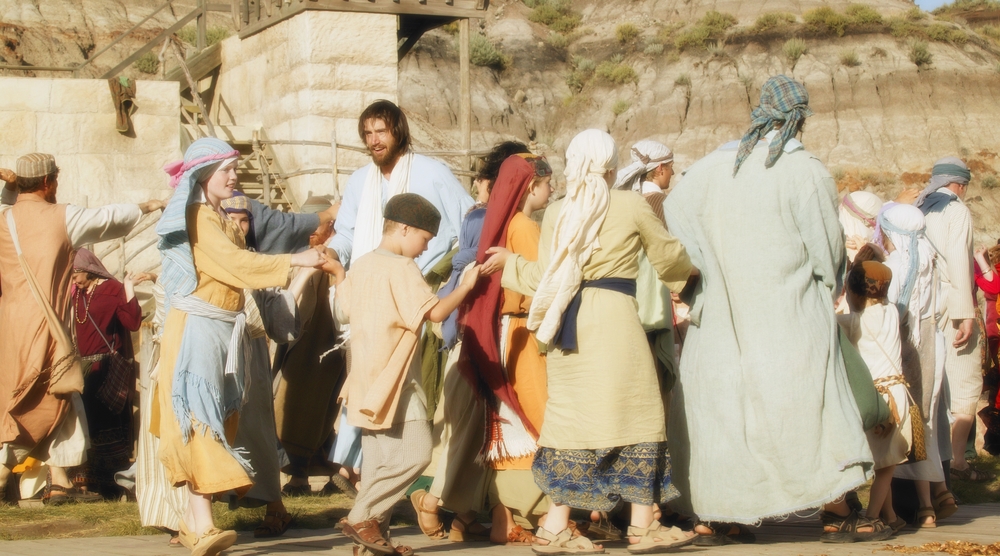
My thoughts today are based on the story of Paul and Barnabas while they were in Lystra, a city in central Anatolia, part of present-day Turkey. While Paul was speaking, his gaze came to rest on a man listening to him speak who was “crippled at birth”.

Paul saw the man had faith, so he loudly told the man to stand up. (Acts 14:8-10) The man sprang up, and the crowd was awed, saying, “The gods have come down to us in the likeness of men!” (Acts 14:11)

The people in Lystra were pagans. They worshiped Roman gods and, perhaps, other gods as well. They started calling Barnabas Zeus and Paul Hermes and began making preparations to worship them.

When Paul and Barnabas realized what was happening, they were appalled! They rushed into crowd, saying, “Don’t do that! We are just men like you!” (Acts 14:14-15 (paraphrasing)). Then, Paul addressed his pagan audience like this:

“[W]e bring you good news, that you should turn from these vain things[i] to a living God, who made the heaven and the earth and the sea and all that is in them. In past generations he allowed all the nations to walk in their own ways. Yet he did not leave himself without witness, for he did good by giving you rains from heaven and fruitful seasons, satisfying your hearts with food and gladness.”

Acts 14:15-18

This is, perhaps, the first sermon preached in the early church to people who are not Jews. The pagans did not believe one God. They didn’t understand Mosaic Law, the concept of sin or the prohibition against worshiping idols considered to be false gods.

Thus, Paul didn’t address them as he did his Jewish audiences. He didn’t appeal to Mosaic Law, or accuse them of sin, or call them to repent.

Just as the Gospel is good news to the Jews, it is good news to the pagan Gentiles. The message, however, is different. Paul urged them merely to “turn from vain things to a living God”!

By “vain things” Paul meant their gods, the idols that the pagans worshiped. Instead of calling them idols, as he would have done to a Jewish audience, he referred to them descriptively by their character – their worthlessness, emptiness and utter inability to accomplish anything.

We have a hard time relating to idol worship in the 21st Century. Idol worship is so Bronze Age! Our ancestors long ago stopped believing in gods and sacrificing to them, right?

Tim Keller, in his sermon, The Gospel for the Pagan, paints a different story. These pagans were not so different from us.

In a polytheistic society, of course, people worshiped and sacrificed to a variety of gods. There was no supreme god. People had to decide what gods to worship. Thus, people chose gods to worship based on how those gods could help them.


A a merchant might sacrifice to the god of commerce. A farmer might sacrifice to the god of agriculture. Other people might sacrifice to the god of art and music, or love and beauty, or a combination of gods, depending on what was most important to them.

Keller says that sacrificing to the god(s) of choice was, in effect, worshiping the things people valued most. By sacrificing to the gods of commerce, agriculture, art and music, love and beauty, etc., they were worshiping whatever it was the god represented.  Whatever a person sought help for was the thing from which they sought meaning in life, hope and fulfillment.

Thus, says Keller, “vain things” (idols) are things that “promise fulfillment, but leave you empty”.

We may think of ancient pagans as a brutish and unsophisticated lot, but we are no different than they in the sense that we sacrifice for the things we think will fulfill and satisfy us. The only difference is that we have dispensed with the representative gods.

The person who values career, or accomplishment or being respected by peers as a matter of first priority will sacrifice for those things. The person who thinks that love, romance and family are the highest forms of meaning will devout primary attention to those things. The person who loves art and music will sacrifice for those things and from them seek meaning and fulfillment.

We aren’t that different, really from our pagan ancestors, though we might scoff at the idea of gods, as in idols. We have our gods, though. We just don’t call them names or ascribe human personalities to them.

Paul’s message to the pagans in Lystra was, “These are worthless things!” They can’t fulfill you. Only the Living God can do that. His message has more application to us in the 21st Century than we might think at first glance.

Continue reading “How Does a Living God Relate to a Pagan World?”

On the Intersection of Differences and Unity in the Body of Christ

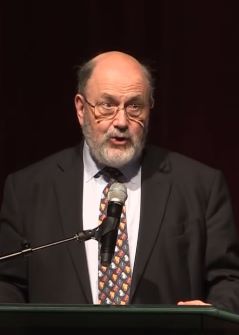
Esau McCaulley interviewed NT Wright on his Disrupters podcast last year. NT Wright is a British New Testament scholar of some renown who became McCaulley’s mentor at St. Andrew’s University in Scotland. McCaulley made a comment after the interview that prompts my writing today. He said,

“I feel like I am a mix of a bunch of things. I have this kind of British, evangelical side, and I have this kind of African American church side, and strangely they have coalesced in ways I didn’t expect.”

N.T. Wright Forces an Overdue Conversation on the Disrupters Podcast 2-3-22

McCaulley was raised Southern Baptist in the deep south, so their relationship is intriguing to me. The conversation between Wright and McCaulley is interesting and rich. The fact that they come from unique and diverse backgrounds permeates the discussion as they explore the things that unite them.

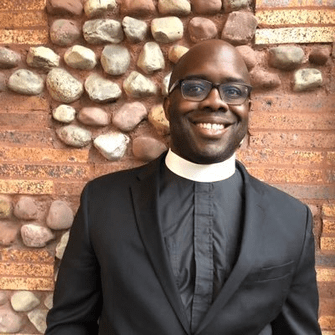
Esau McCaulley is a New Testament scholar in his own right, due in no small part to the influence of NT Wright. He has written one book on Galatians, and he is now writing a second. McCaulley also became an Anglican priest, but his heritage and unique experience, personally and communally, as a black man in America remain central to his identity.

The close relationship between these men from very different backgrounds and from different areas of the world has me thinking about the church in the United States and the global Church. I recently heard someone comment on an unfortunate, unforeseen, and unintended consequence of the Reformation. That consequence was the fragmentation of the Church.

The post-Reformation church fragmented into dissenting groups, and some of those dissenting groups fragmented further into groups of people who spoke English, French, and other European languages. Over time, the fragmentation rippled out from Europe to the New World and beyond.

The Reformation splintered into many “protestant” groups, and that fragmentation exploded in the New World where Lutherans, Presbyterians, Methodists and others splintered apart from each other into various and distinct groups, and many more new denominations sprung up. The fragmentation continued along cultural, doctrinal, ethnic, ritualistic, racial, governmental, language and other lines.

Today in America we can find a mind-boggling number of separate church bodies aligned in linguistic, ethnic doctrinal, geographic, and cultural huddles of believers that keep largely to themselves based on language, ethnicity, race, heritage, doctrine, worship preference, governmental protocol, and other things.

This fragmentation is still evident in the United States, and churches in the United States have been accused of being more segregated than the rest of the country (which is still pretty segregated).

The intersectionality (to use a very loaded term) of the disparate backgrounds, experiences and heritage of Wright and McCaulley, and their ongoing relationship remind me of the need for unity in the Church. We need to come together. We need to talk.

We need each other.

Continue reading “On the Intersection of Differences and Unity in the Body of Christ”

Thinking Outside the Circle and Focusing on the Center: What Direction are You Moving?

If we are not challenged to rethink what we think we know from time to time, we are not likely coming into close enough contact with Jesus.

I watched the Chapelstreet church service today and listened to the sermon by Jeff Frazier in Batavia, IL. It was just what I needed to hear. Not that it tills new ground; it covers familiar ground from a new angle. It avoids the ruts of old, tired ways of thinking and finds fresh new ground (for me) from which to approach how we see Jesus.

The sermon today was inspired by Matthew 9:9-13.[i] You can read it in full at the endnote below. In summary, Jesus called Matthew from the tax booth where he was sitting to follow him, and Matthew responded by following him. That was the extent of the initial story

Then Scripture jumps to another scene: Jesus reclining at a table with “many tax collectors and sinners”. We are left to draw our own conclusions about what happened in the interim. It could be that Matthew invited all his friends, who were naturally other tax collectors and “sinners”, to met Jesus who had just connected with him.

The focus of the new scene, though, isn’t on Matthew anymore. The focus shifts to the Pharisees who ask the disciples why Jesus eats with “tax collectors and sinners”.

Before I describe how Jesus responded to them, I want to focus on the fact that the people who had a problem with Jesus were the religious people. Jesus was hanging around with all the wrong people according to the religious insiders of his day.

This is nothing new. I have written often about the Pharisees, Jesus and tax collectors and sinners. In fact, I wrote on the same subject just two weeks ago. (The Danger that Good, Upstanding, Religious People Face Today)

It isn’t a new thing to realize Jesus defied categorization; he shattered expectations and common ways of thinking. He challenged everyone he met to see the world differently, but we sometimes forget the radicalness of Jesus in our routine orthodoxy.

I dare say, if we are not challenged to rethink what we think we know from time to time, we are not likely coming into close enough contact with Jesus!

Back to the story: in First Century Judea, tax collectors were traitors and sell-outs. They were Hebrews who collected taxes for the Romans and used the authority of the Roman occupiers of the Hebrew Promised Land to accumulate wealth for themselves. They were hated by good Jews. They were outsiders in their own community.

As outsiders, they naturally associated with other outsiders (“sinners”). Thus, for Jesus to establish a relationship with Matthew – and worse than that: to “hang out” with other tax collectors and “sinners” – was scandalous. It was unthinkable!

When Jesus heard the Pharisees challenge the disciples to explain why Jesus was associating with “such people”, Jesus famously responded:

“Those who are well have no need of a physician, but those who are sick. Go and learn what this means: ‘I desire mercy, and not sacrifice.’ For I came not to call the righteous, but sinners.”

Matthew 9:12-13

This is a familiar passage to us, but I think the application of the message is sometimes lost on us today. I think we can fall into the trap of the Pharisees in our thinking without even realizing it. Thus, we need to be challenged to see things from a different angle, just as Jesus challenged the Pharisees in the first century.

Again, these are not new thoughts, but the the change of perspective (for me) comes courtesy of Paul G. Hiebert. Born to missionary parents in India, he became “arguably, the world’s leading missiological anthropologist”.[ii]

When he moved back to the west, he wrestled with questions like these: What does it mean for an illiterate, Hindu peasant to know Jesus? How much of their old life and traditions must be left behind?

Having observed missionaries in India, he concluded that the western mission movement was importing too many western traditions and thoughts. He saw the need for thinking outside the western box – like Jesus encouraged the followers of his day to think outside the box…. or rather, outside the circle, as we will see.

Continue reading “Thinking Outside the Circle and Focusing on the Center: What Direction are You Moving?”

The Danger that Good, Upstanding, Religious People Face Today

Who are the Pharisees of today and their religious followers?

From the sermon I heard today, I have come away with a couple of things that I am meditating on. One is personal – my need to get over myself. The need to crush the pride in me that wants to appear respectable. The desire to be liked and honored by people.

I believe God is speaking these things to me, and I need to listen and respond. I can’t be afraid to speak the truth because of fear that some people will think me a fool. I need to be willing to appear foolish for the sake of the Gospel. I confess these things today (and ask you to pray for me if you feel so compelled).

The other thing is something God has been laying on my heart over many years now. A more prophetic message for the church, the body of Christ. It goes all the way back to my earliest reading of Scripture when I noticed that the focus of the harshest words Jesus spoke was directed at the Pharisees – the religious leaders (and presumably the people who followed them).

The year 2020 will be remembered as a year of hardship and difficulty, but the ways in which people reacted to those hardships may be longer lasting than those difficulties themselves. I am thinking specifically of the religious people in the United States when I say this.

The sermon today was about the story of Zacchaeus, the wealthy tax collector who was short in stature. A more despised person one might not be able to imagine.

Tax collectors were sellouts to the Roman occupiers for personal gain. They not only collected the taxes imposed by Roman rulers; they used their position and authority to collect more than was required to line their own pockets.

Tax collectors took advantage of the Roman occupation to gain wealth for themselves at the expense of their own people. They turned their backs on fellow Hebrews and were, therefore, despised by them (and likely by the Romans as well for the same reason).

We might have a modicum of compassion and understanding for a prostitute washing the feet of Jesus with her tears, or the adulterous, Samaritan woman at the well, or the woman caught in the very act of adultery who was brought to Jesus to be stoned. Zacchaeus, though, was a man people could love to hate.

He was an outcast of a different kind. He was an outcast by choice. He wasn’t a victim of his own weakness. He exploited the weakness of his own people to benefit himself. He was alone because he chose exploitation as a way of life over family, friendship, compassion, faith and doing what was right.  

It’s no wonder that, when Jesus called Zacchaeus down from the tree and invited himself to his house for a meal and fellowship, the crowd was indignant.

Of all the people Jesus could have chosen, why in the world did Jesus choose this guy? Didn’t he know who he was and what he did for a living?

Nothing would likely have stirred the indignation of moralistic, self-righteous, religious people then this!

Many of the reputable, religious people were not fans of Jesus to begin with. They had already judged who Jesus was. He came from Nazareth, a small town of little influence and lesser reputation. Does anything good come out of Nazareth.[1] (John 1:46)

Many more “common” people were saying Jesus was a prophet, and even the Messiah. Jesus seemed to encourage them. He didn’t say he wasn’t, but the Messiah was supposed to come from the line of David, the seed of Jesse, from Bethlehem, the City of David, the place where David was born.[2]

The religious people knew their Scripture.

They knew their Scripture, but they jumped to conclusions about Jesus that were incorrect. Though Jesus was from Nazareth, he was also born in Bethlehem like David was, and his parents were from the line of David.

The Pharisees applied their undeniable scriptural knowledge, but they judged by appearances, rather than giving more careful consideration to the matter. Once they came to a conclusion about Jesus, they were unwilling to consider alternative possibilities.

The crowd present when Jesus invited himself into the home of Zacchaeus included Pharisees and moralistic, self-righteous, religious followers of the Pharisees (the blind leading the blind, as Jesus called them), who criticized Jesus for associating with tax collectors (and other sinners). Some of these people were very likely in the crowd that would demand that Pontius Pilate “crucify him”!

Does anyone doubt that Jesus would be just as critical of the moralistic, self-righteous, religious people today if he lived among us?

Have people changed in the last 20 centuries? The writer of Ecclesiastes suggests the answer when he said, “There is nothing new under the sun”, centuries before Jesus.

Who are the Pharisees of today and their religious followers?

We struggle with the same issues and the same tendency for sinfulness. Jesus came to his very own! The Hebrews, of all the people on earth who should have recognized him and received him, but they didn’t recognize him. They rejected him.

They knew the Scriptures. They could recite Scripture by heart. They studied to show themselves approved. They knew right doctrine. They were proud of their religious heritage. They were pious, moral, upstanding, devoted, reputable people who had not sold out their birthright for personal profit.

But they were dead wrong about Jesus.

These are words of warning to us today. Perhaps, we should not to be so quick with our judgments or so slow to consider other alternatives.

The warning is all the more poignant for the religious among us. The interaction of Jesus with the Pharisees and the moralistic, self-righteous, religious people in the first century crowds is no less a warning for moral, upstanding, reputably religious people today than it was for them.

Continue reading “The Danger that Good, Upstanding, Religious People Face Today”