On the Intersection of Differences and Unity in the Body of Christ

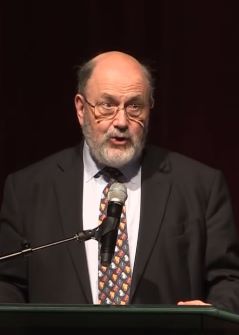
Esau McCaulley interviewed NT Wright on his Disrupters podcast last year. NT Wright is a British New Testament scholar of some renown who became McCaulley’s mentor at St. Andrew’s University in Scotland. McCaulley made a comment after the interview that prompts my writing today. He said,

“I feel like I am a mix of a bunch of things. I have this kind of British, evangelical side, and I have this kind of African American church side, and strangely they have coalesced in ways I didn’t expect.”

N.T. Wright Forces an Overdue Conversation on the Disrupters Podcast 2-3-22

McCaulley was raised Southern Baptist in the deep south, so their relationship is intriguing to me. The conversation between Wright and McCaulley is interesting and rich. The fact that they come from unique and diverse backgrounds permeates the discussion as they explore the things that unite them.

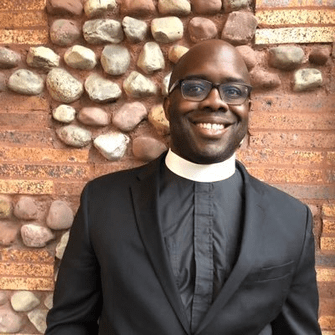
Esau McCaulley is a New Testament scholar in his own right, due in no small part to the influence of NT Wright. He has written one book on Galatians, and he is now writing a second. McCaulley also became an Anglican priest, but his heritage and unique experience, personally and communally, as a black man in America remain central to his identity.

The close relationship between these men from very different backgrounds and from different areas of the world has me thinking about the church in the United States and the global Church. I recently heard someone comment on an unfortunate, unforeseen, and unintended consequence of the Reformation. That consequence was the fragmentation of the Church.

The post-Reformation church fragmented into dissenting groups, and some of those dissenting groups fragmented further into groups of people who spoke English, French, and other European languages. Over time, the fragmentation rippled out from Europe to the New World and beyond.

The Reformation splintered into many “protestant” groups, and that fragmentation exploded in the New World where Lutherans, Presbyterians, Methodists and others splintered apart from each other into various and distinct groups, and many more new denominations sprung up. The fragmentation continued along cultural, doctrinal, ethnic, ritualistic, racial, governmental, language and other lines.

Today in America we can find a mind-boggling number of separate church bodies aligned in linguistic, ethnic doctrinal, geographic, and cultural huddles of believers that keep largely to themselves based on language, ethnicity, race, heritage, doctrine, worship preference, governmental protocol, and other things.

This fragmentation is still evident in the United States, and churches in the United States have been accused of being more segregated than the rest of the country (which is still pretty segregated).

The intersectionality (to use a very loaded term) of the disparate backgrounds, experiences and heritage of Wright and McCaulley, and their ongoing relationship remind me of the need for unity in the Church. We need to come together. We need to talk.

We need each other.

Continue reading “On the Intersection of Differences and Unity in the Body of Christ”

Thinking Outside the Circle and Focusing on the Center: What Direction are You Moving?

If we are not challenged to rethink what we think we know from time to time, we are not likely coming into close enough contact with Jesus.

I watched the Chapelstreet church service today and listened to the sermon by Jeff Frazier in Batavia, IL. It was just what I needed to hear. Not that it tills new ground; it covers familiar ground from a new angle. It avoids the ruts of old, tired ways of thinking and finds fresh new ground (for me) from which to approach how we see Jesus.

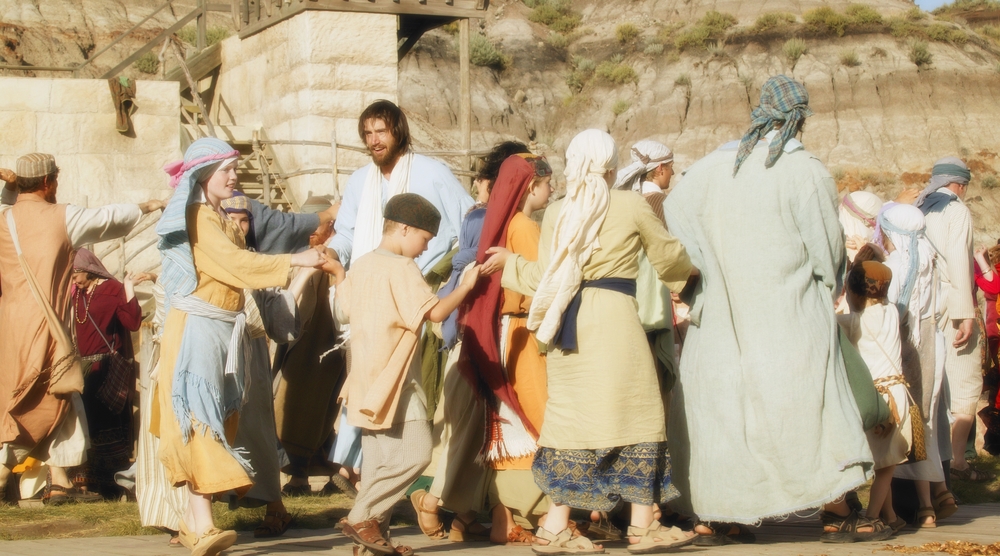
The sermon today was inspired by Matthew 9:9-13.[i] You can read it in full at the endnote below. In summary, Jesus called Matthew from the tax booth where he was sitting to follow him, and Matthew responded by following him. That was the extent of the initial story

Then Scripture jumps to another scene: Jesus reclining at a table with “many tax collectors and sinners”. We are left to draw our own conclusions about what happened in the interim. It could be that Matthew invited all his friends, who were naturally other tax collectors and “sinners”, to met Jesus who had just connected with him.

The focus of the new scene, though, isn’t on Matthew anymore. The focus shifts to the Pharisees who ask the disciples why Jesus eats with “tax collectors and sinners”.

Before I describe how Jesus responded to them, I want to focus on the fact that the people who had a problem with Jesus were the religious people. Jesus was hanging around with all the wrong people according to the religious insiders of his day.

This is nothing new. I have written often about the Pharisees, Jesus and tax collectors and sinners. In fact, I wrote on the same subject just two weeks ago. (The Danger that Good, Upstanding, Religious People Face Today)

It isn’t a new thing to realize Jesus defied categorization; he shattered expectations and common ways of thinking. He challenged everyone he met to see the world differently, but we sometimes forget the radicalness of Jesus in our routine orthodoxy.

I dare say, if we are not challenged to rethink what we think we know from time to time, we are not likely coming into close enough contact with Jesus!

Back to the story: in First Century Judea, tax collectors were traitors and sell-outs. They were Hebrews who collected taxes for the Romans and used the authority of the Roman occupiers of the Hebrew Promised Land to accumulate wealth for themselves. They were hated by good Jews. They were outsiders in their own community.

As outsiders, they naturally associated with other outsiders (“sinners”). Thus, for Jesus to establish a relationship with Matthew – and worse than that: to “hang out” with other tax collectors and “sinners” – was scandalous. It was unthinkable!

When Jesus heard the Pharisees challenge the disciples to explain why Jesus was associating with “such people”, Jesus famously responded:

“Those who are well have no need of a physician, but those who are sick. Go and learn what this means: ‘I desire mercy, and not sacrifice.’ For I came not to call the righteous, but sinners.”

Matthew 9:12-13

This is a familiar passage to us, but I think the application of the message is sometimes lost on us today. I think we can fall into the trap of the Pharisees in our thinking without even realizing it. Thus, we need to be challenged to see things from a different angle, just as Jesus challenged the Pharisees in the first century.

Again, these are not new thoughts, but the the change of perspective (for me) comes courtesy of Paul G. Hiebert. Born to missionary parents in India, he became “arguably, the world’s leading missiological anthropologist”.[ii]

When he moved back to the west, he wrestled with questions like these: What does it mean for an illiterate, Hindu peasant to know Jesus? How much of their old life and traditions must be left behind?

Having observed missionaries in India, he concluded that the western mission movement was importing too many western traditions and thoughts. He saw the need for thinking outside the western box – like Jesus encouraged the followers of his day to think outside the box…. or rather, outside the circle, as we will see.

Continue reading “Thinking Outside the Circle and Focusing on the Center: What Direction are You Moving?”

The Danger that Good, Upstanding, Religious People Face Today

Who are the Pharisees of today and their religious followers?

From the sermon I heard today, I have come away with a couple of things that I am meditating on. One is personal – my need to get over myself. The need to crush the pride in me that wants to appear respectable. The desire to be liked and honored by people.

I believe God is speaking these things to me, and I need to listen and respond. I can’t be afraid to speak the truth because of fear that some people will think me a fool. I need to be willing to appear foolish for the sake of the Gospel. I confess these things today (and ask you to pray for me if you feel so compelled).

The other thing is something God has been laying on my heart over many years now. A more prophetic message for the church, the body of Christ. It goes all the way back to my earliest reading of Scripture when I noticed that the focus of the harshest words Jesus spoke was directed at the Pharisees – the religious leaders (and presumably the people who followed them).

The year 2020 will be remembered as a year of hardship and difficulty, but the ways in which people reacted to those hardships may be longer lasting than those difficulties themselves. I am thinking specifically of the religious people in the United States when I say this.

The sermon today was about the story of Zacchaeus, the wealthy tax collector who was short in stature. A more despised person one might not be able to imagine.

Tax collectors were sellouts to the Roman occupiers for personal gain. They not only collected the taxes imposed by Roman rulers; they used their position and authority to collect more than was required to line their own pockets.

Tax collectors took advantage of the Roman occupation to gain wealth for themselves at the expense of their own people. They turned their backs on fellow Hebrews and were, therefore, despised by them (and likely by the Romans as well for the same reason).

We might have a modicum of compassion and understanding for a prostitute washing the feet of Jesus with her tears, or the adulterous, Samaritan woman at the well, or the woman caught in the very act of adultery who was brought to Jesus to be stoned. Zacchaeus, though, was a man people could love to hate.

He was an outcast of a different kind. He was an outcast by choice. He wasn’t a victim of his own weakness. He exploited the weakness of his own people to benefit himself. He was alone because he chose exploitation as a way of life over family, friendship, compassion, faith and doing what was right.  

It’s no wonder that, when Jesus called Zacchaeus down from the tree and invited himself to his house for a meal and fellowship, the crowd was indignant.

Of all the people Jesus could have chosen, why in the world did Jesus choose this guy? Didn’t he know who he was and what he did for a living?

Nothing would likely have stirred the indignation of moralistic, self-righteous, religious people then this!

Many of the reputable, religious people were not fans of Jesus to begin with. They had already judged who Jesus was. He came from Nazareth, a small town of little influence and lesser reputation. Does anything good come out of Nazareth.[1] (John 1:46)

Many more “common” people were saying Jesus was a prophet, and even the Messiah. Jesus seemed to encourage them. He didn’t say he wasn’t, but the Messiah was supposed to come from the line of David, the seed of Jesse, from Bethlehem, the City of David, the place where David was born.[2]

The religious people knew their Scripture.

They knew their Scripture, but they jumped to conclusions about Jesus that were incorrect. Though Jesus was from Nazareth, he was also born in Bethlehem like David was, and his parents were from the line of David.

The Pharisees applied their undeniable scriptural knowledge, but they judged by appearances, rather than giving more careful consideration to the matter. Once they came to a conclusion about Jesus, they were unwilling to consider alternative possibilities.

The crowd present when Jesus invited himself into the home of Zacchaeus included Pharisees and moralistic, self-righteous, religious followers of the Pharisees (the blind leading the blind, as Jesus called them), who criticized Jesus for associating with tax collectors (and other sinners). Some of these people were very likely in the crowd that would demand that Pontius Pilate “crucify him”!

Does anyone doubt that Jesus would be just as critical of the moralistic, self-righteous, religious people today if he lived among us?

Have people changed in the last 20 centuries? The writer of Ecclesiastes suggests the answer when he said, “There is nothing new under the sun”, centuries before Jesus.

Who are the Pharisees of today and their religious followers?

We struggle with the same issues and the same tendency for sinfulness. Jesus came to his very own! The Hebrews, of all the people on earth who should have recognized him and received him, but they didn’t recognize him. They rejected him.

They knew the Scriptures. They could recite Scripture by heart. They studied to show themselves approved. They knew right doctrine. They were proud of their religious heritage. They were pious, moral, upstanding, devoted, reputable people who had not sold out their birthright for personal profit.

But they were dead wrong about Jesus.

These are words of warning to us today. Perhaps, we should not to be so quick with our judgments or so slow to consider other alternatives.

The warning is all the more poignant for the religious among us. The interaction of Jesus with the Pharisees and the moralistic, self-righteous, religious people in the first century crowds is no less a warning for moral, upstanding, reputably religious people today than it was for them.

Continue reading “The Danger that Good, Upstanding, Religious People Face Today”

On the Delusion of Plausible Arguments, I Hold to Christ in Me

As I read through Scripture, I am always looking to understand it better. At the same time, I am listening for God to speak to me. In the process, I notice things. Like today. I noticed Paul’s statement to the Colossians:

I say this in order that no one may delude you with plausible arguments.

Colossians 2:4 ESV

Hmmm… the delusion of plausible arguments. That’s an interesting phrase… (So it seems to me, anyway!) I want to explore that a bit further.

Context is always important. the context for this statement is Paul’s letter to the people in Colossae, a very Greek city. He had already been to Athens where the Athenians spent significant time telling and listening to the latest ideas. (Acts 17:21)

In our modern view, we might imagine an ancient think tank in which new ideas are explored and developed toward some greater ends. We might be tempted to see Athens as an incubator of ideas for the benefit of mankind.

Luke, the writer of Acts, was not being complimentary, however, when he made this observation. The context suggests a contrast between a desire for novel ideas and a desire for truth. Ideas for the sake of ideas and novelty for the sake of novelty may be an erudite pastime for the bored elite who enjoy comfort and privilege, but they are not noble pursuits in themselves.

Unless one has a desire to know truth (and put it into practice), entertaining new ideas is only an exercise in futility, diversion and delusion. The ancient writer of Ecclesiastes, writing about a millennia before Paul set foot in Athens, recognized “there is nothing new under the sun”. (Ecc. 1:9)

Even way back then! Chasing after ideas that are new for the sake of novelty is just a distraction from the truth. It is meaningless!

Paul views the sharing of ideas for the novelty of them in the same way modern people might play video games or read a book – entertainment to pass time. He obviously thought little of such things and had no time for it.  

Truth had been revealed to Paul in the form of the risen Jesus, whom his people had crucified and Paul had persecuted. Paul’s whole life was interrupted one day as he traveled with the intention of arresting and imprisoning Christ followers in Damascus, and the course and trajectory of Paul’s life was forever changed.

Paul’s life would never be the same. By the time Paul wrote the letter to the Colossians, his motto had become “to live is Christ and to die is gain”. (Phil. 1:21) Other things, including a preoccupation with novel ideas, has become mere distractions not worth his time.

If we can tell anything about the biographical and autobiographical sketches of Paul in Acts and his letters, we can see that Paul was fiercely and uncompromisingly concerned about truth. That attitude led him to persecute the followers of Christ with zeal when he thought the truth lay in that direction.

It was Paul’s commitment to truth that prompted him to turn in the opposite direction and accept the same Jesus Paul had persecuted as his Lord and Savior. Paul gave himself completely as a servant of the risen Lord to the point of sharing in his own body the sufferings of Christ (as described in Colossians 1:24).

Paul’s turn of phrase, perhaps, is what caught my eye as I read through Colossians this morning: the delusion of plausible arguments. It deserves some additional contemplation.

Continue reading “On the Delusion of Plausible Arguments, I Hold to Christ in Me”

Holland Digs Up the Root of Modern Western Values as Others Attempt to Dig It Out

The exposure and expose of a wildly popular myth

I have written about Tom Holland before and the book he published called Dominion: The Making of the Western Mind.

The story about the book has intrigued me since I heard him talk about it. I am taking my time reading through it. Holland is a historian with a particular focus on ancient, classical history. He chose dinosaurs over the Bible as a young child. He was more enamored with Pontius Pilate than Jesus Christ. The ancient, classical world and the likes of Julius Caesar captured his imagination.

His passion became both avocation and vocation. He became a historian. Holland is the best kind of historian, because he realizes that we all have basic assumptions that we bring to the table, and we need to be as candid challenging our own assumptions as we are challenging others.

We all have a perspective, right? We come to whatever we read or hear with certain assumptions that have developed in our thinking. Affirmations of those assumptions sit well, but challenges to those assumptions do not rest easy. You know what I am talking about.

Holland challenges assumptions from all sides, including his own. For that reason, it’s a challenging read, but all lasting growth of any kind comes through conflict and tension.

When Holland wrote a book, In the Shadow of the Sword: The Birth of Islam and the Rise of the Global Arab Empire, that was candid about Islam, Holland was criticized and challenged to do a similar history of the assumptions that underlie his worldview. The criticism was fair, so he set out to do it.

His worldview? Holland is an atheist and secular humanist. Holland’s basic philosophy of life is informed by the values of basic humans rights: the right to equality, fair treatment and freedoms that we might call inalienable, like the separation of church and state, the value of scientific endeavor and the social necessity of charity and good will.

When he set out to write a book tracing these values back to their sources, he was not predisposed to assume where he would find them, though he certainly had assumptions and presuppositions. Like the paleontologist sifting through layers of earth and civilization laid one on top of another, Holland did the painstaking, tedious work.

Beginning with Darius and the great Persian Empire, Holland sought to uncover the lineage of modern western thought from one empire to the next, tracing the rivulets of thinking to find the headwaters for modern secular humanism.

Holland was looking for the progression that evolved into ideas that inform the modern western mind. He did not focus on the usual events that historians dutifully catalogue, other than to look behind them for their motivation. He focused on thoughts as they developed and the people who championed them and events as they influenced those thoughts and ideas.

In the ancient world, as one might expect, many of those ideas were dressed in metaphysical garb. Holland’s focus, though, is always on the those thoughts and ideas that continue in our modern values today. The ones that died off, like the dinosaurs, are only interesting as side notes to that history.

Much of the book explores the world of discarded gods and beliefs that animated the ancient world. The beliefs of the ancients are the evolutionary precursors to our modern thought. In those layers of metaphysical and philosophical sediment lie traces of our modern values.

In sifting through the soils of history, Holland identifies the beginnings and ancestry of the ethics and values that ground his worldview as a humanist in the sedimentary layers in which they arose. As often is the case in such endeavors, Holland makes some startling discoveries.

What Holland carefully and methodically uncovers is one seismic development that diverted and defined the flow of thinking in western civilization – a metaphysical “Cambrian Explosion”. His find caught him off guard: that western thinking is founded on, permeated with and inextricably intertwined in Christian ideas.

Holland was always taught that the Church held back modern advances, like a stubborn dam that had to be blown up to let the river of progress flow. He assumed the narrative of the Enlightenment was true. Holland assumed we are Greek, and maybe a little Roman, in our modern, western values.

Holland had a nagging suspicion, however, that modern values are not so much connected to the thinking of ancient Greeks and Romans as they are connected to something else.

When Holland gets into the Enlightenment Era in his book, he finds that his suspicions were correct, and he is able to identify the disconnect – an incongruity that bears some candid analysis for its deviation from the origin and trajectory of the historical developments to that stage.

It was Christianity that changed the course of history and added the soil in which modern values took root. Holland also came to realize that Enlightenment thinking grew out of that rich soil that it sought to dig, and this is both ironic and dangerous, like the man sawing off the branch that supports him.

Continue reading “Holland Digs Up the Root of Modern Western Values as Others Attempt to Dig It Out”