How Does the Tower of Babel Fit into God’s Plan for People to Love Him and Love Our Neighbors?

Our frustration, toil and separation from other people are not contrary to the purposes of God, but part of the plan.

The story of the Tower of Babel is included in Scripture for a reason, right? So, Why is it there? How does the tower of Babel fit into God’s redemptive plans and purposes?

These are questions we should think to ask. In fact, Scripture is designed, according to Hebrew thinking, to invite us to ask questions.

Western thinking might assume that we just take things on faith and don’t ask questions. Or the opposite: take it at face value and dismiss it when we find problems (“contradictions”) in the text. The biblical texts, however, are inherently Hebrew (“eastern”) in their assumptions, and we lose something if we do not understand that.

God wants us to seek Him, and that includes asking questions of Scripture, wrestling with it, and finding answers to our questions. We don’t exhibit a lack of faith when we find “problems” in Scripture and ask questions. Our faith propels us forward to wrestle with the text and seek answers through study, prayer, and the guidance of the Holy Spirit.

We can hold to a high view of Scripture and admit there are “problems” in the text. Those problems can lead us to some real gems in the answers they reveal.

God desires us to seek him and find him, as Paul says to the philosophers in Athens. (Acts17:27) Jesus, of course, promised that those who ask, seek, and knock will be answered, will find, and the door will be open to them. (Matthew 7:7) Faith is evident when we use the problems we see as the springboard to seek answers.

I recently wrote an article on the Tower of Babel story exploring some of the questions it invites us to ask, and trying on answers that are suggested by a more eastern (Hebrew) mindset than most westerners might be adopt.

One question we might ask is: why is the story there to begin with?

We might assume the story is simply an explanation for how people became scattered all over the world in different language groups. If that is all we get out of the story, though, we miss the most important meaning. If we stop there, and assume there is no more to the story, we may be missing the most important part of the story!

A Hebrew (or eastern) mind always asks, “Why?”

I resonate with this basic practice incorporated into the BEMA Podcast because of a Jewish professor I had in college. He explained one day the difference between the western and eastern approaches to Scripture. He illustrated it with the following example.

If the universe consisted of a chair in a room, people with western minds and eastern minds would approach the room differently. The westerner would measure the height, width, depth and mass of the chair. He would weigh it and measure the distance of the chair from the walls and the ceiling. The easterner (the Hebrew) would start by asking, “Why is the chair here?”

In my previous article, I discussed how the story is a chiasm (a type of poetry). A chiasm puts emphasis on the middle verse. In this story, the emphasis falls on the people’s desire to “make a name for ourselves” because “otherwise we will be scattered over the face of the earth”. (Gen. 11:4)

Why were they concerned about being scattered? Why does God care? What is God doing in confusing their languages and scattering them?

For starters, God does not break into the story, yet, when they are making bricks. We might assume, therefore, that God isn’t threatened or concerned about their development of new technology. He doesn’t break into the story until they say they are going to build a tower to make a name for themselves.

We also need to be mindful, always, of context. The context here is that people are moving away from God, away from his plans. (Moving east.) God wanted them to multiply and fill the earth, but they wanted to put down roots in the plains of Shinar (Babylon), lest they be scattered, and build a tower to exalt themselves.

God’s plan was to have them “multiply and fill the earth”. This was the instruction from God to Adam and Eve. The people who built the Tower of Babel didn’t want to do that. They didn’t want to be “scattered”. They resisted, and they put down roots when they should have been filling the earth.

Building a tower to make a name for themselves, in this context, means wanting to pursue their own plans to achieve their own ends. The concern about being scattered suggests they knew they were doing their own thing contrary to God’s plans for them. They might have feared being scattered because it would disrupt their plans to exalt themselves.

Maybe they thought God couldn’t scatter them if they built a fortified tower. Maybe they were trying to make God deal with them on their own terms, in a location they established, by a structure by which they thought they could ascend to God and control where God met with them.

Of course, God did exactly what they feared, and scattered them a against their wishes by confusing their languages.

But why? Was God threatened by them?

Um…., no. God is sovereign. He created the heavens and earth, and He created these people. They were no threat to Him. So why did God scatter them?

I believe the answer lies partly in the fact that they were pursuing their own plans in exultation of themselves. God had other plans, and God frustrated their plans that were not in keeping with His plans.

That might all seem arbitrary unless we keep asking questions and seeking answers. Why were the peoples’ plans something God couldn’t abide? How did the peoples’ plans interfere with God’s plans?

What were God’s plans?

Continue reading “How Does the Tower of Babel Fit into God’s Plan for People to Love Him and Love Our Neighbors?”

Breakfast in America: A Litmus Test for the Church?

We can forget that we are ambassadors for Christ everywhere we go, in everything we do, and to each and every person that we meet

I was listening to an interview of Kevin Finch. He is the nephew of the well-known pastor, author and thinker, Eugene Peterson. Kevin comes from a long line of pastors going back generations, and he is the founder of a ministry to people in the food industry called The Big Table.

The food industry may seem like a strange idea to target for a ministry, but Kevin’s eloquent explanation of his call to this ministry, and hearing the clear voice of God in it makes sense. The website provides some further insight.

The restaurant and hospitality sector of the workforce is the largest sector of the American workforce, doubling any other industry. It is also growing faster than any other segment of the workforce. The Big Table website describes it as a “catch basin” for “all of the most vulnerable demographics” – single parents, at-risk teens, immigrants, ex-felons trying to turn their lives around, etc. It is a filed ripe unto harvest.

Perhaps, one reason for the vulnerable demographic is that anyone willing to work can get a job in the restaurant and hospitality world. It is often the first place people look for entry level jobs and the last place people look when all else fails.

“[P]ut so many at-risk individuals together under one roof and it is not surprising that this industry has the highest rates of people struggling with alcohol and drug addiction, massive amounts of divorce and broken relationships, redline stress levels, job instability, rapid turnover, and almost no safety net.”

Restaurant and hospitality workers get paid (often not very much) for serving others with smiles on their faces, while a large portion of them suffer in their own lives more than the average person. The website reports the following:

  • Forty three percent (43%) of workers in the restaurant and hospitality industry fall below the “survival” line – DOUBLE the rate of any other working population;
  • Workers in the restaurant and hospitality industry struggle with drug and alcohol addiction more than any other working group; and
  • Benefits, like health insurance, vacations, sick time, etc. are largely not available for workers in the restaurant and hospitality industry.

In my own experience, I see that workers in the restaurant and hospitality industry are often exploited. They don’t get paid overtime. Bosses often schedule them part-time to avoid overtime pay. They don’t have to be paid even minimum wages, so they most rely on tips. They sometimes get paid “under the table”, and that usually means they get paid even less.

Restaurant workers are very likely to need multiple jobs to make ends meet. Working conditions can be extremely stressful in a hot kitchen or full restaurant, under the pressure of demanding bosses, expectant and often ungrateful patrons, and ever changing conditions. The lowest paid workers are often the first target of angry customers and critical bosses.

I was as a busboy in a popular restaurant in high school. Some of these factors I have experienced firsthand or through friends and family in the hospitality industry. I also worked retail, which includes some of the same pressures to perform with a smile under the hot light of customer interrogation and store bottom lines.

As a young bus boy, I noticed (and can still see in my mind) that every seasoned waitress, Maître d’, cook, and kitchen worker smoked like chimneys. The stress of performing in that pressure cooker environment showed in the worry worn faces of those veterans on which smiles often lost their battle with the struggle of simply getting through the night.

So, what does any of this have to do with the Church in America? In the course of the interview, Kevin Finch said something that made my ears perk up. That is the point is the point of this article, but a little background is necessary to set the stage.

Continue reading “Breakfast in America: A Litmus Test for the Church?”

The Illusion of Happiness and the Kindness of Want

God put eternity into our hearts (Ecc. 3:11) so that we can, if we aren’t too distracted, sense that something more awaits us.

Photo cred to Deb Zeyher

To CS Lewis was posed the following proposition and question:

“Many people feel resentful or unhappy because they think they are the target of unjust fate. These feelings are stimulated by bereavement, illness, deranged working or domestic conditions, or the observation of suffering in others. What is the Christian view of this problem?”

Today, the same question has taken on a sharper edge. Similar questions are aimed like unfriendly fire at Christianity and the character of God: If God is all good and all powerful, why does God allow evil and suffering in the world? Either God isn’t all good; or God isn’t all powerful; or God simply does not exist.

CS Lewis answered the question put to him as follows:

“The Christian view is that people are created to be in a certain relation to God. If we are in that relation to Him, the right relation to one another will follow inevitably. Christ said it was difficult for the rich to enter the kingdom of heaven (Matt, 19:23; Mk. 10:23; Luke 18:24), referring, no doubt, to riches in the ordinary sense. But, I think it really covers riches in everything – good fortune, health, popularity, and all the things one wants to have.

“All these things tend, just as money tends, to make you feel independent of God. Because if you have them, you feel happy already and contented in this life. You don’t want to turn away to anything more, and so you try to rest in a shadowy happiness, as if it could last forever.

“But God wants to give you a real and eternal happiness. Consequently, He may have to take all these riches away from you. If He doesn’t, you will go on relying on them. It sounds cruel, doesn’t it?

“But I am beginning to find out what people call the cruel doctrines are really the kindest ones in the long run. I used to think it was a cruel doctrine to say that troubles and sorrows work punishment, but I find in practice that, when you are in trouble, the moment you regard it as a punishment it becomes easier to bear.

“If you think of this world as something simply intended for our happiness, you find it quite intolerable. Think of it as a place of training and correction, and it’s not so bad.

“Imagine a set of people all living in the same building. Half of them think of it as a hotel. The other half think it is a prison. Those who think it a hotel might regard it quite intolerable, and those who thought it was a prison might decide it was really surprisingly comfortable. So that what seems the ugly doctrine is what comforts and strengthens you in the end.

“The people who try to hold an optimistic view of this world become pessimists; the people who hold a pretty stern view of it become optimistic.”

I like to say that perspective changes everything. Because human beings are finite, our perspective is limited. Change your perspective, and the world looks different from the new angle.

Lewis had a perspective of this world that allowed him to see it as beautiful, for what it is worth. Perhaps, he was colored by his experience as a young man, not even out of his teens, fighting in World War I. He knew the worst the world had to offer.

When he became a believer in the death and resurrection of Jesus Christ, he found the “silver lining”. He found hope and light in the darkness of the world.

Many people who live in the late 20th and 21st centuries have had a relatively good time of “this life” compared to people just a few generations before us (and even more dramatically compared to people of centuries past). Our perspective is colored by our relative prosperity. In the United States today, even those who live below the poverty line live higher and better than most of the people in the rest of the world (and in times past).

The comparative riches we have tend to make us feel independent of God. Indeed, the shift in the question of the problem of evil from focusing on individual unfairness to thinking it is proof that God does not exist is a product of our perspective.

We have enough s that we are willing to accept that what we can have in this life is all there is. We have learned to be content with the hope of no more. We have embraced a shadowy happiness in lieu of true joy that God offers to those who seek Him.

Continue reading “The Illusion of Happiness and the Kindness of Want”

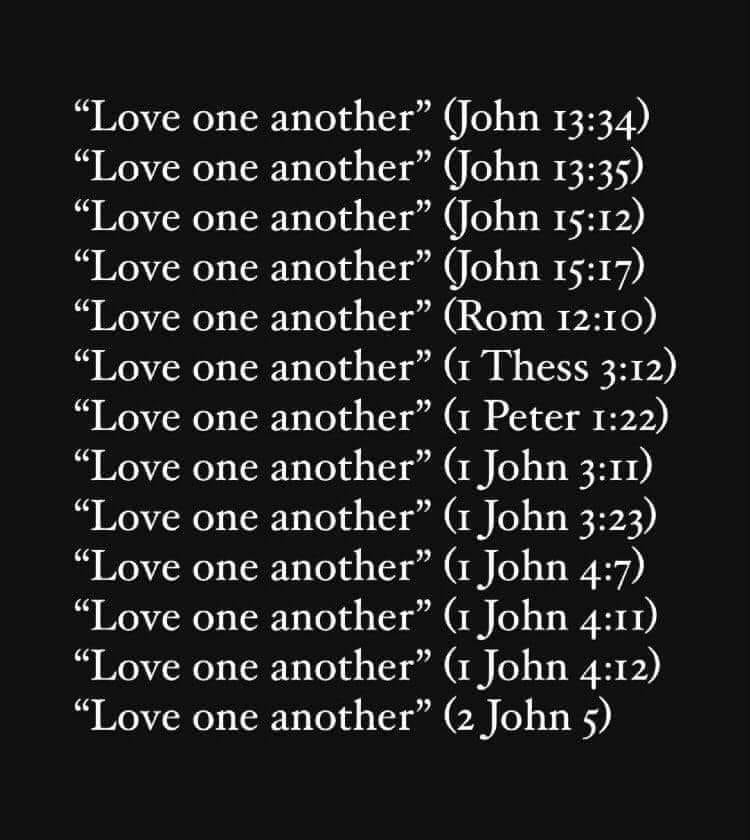
How Important is Love in Your Theology?

Where does love come from?

Tina Turner sang, “What’s love got to do with it?” We might ask that question about theology. We might even ask that question about life, itself!

Most people, I think, would say that love has a lot to do with life and theology. Or, at least, it should!

What does the Bible say? Does it affirm that intuition? The answer is clear that the Bible affirms that intuition of the importance of love ins spades!

What is love?

“Love is patient and kind; love does not envy or boast; it is not arrogant or rude. It does not insist on its own way; it is not irritable or resentful; it does not rejoice at wrongdoing, but rejoices with the truth. Love bears all things, believes all things, hopes all things, endures all things.” (1 Corinthians 13:4-7)


“This is love, not that we have loved God but that he loved us and sent his Son to be the propitiation for our sins.” (1 John 4:10)


“Greater love has no one than this, that someone lay down his life for his friends.” (John 15:15)

What is the source of love?

“[L]ove is from God”

1 John 4:7


“God is love.”

1 John 4:16

How important is love in the Bible?

“So now faith, hope, and love abide, these three; but the greatest of these is love.”

1 Corinthians 13:13

The supreme importance and place of love in Scripture reveals that love could not more more important or prominent in our theology! Any theology, therefore, that is light on love is light on truth.

Putting Denominational Disagreements in Perspective for the World and the Church

In a world in which the standard for disagreement is tolerance, we are called not just to tolerate each other, but to love each other deeply, from the heart.

J. Warner Wallace tackled the question, Do Denominational Disagreements Falsify Christianity? recently from an apologetic angle. A common challenge to Christianity is the extent to which we don’t agree with other. If Christianity is true, why so much disagreement? Why so many denominations?

I like the way Wallace tackles the issue. He starts by observing that truth is often complex, and finite beings such as ourselves often disagree on the complexities. This is true not just in Christianity, but even in science. Wallace lists some of the various “theoretical camps” on the origin of the universe and the various types of atheists who don’t agree with each other in their atheism.

Wallace observes that disagreement doesn’t negate the truth. Truth remains truth whether people understand it or agree on it. Paul is saying the same thing, basically, when he says, “Let God be true though every one were a liar.” (Romans 3:4) We can’t judge God by the way people act, and we can’t judge the truth of Christianity by the way the Church acts.

On that last statement, I can imagine someone saying, “Now wait a minute! Shouldn’t we hold the Church to a higher standard? Shouldn’t the Church, of all institutions, be better than secular ones? If Christianity is true, shouldn’t we expect more harmony in the Church?

I actually agree with these criticisms. What about the inquisitions, and Christians burning other Christians at the stake for heresy and Puritans burning Puritans at the stake for supposedly being witches? That sounds like a lot of infighting for a group of people who are called to be “one in Christ”!

These are serious charges against the Church and Christianity. Wallace is right that every human institution under the sun has disagreement, but shouldn’t the Church be different? If God is God and Christianity is true, shouldn’t the Church stand apart?

Jesus called his followers to be like a city set on a hill, like a beacon of truth. He said the world would know his followers by their love for one another, and he prayed for them to be one with each other as he and the Father are one.

We don’t have to dig very deep, or look very far, or think very long before we find examples in history and in current events today that paint a very different picture of the Church. The Church, universal, is fragmented. Even denominations, within themselves, are divided. Division and dissention occur in our local churches on a regular basis.

The skeptics put up a serious challenge to believers when they make the claim that our penchant for disagreement calls into question the truth that we stand for. How do we respond?

Yes, disagreements in the Church do not negate the truth, but how do we put them in perspective? How does our disagreement fit the truth that is revealed in Scripture? (That the world should know us by our love for one another) How do we reflect the love of God to the world as a fractured and broken Church?

I don’t believe I have a complete handle on these things, but I have some thoughts on how we can square the disagreement in the Church with Scripture and how we should respond as believers to this challenge.

Continue reading “Putting Denominational Disagreements in Perspective for the World and the Church”