Repentance from Dead Works

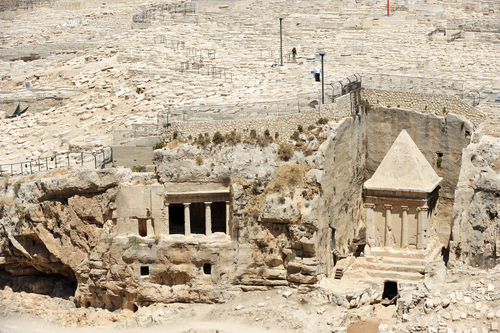
For it is impossible, in the case of those who have once been enlightened, who have tasted the heavenly gift, and have shared in the Holy Spirit, … and then have fallen away, to restore them again to repentance

depostphotos Image ID: 5379147 Copyright: Iurii

These are some of the most terrifying words in the New Testament:

For it is impossible, in the case of those who have once been enlightened, who have tasted the heavenly gift, and have shared in the Holy Spirit, and have tasted the goodness of the word of God and the powers of the age to come, and then have fallen away, to restore them again to repentance, since they are crucifying once again the Son of God to their own harm and holding him up to contempt.” (Hebrews 6:4-6)

For anyone but the hardest core Calvinist, these words are enough to make one shudder. No one wants to fall away. But we often do what we know we shouldn’t. The mind is willing, but the flesh is weak. Though we may be born again, the old man lurks incessantly beneath the service and around every corner. The struggle is real.

Most people, however, (me included) tend to read these words out of context. As an isolated statement, we might be strongly tempted to believe these words speak to sin, especially those nagging, habitual, ingrained sins that we have a hard time overcoming. We feel as if, one day, we will sin one too many times and will have fallen away – completely lost and irredeemable!

But the context speaks to something different than the direction our mind is prone to go.

The statement in Hebrews 6 quoted above is prefaced with the following introduction:

“Therefore let us leave the elementary doctrine of Christ and go on to maturity, not laying again a foundation of repentance from dead works and of faith toward God ….” (Hebrews 6:1)

What is the “elementary doctrine of Christ”? What are these “dead works” from which we must repent? This is the key to keep from “falling away”.

Continue reading “Repentance from Dead Works”

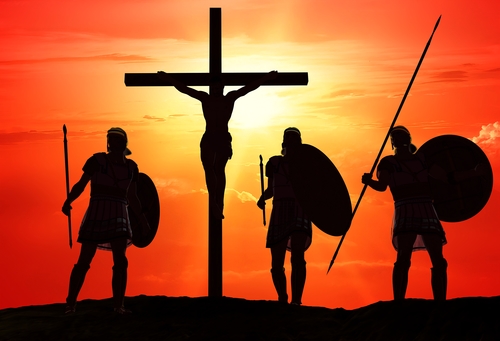
Palm Sunday: the Prelude to the Crucifixion

Jesus didn’t live up to the expectations of the crowd who followed him, and, no longer believing he was the Messiah they had hoped for, they turned on him


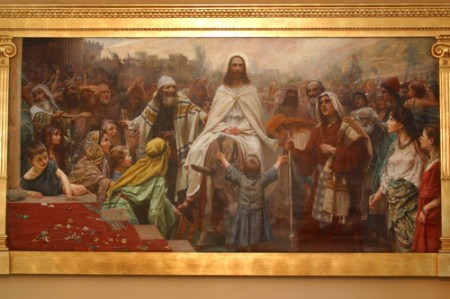
Today is Palm Sunday. This is the day we celebrate the “triumphal entry” of Jesus into the City of Jerusalem. He rode into the city on a donkey. Many hundreds of thousands were gathered in Jerusalem for the coming Passover. John tells us that people gathered in expectation of seeing Jesus because of the word that he had raised a man (Lazarus) from the dead days before. (John 12:17-18)

As Jesus entered the City, people lined the streets with palm branches. They threw their cloaks on the road in front him, and they hailed him with. This is Luke’s account:

As he went along, people spread their cloaks on the road.
When he came near the place where the road goes down the Mount of Olives, the whole crowd of disciples began joyfully to praise God in loud voices for all the miracles they had seen:
“Blessed is the king who comes in the name of the Lord!”

Luke 19:36-38

And here is John’s account:

The next day the great crowd that had come for the festival heard that Jesus was on his way to Jerusalem. They took palm branches and went out to meet him, shouting, “Hosanna!” “Blessed is he who comes in the name of the LORD!” “Blessed is the king of Israel!”

John 12:12-13

As we celebrate Palm Sunday today, we know the story of Jesus is about to take a very dramatic, tragic turn for the worse. The triumphal entry of Jesus into Jerusalem is not the precursor of celebratory times. Ominous clouds are looming on the horizon.

The incongruity of this joyous moment days before Jesus will be crucified is sobering. He was hailed King of the Jews by an adoring crowd days before a jeering crowd yelled, “Crucify him!” Most sobering of all is the likelihood that many people in those crowds were the same people.

What happened?

Continue reading “Palm Sunday: the Prelude to the Crucifixion”

Where Do You Stand in Relation to God?

If we choose to continue to go our own way, and insist upon our own values and ends, God will let us go. Love does not coerce or force itself upon another.

Depositphotos Image ID: 100613226 Copyright: tokkete

We live in a world that defies God. That is the point of the Adam and Eve story. The temptation to go our own way is great. In fact, like sheep wandering without guidance, ignorant of the dangers that lurk around us, we have all gone astray. That is our lot.

From Adam and Eve, throughout all of the Old Testament, this is the story of the world. This is the world into which God came, having reduced himself from the greatness of being our creator[1], to become one of us, in the form of the man Jesus[2].

That God loves us could not be more intimately or completely demonstrated for us than in the life of Jesus. Though he was God[3], he did not hold on to His privilege and power over us. He emptied himself for us. He came humbly and obedient to his own purpose, which was to lay down his own life for us[4] in a demonstration of love and compassion the world had never seen before and has never seen since.

God came into the world, and the world did not recognize him or receive Him[5]. Yet God was faithful to his purpose. He was faithful in his love for us. He was faithful to fulfill what he came to accomplish, which was to redeem us.

He came while we were yet sinners[6]. He didn’t wait until we became holy, righteous and good. He would have still been waiting. He came to heal us from all that makes us broken, which is our innate inclination to separate ourselves from God and to go our own ways.

This is the world and the reality in which we live. The world sets itself in opposition to its creator. Many people pay lip service to God, but their hearts are far from Him[7]. They deny Him in the way they live their daily lives. Though they honor Him with their lips, their actions belie them.

The good news, which is what Gospel means, is that God loves us anyway. He came for us while we were in this very condition, knowing the worst of us. God became man and lived among us knowing how corrupt we were, that we would reject him and knowing that we would attempt to put him to death. He came anyway. This is the extent of God’s love for us.

Our choice of how we will live in this world has consequences because of God’s love and the fact that He made us in His own image, to love him back. We are not compelled to love Him, but we are given the freedom to love Him. We are not robots or automatons who have no choice. But our choice is eternally significant.

Continue reading “Where Do You Stand in Relation to God?”

Why Does Goes God Allow Suffering: Eternal Decisions

Sometimes the rational answer doesn’t satisfy the emotional problem, but there is an answer to the emotional problem of suffering.

Depositphotos Image ID: 31692361 Copyright: DesignPicsInc


I often listen to podcasts in the morning as I shave, shower, brush my teeth and get ready for work. Today I was listening to Dr. William Lane Craig respond to some questions about free will and suffering, and his comments prompt this blog piece.

He made the following statement

“Natural suffering forms the arena in which the drama is played out of people being freely called to come into the kingdom of God and find an eternal relationship with God. It is not at all improbable that only in a world infused with natural suffering would an optimal number of people freely respond to God’s gracious initiatives and come to enjoy a relationship with God and eternal salvation.”

Dr. Craig represents the Molinist view of the tension between God’s sovereignty, knowledge and power and man’s free will. On the Molinist view, God knows the future, but he does not determine it. Knowing the future, God chose to set the universe in motion, but he does not determine every aspect of it, including the choices that people make.

Knowing the future, God chose to set the universe in motion, and to that extent, He determines the outcome, because He knows the outcome. He does not determine it, however, to the extent of interfering with the free will He gave humans who are created in His image.

The fact that he knows the outcome, does not mean that He determines the choices each person makes. Each person is free to choose as they will, but God knows how they will choose from the beginning, and so He can be said to have willed it.

This is (my simple version of) the Molinist view. It respects God’s sovereignty, while acknowledging the clear implication of free will and moral responsibility to which God holds us that is reflected from beginning to end in the Bible.

I tend to like the Molinist view, but I am always somewhat cautioned in my own thinking not to be overly concerned with doctrinal nuances on matters that are, frankly, beyond us. I don’t want to die on a Molinist hill, or any other hill than the Gospel.

The Calvinist resurgence in the church today stands in contrast to a more Armenian view of inviolate free will. Many have been the discussions and debates between these two views. I fear we spend too much time and energy on debating when we should spend more time living out the Gospel. I think Paul might lump these debates in the category of vain discussions.

Still, I think it is good to chew on these things as they may be beneficial to our knowledge and understanding of God. As I thought about Dr. Craig’s comment above, I could not help think that this is a kind of divine utilitarianism – what is optimal for generating the most free will responses of love for, relationship with God, and eternal life with God.

Dr. Craig’s thesis is an attempt to explain why suffering exists in the world when God is supposed to be good, all-powerful and sovereign. Why doesn’t God stop suffering if He is all those things? Why does he allow suffering at all?

Continue reading “Why Does Goes God Allow Suffering: Eternal Decisions”

Christmas Thoughts: Uriah’s Wife and The Redemption Plan of God


My Christmas thoughts a year ago were focused on the women in the genealogy that Matthew included in the beginning of his Gospel. Tamar, Rahab and Ruth are all women whose stories foreshadow the ultimate redemption saga of God entered into our story as human being to redeem the world. The grand story of global redemption is what we celebrate at Christmastime, and these women are each instrumental in that global redemption story.

A total of five women are listed in the patriarchal lineage included at the beginning of Matthew’s Gospel. The oddity of including women in a patriarchal lineage bears some investigation. Indeed, we find the redemptive theme when we look into it, and, that theme continues with the next woman on the list, but with a twist.

The twist begins with the fact that the next woman isn’t even named. The genealogy in Matthew reads like this:

Boaz the father of Obed, whose mother was Ruth,
Obed the father of Jesse, and Jesse the father of King David.
David was the father of Solomon, whose mother had been Uriah’s wife[i]

Another oddity signals that something is different here. The stories of Tamar and Ruth were stories of kinsman-redeemers, women who sought the shelter and protection of the relatives of their deceased husbands, and, thereby, gave birth to sons who would carry on the line that would eventually lead to Jesus, the Christ (Messiah). The stories of the first three women, including Rahab, are also stories of trust in God that are met by God in His faithfulness.

The story of “Uriah’s wife” is another example of God’s faithfulness, but the human side of the story is one of unfaithfulness. Bathsheba is the mother who had been Uriah’s wife. She isn’t named, perhaps, for the scandalous reason that King David murdered her husband and took advantage of her.

Continue reading “Christmas Thoughts: Uriah’s Wife and The Redemption Plan of God”