Evangelicalism and Injustice Part I

Evangelicalism has been very good at preaching the good news, but falls a bit short on doing justice.


I am taking a break from considering the difference between “the righteous” and “the wicked” in Scripture to return to a related topic that erupted publicly in recent weeks: racial injustice. It is related because God’s character is righteousness and justice at His core.

As an attorney, I have had the privilege (and sacred duty) to devote some time to a local organization known as Administer Justice that serves the poor, vulnerable and under-privileged in communities around the country. A great many of “those people” are minorities, immigrants and “the working poor”. I’ve had the honor of getting know some real servants of the Gospel in the process, like Bruce Strom, the founder and executive director of this organization.

I am reading through his book, Gospel Justice. I’ve owned the book for a long time, probably years. I started it a long time ago, and I am still not through it yet because ( I admit) that other, more “interesting” subjects and diversions have distracted me from the seemingly mundane subject of justice.

If I truly want to know God’s heart, to follow Jesus and to work out my salvation as God works within me to will and to act according to His good purpose, though, I need to be concerned about justice – because it’s at the foundation of God’s throne. (Psalm 89:14)

We can’t talk about justice in the United States in the 21st century without talking about racial disparities resulting from centuries of racial injustice. The recent events following the killing of George Floyd (and others) have focused national attention on the issue. As the national dialogue continues, we in the Body of Christ need to engage.

There is a great need for the Body of Christ collective to participate as God would have us get involved in the discussion, action and changes necessary to address racial injustice. My own neighborhood in the Body of Christ is the American evangelical church. Thus, I write this with my evangelical brothers and sisters in mind.

The following passage in Bruce Strom’s book inspires my thoughts today:

“The division between Jews and Gentiles was the great divide of the first century.
“In America that great divide is race, and it remains a leading contributor to injustice. In their book, Divided by Faith, Michael Emerson and Christian Smith examine the role of white evangelicalism in race relations. Based on extensive interviews and study, they conclude that the evangelical church, with its focus on individual salvation, not only misses the opportunity to break down the great divide between the races, but also contributes to it.
“This view is shared by my friend Ed Gilbreath, who wrote Reconciliation Blues. ‘A sad tendency of evangelical faith is to elevate the act of evangelism over the humanity of the people we want to reach…. Apparently, any time an ethnic minority speaks out against race-related injustice, he risks being branded a malcontent in need of therapy.’
“Racial injustice is real….
“We must not walk on by [like the priest and Levite in the parable of the Good Samaritan] as if racial injustice does not exist. We should listen to our neighbors of color who understand well the injustices in their community. And our friends of race should not give up, but seek opportunity to lead by example.”

I am reminded that the evangelical tradition is informed by people like Luther and Wycliffe. They championed the principal that salvation is by faith in the grace of God, not by works that we can do. That and the primacy of Scripture and the need for individual members of the Body of Christ to read Scripture for themselves and to pray to God our Father – not through some intermediary, but directly – one on one.

These things have driven the evangelical church to seek and save the lost, proclaiming the Gospel with the message of salvation to individuals who believe, repent of their sins and put their faith in the lordship and salvation wrought by Jesus on the cross. These are hallmarks of evangelicalism. They are indeed central to the purposes of God.

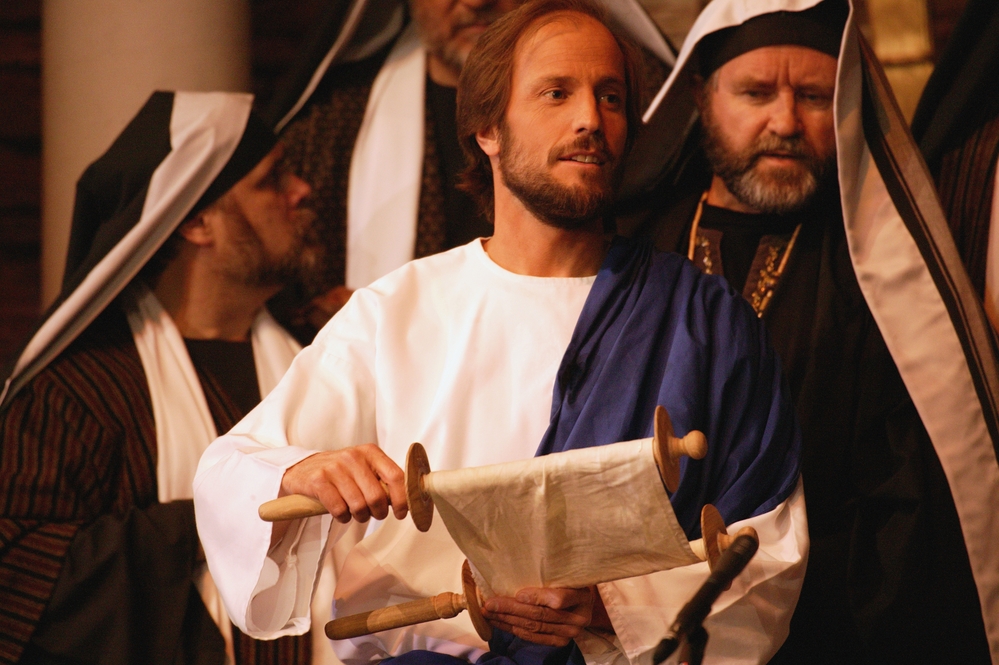
I am reminded further that, when Jesus stood up in the Temple to announce the beginning of his ministry in Luke 4, he read this from the Isaiah scroll:

The Spirit of the Lord is upon Me,
Because He anointed Me to preach the gospel…. (v.18)

When the evangelical church considers the Great Commission –  “[G]o and make disciples of all nations….” (Matt. 28:19-20) – preaching the Gospel comes primarily to mind.  Evangelicalism has been a champion of preaching the Gospel. 

But, I think that sometimes we forget that Jesus didn’t stop there. The passage in Isaiah from which Jesus read continues on well past preaching the good news (quoting from Isaiah 61:1):

He anointed Me to preach the gospel to the poor.
He has sent Me to proclaim release to the captives,
And recovery of sight to the blind,
To set free those who are oppressed,
To proclaim the favorable year of the Lord.

Continue reading “Evangelicalism and Injustice Part I”

Responding to the Journalism Crisis

business man, aggressive businessman with typewriter and hammer


via Responding to the Journalism Crisis

We need to find a way to talk to each other, and not just at each other. We need to listen to each other, and not be so quick to respond with a put down or a label or an accusation.

Does the present state of journalism reflect our current attitudes toward “others”? Or does it drive our attitudes towards “others”?

Maybe its both.

We wouldn’t “buy” what they are dishing out if we didn’t want it. The biased, clickbait journalism that we consume is, sadly, just a reflection of who we have become. Maybe it’s who we always were?

At the same time, the hyped up “news” outlets of the left and right variety to a good job of stirring up the division among us and agitating us to fight with other. We toss meme hand grenades into the social media foxholes of our “enemies”, while we rally the troops hiding in the trenches, and they are fueled by a nonstop barrage of media assault.

What are coming too? Where does this end? Is there any hope?

Maybe, but we need to become better news consumers and demand more integrity from our news sources. We need to become more astute in our vetting of fact and eschew the clickbait headlines that dangle in front of our faces like garish posters advertising the wolf boy at a carnival.

We need to stop ourselves from posting knee-jerk responses on social media, labeling those we disagree with and parroting our talking points without really listening or engaging in independent thought. We need to stop the us-against-them mentality when it comes to politics and worldviews and see ourselves as neighbors who have different perspectives.

Yes, worldviews matter, but relationships matter more. No one is winning the social media debates. We are losing our connectedness in a sea of disjointed, clamorous rancor.

Followers of Christ should seek to set a better example. We should be salt and light. We should have a different flavor. We should not defined by the political positions that we hold, but by the love and character of Christ.

Looking at Both Sides of the Wall

Walls can provide peace and security, but they can also be used to oppress and to prevent us from accomplishing God’s purposes.

Ancient city walls and modern buildings in Istanbul, Turkey

Wayne Gruden, a Christian ethicist, makes a case for building a wall. He cites to biblical passages that reinforce the idea that walls provide protection, peace and security to those inside the walls. These are good things, he says, and he cites to support for this proposition in the Scriptures.

The Psalmist prays (for Jerusalem) for “peace within your walls and security within your towers” (Psalm 122:7) and praises God for strengthening the bars of Jerusalem’s gates, making peace within its borders. (Psalm 147:12-14) David prayed to God to build up the walls of Jerusalem. (Psalm 51:18) King David built walls around Jerusalem, and King Solomon strengthened those walls after him. (1 Kings 3:1)

God used the Babylonians to visit judgment on the people of Israel by breaking down the walls of Jerusalem and burning down the temple and the palaces. (2 Chronicles 36:19. See also Jeremiah 52:14) The first thing the remnant did when they returned to Jerusalem was to rebuild the wall. (Nehemiah 2:17)

Indeed, walls and gates and towers are all pictures that convey the peace and security that the ancients hoped and prayed for from God. These symbols stand for the peace and protection for which ancient people longed in the harsh world of their time.

Proverbs says, “A man without self-control is like a city broken into and left without walls.” (Proverbs 25:28) Thus, walls around cities are symbols of self-control and self-defense.

Certainly, building walls in a hostile world is a prudent thing to do. On different levels, we do this (provide peace and security) for our families, our communities and our nations. Basic decency demands it. Therefore, Wayne Grudem concludes that “the Bible views border walls as a morally good thing”.

I agree with him, but that isn’t necessarily the end of the story. Like many things, walls can be good, and they can be bad. Few people, for instance, believe the Berlin Wall was a morally good thing. Whether building a wall is a morally good or appropriate thing depends on the circumstances and the purposes for which it is built.

Moral goodness can’t be determined in a vacuum. Morality, or righteousness and justice, to use more biblical terms, is a matter of relationship with God and other people. The determination of what is righteous and just begins with a determination of God what God desires and purposes We must have to apply what we know about God’s heart for righteousness and justice in a given situation by considering specific circumstances in light of the big picture.

Walls are not good or evil in themselves. They can protect and maintain peace and security for the people within the walls. They were a critical and necessary component of safe community in most centuries gone by. People who were not protected by walls were exposed to the vagaries of every vagabond with bad intent.

But walls that are designed to keep people captive to an oppressive regime are not good. Walls that were necessary and appropriate for the safety and security of people in ancient times may not be as necessary of appropriate in modern times.

Walls can be used to provide peace and security, but they can also be used for evil purposes like oppression. The issue isn’t walls, but purpose and intent. For Christians that means God’s ultimate purposes and intent.

Continue reading “Looking at Both Sides of the Wall”

Following Jesus on Immigration

Jesus told us to give to Caesar what is Caesar’s, but we are Caesar in a democracy in which we all participate through the right of freedom of speech.


“If you really fulfill the royal law according to the scripture, ‘You shall love your neighbor as yourself,’ you are doing well. But if you show partiality, you are committing sin and are convicted by the law is transgressors. For whoever keeps the whole law but fails in one point he has become guilty of all of it…. So speak and so act as those who are to be judged under the law of liberty. For judgment is without mercy to one who has shown no mercy. Mercy triumphs over judgment.” (James 2:8-10, 12-13)

The immigration issues in the United States are much on everyone’s mind, if for no other reason than Donald Trump and the media are making a big to do about it. Most thinking and empathetic people, however, have watched with some angst as the treatment of families and children crossing the border has brought a moral crisis to our daily awareness.

What should we do with these illegal immigrants and asylum seekers? How should we be treating them and handling the situation? As the videos, photos, stories and reports stream in day after day, we can’t help but notice what is going on and react to it.

How does a Christian respond to the immigration issues that face our country?

Continue reading “Following Jesus on Immigration”

Hearing the Voice of God for Today

Our focus should be on God, and our direction should be inspired by scripture with the help of the Holy Spirit to discern God’s heart, intention and direction for us in these modern times.


I recall a sermon preached back in the 1980’s in the church I attended at the time in New Hampshire. I don’t remember the scriptural passage or references, but I remember the gist of the message, and it has stuck with me ever since.

The gist goes something like this: As God’s people, we need to be informed and take our direction primarily from God and God’s will as revealed to us in the Bible with the help of the Holy Spirit. We are in the world, but we are not of the world, and we should be careful not to be influenced by the world in our thinking.

The key point that I remember, however, is that we can focus so much on trying not to be influenced by the world that we become reactionary to it. If the world goes right, we go left. If the world goes left, we go right. If all we are doing is being reactionary to the world, we lose our focus on God. In the process of trying not to be like the world, we allow ourselves to be defined by the world nevertheless.

If our direction is dictated by nothing more than going in the opposite direction of the world, we are no more directed by God than if we are going in exactly the same direction as the world. Either way, we are focusing on the world and allowing the world to influence our direction, rather than God.

Continue reading “Hearing the Voice of God for Today”