Abraham, Faith, and the Hope Deferred

I ended the article, The Story of Abraham and Isaac Revisited: Here I Am, with a promise to come back to the story of Abraham and Isaac one more time. Recall that Abraham had the intuition to tell Isaac “God would provide” when Isaac asked him where the lamb was for the sacrifice.

We do not know whether Abraham really believed what he told Isaac, whether he was simply being hopeful, or whether he was merely dodging Isaac’s question. We learn in Sunday school that Abraham truly believed it. Perhaps, that is the right answer.

I say that, not because of a Sunday lesson, but because of Abraham’s experience and particularly his experience with God in moments of great doubt and angst. One such moment was described in Genesis Chapter 15. The set up is interesting.

Four kings conspired together to attack Sodom and Gomorrah. They attacked and routed the inhabitants, seizing their goods and carrying off Abraham’s nephew, Lot, and his possessions. (Genesis 14:5-12) Abram (as he was still known at the time) responded immediately with “318 trained men in his household”. He pursued them, routed them, pushing them all the way to Damascus, and recovered Lot and all the goods. (Genesis 14:13-16

Melchizedek, “priest of the God Most High”, pronounced Abraham blessed by “God Most High”, and Abram tithed a tenth to him. (Genesis 14:18-20) After this great victory and blessing from Melchizedek, we read that the word of the Lord came to Abram in a vision:

“Do not be afraid, Abram.
    I am your shield [sovereign],
    your very great reward.”

Genesis 15:1

We might expect Abram to be exalting in the afterglow of his decisive routing of the four kings and blessing by Melchizedek, but he wasn’t. Abram appears to be struggling with the lack of fulfillment of the promises God gave him so many years before.

Abram is human. He has held onto the promise, but his faith is waning. The doubts are rising. Though God had just given him an encouraging word, Abram is focused on the unfulfilled promise:

“But Abram said, ‘Sovereign Lord, what can you give me since I remain childless and the one who will inherit my estate is Eliezer of Damascus?'”

Genesis 15:2

The text continues with Abram still talking. That means God hasn’t responded, and so Abram continues:

“And Abram said, ‘You have given me no children; so a servant in my household will be my heir.'”

Genesis 15:3

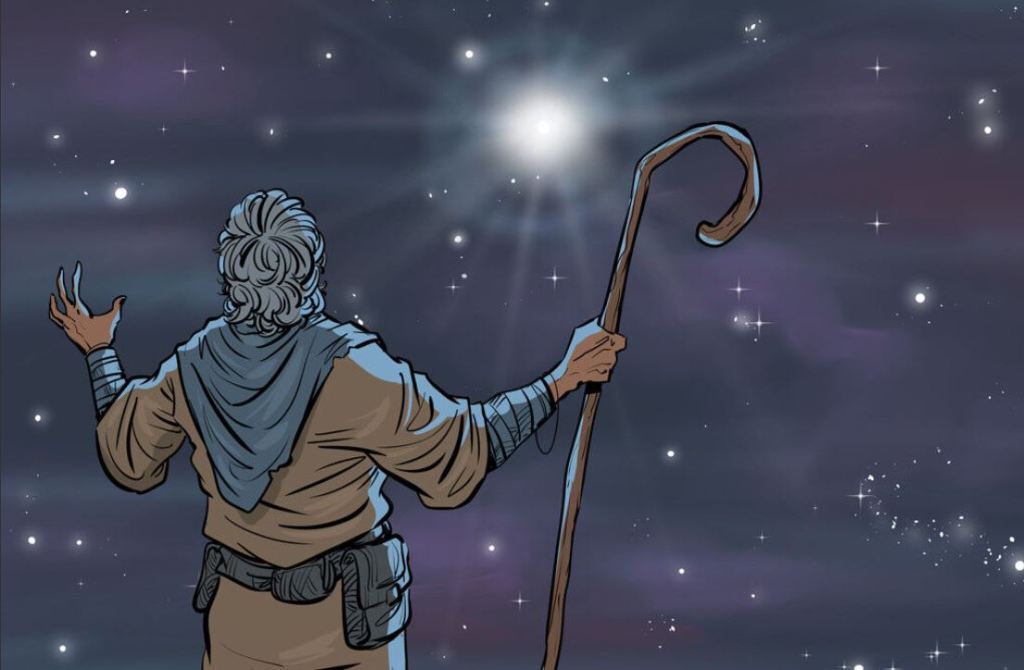
Finally, God breaks in, telling Abraham that his legacy would come from his own flesh and blood, taking Abram outside to look at the sky and telling him his offspring would be like the stars. (Genesis 15:4-5)

We are told that Abram believed in that moment, and God, who sees the hearts of men and knows the thoughts and the intents of mean’s hearts, credited that belief to Abram as righteousness. (Genesis 15:6) God also reminded Abram that He brought Abram out of Ur to the land Abram stood on to give it to him. (Genesis 15:7)

Though Abram believed, and though God had just given him more assurance, Abram kept pressing:

“But Abram said, ‘Sovereign Lord, how can I know that I will gain possession of it?’”

Genesis 15:8

It wasn’t for lack of belief that Abram kept pressing God. We were just told Abram believed. In fact, this was the very moment that God credited Abram with righteousness for his faith!

At the same time, Abram was pressing God for something more than a bare promise. Doubt is not the absence of faith, and pressing God for assurance is not a lack of faith. I hear echoes here of another father who cried out for his son when Jesus promised deliverance, “I believe; help my unbelief!” (Mark 9:24)

God doesn’t rebuke Abram, and he doesn’t take away the righteousness God had just credited to Abram. In the same vein, Jesus didn’t rebuke the father who asked for help in his believing unbelief. Jesus commended him, and God tells Abram,

“Bring me a heifer, a goat and a ram, each three years old, along with a dove and a young pigeon.”

Genesis 15:9

If you are scratching your head right now, that is good! God’s response begs for some understanding and insight. Just as Abram pressed God, we should be pressing right now for understanding.

Continue reading “Abraham, Faith, and the Hope Deferred” →

The Government Will Be on His Shoulder, But What Does it Mean that the Kingdom of God Is Now

How should Christians orientate themselves to the world in which we live and conduct ourselves in the political and governmental spheres of present life?

The following passage from the Prophet, Isaiah, isn’t just a platitude to recite at Christmas:

For to us a child is born,
    to us a son is given;
and the government shall be upon his shoulder,
    and his name shall be called
Wonderful Counselor, Mighty God,
    Everlasting Father, Prince of Peace.

Isaiah 9:6

Jesus has many names, but the one used (perhaps) the most is Lord. All authority on heaven and earth has been given to Jesus. (Matt. 28:18) Christians revel in that statement. In the next breath, after Jesus said this, he said:

“Therefore go and make disciples of all nations….”

Matthew 28:19

When we think of the authority and lordship of Jesus, we might jump immediately to the ultimate conclusion – of Jesus ruling and reigning at the right hand of the Father. When Jesus told the disciples that all authority had been given him, however, his instruction to follow does not take us where our minds might be tempted to go. He did command us to take over the government or set up a new government.

His charge to the disciples was to go to all nations and make disciples.

That is still his instruction at this time.

Perhaps, we can be excused for forgetting the last instructions he gave after almost 2000 years. Or maybe not…. He was pretty clear about it. We also have the following reminder from the Apostle, Peter:

“But do not forget this one thing, dear friends: With the Lord a day is like a thousand years, and a thousand years are like a day. The Lord is not slow in keeping his promise, as some understand slowness. Instead he is patient with you, not wanting anyone to perish, but everyone to come to repentance.”

2 Peter 3:8-9)

Of course, the government will ultimately be committed into His hands. (Is. 22:21) He will ultimately make a footstool of all his enemies. (Ps. 110:1) Jesus will ultimately sit on the throne with throngs of people proclaiming, “Holy, holy, holy. Lord God Almighty!” (Rev. 4:2)

Jesus will be seen as the Lion of Judah and the Root of King David (Rev. 5:5) at that time with a sharp sword coming out of his mouth, striking down the the nations, ruling them with an iron scepter, and treading “the winepress with the fury of the wrath of God the Almighty!” (Rev. 19:15)

But, that time is yet to come. We aren’t there yet.

Even in John’s vision of this future time, the most common description of Jesus is as a Lamb (28 times). Jesus is first the Lamb who was slain, and that is the most prominent name he is given, even in the Book of Revelation.


We have yet to experience Jesus, the Lion of Judah, with sword in his mouth, a scepter in his hand, and a winepress at his feet. That time has not yet come.

Meanwhile, Jesus came not to Judge the world, but to save the world. (John 12:47) Jesus came not for the healthy, but the sick; and Jesus presently desires mercy. (Matt. 9:12-13)

Jesus is not yet the Judge, treading a winepress with the fury of the wrath of God Almighty; He is the Good Shepherd searching for the lost sheep. He is not presently in the business of condemning the world; he is currently in the business of seeking and saving the lost. (Luke 9:10)

So, we should be.

The charge that Jesus gave us – to go and make disciples of all the nations – is still our marching orders. It hasn’t changed.

No matter how close we think we are to the end, God is still currently in the mode of being patient, not wanting anyone to perish, but wanting everyone to come to repentance.

We are easily distracted by many things. We can be so obsessed about the past and we can be so forward-thinking that we forget about the present. We can be so focused on the end times that we do not understand the times in which we live.

We may be close to the end times, but we may yet be far off, by human reckoning. To God, a day is like a thousand years, and a thousand years is like a day. (2 Pet. 3:8) Jesus said we would not know the day or the hour. Most importantly, we are still in the times in which Jesus told us to make disciples of all nations.

He didn’t tell us to make enemies of the nations. He didn’t tell us to set up new nations. He didn’t tell us to take over nations. He said, “Go and make disciples of all nations.”

This, so far, is just a preface for talking about politics and government in the 21st Century. Yes, the government will be on the shoulders of Jesus, but what of the Kingdom of God now? How should Christians orientate themselves to the world in which we live and conduct ourselves in the political and governmental spheres of present life?

Continue reading “The Government Will Be on His Shoulder, But What Does it Mean that the Kingdom of God Is Now” →

Enough Is Enough: Entering into God’s Rest

God’s work has been finished since creation, but that doesn’t mean His purposes are accomplished, yet

I am listening to the BEMA Podcast with Marty Solomon and Brent Billings as they work their way through Genesis applying a more Hebrew, eastern approach to understanding and interpreting scripture. I have talked about these things in previous articles, so I will not rehash.

One of the observations made in the story of creation is that God rested on day 7. The theme of God resting can be followed throughout scripture, especially in the law of the Sabbath rest.

The writer of Hebrews says that the nation of Israel would not enter His rest because they hardened their hearts “in the rebellion” in the wilderness when they “tested and tried” God; rather, they went astray in their hearts and did not know God’s way. (Heb. 3:7-11) From these statements, we understand that God withholds His rest to those who harden their hearts, test and try God, go their own ways and do not “know” God’s ways.

In Hebrew thinking, to know God’s ways is not just an intellectual thing. It’s an experiential thing. To know is to connect personally with and to experience. Knowing is not just intellectually grasping, but becoming personally intimate with something.

God promises us that we will enter into His rest if we do not harden our hearts, if we do not test and try Him and do not go astray, but know (experience, become intimate with) God’s ways. (Heb. 4:1-2) God desires for us to enter His rest.

One conclusion a person might draw from the story of creation is that God knew when to stop creating. He knew when to rest. He knew when enough was enough, and He invites us likewise to know when enough is enough: to rest.

God’s work has been finished since creation (Heb. 4:3), but that doesn’t mean His purposes are accomplished, yet. We know, for instance, that He subjected creation to futility (mataiotés – vanity, emptiness, unreality, purposelessness, ineffectiveness, instability, frailty….”) in hope. (Rom. 8:20)

If He subjected creation to futility in hope, He did it with the expectation and purpose that the hope would be fulfilled and accomplished. The hope is that “the creation itself will be liberated from its bondage to decay and brought into the freedom and glory of the children of God”. (Rom. 8:21)

This suggests that God may have been done with His works when he rested, but His purposes were not yet accomplished. Gods rest prior to the ultimate accomplishment of all that He purposed is part of the story. There is more to the story then simply the creation.

The creation was intended for a purpose that is yet to be accomplished, and our freedom and glory is needed to accomplish that purpose and to liberate creation from its bondage to decay! But what is that yet unfulfilled purpose?

Continue reading “Enough Is Enough: Entering into God’s Rest” →

How Does the Tower of Babel Fit into God’s Plan for People to Love Him and Love Our Neighbors?

Our frustration, toil and separation from other people are not contrary to the purposes of God, but part of the plan.

The story of the Tower of Babel is included in Scripture for a reason, right? So, Why is it there? How does the tower of Babel fit into God’s redemptive plans and purposes?

These are questions we should think to ask. In fact, Scripture is designed, according to Hebrew thinking, to invite us to ask questions.

Western thinking might assume that we just take things on faith and don’t ask questions. Or the opposite: take it at face value and dismiss it when we find problems (“contradictions”) in the text. The biblical texts, however, are inherently Hebrew (“eastern”) in their assumptions, and we lose something if we do not understand that.

God wants us to seek Him, and that includes asking questions of Scripture, wrestling with it, and finding answers to our questions. We don’t exhibit a lack of faith when we find “problems” in Scripture and ask questions. Our faith propels us forward to wrestle with the text and seek answers through study, prayer, and the guidance of the Holy Spirit.

We can hold to a high view of Scripture and admit there are “problems” in the text. Those problems can lead us to some real gems in the answers they reveal.

God desires us to seek him and find him, as Paul says to the philosophers in Athens. (Acts17:27) Jesus, of course, promised that those who ask, seek, and knock will be answered, will find, and the door will be open to them. (Matthew 7:7) Faith is evident when we use the problems we see as the springboard to seek answers.

I recently wrote an article on the Tower of Babel story exploring some of the questions it invites us to ask, and trying on answers that are suggested by a more eastern (Hebrew) mindset than most westerners might be adopt.

One question we might ask is: why is the story there to begin with?

We might assume the story is simply an explanation for how people became scattered all over the world in different language groups. If that is all we get out of the story, though, we miss the most important meaning. If we stop there, and assume there is no more to the story, we may be missing the most important part of the story!

A Hebrew (or eastern) mind always asks, “Why?”

I resonate with this basic practice incorporated into the BEMA Podcast because of a Jewish professor I had in college. He explained one day the difference between the western and eastern approaches to Scripture. He illustrated it with the following example.

If the universe consisted of a chair in a room, people with western minds and eastern minds would approach the room differently. The westerner would measure the height, width, depth and mass of the chair. He would weigh it and measure the distance of the chair from the walls and the ceiling. The easterner (the Hebrew) would start by asking, “Why is the chair here?”

In my previous article, I discussed how the story is a chiasm (a type of poetry). A chiasm puts emphasis on the middle verse. In this story, the emphasis falls on the people’s desire to “make a name for ourselves” because “otherwise we will be scattered over the face of the earth”. (Gen. 11:4)

Why were they concerned about being scattered? Why does God care? What is God doing in confusing their languages and scattering them?

For starters, God does not break into the story, yet, when they are making bricks. We might assume, therefore, that God isn’t threatened or concerned about their development of new technology. He doesn’t break into the story until they say they are going to build a tower to make a name for themselves.

We also need to be mindful, always, of context. The context here is that people are moving away from God, away from his plans. (Moving east.) God wanted them to multiply and fill the earth, but they wanted to put down roots in the plains of Shinar (Babylon), lest they be scattered, and build a tower to exalt themselves.

God’s plan was to have them “multiply and fill the earth”. This was the instruction from God to Adam and Eve. The people who built the Tower of Babel didn’t want to do that. They didn’t want to be “scattered”. They resisted, and they put down roots when they should have been filling the earth.

Building a tower to make a name for themselves, in this context, means wanting to pursue their own plans to achieve their own ends. The concern about being scattered suggests they knew they were doing their own thing contrary to God’s plans for them. They might have feared being scattered because it would disrupt their plans to exalt themselves.

Maybe they thought God couldn’t scatter them if they built a fortified tower. Maybe they were trying to make God deal with them on their own terms, in a location they established, by a structure by which they thought they could ascend to God and control where God met with them.

Of course, God did exactly what they feared, and scattered them a against their wishes by confusing their languages.

But why? Was God threatened by them?

Um…., no. God is sovereign. He created the heavens and earth, and He created these people. They were no threat to Him. So why did God scatter them?

I believe the answer lies partly in the fact that they were pursuing their own plans in exultation of themselves. God had other plans, and God frustrated their plans that were not in keeping with His plans.

That might all seem arbitrary unless we keep asking questions and seeking answers. Why were the peoples’ plans something God couldn’t abide? How did the peoples’ plans interfere with God’s plans?

What were God’s plans?

Continue reading “How Does the Tower of Babel Fit into God’s Plan for People to Love Him and Love Our Neighbors?” →

When It Gets Hard, to Whom Shall We Go?

I had gone back to medicating myself and chasing weekends. I was lost in a spiritual wilderness.

The passage from the Gospel of John reproduced below was the subject of a sermon recently where I attend church. It is also the catalyst for one of the most important turning points in my life.

Jesus had just finished telling the crowd, “I am the bread of life….” (John 6:48); “And the bread that I will give for the life of the world is my flesh” (John 6:51); and, “Whoever feeds on my flesh and drinks my blood has eternal life.” (John 6: 54)

The Romans called the early Christians cannibals because of words like these and “the Lord’s Supper” that Christians observed ritually when they met. The crowd didn’t understand what he was saying either. The apostles also didn’t understand, as is evident by the following interchange in John 6:

60 On hearing it, many of his disciples said, “This is a hard teaching. Who can accept it?”

61 Aware that his disciples were grumbling about this, Jesus said to them, “Does this offend you? 62 Then what if you see the Son of Man ascend to where he was before! 63 The Spirit gives life; the flesh counts for nothing. The words I have spoken to you—they are full of the Spirit[e] and life. 64 Yet there are some of you who do not believe.” For Jesus had known from the beginning which of them did not believe and who would betray him. 65 He went on to say, “This is why I told you that no one can come to me unless the Father has enabled them.”

66 From this time many of his disciples turned back and no longer followed him.

67 “You do not want to leave too, do you?” Jesus asked the Twelve.

68 Simon Peter answered him, “Lord, to whom shall we go? You have the words of eternal life. 69 We have come to believe and to know that you are the Holy One of God.” (Emphasis added)

These words Jesus spoke were allegorical of course. In the sermon on this passage the pastor developed the principal that we feed on what we follow.

Paul says, “Bad company corrupts good character.” (1 Corinthians 15:33) “Garbage in, garbage out”, as “they” say. It’s biblical, and it’s common wisdom, but this passage is about much more than an adage for life.

Continue reading “When It Gets Hard, to Whom Shall We Go?” →