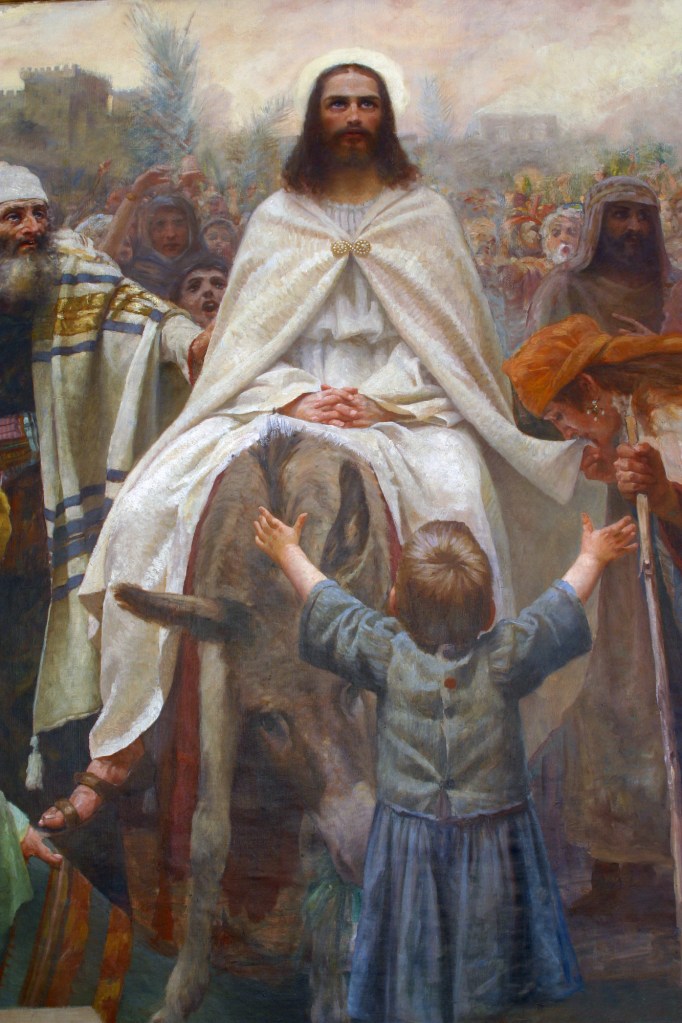
I am reading through Kings and Chronicles right now in my annual trek through the Bible, and the Prophet, Elijah, has been the “star” these last few days. Elijah means “Yahweh is my God” in Hebrew. He is known for his great faith and is one of the most prominent and revered prophets in the Old Testament.
Elijah is known for his fierce faith in the face of difficult circumstances when Ahab, the King of Israel, and his domineering, foreign wife, Jezebel killed off most of the faithful Hebrew prophets and instituted the worship of Baal and Asherah for the nation of Israel.
Elijah stood defiantly against Ahab and Jezebel who sought to kill him for his defiance Elijah is, perhaps, most known for his public challenge to the prophets of Baal and Asherah that culminated in a powerful demonstration of Yahweh’s superiority to those foreign gods.
This story and another story in a similar vein to it are the backdrop for this article. If Elijah is an exemplary man of faith, to what extent should we follow his example today in the expression of our faith in the face of governmental and cultural opposition?
I did the research and wrote a thesis in college in support of the concept that Scripture is inerrant. I have mentioned this before. I was not a religion major in college only because I did not turn in my thesis.
I didn’t turn it in because I was having a hard time getting to where I wanted to go using Scripture and the scholarly work that was done up to the early 1980’s. I could not support my thesis with integrity, so I shelved it and did not return to the subject for almost 40 years!
I had a high view of Scripture then, and I have a high view of Scripture now. I read the Bible daily for personal guidance and edification. I believe the Bible is the inspired Word of God (which I can support from Scripture itself. (2 Timothy 3:16-17))
I believe, like the Moody Bible Institute, that the Old and New Testaments are divine revelation from God. The original autographs were verbally inspired by the Holy Spirit. The revelation is God’s self-disclosure recorded in human language. God is the source of it.
I stop, though, in going further to say that every word is true, and the Bible is free from error. The very statement begs the questions: which version? Written in which language? And other questions.
I agree with the Moody statement that the Bible is the supreme source of our knowledge of God and of salvation through Jesus Christ. I agree that it is “our indispensable resource for daily living”. I agree, also, that humans are left to interpret the Bible, and our interpretation is guided by “our reception and understanding of that which God revealed”.
I stop short of saying that God “recorded” Scripture, because we all know that it was written down by men. This difference distinguishes the Bible from the Quran and the Book of Mormon, both of which are claimed to have been dictated to men in a trance-like state.
I agree that “revelation is a divine act”, and “interpretation is a human responsibility”. I agree that our interpretation is fallible, but I must admit the possibility that the writing down of the Bible may, also, be fallible.
I also recognize that I am fallible and must remain humble in my approach, so take what I say with a grain of salt and make your own determinations. I share my thoughts for what they are worth.
When I was in college sitting in a World Religion class, reading the Bible for the first time in my life, I was struck by a thought that I believe to this day came from the Holy Spirit (along with others). My professor was liberal and progressive, so I can’t “blame” it on him.
It occurred to me that, if God is real, and the God of the Bible is the creator of the universe, then He could orchestrate His communications to humans in a way that they could understand them and preserve the important points for posterity. If God is sovereign, He can do that.
I believe the Bible is the book God wanted us to have.
NT Wright
I still believe that, but I also like the way NT Wright puts it: “I believe the Bible is the book God wanted us to have.” I can buy that! Other things NT Wright says about the character of Scripture also make sense to me, so I will mix his words with mine in the remainder of this piece.
I have heard a number of people assert that Christianity gave birth to the scientific method. Perhaps, the first time I heard that claim was from John Lennox, the famous Oxford University professor of mathematics. I was intrigued, but I didn’t take the time to research his claim at the time.
I have heard the claim repeated multiple times, most recently by Dr. Michael Guillen the astrophysicist, former Harvard professor and TV personality. In fact, he devoted a podcast to the subject (embedded below), so I figured it was time to learn more.
I started with Wikipedia, which has a page on scientific method. Wikipedia begins with Aristotle and focuses on rationalism as the basis for scientific method.
Properly speaking, rationalism is not a method. It is a philosophy, a way to approach the world. Rationalism and Aristotle, though, seem to have led the way to the development of the scientific method.
Aristotle’s inductive-deductive method that depended on axiomatic truths and the “self-evident concepts” developed by Epicurus was an early conception of the way to do science. It was jettisoned, however, for something more like the modern scientific method beginning around the 16th Century. Perhaps, this is why Guillen doesn’t mention Aristotle, except in passing.
After those early pioneers, Wikipedia references some great Muslim thinkers who were influenced by Aristotle (including Avicenna (Ibn Sina) and Averroes (Abū l-Walīd Muḥammad Ibn ʾAḥmad Ibn Rušd)). They placed “greater emphasis on combining theory with practice”, focusing on “the use of experiment as a source of knowledge”. Guillen starts his history of scientific method with these early “flashes” of scientific method in the Muslim world.
These men of the Islamic Golden Age pioneered a form of scientific method, but the inertia did not continue. Moses ben Maimon (Maimonides), the great Jewish theologian, physician, and astronomer, developed a similar emphasis on evidence. He urged “that man should believe only what can be supported either by rational proof, by the evidence of the senses, or by trustworthy authority”. He foreshadowed a future scientific posture, but his prescience also did compel further advancement at the time.
Dr. Guillen credits Robert Grosseteste and Roger Bacon with the formation of the first actual principles of scientific method. Their ideas “caught fire” in Christian Europe from the tinder of academies that began just after the turn of the first millennium, igniting a blaze that would fuel scientific inquiry and endeavor for centuries to come.
“Concluding from particular observations into a universal law, and then back again, from universal laws to prediction of particulars”, Grosseteste emphasized confirmation “through experimentation to verify the principles” in both directions.
Roger Bacon, Grosseteste’s pupil, “described a repeating cycle of observation, hypothesis, experimentation, and a need for independent verification”, including the recording of the way experiments were conducted in precise detail so that outcomes could be replicated independently by others. Bacon’s methodology lead to the modern emphasis on peer-review in science, says Guillen.
Wikipedia mentions Francis Bacon and Descartes. Bacon and Descartes emphasized the importance of skepticism and rigid experimentation, expressly rejecting Aristotle’s dependence on first principles (axioms). Guillen, however, glosses over Descartes to get to Galileo Galilei and Isaac Newton.
Galileo Galilei introduced mathematical proof into the process and continued to distance science from reliance on Aristotelean first principles. Galileo and Newton reformulated the terms of scientific method that would inform modern scientists ever afterward.
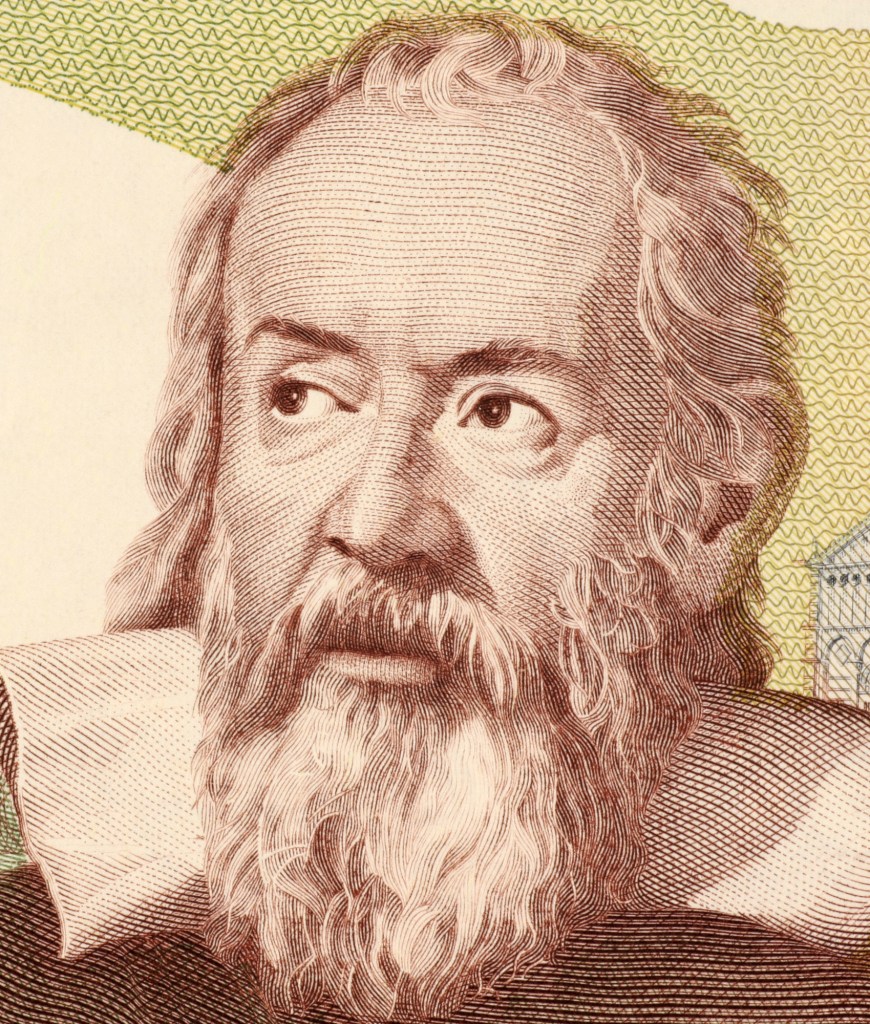
That the two latter men were men of faith, along with Grosseteste (a Catholic Bishop) and Roger Bacon, his student, is significant. Maimonides and the Islamic thinkers before him were also men of faith. These men who pioneered the way to modern science were all monotheists who believed in a creator God.
Science did not really take off until the 17th Century. The trailblazers of the modern scientific method were religious men, and the modern scientific method was born in the religious environment in Christian Europe lead, primarily, by men of faith.
Why did science catch fire in Christian Europe and not in other parts of the world? Why not in China? Or in the world of the eastern religions? This is a question Guillen poses, and he provides a possible answer.
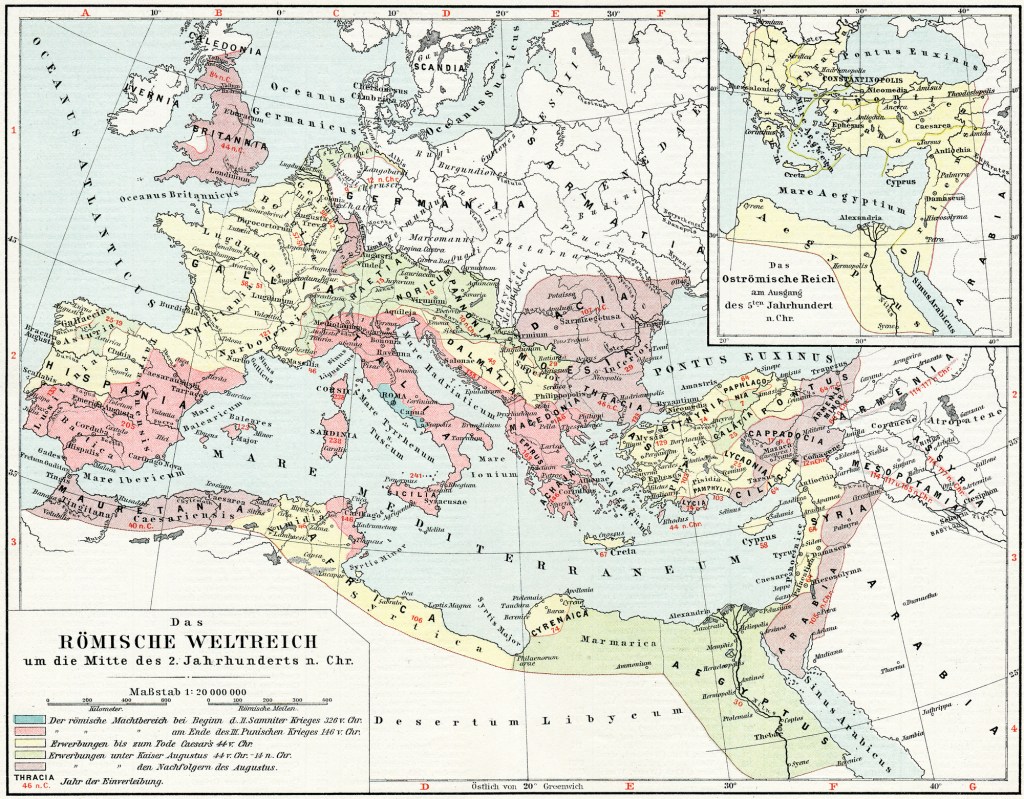
Map of the Roman Empire, 2nd century AD. Publication of the book “Meyers Konversations-Lexikon”, Volume 7, Leipzig, Germany, 1910
Fellow blogger Joel Edmund Anderson wrote a short summary of the Letter to Diognetus on his blog, Resurrecting Orthodoxy (March 19, 2022). This is part of his series on early church fathers.
I feel like we tend to believe that we have advanced from our peers centuries ago, and I am ever skeptical of that advancement. I tend to believe the writer of Ecclesiastes:
What has been will be again, what has been done will be done again; there is nothing new under the sun.
Ecclesiastes 1:9
Yes, we have made great technological advancements, but how different are people, really? I direct your attention to the Ukraine where Russian bombs fall on hospitals, schools and people fleeing a war with very questionable motivations.
Lest we be too smug, more people died at the hands of despotic rulers in the 20th Century than all the previous centuries combined.
But, I don’t want to preach, and I don’t exempt myself from my personal indictment. I am not exempt. People are still people, and we have a tendency to do bad things.
On this point, though, I like reading the thoughts of ancient minds to remind myself of the ways in which we tread the same ground. The Letter to Diognetus is a good example, and I commend the article I have linked for your consideration.
Joel Edmund Anderson observes that the Letter to Diognetus is the first communication (in records we have) attempting to explain Christianity to pagans. It was written early, around 130 AD, and it distinguishes Christianity from Judaism and from paganism.
Who is Diognetus? What was the occasion for the letter? Was the letter sent unsolicited? Did Diognetus inquire about Christianity? Was it the product of a discussion? Who wrote the letter? We don’t know.
I imagine the letter wasn’t unsolicited. Writing utensils and parchment, papyrus or whatever medium was used then not in abundant supply in the 2nd Century. Writing was an effort.
That the letter was preserved speaks, perhaps, to the way the letter was received. Whoever received this letter thought it was valuable enough to keep it and preserve it.
As I read the summary of the letter today, though, I am interested in several points made in the letter and how they relate to us 19 centuries later.
My inspiration this morning comes from “the woman at the well” and Galileo. They are separated by about 1500 years, but their stories resonate together for me this morning.
The theme is inspired by the questions: “How should we read Scripture?” and “How should we understand science and faith?” Those questions were relevant over 2000 years ago; they were relevant 500 years ago; and they are still relevant today.
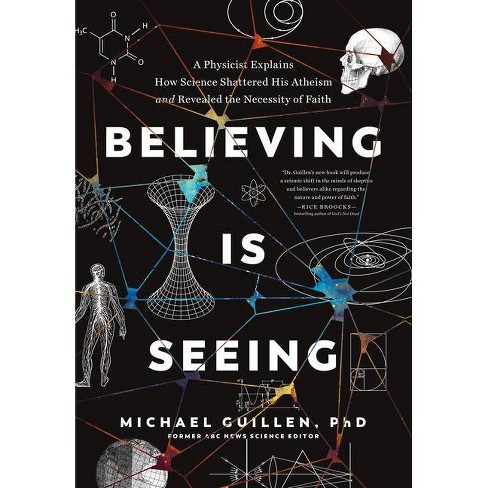
Michael Guillen, in his book, Believing is Seeing, reveals how logical and trans logical thinking are different tools, and each have a place in the intellectual toolbox. Logic is necessary to understand simple, “trivial” truths, but “profound” truths, he says, require trans logical thinking.
We err to apply logic to every problem. Simple matters are the province of logic, but complex matters require trans logic. As much as we might want to keep complex matters simple, we cannot gain insight into many complex matters without a willingness to go beyond the familiar confines of simple logic.
Guillen recognized the necessity to stretch beyond simple logic to more complex, trans logical thinking, among other things, in the realization that dark matter and dark energy make up 95% of the universe. In other words, 95% of the universe is invisible to us! (p. 9)
If we insist on limiting ourselves to things that we can see, touch, feel, smell, and hear, we must give up on 95% of the universe. If we want to explore outside the boundaries of what we can see, we need to adopt more robust, trans logical thinking.
Trans logical thinking is not anti logic, but it isn’t as linear as logic, and it may require holding things in tension that may seem contrary on their face. Classical physics and quantum physics are good examples of things we believe are both true, but which seem to be contradictory on their face.
If we are not willing to give up on 95% of reality, we must be willing to adapt. We must let go of our insistence that everything be reduced to what we can affirm with our senses and to what will fit into simple formulas and logical constraints. We need to think outside the box.
Guillen sees a parallel in the “stretching” that scientists must do to grapple with the unseen world at the edges of simple science and the revelation of the Bible of more “spiritual” things:
“’What no eye has seen, what no ear has heard, and what no human mind has conceived’ — the things God has prepared for those who love him— these are the things God has revealed to us by his Spirit.”
1 Corinthians 2:9
What the Spirit of God can reveal to us is somewhat similar to the stretching the scientist must do in his thinking to understand things like dark matter and dark energy, quarks, quantum entanglement and other mysteries of science that defy Aristotelian logic and conventional principals. For people who like to live with their feet planted solidly on the ground and with certainty anchoring their beliefs, the prospect of revelation by God’s Holy Spirit is like a black hole. We dare not venture too close for fear of being sucked into a black hole.
Yet, God not only invites us in; He insists that we venture close to understand Him.
“The Spirit searches all things, even the deep things of God. For who knows a person’s thoughts except their own spirit within them? In the same way no one knows the thoughts of God except the Spirit of God. What we have received is not the spirit of the world, but the Spirit who is from God, so that we may understand what God has freely given us. This is what we speak, not in words taught us by human wisdom but in words taught by the Spirit, explaining spiritual realities with Spirit-taught words.”
1 Corinthians 2:10-13
The difference between logic and trans logic in science and the study of the edges of the physical world have application to the metaphysical world in the encounter of the woman at the well with Jesus. I will lay out the similarities I see below.