Racial Justice: Having the Same Attitude Jesus Had

Jesus was the ultimate privileged individual in history. He was God who gave up His divine privilege to become one of us.

I consider myself fortunate to have been raised by parents who spoke about the evils of racial prejudice. I was rightfully appalled when I heard a racial comment spoken by a classmate in 1st grade. I was deeply affected by the assassination of Dr. Martin Luther King, Jr. when I was eight, so much that I remember what it was like walking to school the following day.

Dr. King’s death was a momentous event in my life. It affected me profoundly, but the darkness I glimpsed in the moment was as far away from me as the clouds way up in the bright morning sky that day as I walked to school.

As fortunate as I was to have had the good example of my parents’ just position on the issue of racism, I have been very slow to realize, personally, the real impact of racism in the routine lives of my brothers and sisters of color. The racism I understand (very incompletely) has has only slowly come into focus for me from the other side of that world.

I have never experienced racism directed at myself. I have not lived with the ever-present reality of racism bearing down on me from seen and, mostly, unseen sources (now).

I have never walked into a retail store knowing that someone, somewhere in that store, was watching me, suspicious of my every move. I have not driven my car in my own neighborhood conscious of the fact that eyes were following me, wondering what I am up to. I have not been stopped multiple times in my life on a pretense, though I was doing nothing wrong.

I do know the fear of being found out when I was doing something wrong, but that isn’t the same thing. I remember as a rebellious youth the fear that gripped me when I encountered a squad car at an intersection or when a squad car pulled behind me while I had an open container of alcohol in my car. But I could control my circumstances and change my ways to eliminate that fear.


I don’t know what it’s like to live in constant fear of circumstances I can’t control or predict – circumstances controlled by the fate of my birth in modern America with dark-colored skin.

As a child, I had hope and faith that we could truly see Dr. King’s dream come true: the dream that is deeply rooted in the American dream – that this nation would rise up and live out the true meaning of its creed:

“We hold these truths to be self-evident, that all men are created equal.”

We have made great strides, but the racism in this country is deeply rooted and pernicious than I believed it to be when I was child.

The deaths of Ahmaud Arbery and George Floyd are just the most recent examples of decades, generations and centuries of this cancer. The rioting that occurred last year is hard to understand from a purely rational perspective by those who don’t personally know the pain, grief, frustration and anger that wells up in response to injustice. Meanwhile, many people like me, people of good will, sit silently by.

We have not, yet, achieved the goal of the civil rights movement that was inspired by the tragic death of Dr. King. Half a century later, we aren’t colorblind. In fact, colorblindness has become a way of denying the racial disparities that still exist. Racial issues have gone underground and have become more insidious.

How does a white guy like me, who once thought that we had overcome racism with civil rights laws on the books, speak to these largely underground racial strains that remain? How do I conduct myself?

Some would say I have no legitimate voice to speak to these issues, but need to speak.

Continue reading “Racial Justice: Having the Same Attitude Jesus Had”
What Should We Do When the Prophets Are Wrong

We should not despise prophecy, but we should test everything, focus on what is good and reject evil.

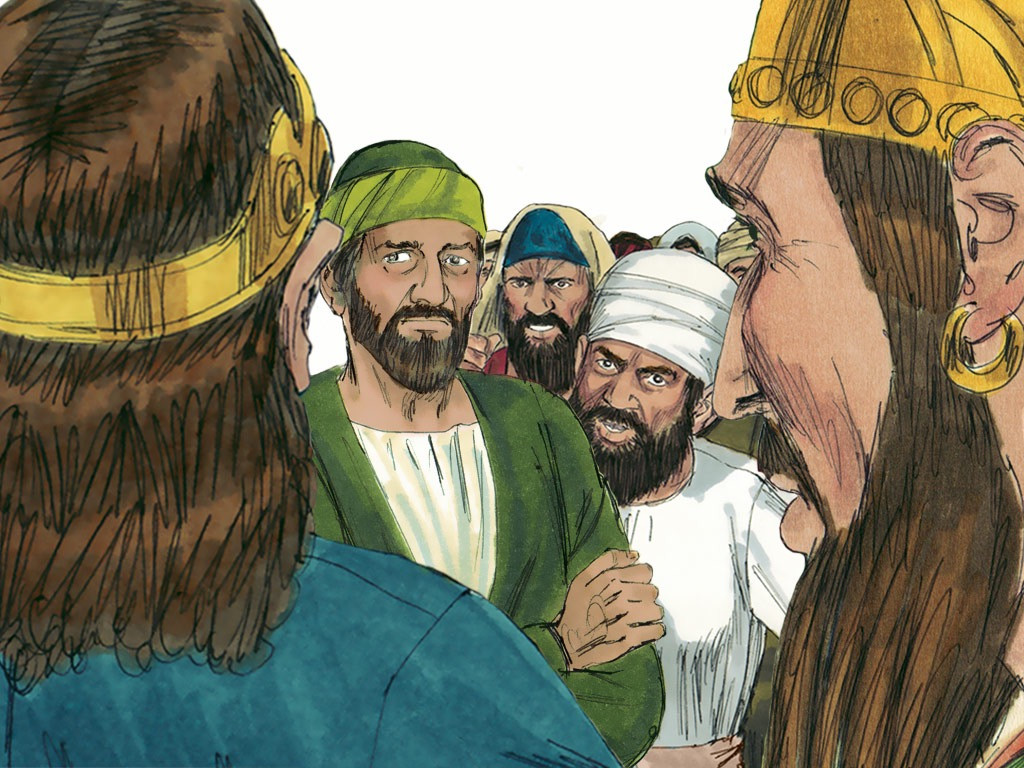
“When the prophet of the Lord arrived, King Ahab asked him, ‘Micaiah, shall we go to war against Ramoth Gilead, or not?’” (1 Kings 22:16)

I continue to process the events of the last year, and my reading through Scripture will sometimes call those things to mind. One of those ongoing events involved former President Trump and all the evangelical support he received regardless of whatever he said or did.

There were evangelicals who defended every word and action. Their support was unwavering, and prophets even prophesied that he would be reelected.

Obviously, they were wrong.

Let me say that again. They were wrong. If God spoke to them and said Trump would be re-elected, he would have won, regardless of any voter fraud.

Regardless of the circumstances in the world. God is sovereign. He knows those things. If God actually moved in those prophets to foretell the future, it would have come to pass. They were wrong! God didn’t prompt those prophecies.

More importantly, I want to focus on the evangelical support of Donald Trump. The unwavering support and relentless defense of Donald Trump troubled me greatly from before he was elected in 2016. I wrote often about it. The prophecies that he would be reelected troubled me even more.

They didn’t trouble me because of the thought that Trump might be reelected. Whatever God will do, He will do. If God wanted Donald Trump to be President for another four years, so be it. God establishes authorities. (Rom. 13:1)

The prophecies troubled me because Paul says we should not despise prophecy. (1 Thessalonians 5:20) We should, therefore, not take prophecy lightly. In that vein, I was troubled that I could be dead wrong about my assessment of Donald Trump and of what God is/was doing in our time.

I wrote about the Sons of Issachar who “understood the times” in an attempt to think, pray and write through it. The people who were saying that Donald Trump would be elected were claiming to be like the Sons of Issachar. They claimed to know what God was doing in our times, and they were one hundred percent behind Donald Trump who they claimed was God’s man for this time.

I was personally concerned that I had it all wrong. I am not a prophet, and I don’t claim to be one, though I feel sometimes that I have a prophetic bent in me (whatever that really means). I would not, however, and do not call myself a prophet.

I don’t predict things.

Not that predicting things is all the prophetic gift is about. I don’t think it is. I think the prophetic gift is about speaking the mind of God. It may include speaking the mind of God in a particular moment, to a particular person or people, or not. It may include speaking God’s mind and heart generally.

I believe people who preach can be prophetic in their preaching. There are teachers, and then there prophetic preachers.

Prophecy may (at times) be predictive, but I think it is more about speaking God’s mind and heart than the ability to predict things. For whatever reason, though, people are really interested in predicting things and knowing the future. In fact, we seem to be obsessed with it.

This isn’t anything new. The disciples asked Jesus many times about when the end would come. Jesus said it wasn’t for them to know the day or time. Still, they pressed him.

Throughout history are examples of people claiming to know the end times. Though, many people have predicted days and times, they have all been wrong.

Of course, someone someday might be right, so people continue to try….

Not that I think we should. Jesus said we wouldn’t know. I take him at his word.

We see this same kind of preoccupation with wanting to know the future in the Old Testament. I recently read the story of Israel’s King Ahab and Judah’s King Jehoshaphat coming together to attack the City of Ramoth Gilead that once belonged to Israel. This story has something to say to us today on the subject of prophecy, and it’s the backdrop for what I have on my mind today.

Continue reading “What Should We Do When the Prophets Are Wrong”

From Atheism to Faith: The Story of Mary Jo Sharp

“I really didn’t have a view of God, and I wouldn’t have thought to gain one or why a person should want to gain one. It just wasn’t on the radar”

Mary Jo Sharp grew up in a secular home. Her parents didn’t go to church. Her community in Portland, Oregon was post-Christian, and she didn’t even know people who claimed to be Christian.

She was aware of Christianity in culture, but she didn’t have any firsthand contact with Christian culture. Her parents weren’t’ religious, and they didn’t go to church.

Her father was a “huge Carl Sagan fan”, and she was influenced by his love for science, outer space and nature. She was influenced almost exclusively by a materialist worldview from a young age – the view that reality consists only of what we can see, hear, feel, touch, and taste in the material realm. (There is no other “realm”.)

Materialism was the theme that ran through the TV shows on science and nature that her father would watch. “This was the background that formed my view of reality,” says Sharp, “I really didn’t have a view of God, and I wouldn’t have thought to gain one or why a person should want to gain one. It just wasn’t on the radar”

She says she didn’t know that the materialist view is only one view among other views on the nature of reality. She says, “It’s just what I was exposed to.” She didn’t know any other way to view the world and reality.

The Christians she would later meet seemed “nice and innocuous”, but she predisposed to be wary of them from the exposure to Christianity on television. Her view of religion was also shaped by her knowledge of a cult at a compound in her area that attempted a bio-terrorist attack on nearby cities, using salmonella to poison people. Therefore, she says,

“I had a lot of misgivings about what religion was, who God is or was. I didn’t understand what religion was for. It seemed like the kind of thing people did because they were raised that way, and I wasn’t.”

Mary Jo Sharp was an atheist from as young as she can remember. Atheism to her was normative. She had a good life. Her parents loved her. She loved science. She loved music. She had no needs that might drive her to religion for comfort.

Her primary exposure to religion was in the myths of ancient religions. She says, now, that she had a kind of “chronological snobbery”, believing that she was more “progressed” than other people who still had vestiges of a religious faith. She felt her family was better than others who still clung to religious myths.

There was no crisis in her life. She saw herself as a good person. “I had it together,” she says, but one thing opened a door (just a crack) to the possibility that reality was more than she supposed.

She was becoming aware of the wonder of the world, and that wonder caused a subtle tension in her materialist assumptions. She felt wonder at sunsets and mountain ranges and music that she couldn’t explain on the basis of her view of the world as the product of random and meaningless matter and energy.

Things were about to change for her when a person she respected in her life gave her a Bible. She “didn’t receive it well”, but the timing was fortuitous because of the subtle questions that were beginning to occur to her prompted by wonder.

She didn’t have a source for answering the questions she had. She didn’t have philosophy training to help put her questions into context because her public school education did not include training in critical thinking or how to tackle the big questions of life.

Though she didn’t react well to the gift of a Bible she received one day, she read it. Reading the Bible opened her mind up to possibilities she hadn’t considered before.

She says, “I was really caught off guard because it wasn’t what I expected.” She was experienced in reading mythology from the Samarians, Greeks, Egyptians and Native Americans, but the Bible stood in contrast to those mythological writings. “As I was digging into the Bible, it was nothing like that…. It sounded more report-like.”

She realized, of course, that some portions of the Bible are poetic. Other portions of the Bible, however, like Luke, read like reports of factual things. Those portions of the Bible include many details of places, times, people, happenings, etc. On reading Luke, she recalls, “It sounds like he was just trying to report what was going on.”

That “shook” her because the Bible seemed to be written by people who were just trying to convey what happened. It didn’t read like mythological stories made up with the primary purpose of conveying moral lessons, as the writings with which she was more familiar.

Continue reading “From Atheism to Faith: The Story of Mary Jo Sharp”

Rising Up To Honor Christ Who Saves!

“[I]n your hearts honor Christ as holy….”

Most Christians, especially those who like apologetics, are familiar with the exhortation in 1 Peter 3:1 to “[be] prepared to make a defense to anyone who asks you for a reason for the hope that is in you….” I read this verse today, but the beginning of verse stood out for me today:

“[I]n your hearts honor Christ as holy….” (ESV)

Perhaps, this phrase stood out to me today because of my recent experience at a gathering on a bright, sunny and warm day. We were outside with neighbors, enjoying the turn of good weather, and I was very relaxed.

It was Easter. I had gone to church, but the poignance of the morning service had washed out in the sunlight and warm breeze of a lazy day. I wanted to hold onto and appreciate the significance of the day, but the pleasure of spring after a long, hard winter absorbed my attention.

I am reminded as I read 1 Peter 3:15 today that holiness means being set apart. A more literal reading of the Greek phrase might be as follows:

“Sanctify Christ in your hearts as Lord….”

The Greek word translated variously in different translations as honor, sanctify, reverse, worship, set apart, consecrate, dedicate, is ἁγιάζω (hagiazó). It means “to make holy, consecrate, sanctify”. It comes from the adjective, hágios, which means holy. It is a verb that means to make holy, consecrate, sanctify or to dedicate separate.

Thus, Christ is not simply holy. He is holy, of course, but we have to make Him holy in our hearts. We must actively participate in honoring, revering, consecrating, sanctifying and making Christ holy in our hearts. This is not a passive stance; we are called to be active participants in the process of making Christ holy and set apart in our hearts.

I was troubled in my heart the evening of our lazy Easter day. I went to bed troubled. I woke up troubled. I am still troubled.

This verse focuses the light of God’s word on my troubled heart: I was not actively participating in the holiness of Christ in my heart. I was a passive vessel after church the rest of that Easter day. I was passive, not active, in my heart to honor and revere Christ as Lord the rest of that day.

I am not beating myself up for this. Christ is my salvation. He alone is my hope. His gift of salvation is freely offered to me. It’s nothing I can add to, nothing I must strive to hold onto, and nothing in which I can boast.

Yet, my heart is troubled when I fall short of honoring Christ for what He has done for me.

I am not troubled for having enjoyed the day. All good things come from God. The warmth of spring after the cold of winter is a reminder of God’s love for us. We do well to enjoy the blessings of God.

We shouldn’t enjoy the blessings of God, however, as we are often tempted to do, in place of God from whom all blessings come. It’s easy, especially in the good times, to embrace the blessings while relaxing our embrace of God from whom those blessings come.

I believe I have been troubled because I failed in my heart to honor Christ well during the rest of the day after the morning church service in the way that I wanted to – in the way my heart desired to honor Christ, who died for my sins.

As I write this, I realize the danger of being the Pharisee here. I could beat myself up. I could do penance and scrub the outside of this tomb I call my body. I could polish it up so that my appearance to all who see me is whitewashed, but I would do nothing in the effort to drive out the darkness in me that would rather settle into the comfort of a lazy day than keep Christ sanctified in my heart.

Or, I could simply recognize that I need Christ all the more for having succumbed to the laziness that resides still within me. Christ is the Author and Perfector of my faith. Not I. So, I submit in writing this to Him who saves me to work in me to will and to act according to His good purpose.

The spirit in me aligns with God’s Holy Spirit to cry, Abba! Father! Save me from this heart of sin! Save me from the sin into which I so easily settle.

Stir my heart within me to rise up and honor Christ who saves me!

The Borderlines: A Place Called Earth

When we stand at the borderline and understand the limitations and futility of our lives, we have begun to see as God intended for us to see.

Oh, how I long for heaven in a place called earth
Where every son and daughter will know their worth
Where all the streets resound with thunderous joy
Oh how I long for heaven in a place called earth

Song writers have common themes and images that run through their work. Jon Forman is one of my favorite song writers because he resonates with a theme that has run through my thinking over the last decade: the transience of this life and the transcendence of the life to come.

In the song, A Place Called Earth, he focuses on the “borderlines” between the transience of our lives and the longing for transcendence. It’s an age-old theme. It’s a theme that has been the subject of some of the greatest writers in the history of world from the author of Ecclesiastes to Shakespeare.

The video embedded above was a recent live performance of this song off the new EP, Departures. Linked below is the studio recording of A Place Called Earth that was written by Jon Foreman with his brother, Tim, and Lauren Daigle. I encourage you to listen to it in all of its orchestral fullness.

The hope of the Christ follower is the longing for heaven, a place where everyone knows their worth through the eyes of Jesus. Our hope to know even as we are fully known. Meanwhile, we see dimly as in a mirror, and we have this hope, the treasure of the Holy Spirit who gives us assurance, in earthen vessels. (2 Corinthians 4:7) We long for heaven in a place called earth.

Oh, the wars we haven’t won
Oh, the songs we’ve left unsung
Oh, the dreams we haven’t seen
The borderlines

Jon Foreman’s plaintive voice captures the angst of these lines perfectly. We try to notch our belts with victories, but what of all the defeats? The songs we have left unsung? The great dreams we dared to dream that we haven’t seen?

All our victories are hollow trophies at the end of our days. Memories of them begin to fade from the moment of victory. Like the entropy to which our universe is subjected (Romans 8:20), those memories will fade into utter obscurity long after we have taken our last breaths.

We see this on the borderlines. On the borderlines, where we peer out over an endless expanse yawning out into a far distant future, and beyond it into an eternity we can’t even fathom. We realize our utter insignificance as we peer out beyond what we can see and comprehend.

Continue reading “The Borderlines: A Place Called Earth”