On the Intersection of Differences and Unity in the Body of Christ

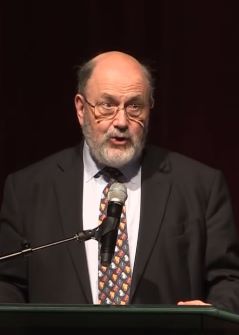
Esau McCaulley interviewed NT Wright on his Disrupters podcast last year. NT Wright is a British New Testament scholar of some renown who became McCaulley’s mentor at St. Andrew’s University in Scotland. McCaulley made a comment after the interview that prompts my writing today. He said,

“I feel like I am a mix of a bunch of things. I have this kind of British, evangelical side, and I have this kind of African American church side, and strangely they have coalesced in ways I didn’t expect.”

N.T. Wright Forces an Overdue Conversation on the Disrupters Podcast 2-3-22

McCaulley was raised Southern Baptist in the deep south, so their relationship is intriguing to me. The conversation between Wright and McCaulley is interesting and rich. The fact that they come from unique and diverse backgrounds permeates the discussion as they explore the things that unite them.

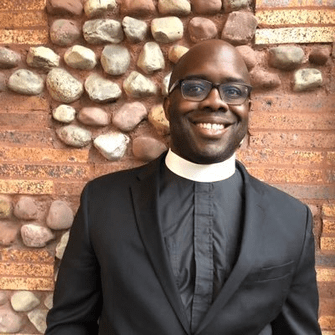
Esau McCaulley is a New Testament scholar in his own right, due in no small part to the influence of NT Wright. He has written one book on Galatians, and he is now writing a second. McCaulley also became an Anglican priest, but his heritage and unique experience, personally and communally, as a black man in America remain central to his identity.

The close relationship between these men from very different backgrounds and from different areas of the world has me thinking about the church in the United States and the global Church. I recently heard someone comment on an unfortunate, unforeseen, and unintended consequence of the Reformation. That consequence was the fragmentation of the Church.

The post-Reformation church fragmented into dissenting groups, and some of those dissenting groups fragmented further into groups of people who spoke English, French, and other European languages. Over time, the fragmentation rippled out from Europe to the New World and beyond.

The Reformation splintered into many “protestant” groups, and that fragmentation exploded in the New World where Lutherans, Presbyterians, Methodists and others splintered apart from each other into various and distinct groups, and many more new denominations sprung up. The fragmentation continued along cultural, doctrinal, ethnic, ritualistic, racial, governmental, language and other lines.

Today in America we can find a mind-boggling number of separate church bodies aligned in linguistic, ethnic doctrinal, geographic, and cultural huddles of believers that keep largely to themselves based on language, ethnicity, race, heritage, doctrine, worship preference, governmental protocol, and other things.

This fragmentation is still evident in the United States, and churches in the United States have been accused of being more segregated than the rest of the country (which is still pretty segregated).

The intersectionality (to use a very loaded term) of the disparate backgrounds, experiences and heritage of Wright and McCaulley, and their ongoing relationship remind me of the need for unity in the Church. We need to come together. We need to talk.

We need each other.

Continue reading “On the Intersection of Differences and Unity in the Body of Christ”
Thinking Outside the Circle and Focusing on the Center: What Direction are You Moving?

If we are not challenged to rethink what we think we know from time to time, we are not likely coming into close enough contact with Jesus.

I watched the Chapelstreet church service today and listened to the sermon by Jeff Frazier in Batavia, IL. It was just what I needed to hear. Not that it tills new ground; it covers familiar ground from a new angle. It avoids the ruts of old, tired ways of thinking and finds fresh new ground (for me) from which to approach how we see Jesus.

The sermon today was inspired by Matthew 9:9-13.[i] You can read it in full at the endnote below. In summary, Jesus called Matthew from the tax booth where he was sitting to follow him, and Matthew responded by following him. That was the extent of the initial story

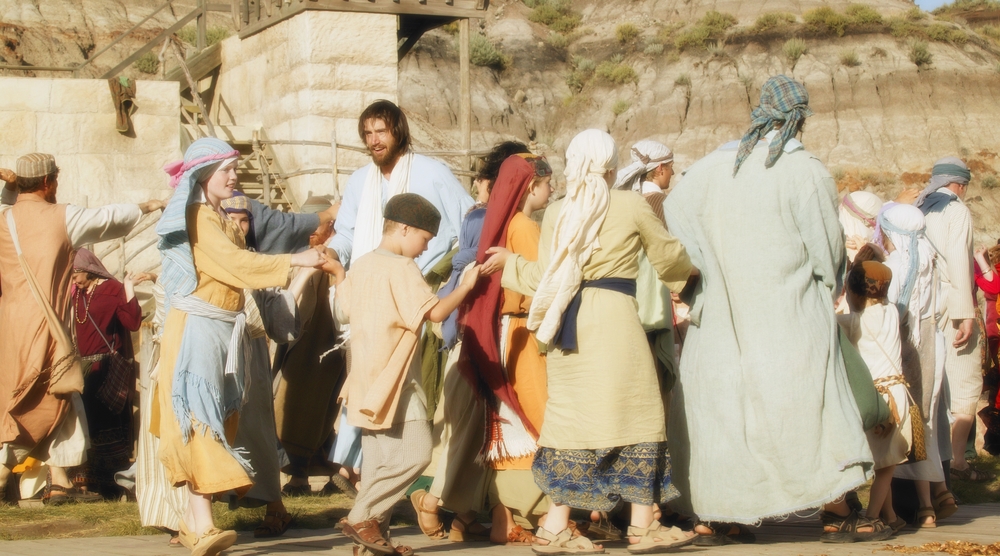
Then Scripture jumps to another scene: Jesus reclining at a table with “many tax collectors and sinners”. We are left to draw our own conclusions about what happened in the interim. It could be that Matthew invited all his friends, who were naturally other tax collectors and “sinners”, to met Jesus who had just connected with him.

The focus of the new scene, though, isn’t on Matthew anymore. The focus shifts to the Pharisees who ask the disciples why Jesus eats with “tax collectors and sinners”.

Before I describe how Jesus responded to them, I want to focus on the fact that the people who had a problem with Jesus were the religious people. Jesus was hanging around with all the wrong people according to the religious insiders of his day.

This is nothing new. I have written often about the Pharisees, Jesus and tax collectors and sinners. In fact, I wrote on the same subject just two weeks ago. (The Danger that Good, Upstanding, Religious People Face Today)

It isn’t a new thing to realize Jesus defied categorization; he shattered expectations and common ways of thinking. He challenged everyone he met to see the world differently, but we sometimes forget the radicalness of Jesus in our routine orthodoxy.

I dare say, if we are not challenged to rethink what we think we know from time to time, we are not likely coming into close enough contact with Jesus!

Back to the story: in First Century Judea, tax collectors were traitors and sell-outs. They were Hebrews who collected taxes for the Romans and used the authority of the Roman occupiers of the Hebrew Promised Land to accumulate wealth for themselves. They were hated by good Jews. They were outsiders in their own community.

As outsiders, they naturally associated with other outsiders (“sinners”). Thus, for Jesus to establish a relationship with Matthew – and worse than that: to “hang out” with other tax collectors and “sinners” – was scandalous. It was unthinkable!

When Jesus heard the Pharisees challenge the disciples to explain why Jesus was associating with “such people”, Jesus famously responded:

“Those who are well have no need of a physician, but those who are sick. Go and learn what this means: ‘I desire mercy, and not sacrifice.’ For I came not to call the righteous, but sinners.”

Matthew 9:12-13

This is a familiar passage to us, but I think the application of the message is sometimes lost on us today. I think we can fall into the trap of the Pharisees in our thinking without even realizing it. Thus, we need to be challenged to see things from a different angle, just as Jesus challenged the Pharisees in the first century.

Again, these are not new thoughts, but the the change of perspective (for me) comes courtesy of Paul G. Hiebert. Born to missionary parents in India, he became “arguably, the world’s leading missiological anthropologist”.[ii]

When he moved back to the west, he wrestled with questions like these: What does it mean for an illiterate, Hindu peasant to know Jesus? How much of their old life and traditions must be left behind?

Having observed missionaries in India, he concluded that the western mission movement was importing too many western traditions and thoughts. He saw the need for thinking outside the western box – like Jesus encouraged the followers of his day to think outside the box…. or rather, outside the circle, as we will see.

Continue reading “Thinking Outside the Circle and Focusing on the Center: What Direction are You Moving?”

How the Moorings of the Gospel Were Secured

God’s promise to Abraham was given 430 years before Moses

I have taken some time to reflect on the unity for which Jesus prayed in relation to the story of Peter & Cornelius and the tension that continued in the early church over extending the Gospel to Gentiles (non-Jews). The tension that persisted at the heart of the early Church threatened to unmoor the Gospel from its footing.

In previous articles, I reflected on the deeply ingrained nature of the belief that the Jews were God’s people. They were entrusted with the Law of Moses, and they had protected the Law God gave them for well over a 1000 years, painstakingly preserving it, passing it down from generation to generation.

They were instructed by God Himself to drive out all the inhabitants in the land God promised them, to avoid intermarrying and being corrupted by the influence of “Gentiles” to worship their gods. Thus, Hebrew descendants of Abraham avoided association with others – Gentiles – like the plague.

So intent on sticking to the script were Jews in the First Century that they didn’t recognize God when He shed his deity and came to them in the form of a man, as Jesus from Nazareth. Thus, He came to His own people, and they didn’t recognize Him!

When the Word through whom the universe was created, the Word who “was with God” and “was God”, became flesh (John 1:1-3, 14), “his own people did not receive him.” (John 1:12) “He was in the world, and the world was made through him, yet the world did not know him.” (John 1:11) On the other hand:

“But to all who did receive him, who believed in his name, he gave the right to become children of God, who were born, not of blood nor of the will of the flesh nor of the will of man, but of God.”

John 1:12-13

“His own” were the Jews. The “all who did receive him, who believed in his name”, were Gentiles (and Jews) who believed in what Jesus said and trusted in him. They became children of God, not because they were born into it, nor because they or anyone else desired it, but because God Himself desired them to be His children. (John 1:13)

But these things were far from clear to the early Church. Even Peter, who lived with Jesus and knew him intimately, had difficulty with the idea that the Gospel should be extended to Gentiles.

In the previous articles linked above, I summarized how God gave Peter a vision that occurred three times in a row for emphasis, including by an audible voice and the voice of the Holy Spirit, directing him to go with men who appeared just then at the door to summon him. Peter’s experience was orchestrated with an angel that visited Cornelius, a Roman Centurion, who was directed to send those men to “a man named Simon who is called Peter”. (Acts 10:5)

Peter yielded to God’s obvious orchestration of these events, and he went with the man who summoned him. When he found himself at a Roman Centurion’s home, Peter recognized God was at work. Then God poured out His Holy Spirit on the Centurion and his household to emphasize to Peter his intention to extend the Gospel to the Gentiles.

But the tradition of shunning the Gentiles would not die easy. Despite the obviously divine orchestration of events to drive home God’s intentions to Peter, Paul had to confront Peter publicly in Antioch over the issue when Jews from Jerusalem came to visit because Peter had disassociated himself from the Antiochian Gentiles. (See Galatians 2-3)

Paul encountered the same issue in Galatia where people were insisting that the Jews continue to follow the Mosaic law. In his letter to the Galatians, Paul described his confrontation with Peter. More importantly, Paul explained why the Mosaic Law no longer applied to the people of God – who now included not just the Jews, but everyone!

Continue reading “How the Moorings of the Gospel Were Secured”

Tension Leads to Accord: Peter, James & Paul

The big issue that threatened to divide the early Church

Paul wrote to the Galatians to address a grievous error in their thinking. They were holding on to a belief that followers of Christ, even Gentiles, must continue to follow Jewish law. Though Jesus prayed for unity among his followers (John 17:20-23), it was a rocky start for his fledgling following. They didn’t last 10 years without division!

To emphasize the gravity of the situation, Paul recalled to the Galatians a time when he opposed Cephas (Peter the Apostle, himself) “to his face” over the Jew and Gentile. (Gal. 2:11)

Consider this: Peter lived with Jesus for 3 years. He was one of the closest people to Jesus during his life. He was there when Jesus died, and he was one of the first people to see Jesus when he returned, risen from the dead.

Paul was never around back then. He despised Jesus and his followers! He held the cloaks of the people who stoned Stephen to death, and he was hellbent on quashing the “rebellion” of the Jesus followers to the traditions of Judaism…

Then, Jesus dramatically revealed himself to Paul. Paul changed completely and became the boldest of proclaimers of the Gospel. Still, what gall to confront Peter of all people! Right?

First for a little back story. In my last post, I described Peter’s vision of animals on a great sheet and the encounter with the Roman Centurion that convinced him Gentiles can be saved from their sins, the same as Jews. It was no small revelation. It took quite the orchestration of visions, angels, voices and a powerful outpouring of the Holy Spirit to convince Peter to accept the fact that God wanted to share the Gospel with Gentiles.

Peter experienced his own change, though not as dramatic. He went from being concerned that he should be not associating with Gentiles to baptizing the Centurion and his entire household and welcoming them into the family of believers!

I also wrote about this story in relation to the theme of the unity of believers: Reflection on the Unity for which Jesus Prayed: Peter & Cornelius. The great shift from the following law to faith, was a change to beat all changes.

It took a nothing short of a divine appointment of Peter, the Apostle on which Jesus said he would establish the Church, orchestrated by God with all the bells and whistles to provide clear direction. We might think that this encounter settled the score for Peter, once for all, right?

Not so.

Continue reading “Tension Leads to Accord: Peter, James & Paul”

The Difference Is In What We Do


These were the words I read this morning when I opened my Bible app:

“So then, as we have opportunity, let us do good to everyone, and especially to those who are of the household of faith.” (Galatians 6:10 ESV)

As I think about this exhortation from Paul, I realize that our faith is meant to be manifested in doing good. It also occurs to me that, maybe, we have gotten the emphasis wrong.

I can understand how it happened. Common people didn’t have the Scripture to read for themselves. The church had gotten corrupted by power and wealth. Priests sold indulgences and turned faith into a religion of required observances and superstitious piety.

John Wycliffe and others made Scripture available to the common people, and Martin Luther and the people he inspired rediscovered the that salvation is received by faith. It’s a matter of grace, not of works, lest any man boast.

These things were inspired by the Holy Spirit at the time, but we always flirt with the danger of settling into religious ruts that prevent us from appreciating and considering the whole counsel of God. Western Protestantism has tended for centuries to accept the stuffy air of an academic, heady faith that gets too little exercise in the “good works, which God prepared beforehand, that we should walk in them”.[1]

This is the progression: We are “saved through faith”; this is not our own doing; “it is the gift of God, not a result of works, so that no one may boast”.[2] But we can’t stop there. We have to realize the truth of the very next statement: “For we are his workmanship, created in Christ Jesus for good works, which God prepared beforehand, that we should walk in them.”[3]

We are saved by faith, not by works, in order for us to do the good works God prepared for us to do.

We are saved by faith, not by works, in order for us to do the good works God prepared for us to do.

Paul’s words in Galatians and the entire thrust of Scripture suggest that the hallmark of Christian faith is the good that we do that flows out of the salvation we received by faith.

Continue reading “The Difference Is In What We Do”