The Gospel records a three year period of time in which Jesus seemingly performed miracles, signs and wonders everywhere he went. Perhaps, the accounts in the Gospels give us an impression that doesn’t correspond to the reality because they recount the many miraculous things he did, but they don’t describe all the times in between.
It seems strange, given all the miracles, signs and wonders that Jesus did that the Pharisees and Sadducees came to Jesus one day to test him by asking him to show them a sign from heaven. (Matt. 16:1) Perhaps, they wanted him to do it on command, like a science experiment to prove himself.
Perhaps, they had only heard of the things Jesus did, but they hadn’t actually seen him do anything. Perhaps, they didn’t trust the accounts of the common people Jesus seemed to prefer to hang out with. They were more gullible and less discerning.
Attitudes like that haven’t changed much in 2000 years. The Sadducees and Pharisees were more learned. The Sadducees didn’t believe in supernatural occurrences, miracles or demons. The Pharisees did believe in those things, but they were skeptical. The two groups had very different worldviews, but they were aligned in their skepticism.
When these elite religious leaders asked Jesus for a private performance – “a sign from heaven” – he refused. And, he said this:
“An evil and adulterous generation seeks after a sign[i]; and a sign will not be given it, except the sign of Jonah.”
(Matthew 16:4)
The fact that these two groups, one that believed in the supernatural and one that didn’t, were aligned in their skepticism suggests that their “problem” with Jesus was that he challenged their dogmas. They doubted the fact that he did miracles, signs and wonders because of the content of what he was saying.
And, Jesus seemed to revel in provoking them on those differences!
The Pharisees (who believed in the supernatural) determined that healing on the Sabbath is work and is, therefore, prohibited by the Law of Moses. They demanded that Jesus not heal on the Sabbath, but Jesus did it anyway. (Matt. 12:1-14)
Ironically, this healing that was done right in the Pharisees’ presence occurred four chapters before they came to Jesus and demanded a sign from heaven. They had seen a sign from heaven already and dismissed it out of hand because it went against their beliefs.
Jesus challenged their preconceived ideas and expectations. He challenged their authority to determine what is work in violation of the Sabbath and what isn’t. They watched Jesus heal a man with a shriveled hand, but they dismissed it because of what he taught that was contrary to what they believed.
God showed the Pharisees a sign (the healing of a man with a shriveled hand), but they were too focused on his violation of their understanding of Scripture and religious dogma to notice it for what it was.
This story illustrates the danger of our religious dogmas and preconceived ideas of what God should do and not do. Even when the evidence is staring us in the face, we can be tempted to ignore it, gloss over it, and explain it away in favor of how we interpret and understand Scripture.
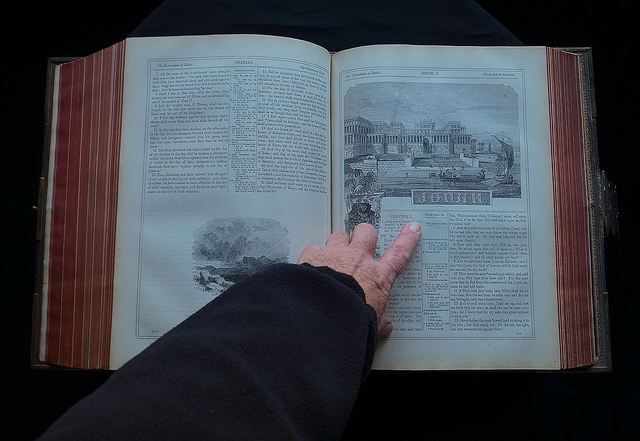
Sometimes, we gloss over what we read in the Bible too quickly, and we don’t spend enough time digging deeper. I have read over the following verse in John 1 many times before I thought, “Wait a minute!”
“But to all who did receive Him, to those who believed in His name, He gave the right to become children of God.”
John 1:12
John wrote that “all who did receive him, to those who believed in his name, HE GAVE THE RIGHT to become children of God”. My emphasis added is the phrase that caught my attention.
For all the verses in Scripture about God choosing us, predestining us, foreordaining us, we find verses like this that put agency squarely in our own hearts and wills. But that isn’t the beginning of the story – or the end of it.
Yes, God chooses us; and in choosing us He gives us “the right to become children of God”.[i]
Yes, He made that choice before the foundation[ii] of the world, and He made us children of God not by blood descent, not by the will of parents or anyone else – maybe not even by our own will – but by His own choice.[iii]
We didn’t choose Him; He chose us, but the vehicle of the choosing was to give those who received Him the right to become children of God. The implication is that He didn’t those who did not receive Him the same right to become His children.
I do not have a systematic theology. I am not a theologian. My understanding of systematic theology is limited, but free will has always seemed self-evident to me as I read Scripture.
Who will approach God? Who is the King of Glory? These are questions David poses in Psalm 24, one of the Messianic Psalms.
He begins with recognizing who God is. God is the creator of everything there is, and He possesses and has authority over all that He created.
The earth is the Lord’s, and everything in it, the world, and all who live in it; for he founded it on the seas and established it on the waters.
Psalm 24:1-2
Though the nations all around David had their own gods in various images and likenesses, David recognizes that there is only one, creator God. One God made the heavens and the earth, and there is no god like Him. In that context he asks the question:
Who may ascend the mountain of the Lord? Who may stand in his holy place?
Psalm 24:3
How does one approach a God like that? How do created beings, such as ourselves, approach the God who created us? David understands that we can only approach such a God on His own terms:
The one who has clean hands and a pure heart, who does not trust in an idol or swear by a false god.
Psalm 24:4
Only a person with clean hands and a pure heart can approach a God like that. Only a person who trusts in such a God, alone, can approach Him. Only a person who understands truth and is free of deceit.
Can any of us say that we meet these conditions?
If we think honestly on these things, we have to realize that we don’t. The truth is that no one is righteous, not even one person. (Psalm 14:3; Psalm 53:3; and Romans 3:10)
Think of David, the very person who wrote this Psalm. He didn’t meet those conditions, and he certainly knew it. He is one of the most flawed people of all the people of faith in the Bible. He knew where he stood with God.
The problem: we want clean hands and a pure hear; we want to trust in God alone, and we want to hold to nothing but the truth. The truth is, though, that no one meets these conditions. No one can approach a holy God!
Yet, this Psalm exalts in the anticipation of connecting with such a God – a God who made and possesses the universe, a God who can only be approached with cleans hands, a pure heart, with singleness of devotion and in the fullness of truth. This is because David anticipates something. And this is where the Psalm shifts:
They will receive blessing from the Lord and vindication from God their Savior. Such is the generation of those who seek him, who seek your face, God of Jacob.
Psalm 24:5-6
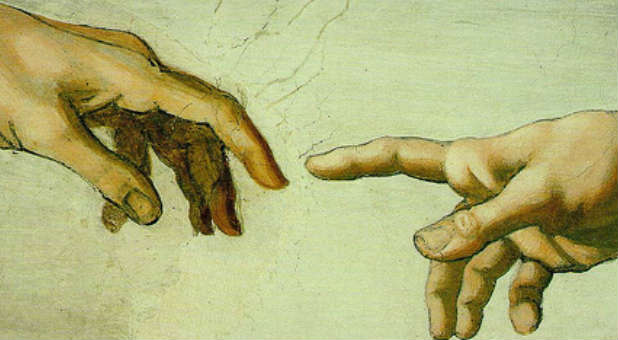
The resolution to the problem is that we do not approach God: He approaches us. We must receive from God his blessing and vindication. It is nothing we can ascend to, nothing we can achieve.
God knows this well, and He provided a way. As with Abraham for whom God provided a ram caught in the thicket to sacrifice in place of his son, Isaac, God has provided for us what is necessary to clear the way for us to receive Him. Through Christ, we are made holy, clean and new.[i]
The Psalm is considered “Messianic” because David anticipates our need for God to come to us, to provide for us. He says:
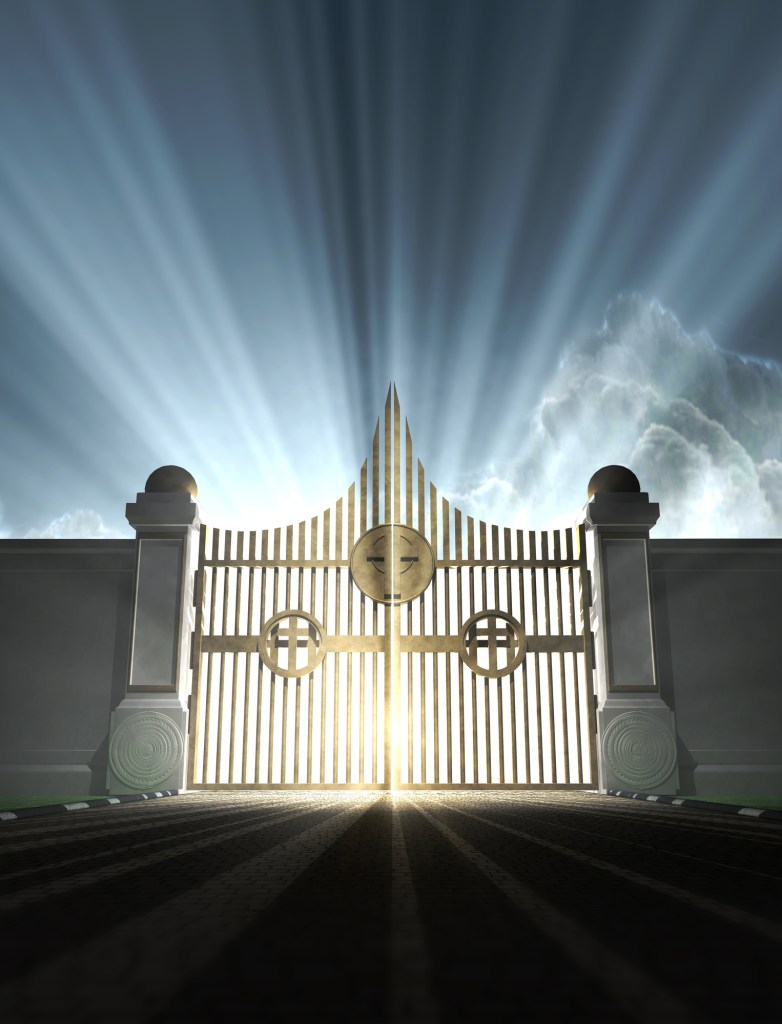
Lift up your heads, you gates; be lifted up, you ancient doors, that the King of glory may come in.
Psalm 24:7
Thus, David exalts not in the prospect that someone might ascend to heaven, but in the anticipation that God will descend to us. God meets us where we are. But there is more to this than God simply meeting us where we are: we need to be ready to receive Him.
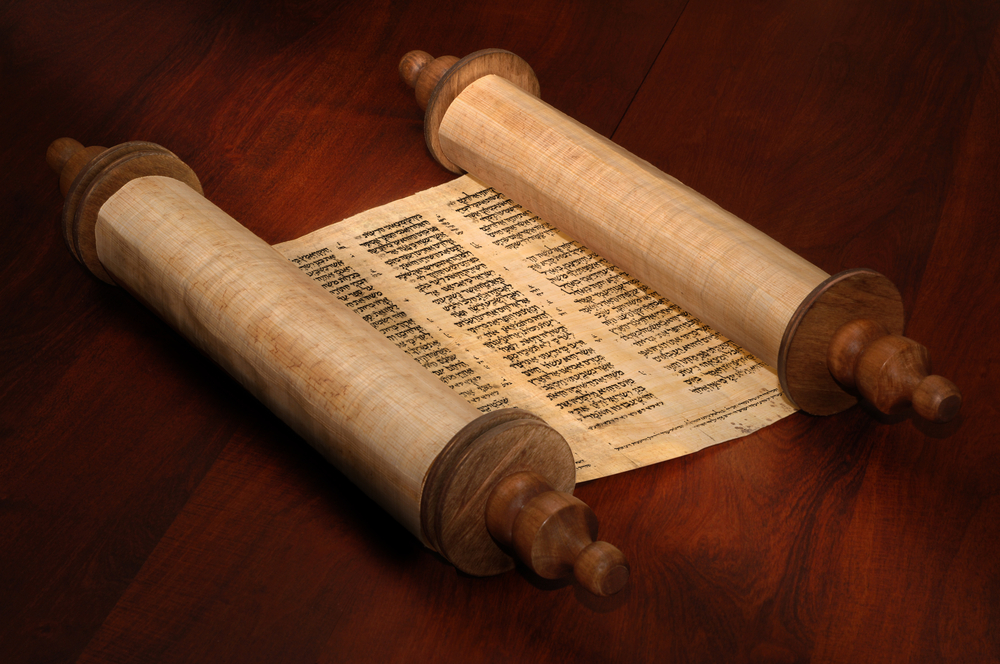
If you read through the Torah, you will find verses that seem morally repugnant to our modern sensibilities. For instance, the death penalty applies to conduct that seem to us like minor offenses. Israelites were allowed to keep slaves. The Mosaic Law is also clearly paternalistic in our modern view, subjecting women to second class citizenship.
This is just a start. Skeptics like to point out these things in criticism of the Bible. They claim that Scripture is full of immoral ideas.
Christians try to find explanations that soften the criticism, claiming that we need to understand the cultural context and what was actually meant. Skeptics claim Christians twist the plain meaning of the text to avoid obvious conclusions. So it goes.
We have to admit that the Torah contains some instructions that are morally distasteful, if not repugnant, by modern standards. We could try to explain them away. We could claim that our modern morality is wrong. We could reject the Bible and concede to the skeptics that it was written by Ancient Near Eastern men, there is no God, and the Bible is unreliable as a moral code.
Most of these options assume that the Mosaic Law is/was meant to be a perfect and universal statement of God’s moral code. Perhaps, though the Torah was never meant to be a perfect, universal moral law. Perhaps it wasn’t meant to be applied to all people in all times.
It seems that believers and non-believers, alike, assume we must apply every word of the Bible to modern life, and it stands or falls on its instruction to us today. Believers hold on as skeptics try to pry away our faith from clenched fists that we hold to the Bible.
Maybe, however, it ain’t so. The video describes some subtle and some not-so-subtle clues that support the view that Ancient Near East morality contained in the Bible was never meant to be a timeless measure of the conduct for mankind. One such clue is the way Jesus viewed and applied the Law.
In Matthew 19, for instance, the Pharisees tried to trick Jesus with a question on divorce. They referenced the Law of Moses, which allowed men to divorce and send their wives away, and they asked Jesus who would be a man’s wife in heaven if he divorced and remarried many times. Jesus responded, to their chagrin, that Moses allowed men to divorce their wives only because of the hardness of their hearts, adding, “but from the beginning it was not so”. (Matt. 19:8)
Jesus seems to be saying, here, that God instructed the people in the Mosaic Law on divorce, not with a timeless moral truism, but with a temporary “law” intended to accommodate their existing, cultural, and social condition.
Jesus seems to be suggesting that this aspect of the Mosaic Law was a kind of “compromise” between God and Israel. God apparently softened and calibrated the provisions of the Law to accommodate the cultural norms, attitudes, and expectations of the people at the time.
Perhaps, the people were not open to what God intended from the beginning, so God revised the terms for them. Perhaps, the instruction on divorce was a “step in the right direction”, but only a step toward the actual ideal.
We don’t know exactly. We might be tempted to think that this was the only accommodation because this is the only time Jesus is recorded to have said anything like this. As it turns out, however, most of the Mosaic Law was provisional, and it was replaced by a New Covenant. Jesus shifted the grand paradigm completely!
Scripture has an arc to it. From the creation of the world, to Adam and Eve, to Noah, Abraham, Moses, David, the first Temple, and the second Temple and forward to Jesus and beyond, Scripture has a progression. There is a “sweep” to Scripture that is, perhaps, just as (or more) important to recognize as any particular passages.
Thus, I believe the video is correct that the Mosaic Law is not meant as a legislative moral code to be applied to all people at all times. The Law was given to a particular people in a particular time, but it fits into the progression of revelation of God to man.
At different places and times, building on prior connections, the Bible is the narrative of God working with people to reveal Himself in ways that they can understand and in ways that they are able (or willing) to receive. He is always working with people to preserve that narrative for future generations who will stand on the shoulders of prior generations with the benefit of hindsight and cumulative revelation.
And this is key: God is doing these things while protecting the character of free agency that He gave to people He created in His image. His overarching purposes require that we be allowed to engage Him and participate in this progression on our own accord using the agency He gave us.
As I have often speculated, this is because God is love, and God desires a reciprocal, loving relationship with us. Love does not coerce. Love does not demand or impose itself uninvited. Love requires freedom both ways in the relationship.
Some of the passages that are most repulsive to us may be nothing more than the Ancient Near perspective of people through whom God was revealing Himself. These passages are colored by the limited understanding of the people at the time and the limits of God’s revelation to them bounded by that understanding.
The descriptions of God’s wrath, jealousy and harsh dealings, are the descriptions of people who lived in a harsh world filled with arbitrary and capricious gods. That’s how they saw the world.
God was distinguishing Himself to these people in the midst of the world as they knew it, and He could only take them so far in their understanding. They way they described what God was doing was true to their understanding, but it was also limited by it.
God engaged with these people in the context of covenant relationship. The relationship came first. The revelation that the God of the “heavens and the earth” desired a two-way relationship with them most have been mind-blowing.
One key to God’s character in this relationship is His faithfulness to the promises He makes. No matter how wicked, evil, and determined the people are to walk in their own ways, God never abandons them. Though he warns them and even metes out judgment on them, God is always ready and quick to receive them back if/when they turn back to Him. Always.
The way Jesus viewed the Mosaic Law is instructive and provides key information about the covenant relationship between God and man. We tend to read the Mosaic Law like a prescriptive code laying down universal rules for all time and all people, but that isn’t the way Jesus seemed to view it.
In a world in which the standard for disagreement is tolerance, we are called not just to tolerate each other, but to love each other deeply, from the heart.
J. Warner Wallace tackled the question, Do Denominational Disagreements Falsify Christianity? recently from an apologetic angle. A common challenge to Christianity is the extent to which we don’t agree with other. If Christianity is true, why so much disagreement? Why so many denominations?
I like the way Wallace tackles the issue. He starts by observing that truth is often complex, and finite beings such as ourselves often disagree on the complexities. This is true not just in Christianity, but even in science. Wallace lists some of the various “theoretical camps” on the origin of the universe and the various types of atheists who don’t agree with each other in their atheism.
Wallace observes that disagreement doesn’t negate the truth. Truth remains truth whether people understand it or agree on it. Paul is saying the same thing, basically, when he says, “Let God be true though every one were a liar.” (Romans 3:4) We can’t judge God by the way people act, and we can’t judge the truth of Christianity by the way the Church acts.
On that last statement, I can imagine someone saying, “Now wait a minute! Shouldn’t we hold the Church to a higher standard? Shouldn’t the Church, of all institutions, be better than secular ones? If Christianity is true, shouldn’t we expect more harmony in the Church?
I actually agree with these criticisms. What about the inquisitions, and Christians burning other Christians at the stake for heresy and Puritans burning Puritans at the stake for supposedly being witches? That sounds like a lot of infighting for a group of people who are called to be “one in Christ”!
These are serious charges against the Church and Christianity. Wallace is right that every human institution under the sun has disagreement, but shouldn’t the Church be different? If God is God and Christianity is true, shouldn’t the Church stand apart?
Jesus called his followers to be like a city set on a hill, like a beacon of truth. He said the world would know his followers by their love for one another, and he prayed for them to be one with each other as he and the Father are one.
We don’t have to dig very deep, or look very far, or think very long before we find examples in history and in current events today that paint a very different picture of the Church. The Church, universal, is fragmented. Even denominations, within themselves, are divided. Division and dissention occur in our local churches on a regular basis.
The skeptics put up a serious challenge to believers when they make the claim that our penchant for disagreement calls into question the truth that we stand for. How do we respond?
Yes, disagreements in the Church do not negate the truth, but how do we put them in perspective? How does our disagreement fit the truth that is revealed in Scripture? (That the world should know us by our love for one another) How do we reflect the love of God to the world as a fractured and broken Church?
I don’t believe I have a complete handle on these things, but I have some thoughts on how we can square the disagreement in the Church with Scripture and how we should respond as believers to this challenge.