Of the Holy Spirit, Truth, Tares, and Wheat at the Asbury Revival

“[N]o one can say, ‘Jesus is Lord,’ except by the Holy Spirit.”


I listened to Voddie Bauchaum summarize what is wrong at Asbury recently. The video title is (Wow) The Asbury Revival is NOT of God. His summary is similar to other skeptical takes I have heard, so I will summarize his summary here. (You can also watch the video and hear what he says for yourself.)

Bauchaum said he listened to four testimonies of students who attended the “revival”, and they “confirmed exactly what I figured was going on.” It’s a small sampling size, but I have no reason to believe he didn’t hear what he heard.

His conclusions were more in number than his sampling size. First, he said, “This event is nothing more than strange fire.” (The whole event.) For proof, he offered what the students said in their testimonies: One student admitted said he experienced a “fit of laughter”; another student claimed his mother began speaking in “unknown tongues”. (If Bauchaum supplied a summary of the other two testimonies he heard, I missed it.)

The phrase, “strange fire”, is a reference to Leviticus 10:1-3 an incident in which two priests put incense into censors and offered “strange fire before the Lord, which he commanded them not.” (KJV) Those men were consumed by fire from the Lord, the passage says. Therefore, Bauchaum is comparing the people at Asbury to the two rogue priests who presented offerings to God they were not instructed to give and were killed for it.

Clearly, Bauchaum is suggesting that “this event” is not of God; it is “unauthorized” worship; and God views it like He viewed the priests who offered strange fire and were killed for it.

As further proof that this event could not be from God, he said, “A lot of this took place out of the church!” He added that “the university ordains women for ministry, so there is a lot wrong here.”

He went on to explain to say that he was looking for a man of God taking the pulpit to open the Bible and preach the word of God, “and it never happened.” Though he didn’t say it, I am left to assume that revivals must happen only inside church buildings, and then only when a man of God preaches the word of God from a proper pulpit.

I note that he didn’t do much research if he only heard four testimonies, as I found testimonies all over the Internet, including many statements by professors and school administrators. The happenings at Asbury took place over roughly a two-week period, so there was a lot of footage to see and many people who were there talking about it.

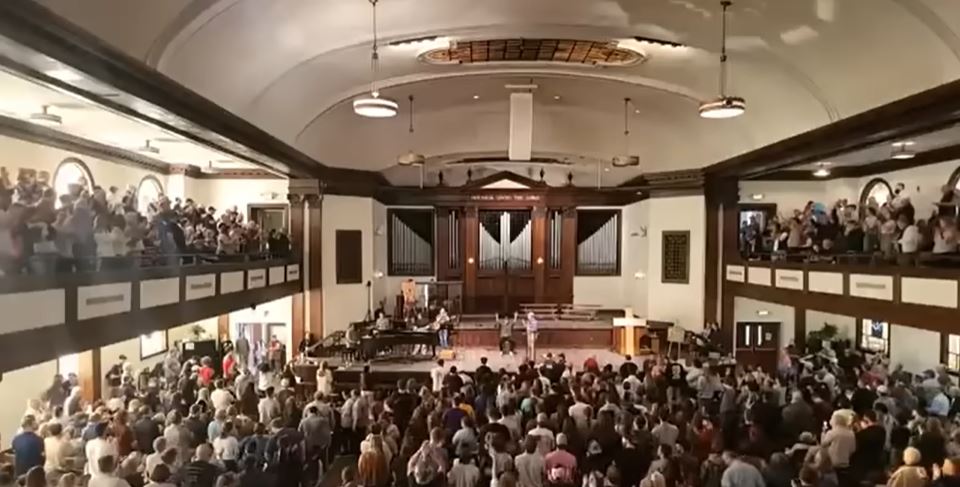
I also note that the chapel service began with someone preaching, but, then, I don’t know if he was “a men of God”, and I don’t recall whether he used a pulpit. (Sarcasm alert.)

Bauchaum warned that Satan tricks people with music. As anecdotal proof, he recounted his own experience attending a Pentecostal church a few times when he was a new believer. He recalled feeling emotional, on the verge of tears, because he felt like God was moving, but he determined it was “nonsense” after reading the Bible for himself for several weeks.

To his credit, he said that he “matured really fast” during during those few weeks. (I am not being sarcastic now. These were his words, not mine.) He said he desired to hear someone preach the Word of God because he was hungry for preaching.

To be fair, I can appreciate. I have been in his shoes before when all I wanted was to hear a meaty sermon that dug deep into God’s word.

Bauchaum recalled an old Paul Washer sermon in which people were moved by the preaching of the word, not by the music. As proof that this is the way it should be done, he quoted Romans 10:17: “Faith comes by hearing, and hearing by the word of God.” (No issue there.)

I don’t know if Bauchaum is a cessationist (someone who believes the “gifts of the Holy spirit” have ceased), so I don’t want to make any assumptions. If he is a cessationist, then it would not matter if people had limbs grow back: a cessationist has already determined God doesn’t do those things anymore.

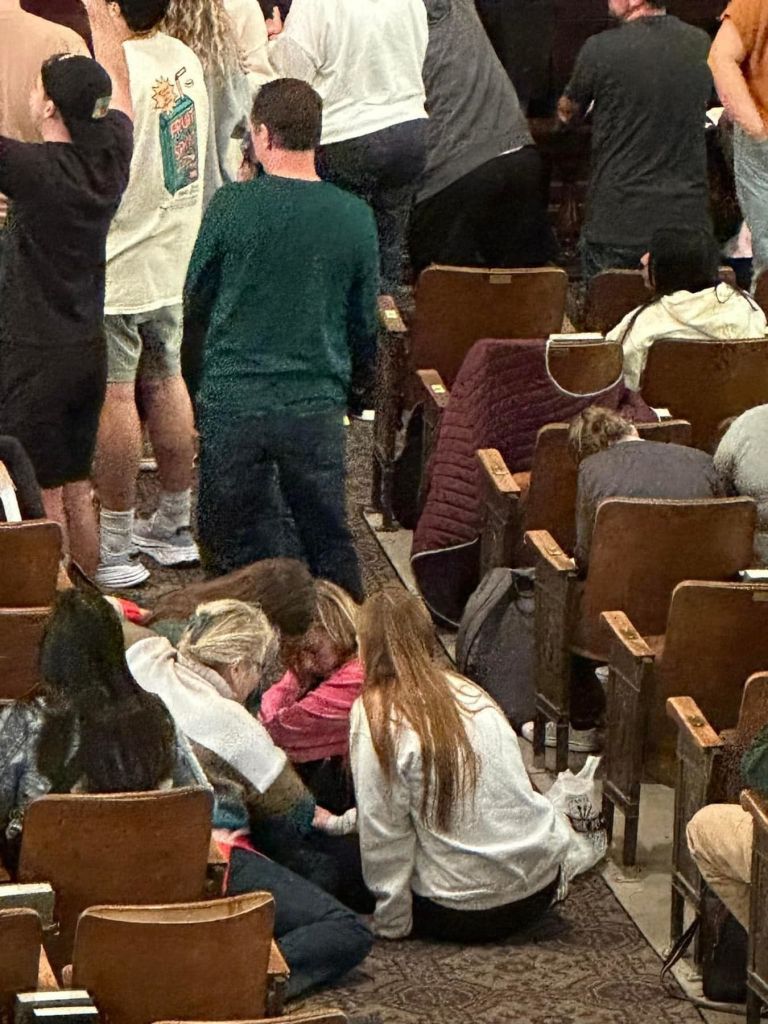
To give him the benefit of the doubt, I can admit that his concerns might be just as validly expressed by someone who is not a cessationist. His concerns do suggest a need for some circumspection, but I have greater concern over his conclusions than any of the spectacle he described that took place on the Asbury University campus for over two weeks in February of 2023.

Continue reading “Of the Holy Spirit, Truth, Tares, and Wheat at the Asbury Revival”

Why did Paul Go to Corinth with a Demonstration of the Spirit’s Power?

“My speech and my preaching were not with persuasive words of wisdom but with a demonstration of the Spirit’s power….”

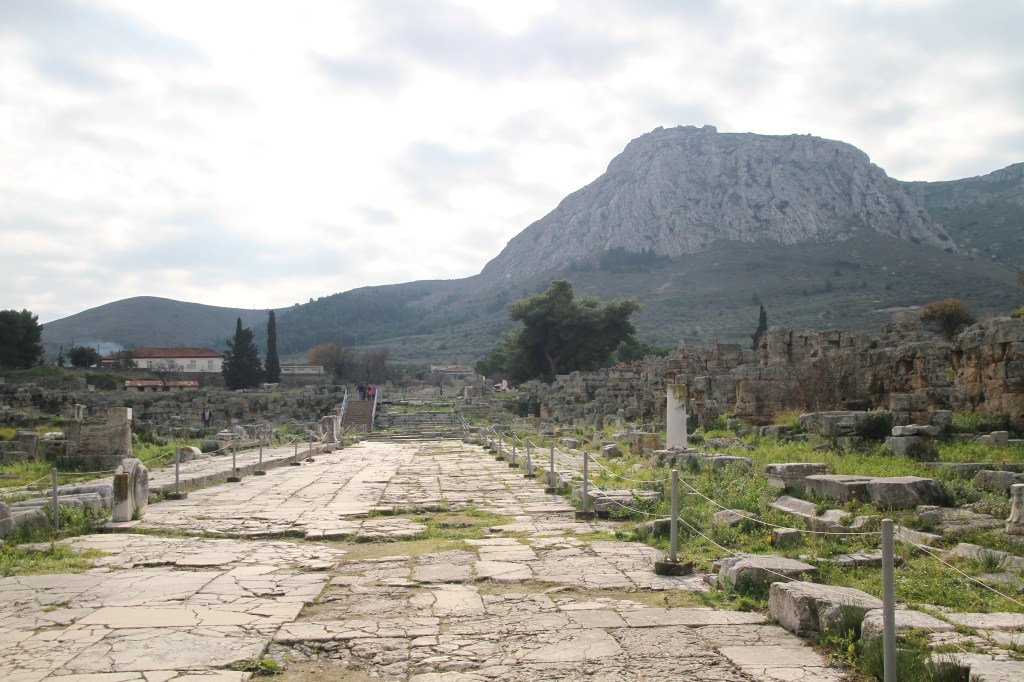
Ruins of Ancient Corinth in Peloponnese, Greece

Over the couple weeks that I was paying attention to what happened at Asbury University in Wilmore, KY (and other places now too), and considering the people criticizing it or cautioning us about it, I have prayerfully considered the matter. I have written about the “Asbury revival” a handful of times, so I am not going to rehash what I have written.

I continue to mull over the seeming positive development of 20-somthings worshiping, publicly confessing sins, praying for each other, and exalting the name of Jesus while people have been critical of what was happening and questioning God’s involvement in it. At the same, I have been drawn in my daily Bible reading to the concern Paul expressed in most of his letters for unity in the body of Christ.

This focus that has been impressed on me as I read the Bible and meditate on it predates the Asbury thing by many months, but it is directly relevant to it. The lack of unity in the American Church stands in sharp contrast to Paul’s emphasis on unity in the body of Christ. Our lack of unity has been publicly demonstrated in the vitriolic responses to the “He gets us” commercials aired during the Super Bowl and now to the Asbury “revival”.

Paul’s first letter to the Corinthians is all about unity and order in the local body of believers in Corinth. At the same time, the Corinthian Christians seemed to lack no shortage of what we might call the “outpouring” or “movement” of the Holy Spirit. None of Paul’s letters deals more with “the spiritual gifts” than this one.

I need to comment that the free exercise of the spiritual gifts, and God moving in peoples’ hearts and minds do not necessarily go hand in hand, as we will see, Paul also did not discourage the Corinthians from using the spiritual gifts.

This is the problem, though: while the spiritual gifts were demonstrably evidenced in the Corinthian church, they Corinthians were not producing an abundance of the fruits of the Spirit among. This lack of the fruit of the Holy Spirit was the problem in Corinth.

As a key indicator of that lack of fruit, Paul focused on their quarrelsome cliques: one group followed Paul, another group followed Apollos, and other groups of people claimed to follow Cephas, or simply Christ. That local body was being torn apart by arguments over who they should follow and other aspects of the Christian life, like whether they should be eating food sacrificed to idols. Meanwhile, they were ignoring other problems in their midst like sexual sin, relational issues, and other things.

They exhibited the spiritual gifts abundantly. Those exhibitions of spiritual gifting might be called today a “movement” or “outpouring” of the Holy Spirit, but the fruit of the Holy Spirit was lacking. Whether the Spirit was “moving” or people were simply exercising gifts given by the spirit are two different things.

I have experienced that incongruity myself. A lack of harmony between a hyper focus on the spiritual gifts and a lack of unity, faithfulness, maturity, and holiness in the local body of Christ has caused many to pull back from Charismatic and Pentecostal forms of Christian expression. Me included.

We sometimes fail to appreciate the difference between the gifts of the Holy Spirit and the fruits of the Holy Spirit. We think that a demonstration of the gifts of the Holy Spirit means that we are blessed by God, and everything we do is approved by God, but that isn’t necessarily true.

If those two things went hand in hand, Paul would have had no issues with the Corinthian church, because the Corinthians experienced a liberal “outpouring of the Spirit” characterized by prophecy, speaking in tongues, miracles, etc. Though the Corinthian church was demonstrably Charismatic (or Pentecostal), it was woefully lacking in unity and personal holiness.

Having acknowledged that, we need to notice that Paul’s issue with the Corinthians wasn’t (primarily) their misuse (or ineffective use) of the spiritual gifts. The more serious concern was their prideful, boastful, quarrelsome lack of unity and toleration of sin in their midst.

Something else occurs to me that I hadn’t noticed before, and this is the focus of my writing today. The Corinthians were Greek, of course. Paul famously says to the Corinthians that Greeks demand wisdom, while Jews (his people) demand signs.

Both of these things are forms of error, but the Corinthians, being Greek, were particularly prone to err along the lines of their particular, cultural bias. They valued discourse, argument and persuasive oratory. Thus, Paul said,


“When I came to you, brothers and sisters, announcing the mystery of God to you, I did not come with brilliance of speech or wisdom. I decided to know nothing among you except Jesus Christ and him crucified. I came to you in weakness, in fear, and in much trembling. My speech and my preaching were not with persuasive words of wisdom but with a demonstration of the Spirit’s power, so that your faith might not be based on human wisdom but on God’s power.”

1 Corinthians 2:1‭-‬5 CSB

Paul says he did not come with brilliance of speech or with persuasive words. He came with “a demonstration of the Spirit’s power”. As I will show below, Paul’s focus is on the Greek tendency to err in demanding “wisdom”, not the Jewish tendency to demand “signs” (though the Corinthians experienced no shortage of “signs”). This is interesting to me in the light of the Asbury University phenomenon.

Continue reading “Why did Paul Go to Corinth with a Demonstration of the Spirit’s Power?”

Is Offense a Measure of whether the Gospel is Authentically Preached?

Jesus said, “My sheep hear my voice, and I know them, and they follow me.” (John 10:27)

On a recent Unbelievable Podcast, Justin Brierley posed the question: is the gospel really being preached if no one is being offended?

That question might seem odd out of context, so I should quickly add that the question was posed in the context of the “Asbury Revival”. Many Christians are advocating caution. They are expressing concern about calling the happening at Asbury University in Wilmore, KY a “revival”. Some are questioning whether God was involved at all.

The claims people are making include, among other things, that there is no preaching going on, that the Gospel is not being preached, and that no one is being offended by the message. The latter statement prompted the question.

Is that the measure of whether the gospel is being preached? That some people are offended? Do we really think that it isn’t really the Gospel unless some people are offended?

Because some people were offended that no one seemed offended, does that count as people being offended?

As food for thought, it seems that everyone was offended during the Super Bowl by the two commercials paid for by a Christian group (with a lot of money) conveying the message that “God gets us”. It seems that everyone was offended by those ads, both the secular world and the Christian world. Does the offense mean that the Gospel was preached?

Perhaps, but only if the right people are offended? What if Christians are offended? What if progressive Christians are offended? What do we mean by “progressive”?

Again, is that really the measure of whether the Gospel was preached? Is that really the right question? Isn’t the Gospel the Gospel? Isn’t the Gospel the Gospel, whether some people are offended or not?

What is the Gospel?

We all know that “gospel” means good news, right? But, what is it? What is the good news?

Paul defines the Gospel to the Corinthians when he says, “I want to remind you of the Gospel I preached to you….” (1 Cor. 15:2) He adds, “ By this gospel you are saved, if you hold firmly to the word I preached to you. Otherwise, you have believed in vain.” (1 Cor. 15:3) Then, he says that the gospel message, which is “of first importance”, is as follows:

“… that Christ died for our sins according to the Scriptures, that he was buried, that he was raised on the third day according to the Scriptures, and that he appeared to Cephas [Peter], and then to the Twelve.”

1 Corinthians 15:3-5

When disagreements arose among the Corinthians, and some were lining up behind Paul, and others were lining up behind Apollos, Paul was perplexed by their disunity. He implored them “that all of you agree with one another in what you say and that there be no divisions among you, but that you be perfectly united in mind and thought.” (1 Cor. 1:10)

Paul was perplexed that some were touting him above Apollos, and the other way around. “Is Christ divided”, he asked rhetorically. (1 Cor. 1:13) The obvious answer is no! And the obvious implication is that we should not be divided either.

The problem with the Corinthians was that they were quarreling with each other over their allegiances to Paul and to Apollos. They were disagreeing and quarreling over peripheral things. Thus, Paul says he only came “to preach the gospel—not with wisdom and eloquence, lest the cross of Christ be emptied of its power.” (1 Cor. 1:17)

Emptied of its power? What did Paul mean? Paul said,

“When I came to you, I did not come with eloquence or human wisdom as I proclaimed to you the testimony about God. For I resolved to know nothing while I was with you except Jesus Christ and him crucified. I came to you in weakness with great fear and trembling. My message and my preaching were not with wise and persuasive words, but with a demonstration of the Spirit’s power, so that your faith might not rest on human wisdom, but on God’s power.”

Paul didn’t emphasize his preaching. He didn’t come with “wise and persuasive words”. He emphasized the “demonstration of the Spirit’s power”. The demonstration of the Spirit’s power is usually what we associate with a revival or an awakening. It isn’t the preaching; there is always preaching, but we don’t always get a demonstration of the Holy Spirit.

Continue reading “Is Offense a Measure of whether the Gospel is Authentically Preached?”

Be Careful Lest You Fail to Take What God Is Doing to Heart

Pharaoh did not take to heart a movement of God in his time.


In Exodus 7, we read that God moved in visible and compelling ways to convince Pharaoh to listen to the request by Moses to let the people go into the wilderness and be with God. Pharaoh was given demonstrative signs that God was behind the request, but Pharaoh was not swayed.

“Instead, he turned and went into his palace, and did not take even this to heart.”

Exodus 7:23 NIV

Pharaoh’s magicians answered Moses and Aaron with their own divination, and Pharaoh did not take the demonstration of the movement of God to heart. This is the character of hardness of heart. We see God move, but we have an answer to explain it away, and we do not take it to heart.

Pharaoh and Egypt are considered to be analogous to the world that does not know God, a world that has set itself against God. We don’t consider ourselves to be like Pharaoh or like Egypt.

When we do the same thing, however, we are no different. When we see God move, and we explain it away and do not take it to heart, we are no different.

The Pharisees, the religious leaders of God’s people, did the same thing. When Jesus performed miracles right in front of them, they explained it away. They said it was of the devil, and they did not take it to heart.

Be careful that you are not quick with an answer to explain away what God is doing and fail to take it to heart.

Do not be quick to explain away what is happening at Asbury University (and reportedly at other universities now, too). Do not be quick to dismiss it and miss what God is doing.

Take it to heart. Ponder it like Mary pondered what the angel told her: that she would give birth to Jesus. Be open to what God is doing, and what God wants to do in you.

The Pharaoh that didn’t take to heart what God was doing in his time lies entombed today like a stone. The God of Israel lives! Jesus, who was also entombed, rose from the dead and lives! The grave could not hold him, and he offers that same life to you!

A New (Old?) Take on Inerrancy

The Bible is the book God wanted us to have, and He wanted us to have it the way it is.


I did the research and wrote a thesis in college in support of the concept that Scripture is inerrant. I have mentioned this before. I was not a religion major in college only because I did not turn in my thesis.

I didn’t turn it in because I was having a hard time getting to where I wanted to go using Scripture and the scholarly work that was done up to the early 1980’s. I could not support my thesis with integrity, so I shelved it and did not return to the subject for almost 40 years!

I had a high view of Scripture then, and I have a high view of Scripture now. I read the Bible daily for personal guidance and edification. I believe the Bible is the inspired Word of God (which I can support from Scripture itself. (2 Timothy 3:16-17))

I believe, like the Moody Bible Institute, that the Old and New Testaments are divine revelation from God. The original autographs were verbally inspired by the Holy Spirit. The revelation is God’s self-disclosure recorded in human language. God is the source of it.

I stop, though, in going further to say that every word is true, and the Bible is free from error. The very statement begs the questions: which version? Written in which language? And other questions.

I agree with the Moody statement that the Bible is the supreme source of our knowledge of God and of salvation through Jesus Christ. I agree that it is “our indispensable resource for daily living”. I agree, also, that humans are left to interpret the Bible, and our interpretation is guided by “our reception and understanding of that which God revealed”.

I stop short of saying that God “recorded” Scripture, because we all know that it was written down by men. This difference distinguishes the Bible from the Quran and the Book of Mormon, both of which are claimed to have been dictated to men in a trance-like state.

I agree that “revelation is a divine act”, and “interpretation is a human responsibility”. I agree that our interpretation is fallible, but I must admit the possibility that the writing down of the Bible may, also, be fallible.

I say these things not to argue with anyone about the reliability of Scripture, and I do not desire to make a mountain out of a molehill. I go far down the road on my confidence in the reliability and trustworthiness of Scripture. I have written on the subject many times, and I have even given presentations on the topic.

I also recognize that I am fallible and must remain humble in my approach, so take what I say with a grain of salt and make your own determinations. I share my thoughts for what they are worth.

When I was in college sitting in a World Religion class, reading the Bible for the first time in my life, I was struck by a thought that I believe to this day came from the Holy Spirit (along with others). My professor was liberal and progressive, so I can’t “blame” it on him.

It occurred to me that, if God is real, and the God of the Bible is the creator of the universe, then He could orchestrate His communications to humans in a way that they could understand them and preserve the important points for posterity. If God is sovereign, He can do that.

I believe the Bible is the book God wanted us to have.

NT Wright

I still believe that, but I also like the way NT Wright puts it: “I believe the Bible is the book God wanted us to have.” I can buy that! Other things NT Wright says about the character of Scripture also make sense to me, so I will mix his words with mine in the remainder of this piece.

Continue reading “A New (Old?) Take on Inerrancy”