The Importance of Separating from the Culture, Politics, and Spirit of Our Age

We are called to be in the world but not of the world or influenced by the world


I have become hyper vigilant about the influence of our current times, culture, politics, etc. on my theology. We can’t help ourselves but to struggle with the currents of our times as they threaten to push us along in their path.

We might find ourselves swept along without even noticing it. Or we might take the opposite course and fight against those currents in the opposite direction. Both responses are problematic for the Christian who desires to follow Christ and to live according to his kingdom that is not of this world.

Whether we are being carried along by the currents of this present world, or fighting in opposition to them, we can find ourselves being wholly defined by the world – what we are for and what are against – instead of the purpose and commission Christ Jesus gave to us. Both types of responses to the world lead us off the path of following Jesus.

My views on this come from a sermon I heard in my early twenties 40 some years ago. I forget the biblical texts that laid the foundation, but the foundation remains with me: whether we allow the currents of our world to sweep us along or we fight in opposition to those currents, we are constantly in danger of defining ourselves and our theology in relation to the world – rather than in relation to God and His kingdom.

If we are followers of Jesus Christ, we might look at times as if we are going in the direction of the world. At other times, we might look as if we are going in direct opposition to the world. In reality, the Christian who follows Christ is walking a straight path. His path will take us at times in the same direction the world around us seems to be going and at other times in the opposite direction.

Christopher Watkin calls this Christian phenomenon “diagonalization” because it often looks like we are working at cross purposes to the world in both directions. As the world is pushes left, we appear to be pulling right; and as the world pushes right, we appear to be pulling to the left.

The key is that we should not allow ourselves to be defined by the world around us. We should be influenced and defined by God alone and His revelation to us found in the Bible.


I made one statement above that is not exactly true. I do remember one verse on which the sermon that influenced me so many years ago hung: “It is good that you grasp one thing, and also not let go of the other; for the one who fears God comes forth with both of them.” (Ecclesiastes 7:18) I call this holding things in tension.


We do this with the Bible itself. We learn to hold things in tension. Our fear (respect) for God and His word compels us to grasp one thing we know to be true while not letting go of other things we know to be true – even when it is difficult holding onto both things.

We fear (respect, trust) that God has greater perspective than we do. When He tells us to hate sin as He hates sin and to love people (who are all sinners), we need to grasp and hold onto both things as true, even though they may seem (to us) to be in tension with each other.

When we do that, we find that we come forward with both truths and a better understanding of Truth (capital T). We understand, for instance, that God hates sin because of what it does to us and to the rest of His creation, among other things.

As finite beings, we always have an understanding gap. Even when we think we know something, we are ignorant of what we don’t know. The Bible describes that reality by saying that God’s ways are not our ways, and His thoughts are not our thoughts.

We all know “religious” people who are hard, self-righteous, and unloving. They find it easier to hold onto the idea that God hates sin and more difficult to grasp the love God has for people who sin. We also know people who tolerate, accept, and even embrace sin in everyone (including themselves) because they feel that the tension between love for people and hating sin is too difficult to navigate.

People tend to want to gravitate to one end or the other of a spectrum of thoughts that seem to be in tension with each other because it might seem simpler and make more sense to us. For instance, some people reject the idea that human beings can even know truth because of our finitude, while others (in rejecting this post modern skepticism) double down arrogantly on the things we think we know. If we hold these things in tension, we reject the idea that human beings cannot know truth while we remain humble in what we think we know.

The person who fears God, grasps the one thing without letting go of the other. We may not do this perfectly well, but we understand that both of these things are true, and we strive to hold them in tension.

I have taken longer to get to the point than I expected, so I am going to finish this train of thought now by tying it back into the opening paragraph. What does this have to do with influence of the currents of the culture, politics, and spirit of our times on our theology?

Continue reading “The Importance of Separating from the Culture, Politics, and Spirit of Our Age”

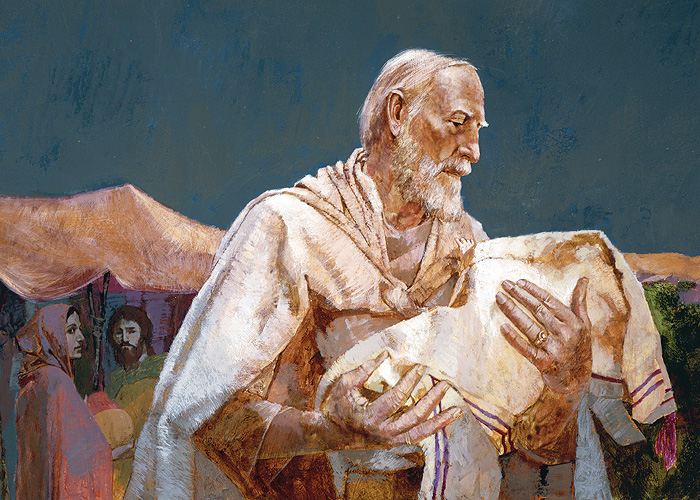
Does God Flip Flop? Abraham, Isaac, and Us

What changed from the Old Testament to the New Testament?


I am listening to The Basic Folk podcast episode 316 with Joy Oladokun (an artist I like by the way) Perhaps, that is a strange way to open a blog post on the age old heresy of Marcionism – the belief that the god revealed in the Old Testament is different from God revealed in the New Testament. Hang with me though!

Joy Oladokun (who is a musical artist you should check out) grew up in the church and cut her musical chops on worship music and listening to Phil Collins with her father. She uses biblical themes in her music, which also has a distinctly spiritual character to it.

Though she may have some heretical ideas about God and the Bible, I believe we can appreciate and like music even when the artist doesn’t believe exactly as we do and, in this case, even when she has heretical ideas about God and the Bible. We are all on a journey in our relationship to God, and I appreciate that about people and the music people make on their own journeys.

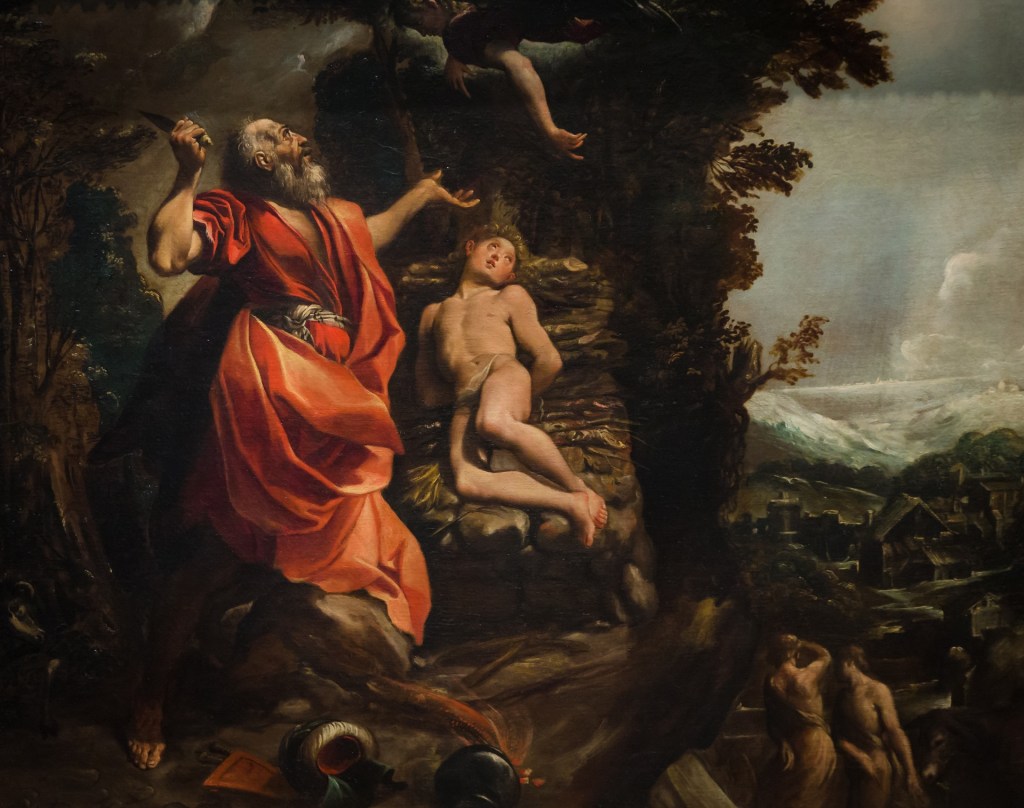
Anyway, around the 15 minute mark in the podcast Joy Oladokun expresses her understanding that God, in the Old Testament flip flops. Then, she provides this short theological synopsis, “It’s like, ‘Sacrifice your son…. Never mind, here’s a goat.” I am chuckling even now, but her thoughts and the example she gives deserves a response.

Many people her age (and all ages, really) have an issue with the story of Abraham sacrificing Isaac. It also opens up a biblical theme that I glimpsed as a young nonbeliever reading the Bible for the first time many years ago that continues to develop as I age.

Perhaps, I am fortunate that I didn’t pay much attention to theology in my formative years, because I didn’t formulate many theological ideas that colored and warped my view of God. When I read the Bible for the first time in college, I came to it with no preconceived ideas and no assumptions (that I recall).

I was raised Catholic, but I didn’t even realize that the readings in the mass were from the Bible (until after I became a Christian). I could not recall anything from the catechism classes I took. I was pretty much too zoned out (and, later, stoned out) to latch onto many theological constructs.

I didn’t know anything about evangelical ideas, like biblical inerrancy, predestination, and eschatological schemes. I came at the Bible like I approached all literature, poetry, and philosophy. I let it speak to me and convey its message to me.

Early on (as I read Genesis), I learned that Abraham heard the voice of God, and he responded in faith (with trust). I learned that the Ancient Near Eastern people from whom Abraham descended and believed in many gods who were more or less arbitrary and capricious. One of those beliefs that was ubiquitous in Abraham’s day was the belief that gods require child sacrifice to be appeased.

I could see that the God who Abraham “heard” was not like those other gods that he and the people around him believed in. I could see that Abraham lived his life on a journey (quite literally) of discovery about this God whose “voice” he heard.

Abraham’s understanding was evolving as he sensed this God and responded in faith to Him. He was learning that God was not like the gods with which he was familiar. This God made promises, and He kept them. This God desired a relationship with Abraham, and He was trustworthy.

I have to admit that the story about Isaac was a bit of a mystery to me then, but I didn’t rush to any conclusions. I understood that child sacrifice was practiced throughout the ancient Levant, but something was different about this story that carried some significance, though I wasn’t quite sure of all that it meant at the time.

There was a lot I didn’t understand. I was on a journey myself, and I realized there was mystery in the stories that belied quick or simple explanations. I, like Abraham perhaps, was willing to explore where a connection to this God might take me (after a brief flirtation with Eastern religion).

I have been on this journey now for over 45 years. I responded to the God of Abraham when I was 19 (the summer after I first read the Bible). I was far from knowing all the answers (though I did go through a period in which I thought I knew much more than I did).

I guess the thought that we know more than we really do is a human trait, and it is one we are well advised to resist. We are finite beings, regardless of the knowledge we collect, and we will never be more than finite beings in these earthly bodies that we will take to our graves.

I can’t tell you how many years I have taken to get to a place of some comfortable understanding on the Abraham and Isaac story. It is more than I might like to admit, but I have always been willing to give God the benefit of the doubt, which is what Abraham did. It is what he was commended for: faith, which is simply trusting in the goodness of God.


The Bible we have says that God told Abraham to go sacrifice his son, Isaac. We cannot escape that is what the Bible says. But, is that what God actually said?


Or is that just what Abraham “heard”? Or is it just what Abraham understood? Or is it just what he felt compelled to do?

I don’t know, and I think it is ok to say, “We don’t really know.” I also think it is ok to ask the question and to assume we may not necessarily have the right answer.

In any event, Abraham clearly believed that God told him to sacrifice his son. That requirement, of course, is antithetical to the promise God had given Abraham – that Abraham’s descendants would fill the earth and become as numerous as the stars in the sky. Yet, Abraham dutifully (if not reluctantly) complied with what he believed he must do.

This is a kind of faith that we don’t understand today, especially in the post Enlightenment age of reason and science driven more recently by post-modern skepticism. We are told in Sunday school (as I have learned) that this story is about Abraham’s faith and willingness to do what he was told, though it didn’t make sense

I think that is partially true, but I have come to see that the story is not only (or maybe even primarily) about faith. The story isn’t primarily about Abraham, either. He is just the vessel through which the story unfolds. The story is about God, and who God is, and the character of God.

Whether God told Abraham to sacrifice his son, or Abraham jumped to that conclusion, doesn’t matter so much. Child sacrifice was demanded by the gods, according to Ancient Near Eastern religious thought that was formative in Abraham’s outlook on the world. He responded according to the custom, practice, and wisdom of his age.

I have written about this a number of times before. (See the Abraham and the Paradigm Shift, Abraham and the Love of God, Abraham and Isaac Revisited: Introduction, Abraham and Isaac Revisited: Here I Am, Abraham, Abraham and Faith and the Hope Deferred, and Abraham and the Blood Path) I am not going to cover all that ground again, but I return to the same theme again because it has roots in my initial revelation of God and my own journey of faith. As I hope to flesh out, it also provides some insight into the God who seems to flip flop.

Continue reading “Does God Flip Flop? Abraham, Isaac, and Us”

On the Flying Fickle Finger of Fate and Reeds Blowing in the Wind

Should Christians be influenced by shifting political winds?


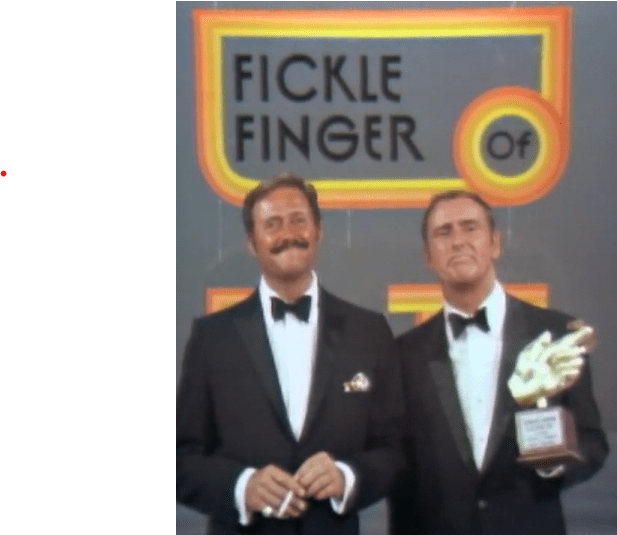
I recall today the Flying Fickle Finger of Fate award from Rowan and Martin’s Laugh In back in 1968. When I was 8 years old, Laugh In was a hip variety show of biting political humor that was mostly lost on my young mind. The award was a dubious honor ceremoniously presented each week to public figures, corporations, and government agencies for ridiculous “achievements”.


The Fickle Finger of Fate suggests the unpredictable and arbitrary nature of luck or destiny. As finite human beings, we don’t control our fates, and we cannot know the twists and turns that await us in the future.


The award has an ironic backstory. Star Trek was moved from the coveted 7:00 PM spot to the dreaded 10:00 PM “death slot” by NBC to make room for Laugh In. The hip, comedic variety show, however, was popular only for a relatively a short stint from 1968 to 1973 and has largely been forgotten by all but impressionable young minds.

Star Trek, on the other hand, went on to become an iconic science fiction series. It was ahead of its time, and it became a hit in off-network syndication, inspiring sequels and movies for almost 50 years.

Fate is certainly a fickle thing. Driven by polls and ratings to attract the largest audience, NBC obviously did not foresee the lasting success of the Star Trek brand. They also did not expect the short-lived lifespan of their cutting edge variety show that replaced Star Trek.

As Christians, we don’t believe in fate, of course. We don’t believe in random chance. We believe in God who designed and ordered the universe and established our place in it.

The future, however, is equally unknowable to us. As the writer of Ecclesiastes said thousands of years ago, “God set eternity in the heart of man, but not so that he can know the end from the beginning.” (Ecc. 3:11). The Prophet Isaiah said it this way,

“’For my thoughts are not your thoughts,
    neither are your ways my ways,’
declares the Lord.
‘As the heavens are higher than the earth,
    so are my ways higher than your ways
    and my thoughts than your thoughts.'”

Isaiah 58:8-6

God famously, but lovingly, rebuked Job for insisting on understanding things he could not fathom. As with Job, we are invited to have faith and to trust God, but we have more reason for hope and trust than Job, because we know our redeemer lives. He rose from the dead!

We understand that God can be trusted because of His willing demonstration of love for us in emptying Himself to become a man and laying down His life for us. We have no option but to trust Him, but we know we can trust him because of His love for us that He demonstrated on the cross.

Still, we easily are easily swayed and influenced by external pressures. We may think that we understand the times when we are only blowing in the shifting winds of “fate” (powers and principalities that want to blow us off course).


Paul says these powers and principalities are operative in the world. They are “spirits of the age” that play us like instruments if we are not grounded in the Word of God and led by His Holy Spirit.

Jesus used the phrase, reed blowing in the wind, when he addressed a crowd that went into the wilderness to see John the Baptist: “Did you you go to see a “reed swayed in the wind?” (Matt. 11:7-18)


John the Baptist was not just a curiosity. He was not a fleeting personality (like Rowan & Martin) with no lasting importance or purpose. He was the messenger of the Messiah, foretold by the prophets preparing the way for Jesus, the suffering servant who would take away the sins of the world. John was an agent in God’s eternal plan, and Jesus was (and is) the key figure in that plan.

Though he was foretold by the Prophets, no one knew exactly how things would unfold – not even God’s own people. In fact, they didn’t recognize God’s Messiah or receive him when he came. (John 1:11). Crowd of common people were drawn to Jesus, but smarter and more prestigious religious leaders were not.

Many have come, and many have gone. Many have claimed to be the harbingers of promise and special knowledge in their times, but many have proven wrong in their predictions.

The reality is that we do not know what we do not know. We must ever remain open to letting God’s Word shape us and direct us, and we must ever remain attentive to allow the Holy Spirit to guide us in applying His Word in our times.

Even now, smart people – including learned, religious people – believe and act as if they know the times. It is the same in every age and every generation, but we are easily swayed and blown by the winds of fate and human influence that seek to drive the course of history not always in ways that are aligned with God’s plan and purposes. To that generation, and to ours, Jesus said:

“They are like children sitting in the marketplaces and calling out to others:
‘We played the pipe for you,
    and you did not dance;
we sang a dirge,
    and you did not mourn.’”

Matt. 11:16-17

Human tendency is to trust ourselves. The smarter we are, the more we trust in our own ability to figure it out. Perhaps, this explains why so many scientists and PhD’s are atheists. Perhaps, this is why so many of the religious leaders in the time of Jesus were blind leaders of the blind. Perhaps, we are susceptible to the same error.


We don’t know the end from the beginning. We don’t know God’s thoughts unless He reveals them. God doesn’t dance to the tunes we play. Our tunes are often just riffs on the spirits of our age changing as those spirits change their tunes that we follow.


I reflect on these things as I think through changes in the winds influencing the evangelical church in my lifetime.. We need to be grounded in the Word of God and in tune with the Spirit of God. (See Hearing the Voice of God for Today) if we are not, we become reeds blowing in the wind.

A few weeks ago, I created a short list of issues on which Evangelicals (my tribe) have swayed in the political winds during my lifetime. I have done some research to confirm and correct my intuitions, and that exercise has confirmed my suspicions that we have, indeed, been reeds blowing in the political winds over the last 60 years. Following are just a few examples.

Continue reading “On the Flying Fickle Finger of Fate and Reeds Blowing in the Wind”

Our Post Enlightenment, Neo Religious World and the Proof of God

Not all truth is known through scientific inquiry and method.


As often happens with me, the things I have been listening to and reading have converged in a meaningful way. Whether we attribute these “convergences” to God’s presence in our lives or dumb luck, pure happenstance, or “coincidence” is a matter of speculation and faith.

Whatever you want to call it, I take special notice of these things. I pay attention. I take them seriously, and they become signposts on my journey through life.

Perhaps, I am just being a good attorney. I am trained to find harmony and contrast in nuanced fact patterns and to apply legal principals to them. Finding harmonies and contrasts and applying spiritual principals to them operates in the same vein. That’s the way my mind works.


Yesterday, I listened to an interview of Jonathan Pageau by Justin Brierley. Pageau is an interesting character and a critical thinker. His recent conversation with Brierley inspires my writing today.


Raised in Montreal influenced by French Catholicism in a French Baptist Church community, Pageau has moved over to Eastern Orthodoxy by way of 4-year and 3-year stints in the Congo and Kenya. He has an undergraduate degree in postmodern art. He returned from Africa to obtain a degree in Orthodox Theology and Iconology from Sherbrooke University in Quebec. Along the way, Jonathan Pageau has become a cutting edge Christian thinker who is in demand as a speaker.

One line of discussion caught me ear in the interview with Justin Brierley that I want to explore. The subject touches on post-Enlightenment, neo-religious thinking and the proof of God.

Continue reading “Our Post Enlightenment, Neo Religious World and the Proof of God”

“Suicidal Empathy” and Weakness: Trust and the Church

Confusion and red flags are reason to stop and consider who we are and where we are going


A funny thing happened to me one evening recently. I received a text from a number that was not in my contacts. The texter introduced himself and said he was from “VBC”. He said he emailed me, but I didn’t respond, so he was sending me a video of the child I sponsor from Uganda with a link for me to click.

I didn’t know the person. I didn’t get an email, and I don’t sponsor a child from Uganda.

Since scamming people is a billion dollar industry, I was cautious,. I do sponsor a child from Africa, but she lives in Ethiopia. The initials, “VBC”, are the initials for the church I go to, so I didn’t just delete it. I looked up name of the texter, but I couldn’t find his name in the directory.

I wanted to respond positively if he was a brother in my church, but I didn’t know him. What if someone hacked into the church directory? What if they found just enough information to make it sound good and to get me to click on a malicious link?

I texted him back and asked what email he had for me. The email he sent back was one letter off. He also sent an email with a shortened version of my former wife’s name, but it isn’t the shortened version she uses. It was close, but wrong. He had just enough of the right information for me to think it was legitimate but just enough of the wrong information for me to pause.

Finally, I texted the campus pastor, and he confirmed that the man was from VBC (but a different campus). He also did go to Uganda where the church has an ongoing missionary presence.

Then, I remembered: there is a young man in the church with exactly my first and last name. I have only met him once because he is a distant relative, and he goes to a campus of the church that is furthest from the one I go to. With this information, I called the man who texted me, and we had a good a laugh.

My name isn’t common. We both sponsor children in Africa. We both were marred to women with the same first name (different nicknames). The similarities were uncanny, but the differences signaled the need for caution.

I was thinking about this after doing my routine reading the next morning. The reading plan focused on James’s letter “to the twelve tribes scattered among the nations” (James 1:1), and it posed this question:

Have you ever been confused about who sent a text, email, or note?

In light of my experience the previous night, I realized that God might be talking to me! The follow up questions ask whether not knowing who sent the message confuses the meaning and whether knowing who the sender is changes our understanding.

The answer is definitely, yes and yes! I was confused when I wasn’t sure who sent me the original text, and knowing it came from a trusted source changed everything.

The context in which this story and my thoughts arise this morning is the confusion in the church caused by Donald Trump and his sidekick, Elon Musk. I have seen red flags since 2015 and reason for caution. The topic has been much on my mind, because some Christians champion these men and defend everything they do, and other Christians don’t.

It seems to boil down to who you trust and whether we should ignore look the other way at the things that seem a little “off”.

What are we to think? Can we trust them? Do we know who they are? Do we ignore the red flags? Perhaps, more importantly: Do we know who we are?


I am afraid I can’t get very deep into this subject without writing a tome, and I have already written much, so I want to stick with the context out of which this experience and these thoughts flow. Specifically the controversy over Elon Musk’s comment to Joe Rogan: “The fundamental weakness of western civilization is empathy.”


Continue reading ““Suicidal Empathy” and Weakness: Trust and the Church”