Distinguishing Biblical Justice from Social Justice I

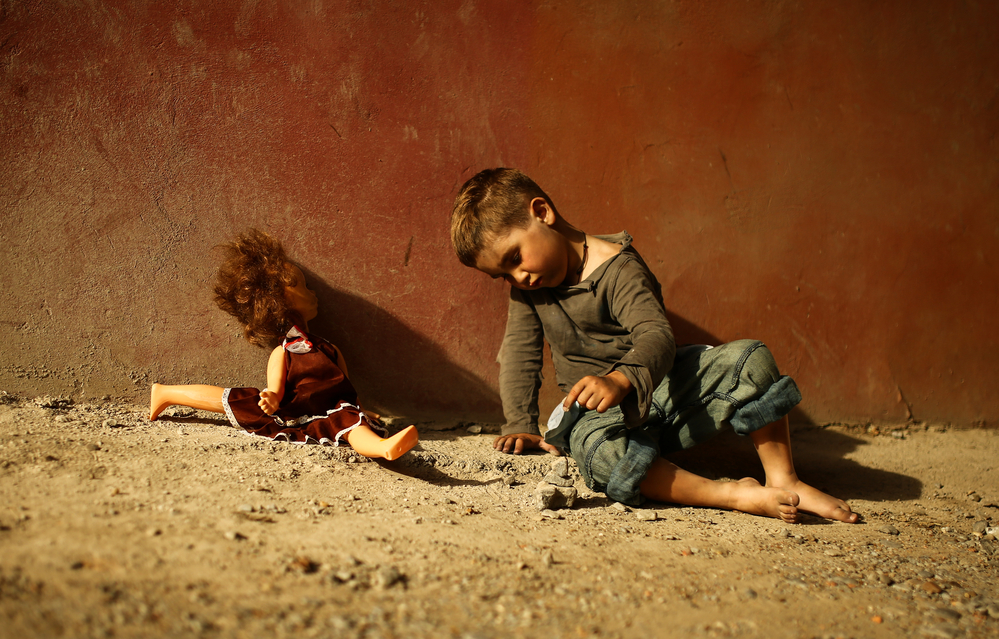
Self portrait of beautiful girl in shanty town.

As Board member of the predominantly evangelical ministry, Administer Justice, a faith-based legal aid organization, I am concerned for Justice. That’s what the ministry is about.

Some skepticism is apparent among evangelicals and other conservative (or orthodox) Christians, however, about the biblical propriety of justice. To be more accurate, the concerns lie with the idea and movement that is labeled “social justice”, but the caution bleeds over into a focus on justice, itself.

Forgetting, for the moment, that a form of justice has been promoted that is divorced and disassociated from orthodox, conservative Christianity, is there any question that our God is a just God.

“His work is perfect, for all his ways are justice. A God of faithfulness and without iniquity, just and upright is he.” (Deuteronomy 32:4)

“Righteousness and justice are the foundation of your throne; steadfast love and faithfulness go before you.” (Psalm 89:14).

God is intimately and preeminently concerned about justice and expects us to “do justice”.

“Learn to do good; seek justice, correct oppression; bring justice to the fatherless, and please the widow’s cause,” (Isaiah 1:17)

“He has told you, O man, what is good; and what does the Lord require of you but to do justice, and to love kindness, and to walk humbly with your God?” (Micah 6:8)

And this biblical sense of justice isn’t just limited to the exhortations of prophets in the Old Testament. Jesus was very clear in His view of justice when he said,

“But woe to you Pharisees! For you tithe mint and rue and every herb, and neglect justice and the love of God. These you ought to have done, without neglecting the others….” (Luke 11:42)

Lest we risk being counted among the Pharisees, we need to take his words to heart. We should not neglect to do justice. We should get about doing the justice God commands us to do.[i]

At the same time, the phrase, “social justice”, carries with it connotations that we rightfully consider with caution. Though we can agree on many of the evils that are the targets of social justice – hunger, poverty, human trafficking, abuse of the elderly and so on – there are some key differences we should recognize between mere “social justice” and biblical justice.

For one thing, secular social justice focuses only on the here and now; whereas biblical justice focuses both on the here and now and eternity. The secular notion of social justice that is based on “civil rights” and “human dignity” has its roots in the idea that all people are made in the image of God, but it has been severed from those roots.

Social justice divorced from the idea of a just God is “grounded” in a currently persuasive social construct created by people that is not rooted to an eternal or timeless truth. That means there is no assurance that the same construct will continue to be persuasive in 500 years, or 100 years, or even 50 years.

But it goes deeper than that. I am not going to attempt a definitive treatise of the differences. I am going to highlight some basic differences with the help of J. Warner Wallace[ii] with the hope of bringing a little clarity that will help Christians take seriously God’s call for us to do justice without getting “off the path” into the secular weeds.

Continue reading “Distinguishing Biblical Justice from Social Justice I”

Social Justice and Gospel Justice, Part I

Jesus and the early church focused on preaching the Gospel and doing justice

alone sad child on a street

I am involved in a faith-based, legal aid organization that provides legal services and holistic help to people who live on the margins of our society. We call it “Gospel justice”, which is the title of a book written by Bruce Strom, the founder of the organization, Administer Justice. (See Gospel Justice)

I am aware of the skepticism with which Christians, and conservatives, generally, view “social justice”. While many Christians of the more liberal stripe (and liberals generally) embrace social justice, more conservative and orthodox Christians have learned to disassociate from social justice.

Labels, however, aren’t ultimately very helpful. We also have to be careful on this subject that we don’t mix politics and the faith to the determent of the Gospel. This is true on both sides of the political aisle. Our politics shouldn’t define our faith (though they should be informed by our faith).

Following Jesus takes us down a narrow road that doesn’t often follow the wide paths the world has beaten. Those wide paths angle left and right, but we want to follow Jesus down the narrow path he has made for us. These and other thoughts have inhabited my thinking for months as I have thought about writing on the topic of social justice. I guess it’s time I do that.

Continue reading “Social Justice and Gospel Justice, Part I”

What Does Archaeology Have to Do with Racial Justice in Modern Times?

A new voice is rising up that is reconnecting social justice to the truth of scripture

The Dead Sea Scrolls on display at the caves of Qumran that located on the edge of the Dead Sea in Israel.

“These are the things you are to do: Speak the truth to one another, render true and perfect justice in your gates. And do not contrive evil against one another, and do not love perjury, because all those are things that I hate – declares the Lord.” Zechariah 8:16-17

A major archaeological discovery was made recently in some remote caves in the Judean Desert. Among the discoveries were, coins from the time of the Bar Kochba Revolt, the skeleton of a child dating back some 6,000 years, and a 10,000-year-old exceptionally well-preserved basket. (From 2,000-year-old biblical texts found in Israel, 1st since Dead Sea Scrolls by Rossella Tercatin for the Jerusalem Post, March 16, 2021.)

These items were found in “the Cave of Horror” in the Nahal Hever area of the Judean Desert. The Nahal Hever is an intermittent stream in in the West Bank, flowing from Yatta to the Dead Sea. At the head of the stream are two caves, the “Cave of Letters“, and, further up, the “Cave of Horror“.

Though the caves are hard to access, looters have raided them over the years. Archaeological efforts many years ago netted portions of the Book of Numbers, Psalms and Deuteronomy. Until recently, people might have assumed all artifacts to be found in those caves had already been removed.

The Greek scroll of the minor prophets found at Nahal Hever may even be the most significant find to date. Some date these fragments in the 50 years before Christ, and others date them in the 50 years after Christ. We don’t really know, but scholars seem to agree that the fragments come from “an early revision of the Septuagint in alignment with the Hebrew text”.


Modern archaeological finds continue to affirm Scripture and the continuity of Scripture through the ages. Poignantly for today in these times, the discovery of the scroll of the minor prophets found in the Nahal Hever speaks to an age old theme.

The passage in Zechariah 8 quoted above was found among the fragments. From old, from ages and ages past, we find that God desires truth and justice from His people.

“Speak the truth to one another, render true and perfect justice in your gates.”

I am reminded that God’s desire for justice and truth from His people is the same today as it was then. I think about these things after listening to the Disrupters podcast in which host, Esau McCalley, spoke to the political strategist, Justin Giboney. As they were talking about faith and politics, I realize that justice and truth continue to be priorities for God, and only the circumstantial details have changed.

Continue reading “What Does Archaeology Have to Do with Racial Justice in Modern Times?”

American History through the Eyes of Four Female, African American Banjo Players: Our Native Daughters

Songs from Our Native Daughters is American history told with dignity, grace and tenderness.

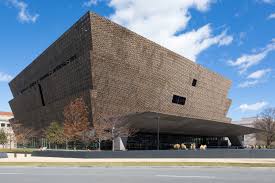
National Museum of African American History and Culture photo by Frank Schulenburg Copyright: CC BY-SA 4.0

For Black History Month 2021, I was more intentional than I normally am to listen to the voices of black people in America and to learn a little black history.


Rhiannon Giddens photo at flickr.com cropped

I have appreciated the voices of many people, including Rhiannon Giddens, formerly of the musical group, Carolina Chocolate Drop. Throughout Black History Month, she posted many biographies, and I followed her daily posts during the month.


So it was that I came across a project she created with a group of female, African American banjo players that was just released to the public. Yes, all banjo players, all female and all African American.

She set out to do an album of Americana music from the perspective of black history for Smithsonian Folkways. She put out a call for banjo players, like her, but she didn’t originally intend to gather together a group of four African American female banjo players: Allison Russell, Leyla McCalla, Amythyst Kiah and Rhiannon Giddens.

Four black female banjo players?!

It turns out she couldn’t have scripted a better group. The result of this collaboration is captured in song by the album, Songs of Our Native Daughters, and in the form of a documentary, Reclaiming History: Our Native Daughters. Their story, which is the story of their ancestors, and a story of overcoming through struggle, is a poignant one.

They met at Cypress House Studio in Breaux Bridge, LA, an old Creole cabin with “stories in the walls”. Dirk Powell, a longtime collaborator with Giddens, owns the cabin that houses the studio, and he produced the album.

They set out to reinterpret an existing canon of Americana music as part of the black narrative in the Americas, but they found their own voices and creativity in the process. The creative force of their shared history and experience led them to produce mostly original music for the album in the genre of Americana.

Part of that shared experience is the history of the minstrel banjo and slave narratives that are common to their collective ancestry. Giddens discovered her own history through her love for the banjo, which was an instrument brought to the Americas by the African slaves. Giddens commented:

“African American history is American history. It is important to know who the founding fathers were, and it’s also important to know who built the White House…. [I]it’s important to know who built the railroads; and it’s important to know the nameless people….”

Thus, Giddens found her own voice in the process of collaborating, writing and playing music for this project. In telling the African American story through Americana music, the group says the hope to prompt people to ask, “What can we do to be better as a society and as humans?”   

Continue reading “American History through the Eyes of Four Female, African American Banjo Players: Our Native Daughters”

Opening Our Eyes and Ears to the Global Church to Gain Perspective

American evangelicals can gain perspective from other believers

I recently read an article by Ed Stetzer and Andrew MacDonald, Waking Up After QAnon: How Can the Church Respond, posted by Christianity Today. The secondary headline is: Evangelicals disproportionately believed conspiracy theories in 2020. How do we recover?

I do not agree completely with everything in this article, but I think it is more “right” than wrong. The following assertion, for instance, certainly rings true to me:

“For years a segment of Christianity has sought to reclaim the United States of America as a Christian nation—or at the very least a nation founded upon Judeo-Christian values. However, they have, at the same time, witnessed the American culture (and, yes, what they see as American elites—media giants, big tech, politicians, and Hollywood) adopt a more secular and progressive agenda.”

I am familiar with the thinking of patriotic Christians because I “grew up” in Christianity in an atmosphere influenced by the Moral Majority and efforts to reclaim the Christian heritage of this country. It was a patriotic movement made “sacred” with Christian reference and fervor.

The community in which I was engaged out of college joined the effort. It seemed that some momentum was being generated in the direction of reclaiming the United States as a Christian nation…. at least while I remained in that community. When I left to go to law school, my perspective changed.

Looking back, I see that patriotic Christianity appeals to a certain narrative of faith and a desire to protect what is familiar and comfortable. It affirms a sense of place in the world as an American Christian who believes fully that the United States was blessed by God more than other nations in the world and stands like a city set on a hill for the world to see.

While I think there may be some truth to that blessing from God, we shouldn’t confuse His blessing for a time (and for His greater purpose) with our own desires for prosperity, influence, protection of lifestyle, culture and familiar life. God raises kings, and he takes them down.

The patriotic movement in the church going back in time was influenced, in part, by the “prosperity gospel”. The focus was on faith. A certain exhilaration accompanies the thinking that we are part of a sacred movement of God’s people uniquely blessed with faith. It was a kind of manifest destiny for the church.

I imagine the 1st Century Jews saw the world similarly, though they didn’t have the prosperity or power of American Christians in 21st Century. Their sense of being God’s people and being culturally “right”, however, made it difficult for them to accept that God loved Gentiles. That tribalism caused the first schism in the early church.

The American exceptionalism that is part of the allure of this politically-charged faith embraces modern Israel and the Jewish state. They see a kinship there, and I believe we are prone to the same kind of error that the early church fell into.

Moving on from that community of my early walk in Christ and seeing faith and the world from different angles changed my perspective. I loved my time in the community of my early Christian years. They did many things right, and they were eager and earnest in their faith in refreshing ways, but I have come to see that patriotic element differently. God is bigger than our patriotic ideas of Him.

(Not that all the people in the church I attended wandered down that road. I know many of them still, and many of them did not get swept up in the patriotic fervor. They have adjusted and adapted, and their perspectives have changed also.)

The real point here is that God has a global and universal purpose. We are as much a part of that purpose as our brothers and sisters in China, or India or in the African American churches in the US.

That is not to say that everyone is right about the way they view the world. We all have our own unique vantage points and perspectives, and for that reason I need to listen to others because they offer perspective that I have trouble seeing from my own, limited position.

Perhaps, if we can all come together in the shared experience of Christ who died for all mankind and learn to set aside the things that divide us, we can catch a more global and universal glimpse of what God is doing in the world. The Stetzer and MacDonald article makes the following statement regarding the headlong embrace of Donald Trump:

“Christians need to understand how this foolishness not only hurts relationships in the local church and community but diminishes our witness. In such situations, our gospel witness is at stake and we cannot afford to be passive.”

This is a major concern. We may have trouble seeing the ways in which we have wandered off the narrow path unless we take time to listen to what other believes are saying.

Continue reading “Opening Our Eyes and Ears to the Global Church to Gain Perspective”