Narnia, and the Danger of Becoming an Accidental Christian

“I don’t think I ever really feel in danger of accidentally believing… or stumbling into it.” Laura Miller


I’m listening to the Unbelievable? podcast replay of the discussion with Holly Ordway & Laura Miller: A convert and skeptic in Narnia. As always, I find the conversation on the Unbelievable! podcast intriguing and thought provoking, engaging people on opposite ends of the thought spectrum.

Holly Ordway and Laura Miller had similar experiences in reading the Chronicles of Narnia by CS Lewis. They read them as young children and loved the books purely for the fantasy. When they were older and discovered that the books had Christian themes and symbolism, they felt betrayed.

Laura Miller explained her sense of betrayal. The fantasy world she imagined and loved turned out to be something different than she thought. The discovery left her feeling like she was on the outside looking in.

As I think about it, the allure of the Chronicles of Narnia is exactly the sense of being on the inside, of discovering a world through the back of an ordinary wardrobe that is unknown and unseen by adults. As a child, perhaps nothing is as intriguing as a secret adventure unknown by your parents.

The experience of finding a whole new world quite by accident through an ordinary wardrobe that is unknown to the greater world, is a fantastical and intimate experience for a child. That intimacy, perhaps, is what gave way to Laura Miller’s feeling of betrayal.

The discovery of “hidden” Christian symbolism, allegory, and themes “planted” in the Chronicles of Narnia betrayed her sense of intimacy with the story. The unveiling of the “secret” behind the secret world she loved for its own sake, destroyed the world of her imagination. The secret that lured her in was a facade.

Holly Ordway felt the same betrayal at first. The secret behind the secret turned the story on its head. The secret, the real secret, was initially hidden from them. When the secret was exposed, they found a world they didn’t expect or know they had encountered.

For Miller, the experience was like losing innocence. In a moment, her childlike fantasy world was forever undone. The story wasn’t the same.  The magic was lost.

For Holly Ordway the sense of betrayal gave way to curiosity – like the curiosity with which a young child might explore a hidden world found inside a wardrobe. It led her eventually out of atheism and into the world of faith in God. The secret behind the secret opened up a better, larger world to her.

The discussion was a good one. I am reminded of a series of dreams I had as a child. The first night found I could fly as I clutched Silly Putty in my hand. It was the most exhilarating dream I ever had. It seemed real, and the realness of it lingered after I woke.

I had the same dream the next night, but I became but I self-conscious. I didn’t know how it worked. I was afraid I couldn’t repeat the feat. I was still able to fly but not as long. My self-consciousness seemed to dispel the magic, leaving me with a dreaded sense of not knowing how the magic worked.

The next night I had the Silly Putty in my hand, but my wishful thinking didn’t work. Try as I might, to make myself fly. I could not recreate the magic, and I never had another dream of flying.

In the initial dream I had tapped into magic quite by accident, like wandering into a wardrobe that opened into an unknown world. But, I could not reproduce the magic because I didn’t have the knowledge of the magic. In Laura Miller’s case, the discovery of the secret behind the secret, the knowledge of the magic, undid the magic for her.

She says that the world of Narnia was no longer as she imagined it when she first read the Chronicles. That knowledge was the undoing of her own understanding of that world. Faced with the reality of it, it was no longer magic to her. Some adult turned the lights on, and the magic was gone.


I am putting some words into what she said, but I can feel her sense of loss. It was the same sense of loss I felt when I could no longer fly in my dreams and never dreamed of flying again.

While I feel her sense of loss, the similarities in our experiences end there. In my case, a lack knowledge about the magic flying was my undoing, or so I felt. In Laura Miller’s case, the knowledge of the Christianity behind the Chronicles of Narnia was her undoing, or so she felt.

She developed her own image of that fantasy world of Narnia, and discovering Christian themes in the Narnian fabric betrayed her own imagination. I read the Chronicles of Narnia in college as a very new Christian. The way those Christian themes played out for me in the pages of those books was entering the wardrobe inside the wardrobe. It was like black and white giving way to technicolor. The nuance and subtlety in which Lewis wove those themes into a beautiful story was inspiring. Images from those books live in my imagination still today and color my theology.

Laura Miller had a distasteful experience of religion as a child. She didn’t get into much detail, though she says she grew up Catholic. I grew up Catholic also. I don’t want to be unfair to Catholics or Catholicism, but I can relate to her negative feelings. (Holly Ordway, on the other hand, found the wardrobe inside the wardrobe, so to speak, and became a believer, and a Catholic.)

Laura Miller went on to claim that “believers” live in a reality that “operates on another plane that, if I am lucky, I can fall in a hole and be in the reality they live in.” She assumes that Christian faith is just another fantasy world – one that is foreign to her.

She says, “I just don’t experience it that way,” meaning life, I suppose, though I don’t want to put words in her mouth. I encourage you to go back and listen to the conversation yourself. The following statement, however, sets the stage for my thinking today, which is this:

“I don’t think I ever really feel in danger of accidentally believing… or stumbling into it.”

She goes onto to explain her interpretation of Lewis’s past: that “he found himself wanting to believe…. and then he was able to find the pathway… towards the thing that he wanted.” She goes on to say, “I don’t really feel that desire…, and it’s kind of impossible to accidentally, or sort of inadvertently, to come into a state of a desire to believe.” She concluded, “I have emerged from all kinds of literature from all kinds of faith without feeling [such a desire].”

Her comments about “accidentally believing,” and “stumbling into” faith,” and “a desire to believe,” as she puts it, is what inspires me to write today. It begs for comment.

Continue reading “Narnia, and the Danger of Becoming an Accidental Christian”

Asbury University and the Manifest Presence of God

I am cautioned, at the same time, by the words of Jesus to the woman at the well that we need to worship God in spirit and truth.

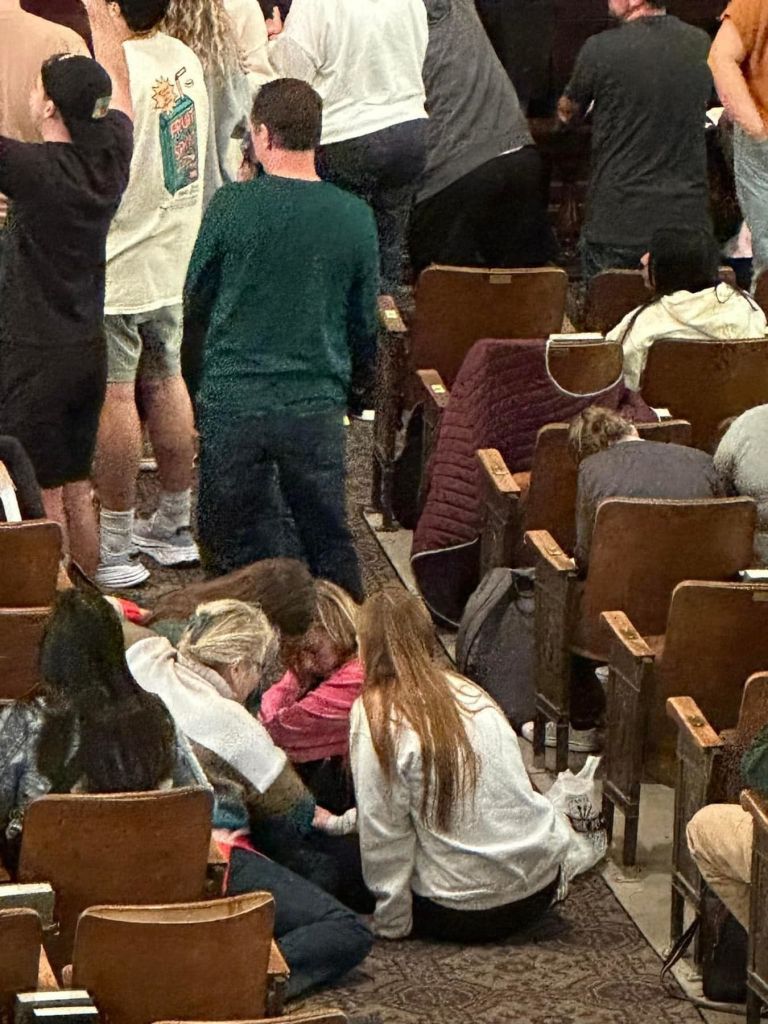
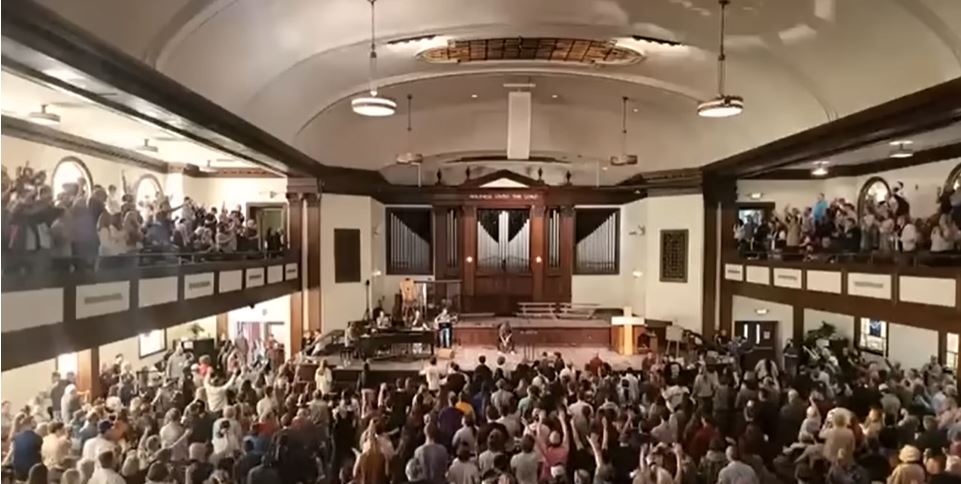
I don’t recall where I obtained this capture, but I am grateful for it.

I woke up thinking about the phrase, “manifest presence of God”. I am not sure where I even heard that phrase. I had not thought of it in ages, but the phrase popped into my head when I slipped from my dreams last night into a brief state of consciousness.

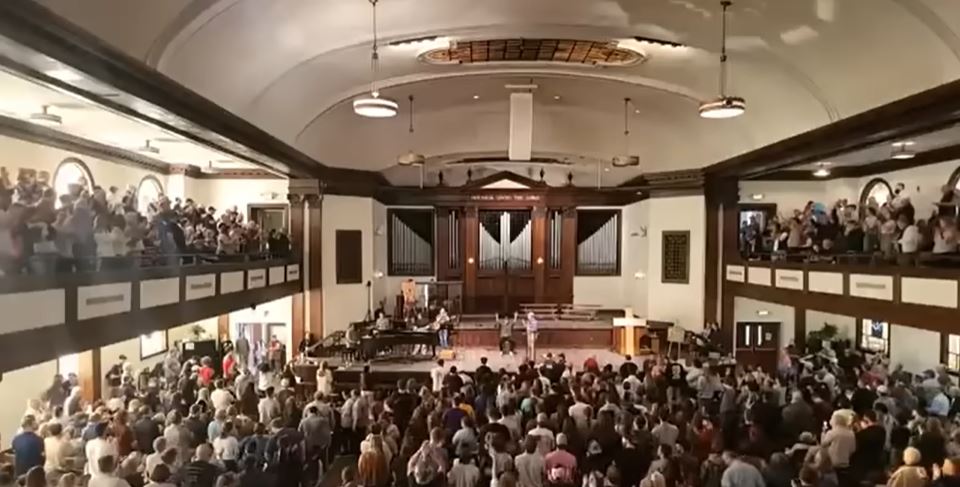
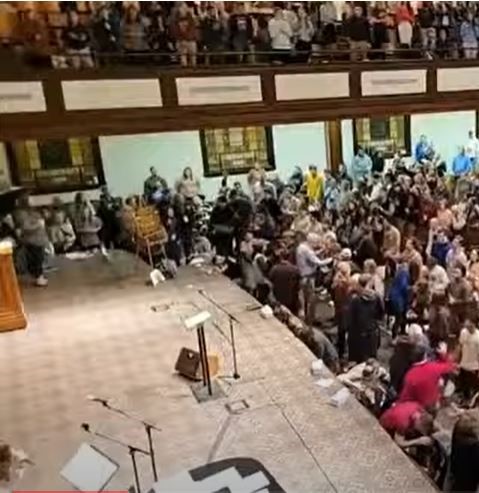
I would say that the so-called “Asbury revival” is an example of the manifest presence of God. What happened there was completely organic. It began after Chapel ended. it began after a very ordinary sermon on a very normal Wednesday morning.

It wasn’t planned or orchestrated. There was no leader. Some students simply lingered. They did not want to stop worshipping. They began praying for each other. Then someone felt the need to repent openly for sin. Others did the same.

One thing led to another. At the same time, students who left the chapel began to make their way back to the Chapel for reasons they could not express. Other students heard that Chapel hadn’t ended and began coming to see what was going on.

Administrators found out something was going on, and they investigated. They recognized that something special was happening, and they had the wisdom to give their blessing to it, not to take over leadership of it, but to let what God was doing simply unfold.

The ongoing Chapel was student led from the beginning. Most of the time, the students leading worship were off to the side. People playing instruments came and went. No one was the center of attention – only Jesus who was lifted up in reverent, tender worship one moment and exuberant praise in the next.


Administrators stayed in the background and supported the students. They protected them when outsiders came flooding in, and they prayed with them. They kept Christian celebrities from taking over the stage and they kept news media out. The University President described it this way:

“What we have experienced since that Wednesday morning has been a current of immeasurable goodness flooding our community and quickly moving into other regions of the world. Words fail any effort to communicate the abundance of experiences and stories that will leave us forever changed.”

The routine chapel service that started on February 8, 2023, was officially ended on February 23, 2023, fittingly on the National Day of Prayer.

God’s manifest present was demonstrated in the repentance of sin, the deep and abiding sense of God’s peace, love, forgiveness, and healing. People spoke of physical healing and deliverance, but it wasn’t front and center. There was little to no spectacle.

The atmosphere in the Chapel was reverent and convicting, but uplifting at the same time, and Jesus was at the center of it. God God was exalted, and Jesus was lifted up as people confessed their sins to one another and to God, repented with tears and weeping, found forgiveness and new joy, prayed for each other and worshipped God. All without a program, or a plan, or a person directing what happened.

Many people would say this was a revival. I don’t know, but it was an example of the manifest presence of God. God simply “showed up”. Not that He was not already present; rather His presence was manifest. To individuals and to all who worshipped corporately.

As I think about the idea of the manifest presence of God, I am reminded of Psalm 139. We can go nowhere that God is not present. We cannot escape him. If we ascended into the heavens, or even to hell, He is there!

He is intimate with us. He knows our innermost thoughts and the intents of our heart. He can even number the hairs on our head, and He knows the words we speak before we even say them.

God is present with us, but his presence is not always manifest. We do not always feel the presence of God. Sometimes, we go long (weeks, months or years) with no sense of the presence of God in our lives. Sometimes, we have trouble even giving mental assent, if we are being honest, to the fact that God is present with us.


When we do feel or sense or see evidence of the presence of God in our lives, we are encouraged, inspired, comforted, and renewed by it. Those times when we are aware of God’s presence can sustain us through the longer, wilderness times. We need to know God in this way.

Jesus is the Bread of Life and the Living Water! What bread that we eat does not satisfy our hunger, and what water that we drink does not quench our thirst? How much more should the Bread of Life and Living Water fill us up and sustain us?!

Continue reading “Asbury University and the Manifest Presence of God”

Is Offense a Measure of whether the Gospel is Authentically Preached?

Jesus said, “My sheep hear my voice, and I know them, and they follow me.” (John 10:27)

On a recent Unbelievable Podcast, Justin Brierley posed the question: is the gospel really being preached if no one is being offended?

That question might seem odd out of context, so I should quickly add that the question was posed in the context of the “Asbury Revival”. Many Christians are advocating caution. They are expressing concern about calling the happening at Asbury University in Wilmore, KY a “revival”. Some are questioning whether God was involved at all.

The claims people are making include, among other things, that there is no preaching going on, that the Gospel is not being preached, and that no one is being offended by the message. The latter statement prompted the question.

Is that the measure of whether the gospel is being preached? That some people are offended? Do we really think that it isn’t really the Gospel unless some people are offended?

Because some people were offended that no one seemed offended, does that count as people being offended?

As food for thought, it seems that everyone was offended during the Super Bowl by the two commercials paid for by a Christian group (with a lot of money) conveying the message that “God gets us”. It seems that everyone was offended by those ads, both the secular world and the Christian world. Does the offense mean that the Gospel was preached?

Perhaps, but only if the right people are offended? What if Christians are offended? What if progressive Christians are offended? What do we mean by “progressive”?

Again, is that really the measure of whether the Gospel was preached? Is that really the right question? Isn’t the Gospel the Gospel? Isn’t the Gospel the Gospel, whether some people are offended or not?

What is the Gospel?

We all know that “gospel” means good news, right? But, what is it? What is the good news?

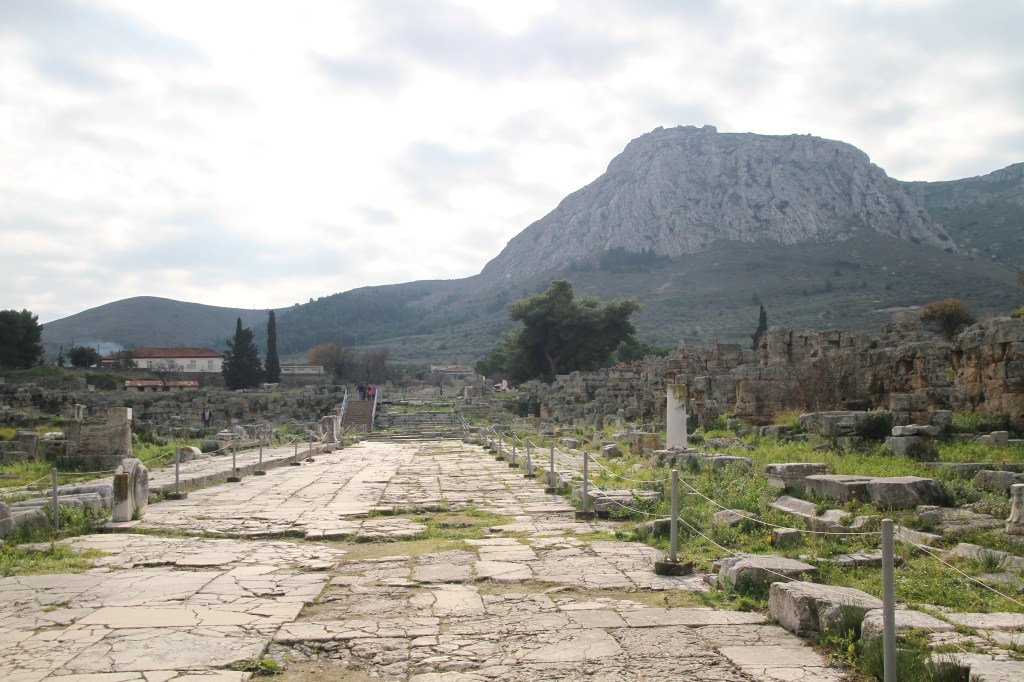
Paul defines the Gospel to the Corinthians when he says, “I want to remind you of the Gospel I preached to you….” (1 Cor. 15:2) He adds, “ By this gospel you are saved, if you hold firmly to the word I preached to you. Otherwise, you have believed in vain.” (1 Cor. 15:3) Then, he says that the gospel message, which is “of first importance”, is as follows:

“… that Christ died for our sins according to the Scriptures, that he was buried, that he was raised on the third day according to the Scriptures, and that he appeared to Cephas [Peter], and then to the Twelve.”

1 Corinthians 15:3-5

When disagreements arose among the Corinthians, and some were lining up behind Paul, and others were lining up behind Apollos, Paul was perplexed by their disunity. He implored them “that all of you agree with one another in what you say and that there be no divisions among you, but that you be perfectly united in mind and thought.” (1 Cor. 1:10)

Paul was perplexed that some were touting him above Apollos, and the other way around. “Is Christ divided”, he asked rhetorically. (1 Cor. 1:13) The obvious answer is no! And the obvious implication is that we should not be divided either.

The problem with the Corinthians was that they were quarreling with each other over their allegiances to Paul and to Apollos. They were disagreeing and quarreling over peripheral things. Thus, Paul says he only came “to preach the gospel—not with wisdom and eloquence, lest the cross of Christ be emptied of its power.” (1 Cor. 1:17)

Emptied of its power? What did Paul mean? Paul said,

“When I came to you, I did not come with eloquence or human wisdom as I proclaimed to you the testimony about God. For I resolved to know nothing while I was with you except Jesus Christ and him crucified. I came to you in weakness with great fear and trembling. My message and my preaching were not with wise and persuasive words, but with a demonstration of the Spirit’s power, so that your faith might not rest on human wisdom, but on God’s power.”

Paul didn’t emphasize his preaching. He didn’t come with “wise and persuasive words”. He emphasized the “demonstration of the Spirit’s power”. The demonstration of the Spirit’s power is usually what we associate with a revival or an awakening. It isn’t the preaching; there is always preaching, but we don’t always get a demonstration of the Holy Spirit.

Continue reading “Is Offense a Measure of whether the Gospel is Authentically Preached?”

Taste and See that God is Good: The Asbury Revival

We spend far more time praying for renewal of our strength than soaring on wings like eagles.


I have noticed with some mild interest at what is going on at the chapel on the Asbury University campus in Kentucky. Posts show up in my Facebook feed daily, as I am connected to many Christians (and many other people too) on Facebook. One post today, shared from someone who has been there from the beginning, described it succinctly as follows:

“A chapel service that didn’t stop but continued spontaneously for 8 days now.”

Today has been ten (10) days since that spontaneous beginning, and I have been watching various live streams of the February 8th chapel service that is still going on. This is how it started:

How the Asbury University chapel started on February 8, 2023

I have seen doubters and critics, I have seen posts from people who jumped in their cars and traveled hundreds of miles to see it for themselves: this chapel service that started and has not stopped. It has continued around the clock for 10 days now.

I have seen hype. I have seen caution. Critics caution about emotionalism. Critics want to de-emphasize experience and double down on the Bible and doctrine. Critics say that an omnipresent God should not require a person to travel to a particular location to experience Him.

I have been cautious myself. I am also aware that a sovereign God does what He wants to do despite our understanding of scripture, and theology and the way things ought to be. I have experienced “moves of the Holy spirit”, myself.

I have experienced that people cannot dictate how, when, or whether the Holy Spirit moves. “The wind blows where it will.” We don’t put the Holy Spirit in our pocket like a rabbit foot. We don’t command or possess Him.

People have described what is going on at Asbury University as a revival. That term may conjure up images of a “tent revival” and flamboyantly crass preachers, artificially slick hair, words that drip like honey, and ecstatic chaos.

The Asbury Revival is characterized by a different atmosphere. The person’s post from today who has been there from the beginning said this:

“To quote Professor McCall, a theology professor at Asbury Seminary, ‘what we are experiencing now—this inexpressibly deep sense of peace, wholeness, holiness, belonging, and love—is only the smallest of windows into the life for which we are made.’”

As a child of the 60’s and 70’s, I am reminded of the hippies who wanted “Peace and love. Not war!” I think of John Lennon who imagined a world without war – and without religion – with only peace. Hippies, however, were a contentious bunch, and John Lennon was no saint.

Not that I blame them for dreaming or trying. It’s just that people are completely incapable of making these kinds of dreams come true. Just when we think we have created our utopia, it is already disintegrating and slipping through our fingers like a mirage we feel we can grab hold of.

I lived for several years in a communal house. It was a leftover from the flower children of the 1960’s who became the Jesus people of the 1970’s. I loved it, but it was no utopia. The reality is that people have rough edges. So, “iron sharpens iron,” but the sharpening isn’t always a pleasant process.

Yet, when people get together to devout themselves to following God together, to worship and pray together, to do life together, God is in their midst. These words of Jesus are as true today as the day he spoke them:

“Where two or three gather in my name, there am I with them.”

Matthew 18:20

These words are true when our rough edges are rubbing against each other as much as when we “feel the love” (which may not be as often as we like). Even then, I have never experienced the intimacy with another human being as I have experienced when I have experienced the Holy Spirit “moving” in me, usually during times of group worship..

I have experienced the “inexpressibly deep sense of peace, wholeness, holiness, belonging, and love” described by the Asbury professor. It cannot be manufactured or trumped up. When it “happens”, words are difficult to describe it; the experience is life changing.

The experience is only truly life changing, however, if we recognize that the experience is not the point. The experience is a brush with God, who is the source of peace, wholeness, holiness, belonging and love.

If we walk away from the experience longing for another experience, we have missed the important thing. It isn’t ultimately the experience that we long for at all; we long for God, and relationship with Him.

If we chase the experience, it becomes ever more elusive. In our desperation and desire to repeat it, we may resort to emotionalism. We may even resort to trumping up experiences that are artificial.

We desperately need connection to our Creator and the lover of our souls.

Continue reading “Taste and See that God is Good: The Asbury Revival”

Echoes of Paul in John and the Priority of Love over Knowledge

Paul and John had very different encounters with Jesus, but they both speak of knowledge and love in similar ways.


I listened to a podcast this week in which the topic of discussion was the difference between John’s Gospel and the synoptic Gospels (Matthew, Mark, and Luke). Some people say the Gospels are so different that they couldn’t have all been written by people who followed Jesus. People say that John’s Gospel, which was written latest in time, includes theological progression and embellishment.

NT Wright, on the other hand, points out that John’s words echo words found in the other Gospels, though it is very different in its emphasis. He also observes that since John’s Gospel was written latest, he would have had access to the other Gospels. There would have been no need for him to cover the same ground the other Gospels already covered.

Wright’s observation about John not wanting to cover ground already covered by the other Gospels, or not wanting to cover it in the same way, makes sense to me. John also had more time to think over and chew on the words of Jesus because he lived long, and he wrote his Gospel later than the others.

John’s Gospel is more philosophical and theologically developed in an obvious sort of way (not that the other Gospels are lacking in theology). Did he embellish on what Jesus said? We don’t know. Would embellishment make it any less “scripture”? I don’t think so.

John was one of the three apostles who spent the most time with Jesus and was most intimate with him. He was part of the inner circle of disciples who were closest with Jesus. He may have gained more insight into what Jesus said in that intimacy and the luxury of a long life to reflect on what Jesus said than the other Gospel writers.

I probably like John’s Gospel the best because it is so philosophical, beginning with some of the most poignant words found in writing anywhere:

In the beginning was the Word, and the Word was with God, and the Word was God. He was with God in the beginning. Through him all things were made; without him nothing was made that has been made. In him was life, and that life was the light of all mankind. The light shines in the darkness, and the darkness has not overcome it.

John 1:1-4

Fast forward a few days: A friend texts me and a group of people a Bible verse or two every morning. I always read it as part of my morning Bible reading. Sometimes the things that I am reading tie together with other things I am listening to and thinking about.

That was the case this morning. The verses sent in the text reminded me of NT Wright’s statements about the echoes of Matthew, Mark, and Luke in John’s Gospel. The verses in the text from my friend this morning are as follows:

Dear friends, now we are children of God, and what we will be has not yet been made known. But we know that when Christ appears, we shall be like him, for we shall see him as he is. All who have this hope in him purify themselves, just as he is pure.

1 John 3:2‭-‬3 NIV

These words are not from the gospel of John, but from the first epistle of John. As I read them, I immediately heard echoes of the words of Paul in his first letter to the Corinthians, which was likely written earlier than John. In that letter, Paul said:

For we know in part and we prophesy in part, but when completeness comes, what is in part disappears. When I was a child, I talked like a child, I thought like a child, I reasoned like a child. When I became a man, I put the ways of childhood behind me. For now we see only a reflection as in a mirror; then we shall see face to face. Now I know in part; then I shall know fully, even as I am fully known.

1 Corinthians 13:10-12 (NIV)

1 Corinthians 13, of course, is the famous “love chapter”, ending with the statement: “And now these three remain: faith, hope and love. But the greatest of these is love.” (1 Corinthians 13:13) John’s first letter is all about love. Just as Paul focuses on love in 1 Corinthians 13, John focuses on love in 1 John, and both of them speak in that context about the present limitations on our knowledge and knowing more fully when we see Christ face to face.

The statement that caught my attention is that we do not know what we will be until Christ appears; then, we will be like him, and we will see him as he is. These words of John echo Paul’s words when he says for now we know in part, but then we will know as we are fully known. Now we see only as a reflection in a mirror, but then we shall see face to face and we shall know fully even as we are fully known.

The similarities between these passages are striking to me., and all the more that they are both spoken in the context of love. They emphasize transformation that will take place in us in the context of our relationship to God. They emphasize that we see and know only partially in this life, and we cannot see or know exactly who God is or exactly what God has created us to be at this point.

Both passages speak to a future in which we shall know fully even as we are fully known (Paul) and see God as He actually is (John).

Now, though, we do not see clearly. The King James says we see only as “through a glass darkly”. I am struck by the implications of these things: both the fact that John echoes Paul, and Paul echoes John, and by the emphasis on love because we do not know what we do not yet know.

Continue reading “Echoes of Paul in John and the Priority of Love over Knowledge”