Dr. William Lane Craig is a Christian philosopher of the highest caliber.[i] He has multiple doctorate degrees and has taught at various colleges and universities. He is a prolific writer, and has debated most of the well known, outspoken t atheists, agnostics and skeptical thinkers of the world on philosophical, theological and other issues.
In the short clip below, which is a segment from a longer interview on the various arguments (proofs) for the existence of God, he discusses an additional basis for knowing that God. This basis, or claim for the existence of God, is personal experience.
This is not an argument for the existence of God based on logic, and it isn’t an objective, evidentiary proof. It is more like a personal proof or confirmation of the existence of God distinct from (not contrary to) reason.
A personal experience with God isn’t a substitute for reason, but neither is reason a substitute for the experience.
The main ways that Dr. Craig usually discusses the proof of the existence of God is logic, scientific evidence and philosophy, but he insists these aren’t the only proofs we have.
We might be apt in the western world to discount personal experience and to be suspicious of it, and for good reason. Charles Darwin was suspicious of his own intuition, being the product of evolution from lower life-forms.[ii] A good friend of his got lost in the morass of spiritualism, and that experience of seeing his friend chase down the rabbit holes of irrational, spiritualistic notions influenced Darwin to distrust his own intuitions.
Of course if Darwin was consistent, he shouldn’t have trusted his intellect any more than his intuition, as both human intuition and intellect are the product of evolution from lower life-forms. If human intuition is tainted by its development from lower life forms, so is the human intellect. It didn’t occur to Darwin, apparently. that his intellect suffers the same weakness according to his own reasoning.
As for personal experience, even though we have some warrant for being suspicious, we shouldn’t be completely dismissive. We shouldn’t trust our experience, alone, but how does it fit into the proof we have of God?
The story of the sinful woman who wipes Jesus’ fee with her tears and anoints them with oil is a tender but rather uncomfortable story. [i] A Pharisee had invited Jesus to eat with him at his house. While reclining at the Pharisee’s table, a woman, a known sinner, came up behind him.
Where did she come from? How did she get into the Pharisee’s house? Was she, perhaps, a daughter of the Pharisee, one of whom he was not very proud? was there something else going on? We don’t know.
When she came up behind Jesus, she was weeping, and she began to wet his feet with her tears. She wiped his feet with her hair, kissed his feet and anointed them with oil. A greater display of open, unabashed affection is hard to imagine. Thinking of the vulnerability and openness of her affection is even uncomfortable.
The Pharisee was taken aback, as we would be, mumbling to himself that surely Jesus must know who this woman is. Her reputation was well known, at least to the Pharisee.
“When the Son of Man comes in his glory, and all the angels with him, then he will sit on his glorious throne. Before him will be gathered all the nations, and he will separate people one from another as a shepherd separates the sheep from the goats. And he will place the sheep on his right, but the goats on the left. Then the King will say to those on his right, ‘Come, you who are blessed by my Father, inherit the kingdom prepared for you from the foundation of the world. For I was hungry and you gave me food, I was thirsty and you gave me drink, I was a stranger[1] and you welcomed me, I was naked and you clothed me, I was sick and you visited me, I was in prison and you came to me.’ Then the righteous will answer him, saying, ‘Lord, when did we see you hungry and feed you, or thirsty and give you drink?And when did we see you a stranger and welcome you, or naked and clothe you? And when did we see you sick or in prison and visit you?’ And the King will answer them, ‘Truly, I say to you, as you did it to one of the least of these my brothers, you did it to me.’”
“Then he will say to those on his left, ‘Depart from me, you cursed, into the eternal fire prepared for the devil and his angels. For I was hungry and you gave me no food, I was thirsty and you gave me no drink, I was a stranger and you did not welcome me, naked and you did not clothe me, sick and in prison and you did not visit me.’ Then they also will answer, saying, ‘Lord, when did we see you hungry or thirsty or a stranger or naked or sick or in prison, and did not minister to you?’ Then he will answer them, saying, ‘Truly, I say to you, as you did not do it to one of the least of these, you did not do it to me.’ And these will go away into eternal punishment, but the righteous into eternal life.”[2]
The parable of the sheep and goats and the explanation of it given by Jesus is relevant to the issue of immigration. This is not in the Old Testament, but the New Testament. This isn’t God talking to the nation of Israel (as if what God said to the nation of Israel has no bearing on us), but God talking to all of us through Jesus.
The bottom line is this: we will be judged by how we treat people.
A case can be made that God’s instructions to the Israelites on the treatment of strangers (aliens, foreigners, immigrants) doesn’t apply to us today,[3] like ceremonial and dietary laws don’t apply to us today as followers of Christ. At least, that is the position taken by James K. Hoffmeier in the article, The Use and Abuse of the Bible in the Immigration Debate, December 2011.[4]
Hoffmeier argues that conservative Christians should not take a position in favor of immigration. He says that only secularists and liberals hold that view, and they misquote the Bible to support that position.
Before digging into the issue, we should note that the discussion isn’t about whether immigration should be allowed, or not. We already allow immigration and always have. Few people are arguing that we should open the borders wide with no controls at all, and few people are arguing that we should shut the borders tight and not allow any immigration at all.
The issue is the extent of the immigration we should allow and the terms and conditions that we should attach to it.
The public debate, however, sounds as if people are lining up completely in favor of open borders or completely in favor of closing them off. That perception isn’t accurate, and assuming an all or nothing approach is counterproductive.
Another perception we need to contend with is the notion that only secularists and liberals are in favor of immigration. This notion is also false. Who is against immigration?! Who would refuse any immigration at all? Everyone but Native Americans are descendants of immigrants in this country.
But, what if those “secularists and liberals” are “right” in their policies that favor more compassionate immigration? Do we oppose things just because secularists or liberals ascribe to them?
These are questions I ask myself as I consider the issues. Are we just reacting? I believe we should be guided, not by our opposition to positions taken by unbelievers, but by our own reading of Scripture and the guidance of the Holy Spirit.
I am neither a secularist nor a liberal. I believe the Bible is the Word of God, and I believe that we are responsible to God whose Word is preserved in the Bible. My reading of the Bible leads me to take the position that we have a holy responsibility to welcome strangers (immigrants) into our land because that is the heart of God.
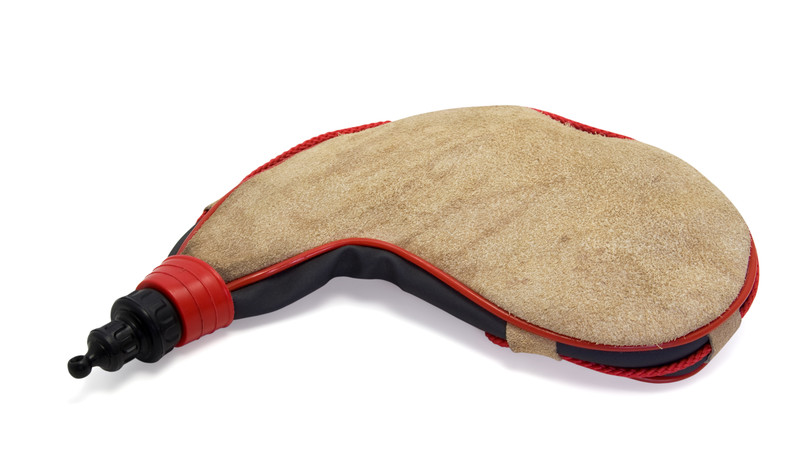
Jesus speaks of the need for new wine skins to hold new wine. We are the wine skins God desires to prepare. When we are born again, we are born of the Spirit.[1] Paul says we become new creations: “the old has passed away; behold the new has come”.[2]
Jesus says we need new wine skins to contain the new wine (of the Spirit).[3]
We often have a very anthropomorphic view of God. Many of us come to God through our own desires, wants and needs. That isn’t wrong. Jesus invites us to come. He invites us to seek, to knock and to ask. He tells us that a good father will not give his child a stone when his child asks for a fish. God expects us to come to him for our needs and even our desires.
We can’t remain in that posture (of seeking our wants and needs from God), however, and grow into the kingdom God desires for us. We can’t remain in the position of asking God only for our own wants and needs and grow in newness of life. We need to transition and mature into the new wine skin God desires us to be.
I am torn with mixed emotions as I watch my social media news feeds well up with agitating statements from pole to pole. The inauguration and the women’s marches have set my social media world on edge – or rather edges. Polarization is the structure and substance of our modern discourse.
In the middle of it all are my brothers and sisters in Christ, dividing over the same issues that divide the country. We feel compelled to take sides, to hold up our own partisan signs, to signal where we stand and to look around to see who is standing with us.
That we seem to be lining up in the same fashion as the rest of our world has me feeling uneasy. Are we no different for the death, burial and resurrection of Jesus than the world around us who finds no need of a Savior and no palate for a Lord?
Have we been born again, born of the Spirit, born from above? Or have we simply adopted a layer of adornment that we have put over the worldviews we already have?
I ask these questions for myself as I put them on paper. I am asking these questions for all of us who profess Jesus as our Lord and Savior.









 Navigating by Faith