What Does It mean that the Kingdom of Heaven Is Subjected to Violence, and Violent People Take It By Force?

Does Jesus authorize violent or forceful behavior in defending Christianity?


I engage in many conversations with people of faith on just about any topic. I remember one conversation (on the topic of guns, I believe) in which a fellow believer cited Mathew 11:12 in support of a Christian defense of gun ownership.


From the days of John the Baptist until now, the kingdom of heaven has been subjected to violence, and violent people have been raiding it.” Matthew 11:12 NIV


My friend also mentioned Jesus turning over tables and instructing his followers to buy swords (Luke 22:36, though he tells them in the same chapter to but them down (Luke 22:49-51); “for all who draw the sword will die by the sword.” (Matthew 26:52)). My friend believes that Jesus was saying that force, and even violence, is ok as long as it is used for a good purpose.

I am reminded of his comments as I read through Matthew 12 in my yearly reading plan. I didn’t follow up on his comment then, but reading this passage in context brings it to mind, and it brings clarity to me at the same time.

Does this passage justify violent or forceful behavior in defending Christianity? That is the question

Let’s start with the context. Jesus is preaching in Galilee where John the Baptist has recently been imprisoned for calling out Herod for adultery. John was no shrinking violet. He was bold and forthright, and it landed him behind bars when Herod didn’t take kindly to the criticism.

While in prison, John heard reports of the miraculous things that Jesus was doing. These reports prompted John to send his own followers to ask Jesus, “Are you the one who is to come, or should we expect someone else?” (Matt. 11:3).

I imagine John the Baptist was wrestling with doubt as he languished in prison. In his mind, and in the minds of most Jews at that time, the Messiah was expected to come and take over the world, but it didn’t seem to be happening. The Roman Empire was still very much in charge.

John’s imprisonment must have given him second thoughts about the Messiah stuff. The miraculous signs seemed to mark Jesus as the Messiah, but why was he not wielding the power and the glory of God against the Roman occupation and Roman Empire? John the Baptist may have been hoping that Jesus was just biding his time when he sent for a report.

Jesus sent this message back:


Go back and report to John what you hear and see: The blind receive sight, the lame walk, those who have leprosy are cleansed, the deaf hear, the dead are raised, and the good news is proclaimed to the poor. Blessed is anyone who does not stumble on account of me.” (Matt. 11:4-6) (quoting Isaiah 35:5-6)


Was that the report John was expecting? Jesus didn’t say anything about driving out Rome and restoring King David’s throne. He didn’t pull from the prophetic messages about a conquering messiah. He pulled a different thread from the Prophets.

When John’s followers left, Jesus praised John the Baptist to the disciples. He affirmed that John the Baptist is the one spoken of in Malachi 3:1 – the messenger sent ahead of the Messiah to prepare the way. He affirmed that he is the Messiah, but the response he sent back to John was about healing, cleansing, and proclaiming good news to the poor.

In this context, Jesus said, “the kingdom of heaven has been subjected to violence, and violent people have been raiding it.”

Jesus seems to be confirming only what John was already hearing about the miraculous signs, but John already knew about those things. Therefore, I think Jesus was doing more than confirming what John already knew. Jesus was tying what he was doing to prophetic passages like the language he quoted from Isaiah when he announced his public ministry (Luke 4:18-19):


The Spirit of the Lord is on me,
    because he has anointed me
    to proclaim good news to the poor.
He has sent me to proclaim freedom for the prisoners
    and recovery of sight for the blind,
to set the oppressed free,
     to proclaim the year of the Lord’s favor.”


These words from Isaiah 61:1-2 with overtones from Isaiah 58:6 were read aloud by Jesus in his hometown synagogue in Nazareth before he sat down with all eyes on him and said, “Today this scripture is fulfilled in your hearing.” (Luke 4:21) These are the words Jesus used to to characterize the purpose for which he came.

We know, of course, that Jesus came to die on a cross, but John and his followers didn’t know that and probably could not have imagined it. Jesus’s followers also didn’t get it even when he tried to tell them.

Jesus pulled passages from Isaiah that alluded to the suffering servant motif to affirm his identity. John the Baptist would have immediately recognized the thread Jesus was pulling, but it wasn’t likely what he was expecting or what he was hoping.

First Century Jews were expecting the Messiah to reestablish the Davidic kingdom “here and now”. The Romans were well aware of that Jewish sentiment and had been putting down factions of zealots who took up the sword to attempt to bring it about.

Imagine Pontius Pilate’s confusion that prompted him to ask Jesus, “Are you the king of the Jews? …. Your own nation and the chief priests have delivered you over to me. What have you done?” This is how Jesus responded to Pontius Pilate:


My kingdom is not of this world. If my kingdom were of this world, my servants would have been fighting, that I might not be delivered over to the Jews. But my kingdom is not from the world.” (John 18:36)


With this as the backdrop, let’s turn back to Matthew 12. If we understand the context, and the bigger picture, we see that Jesus is not advocating violence or force: he is doing just the opposite.

Continue reading “What Does It mean that the Kingdom of Heaven Is Subjected to Violence, and Violent People Take It By Force?”

What It Means to Bear God’s Name and the Significance of Not Taking God’s Name in Vain

We who take God’s name are His representatives in the world.


In a previous blog article, I tried to summarize the view developed by Old Testament scholar, Carmen Imes, on what it means that human beings are made in God’s image. I have only summarized her view as I understand it from a conversation on the Holy Post podcast (with some thoughts of my own added in), but she wrote a whole book about it!

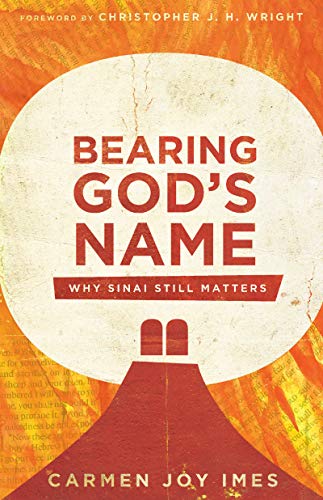
The book, Being God’s Image: Why Creation Still Matters, was recently published as a prequel to her previous book, Bearing God’s Name: Why Sinai Still Matters. The previous book on bearing God’s name, in turn, was distilled from Imes’ doctoral dissertation.

Her observations are profound in my book! (Which I don’t have because I am speaking figuratively now.) Having summarized her view on human beings being made in God’s image, I am turning now to the significance of bearing God’s name and not taking His name in vain.

Imes says we don’t bear (take on) God’s image because we are (already made in) God’s image, but we do take on (bear) God’s name if we are His covenant people. The significance of taking on God’s name is what is implicated in the third commandment: thou shalt not take the Lord’s name in vain.

In Carmen Imes’ first book, Bearing God’s name: Why Sinai Still Matters, she explores the commandment not to take the Lord’s name in vain. She argues for what she calls “missional reading”. Thus, she says we should not understand this command simply as a rule to be applied to our speech and how we refer to God verbally. She says the meaning is much broader, deeper and more fundamental than that.


This commandment implicates our whole lives! We who take God’s name are His representatives in the world. We bear or carry His name, so what we do, and who we are, and how we represent God, who’s name we carry, matters deeply!

Every human being is made in image of God, but only God’s covenant people bear His name. Every member of the human race is invited to join the covenant community, but until people join themselves to God’s covenant community, they do not take His name.

Thus, Imes says, “It’s impossible for a nonbeliever to take God’s name in vain.” They haven’t taken His name at all, so they cannot violate the command not to take God’s name in vain. If a person doesn’t take God’s name in the first place, he/she cannot take His name in vain.

Remember that God revealed His proper name, Yahweh, only to His covenant people. Yahweh was not revealed to all people at the time the commandments were given to Moses. The name of God, Yahweh, was only revealed to Israel in the context of the covenant God made with them.

In New Testament verbiage, we are ambassadors of Christ if we have been born again and accepted Christ as our Lord. When we are born again, we take on the “heredity” of God as His children. When we accept Jesus as Lord, we “take his name”: we become identified as Christ followers, traditionally known as Christians.

Because we are followers of Christ who bear his name, everything we do and say is a reflection of Him. We are representatives of the kingdom of God. We carry His flag as we live our lives in the world. (If, indeed, we are not ashamed to be called by His name.)

Continue reading “What It Means to Bear God’s Name and the Significance of Not Taking God’s Name in Vain”

The Surprising Significance of Being Made in God’s Image

The ultimate significance of human beings being made in God’s image is that we are to love (value) our neighbors and even our enemies.

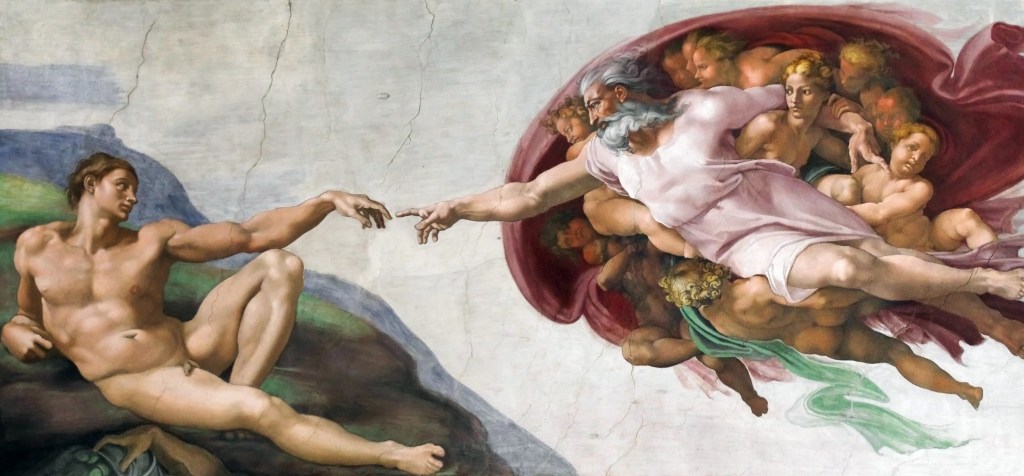
ROME, ITALY – MARCH 08: Michelangelo’s masterpiece: The Creation of Adam in Sistine Chapel

What does it mean that human beings are made in God’s image? What does it mean that God commands us not to take His name in vain? New answers to these interrelated themes might surprise you.

Carmen Imes wrote a book called Bearing God’s Name that explains for common folk like me the conclusions she developed in her doctoral dissertation. She just published a new book called Being God’s Image, a kind of prequel to the first book. I recently listened to her talk about these things with Skye Jathani on the Holy Post podcast that inspires my writing today. (The conversation starts at 54:20 if you want to hear it from her mouth.)

The commandment not to take God’s name in vain is where the conversation started, but being made in God’s image is actually the prequel to that “story”, and the significance of bearing God’s name (in contrast to being God’s image) is central to the story.

I am going to start with the backstory (in the beginning), what it means to be made in God’s image, and what it means to bear God’s name before opening a new understanding of the commandment not to take God’s name in vain, according to Carmen Imes.

Imes says that some theories entertained by the church misperceive the significance of the revelation in Genesis to people in that culture filled with false idols. They miss the mark and fall short of the reality that is expressed in Genesis.

Imes says, “The majority of the views out there through the centuries attached the image of God to some human capacity or function. That view makes the image of God something we do or are qualified to do by having a certain capacity.”

Some say human rationality is what it means to be made in the image of God. They reason that we are intellectually superior to animals; therefore, rationality is what it means to be made in the image of God.

Others have ascribed being made in the image of God to our social and political ability to govern ourselves. Still others believe our morality and conscience are what distinguish us from the animals as being made in God’s image.

These things certainly distinguish human beings from other creatures created by God, but Imes says these human capacities, true as they are, do not accurately convey what the biblical text actually says. Imes says that assuming the differences between humans and the animals is what being made in the image of God means s just “theological speculation” It is eisegesis – imposing our own thinking on the text – rather than exegesis – extracting the meaning from the text, itself.

Th view that special human capabilities are what it means to be made in the image of God is not true to the biblical text, and it is not justified by the text. Exegesis of the text (pulling the meaning from the text, and not from our conceptions applied to the text) reveals a different view for what it means to be made in God’s image.

Imes says we need to pay closer attention to what the text actually says to determine its meaning. She also reads the text in light of its context, the Ancient Near Eastern culture, to determine more precisely what it means that human beings are made in the image of God.

The backstory begins in Genesis 1:27:


God created mankind in his own image,
    in the image of God he created them;
    male and female he created them.


The Hebrew word translated “image” in this passage is tselem, meaning literally an image. Strong’s Concordance describes the word further as “a phantom, i.e. (figuratively) illusion, resemblance; hence, a representative figure, especially an idol — image, vain shew”. (See BibleHub)

We resemble or are representative of God, though we are not (yet) true representations of God. Given the Hebrew meaning of the word, tselem (with overtones of “phantomlikeness” and resemblance – implying something less than the real thing), perhaps we are merely phantom resemblances at this time.

I would note that we may only have the potentiality of being truly like God. In the New Testament, we find that we must be born again to become God’s progeny, His children, his ambassadors (representatives) and to be found “in” Christ, who alone (at this time) is the exact representation of God in the flesh (not merely a resemblance).

Perhaps, we only have the potentiality to be exactly like God, but that doesn’t discount the fact that we are created in His image – as Adam and Eve were created in His image. This understanding sheds new light, perhaps, on the first commandment: “Thou shalt have no other gods before me”; and it sheds new light on the second commandment: “Thou shalt not make unto thee any graven image.”

I am going beyond, now, what Carmen Imes says in the conversation, though I think it follows from her observations. I will also get to the surprising nuance she finds in reading Genesis 1:26-27* that sets this text apart in the Ancient Near Eastern culture.

Continue reading “The Surprising Significance of Being Made in God’s Image”

The Elijah Complex and the Whisper of God

We may have an Elijah complex when we think we are the only ones following God.

BRESCIA, ITALY – MAY 23, 2016: The painting Prophet Elijah Receiving Bread and Water from an Angel at Chiesa di San Giovanni Evangelista by Alessandro Bonvicino-Moretto

Do you identify with Elijah? Do you squirm thinking about his zeal? Do you feel guilty about not sharing the Gospel with your neighbor? Then, maybe a new look at Elijah may resonate with you.

We know Elijah for his zeal for Yahweh in a time when the culture and national leaders were rebelling against God. Sound familiar?

Elijah is famous for challenging the Israelite king, Ahab, and his rebellious wife, Jezebel, and all of the prophets of Baal and Asherah that were commissioned by that royal pair. He felt like he was the only one standing for God in a world that wanted him to shut up and go away.

Some of us may feel like Elijah, while many others of us may feel guilty that we are not like Elijah. He is a pillar of the faith, right?

Yes, of course, he is! As I read through these passages, though, I am seeing something I didn’t catch before. For one thing, I get the feeling that Elijah probably wasn’t a fun guy to be around.

He certainly didn’t go along with the crowd. He wasn’t known for his diplomatic tact. (To put it mildly) He said what was on his mind, and he didn’t pull any punches.

These characteristics of Elijah begin to give us an idea of what he is like. They also point toward a more human side of Elijah that I hadn’t noticed before, which is why I want to dive deeper into the story of Elijah and the prophets of Baal.

Elijah is famous for challenging 450 prophets of Baal to an Ancient Near Eastern duel of the gods. It was Elijah against all the prophets of Baal; Yahweh against Baal in a cosmic duel with mortal consequences for the losers.

This is the way Elijah rolled. No holds barred!

Elijah challenged the prophets to sacrifice a bull on an altar without setting fire to it, letting Baal or Yahweh, as the case might be, consume the sacrifice directly. Which one would show up?! The stakes were high. If Yahweh didn’t show, Elijah was toast!!

Elijah offered to let the prophets of Baal go first. (A bit of showmanship?) They cut up the bull; they placed it on the altar; and they did their ritual thing to entice Baal to come out of whatever stone he might live under … but nothing happened.

Elijah taunted them. (He was not a master of subtlety!) He egged them on to shout louder and offered the following “helpful” comments (paraphrased by me):

  • Maybe your god is daydreaming”;
  • Maybe he fell asleep and you need to shout louder; and
  • Maybe he is relieving himself, and he will be back in a minute!

Elijah’s taunting wound those prophets up into a religious frenzy. They cut themselves with knives, and swords, and spears until they bled everywhere … but still nothing happened.

When their time was up, all eyes turned to Elijah.

I imagine the anticipation in the crowd rivaled a Las Vegas audience watching Siegfried and Roy walk a full grown tiger onto the stage. Elijah let the expectation mount as he built his own altar. The atmosphere was electric. The crowd was undoubtedly hoping for more action than the prophets of Baal gave them.

I can imagine the smug look on Elijah’s face and the brash confidence in his demeaner as he instructed volunteers from the crowd to pour water on the offering. Elijah was nothing if not dramatic!


Lest we forget, they were in the middle of a long draught. Elijah didn’t just have them sprinkle water. Three times Elijah instructed his helpers to fill up the jars, and pour them out on the bull, the wood, and the altar until it was soaked and water pooled in the trench around it.

Anticipation hung like a funnel cloud overhead as darkness loomed over the mountaintop stage. The expectant crowd, the exhausted prophets recovering from their failed ordeal, and Ahab sat poised on the edge of their proverbial seats.

In the flash of a moment, fire came down from heaven. Like a galactic flamethrower, the fire was so fierce it completely consumed the bull, the wood, and the altar itself!

Nothing remained but hot, smoldering ash.

Yahweh showed up as Elijah said he would! Elijah was vindicated!

But that wasn’t enough for him. With freshened zeal fueled by the powerful demonstration of God’s power, Elijah provoked the excited crowd to grab the cowering prophets of Baal and march them down the mountain where they were slaughtered in the valley below.

Elijah was at the height of his prophetic career. Elijah may have thought, “Not even Moses presided over such a powerful demonstration of God’s awesome power!” Elijah was on top of the world!


It’s hard to imagine greater faith and boldness or a more decisive display of God’s power. Perhaps, the only thing more amazing than all of that was Jezebel’s response:

She was not… impressed… at all.

When Ahab raced to deliver the news to Jezebel, his haughty audacious wife didn’t even hesitate. She ordered death to Elijah with ice in her veins.

Elijah must have been thinking, “What’s a man of God got to do?!” (Never mind that the crowd seemed properly convinced.) If his greatest act of faith couldn’t turn the hardened hearts of Ahab and Jezebel, nothing would! He had done his absolute best, and it wasn’t enough.

Have you ever felt that way? Have you ever felt like nothing you do, or can do, makes any difference? Have you ever come to the place that you have done your best, and your best wasn’t good enough? Have you ever felt like you are the only one who stands for God?

Have you ever gotten mad at God for not defending you for standing up for Him? Then, read on.

Continue reading “The Elijah Complex and the Whisper of God”

Should Christians Be Like Elijah and Call Down Fire on People Who Reject Them?

God has been working out His plans and unfolding His purposes – the redemption of mankind and of His creation – throughout history


I am reading through Kings and Chronicles right now in my annual trek through the Bible, and the Prophet, Elijah, has been the “star” these last few days. Elijah means “Yahweh is my God” in Hebrew. He is known for his great faith and is one of the most prominent and revered prophets in the Old Testament.

Elijah is known for his fierce faith in the face of difficult circumstances when Ahab, the King of Israel, and his domineering, foreign wife, Jezebel killed off most of the faithful Hebrew prophets and instituted the worship of Baal and Asherah for the nation of Israel.

Elijah stood defiantly against Ahab and Jezebel who sought to kill him for his defiance Elijah is, perhaps, most known for his public challenge to the prophets of Baal and Asherah that culminated in a powerful demonstration of Yahweh’s superiority to those foreign gods.

This story and another story in a similar vein to it are the backdrop for this article. If Elijah is an exemplary man of faith, to what extent should we follow his example today in the expression of our faith in the face of governmental and cultural opposition?

Continue reading “Should Christians Be Like Elijah and Call Down Fire on People Who Reject Them?”