 via Thoughts on Christian Persecution
Author: kevingdrendel
I am sixtiesh, an English Literature major in college and an attorney by profession. Faith informs my life, and this blog is about my faith journey.

Of Church Heretics and Heroes

via Of Church Heretics and Heroes
Share this:

Nothing New Under the Sun
This post is old; but of course, there is nothing new under the sun.

 BEIT SHEAN,ISR – JUNE 17: Visitor walks near Pillars in Ancient Beit Shean on June 17 2009. Beit She’an is one of the most ancient sites in Israel: it was first settled 5-6 thousand years ago.
“Now all the Athenians and the foreigners who lived there would spend their time in nothing except telling or hearing something new.”[1]
This was the explanation for the philosophers wanting to hear what Paul had to say when he was in Athens. They brought him to the Areopagus so they could hear “the new teaching” he was explaining in the synagogues and market places.[2] They wanted to hear what he had to say, presumably, because it was new.
I have a friend who is always looking for a new way of looking at things. He is a very philosophical and thoughtful person, but he thinks he would be bored in heaven (as…
View original post 524 more words
Share this:

The Work of Godly Grief Within Us
How we measure up in relation to the barometer of Scripture and what we do with it.

“For godly grief produces a repentance that leads to salvation without regret, whereas worldly grief produces death.” (2 Corinthians 7:10) (ESV)
When I read this, I immediately ask myself, “How do I measure up to this standard?” Have I exhibited a godly grief that produces repentance that leads to salvation? I think that’s the natural inclination.
I search myself, my past and present experiences, my behavior and my orientation toward God, and I measure myself on the scale that is presented, not just in this passage, but in any passage. Scripture is not just a prescription; it’s a barometer.
“For the word of God is alive and active. Sharper than any double-edged sword, it penetrates even to dividing soul and spirit, joints and marrow; it judges the thoughts and attitudes of the heart.” (Hebrews 4:12) (ESV)
I felt that active and sharp character of the Bible when I first read it in college, and it is not any less active or sharp in its affect on me today. If I am conscious of the “interaction” of the Scripture in relation to the thoughts and intents of my heart, it provides a third person view, in effect, into my self in relation to God.
Still, I am tempted to think, “How can I measure up?” Regarding the verse above, I am tempted to consider how I can generate a godly grief that produces repentance that leads to salvation. My mindset is, “How can I do that?” or “What does it take to accomplish that?”
As I dive deeper into the verse, though, I begin to see something else. That something else gets to the heart of my relationship with God. It is the heart of the Gospel.
Continue reading “The Work of Godly Grief Within Us”
Share this:

For the Shame of the Gospel
We have gotten away from the pure and simple message of the cross, that Jesus came to die for sinners and give them salvation.
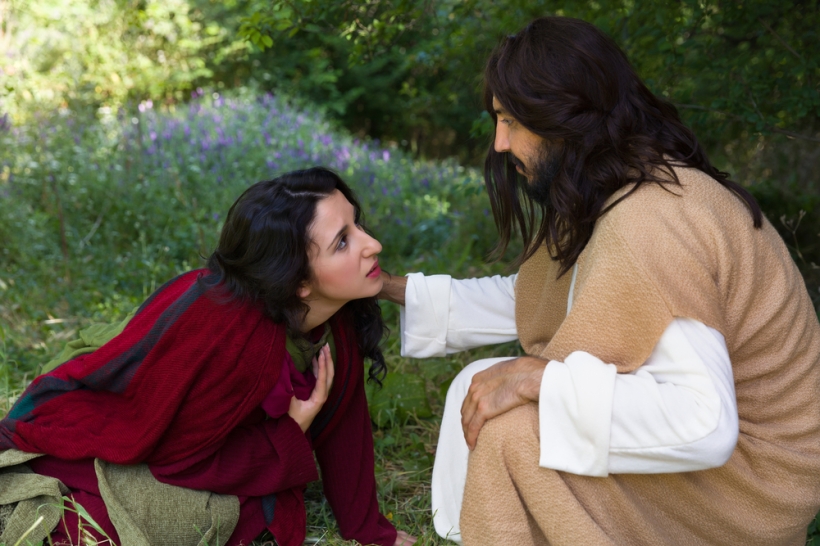
We live in interesting times. We have taken for granted for a long time in the United States that we are a Christian nation. Christians are fighting through political means and social media to convince this country of those origins and to hold on to them. This is a fight that began in my memory back in the 80’s, and maybe even before that.
In my opinion, we have moved past those Christian origins. Perhaps, the minute we had to start fighting to preserve that legacy we had already lost the fight. I am not sure we will ever go back, short of a revival orchestrated by the Holy Spirit.
Current attitudes in popular culture and among the intellectual elite in the US view the Christian heritage negatively, to the extent that people admit we have a Christian heritage. People view Christians as privileged, wielding power and oppressors. This is the cultural Marxist dialectic that has been playing out since at least the 70’s and maybe before that. We are losing the cultural war.
The positive connotation that went with the word, Christian, in our past has been replaced with a negative. This has largely happened in my lifetime.
Christians have not always deserved the positive connotation that unquestioningly followed the reference, Christian, in the past. Neither do Christians deserve the negative assumption that is evident today. While people may have previously distinguished the errors and failures as departures from the actual message of Christianity, that “nuance” (not that it is very nuanced) is largely lost today. Moderns increasingly equate Christians with those errors and failures. The exceptions have swallowed the rule.
We (Christians) need to be mindful in this realization that we can be guilty of the same failure to recognize the distinctions and nuances in “others” as well. Most Muslims, for instance, are not terrorists. Most feminists, gays, transgender people and others who do not see the world as we do are just trying to find meaning and purpose, healing from their pain and happiness in life. They aren’t the enemy. They are people Jesus died for.
But, I digress.
Christians are the most oppressed religious group in the world today, but you wouldn’t know it in the United States. It isn’t the kind of news that gets published (often) or that anyone wants to hear. It doesn’t fit the current narrative on Christianity that has developed in the west.
It may be that people don’t want to hear it because Christians have had it pretty easy. Christians in the US are viewed as the reigning social oligarchy. The consensus that has building for some time is that Christianity needs to be toppled from it privileged position.
Indeed, Christianity has enjoyed a long and enduring influence in the west, and especially in the US, unlike most other areas of the world, but Christians are now on the defensive as the “others” renounce allegiance and demand recompense. It seems to defy common understanding in the United States to consider Christians an oppressed group.
That privilege doesn’t exist in most other parts of the world where, ironically, Christianity is now growing fastest. While the Church in the US is losing ground rapidly to “the nones”, Christianity is growing fastest and gaining ground most in countries in which the environment is harshest and most hostile to the message of Jesus.
Maybe this is a reflection of the difference between the Gospel of Jesus and the institution of the Church – the difference between the simple message of the Gospel and the burdensome structure of religion. Just as “others” no longer understand the difference between the Gospel message and the errors and failures of the Church, equating and conflating the two, the Church in the US has largely lost its way, no longer shining like a bright light on the hill Jesus intended.
The vestiges of Christian power and influence are evident everywhere, but it is a blighted and obsolescent infrastructure that is crumbling and washing away. The cultural momentum that is gaining steam threatens to displace it altogether from its place of position in the social commonwealth. The current oligarchs in that marketplace of ideas threaten to oust the Christian voice and banish it from the public square.
As I survey the voices I hear, what I see that is being opposed is the voice of Christian power and influence. It isn’t so much the Gospel, but all the infrastructure that has been built up around it, that people are opposing. People don’t (very often) object to the simple message of the Gospel, They don’t even know or appreciate what it is! The message of the Gospel is effectively hidden behind the more public scaffolding of the Church.
Continue reading “For the Shame of the Gospel”

 Navigating by Faith