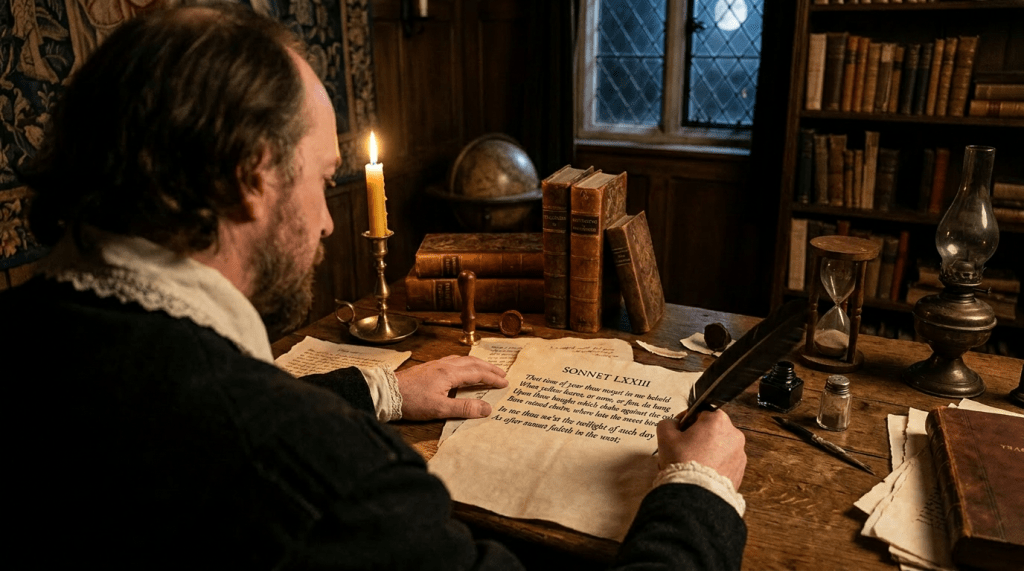
I have been listening to Pensées by Blaise Pascal, who has become a favorite philosopher, theologian, and thinker for me. I resonate with his sentiments about reason and intuition in particular. He was brilliant in science, mathematics, and theology – way ahead of his time. He lived during the initial headwind of the Enlightenment. He was a contemporary of René Descartes, yet he was able to remain objective. He wasn’t swept up in the current of the Enlightenment. He managed to remain aloof from it.
I am inspired to think of death today from my reading of Pensées. Death is the great equalizer. It will come to all of us. The longest-lived among human beings may live to be 110. Most of us will not see 100 … or even 90; and many of us will not see 80 or 70 or even 60. Try as we might, we do not control our fate. We will die, and that reality is inescapable.
Pascal talks about the people who distract themselves from the reality of death. I suppose it’s natural to want to ignore something that is as grim as death. We can’t add a day to our lives by worrying and being anxious about it. Yet, anxiety about death is also natural for the same reason – we dread it, but we can’t avoid it.
I imagine that my cat has never thought a day in its life about the fact that it will die, but I have rationality, consciousness, and awareness of myself that my cat does not seem to have, certainly not in the same measure. To the extent that we have that ability, it seems to me that ignoring the reality death that we can certainly grasp is to be something less than human. To ignore the reality of death is, therefore, beneath us. It denies the qualitative difference between us and other animals.
The proverbial deer standing frozen in the headlights of a hurtling vehicle has little idea of the imminent impact those headlights impend. Like the deer we might shut our minds off in the grim headlights of death … but we know better. The deer doesn’t know any better.
Not that we should have any pride in the fact that we have greater capacity than the other animals. It wasn’t anything we did. It simply is what it is.
Thus, to live into our capacity seems only fitting. Our anxiety about death is fitting for creatures with rationality, consciousness, and awareness of themselves.
I was first impressed about this humanly poignant characteristic – preoccupation with death – in college as an English Literature major. Death was the subject of many a novel, sonnet, and other forms of literature. Death is a common theme across the literary ages. The desire to escape the inevitability of death runs strong in creative and artistic minds living into the fullness of what it means to be human.
It was in a class on William Shakespeare, focusing on the sonnets, that the reality of the creative preoccupation about death crept into my own awareness. In that same time period, I must have been reading Ecclesiastes, because I associate Ecclesiastes 3:11 with that time in my life. Indeed, it has become my favorite verse in the Bible:
“For God has made everything beautiful in its time, and eternity has been set in the heart of man, but not so that he could see the beginning from the end.”
We do live in a world full of beauty, even if the world is also full of pain, struggle, and anxiety. The contrast between beauty and the ugliness of pain and death does not escape us. Ultimately, these things are painful reminders of our own finitude that we would rather not face.
To put it in biblical fashion, the reality is that we are like a mist. We are like a flower that blooms one day and dies the next. Like the writer of Ecclesiastes said, “Everything is meaningless” in a world like that.
In that sense, we are no better off than the animals. From dust we were born and to dust we will return. We end up in the ground just like they do.
Everything that we accomplish fades into other people’s memories when we die. Most if not all of those memories will long be forgotten in a few generations. The things we accumulate that do not rust or rot while we live will be left to rust or rot for someone else. In more modern, poetic terms, no one tows a Cadillac to the grave.
And yet, the very fact that we wrestle with the poignance of death is something that arouses hope. This was the realization I made in that class on Shakespeare.
Why do we even care? Why does it even enter our mind to be anxious about it? Why aren’t we, like my cat or a deer in the headlights, clueless about it? The fact that we think about it and long for a different reality suggests the possibility of such a reality.
Ecclesiastes is full of existential angst, but the light of verse 3:11 dawned on me for the first time in that college class on Shakespeare: “eternity has been set in the heart of man….”
For the first time, I realized that death has been a preoccupation of mankind since we lived in caves. I wondered whether mankind’s relentless wrestling with death means that there is some reality to eternity – because God gave us some inkling of it?
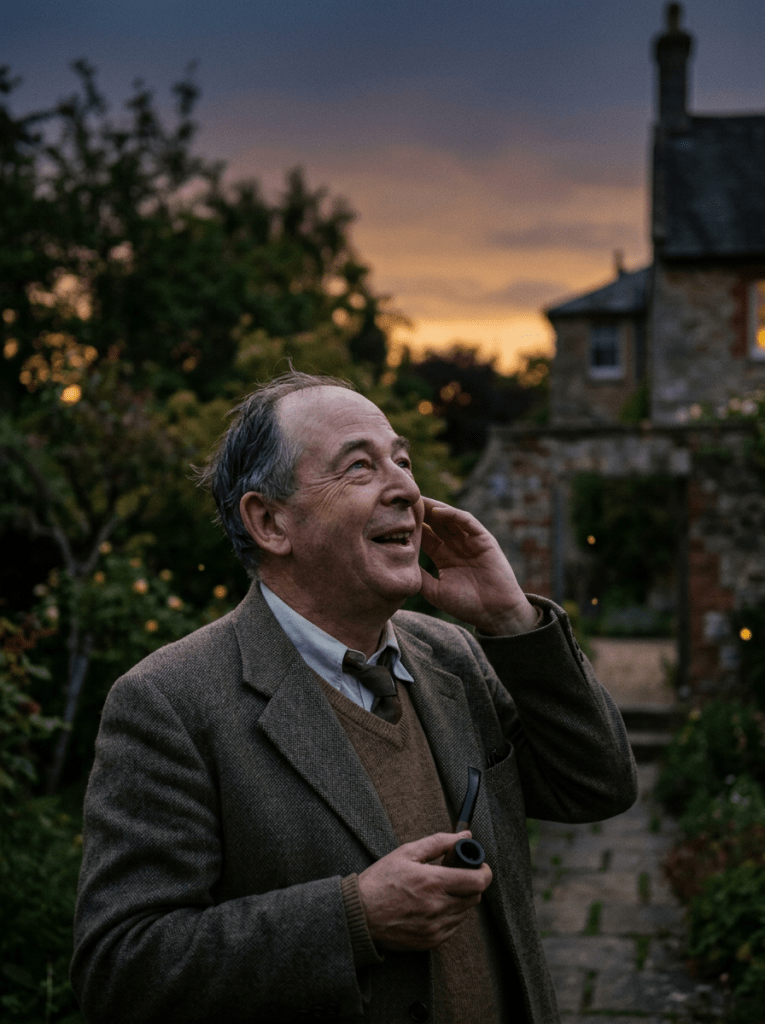
Since that time I have become familiar with C.S. Lewis’s “Argument from Desire.” Lewis reasons from the existence of natural desires that correspond to objects that can satisfy them. The universal experience of innate desire that nothing in this world can fully satisfy, suggests the reality of an object, perhaps, not of this world that can satisfy that desire. He famously makes the point this way in Mere Christianity:
“Creatures are not born with desires unless satisfaction for those desires exists. A baby feels hunger: well, there is such a thing as food. A duckling wants to swim: well, there is such a thing as water. Men feel sexual desire: well, there is such a thing as sex. If I find in myself a desire which no experience in this world can satisfy, the most probable explanation is that I was made for another world.”
Lewis was not talking about ordinary wants, such as wishing to be rich or famous. He had in mind a peculiar longing that he called “Joy” (with a capital J). He meant by Joy a profound longing for beauty, meaning, transcendence, or home. It was a fleeting experience triggered sometimes by music, sometimes by nature or literature, a memory or love. Such “Joy” was at once intensely desirable, yet ever elusive. It fade to an elusive longing the moment one becomes aware of it.
For Lewis the experience itself was not the thing desired. The desire itself pointed beyond it to something else. The very sunset, music, or love that aroused the longing did not satisfy it, leaving a longing for something intimate, but just beyond us.
This longing for transcendence is a natural and universal desire. Where does it come from if there is nothing in this world to correspond with it? No object for that desire? Lewis reasoned there must be some real fulfillment corresponding to the longing we have for it.
This reality is expressed throughout scripture, not just in Ecclesiastes 3:11. “As the deer pants for streams of water, so my soul longs for you, my God.” (Psalm 42) “My soul thirsts for God.” (Psalm 63) The men and women of faith are described in Hebrews 11 as people looking for ‘a better country, a heavenly one,” when they died. (Heb. 11:13-16)1 That very longing is what merits them the description of people of faith.
The desire for life after death is not just evidenced in great literary works. The same desire animated primitive people groups in their religious rituals and burial practices from the beginning of human history. It still animates the best and the brightest minds who plow the fields of transhumanism, medicine, and AI for hidden secrets to our longing for eternity.
The desire for life after death motivates all religious instinct. It is the object of our desire offered to us in Christianity. As Paul the Apostle said, “If Jesus was not raised from the dead, we of all men are the most hopeless.” The hope of for fulfillment of our greatest longing is fueled by his resurrection. If he was not resurrected, the object of our hope is fleeting, illusory, empty.
Why, then, the longing for it?
As I think about these things, it occurs to me that without such a hope, we have two choices in the way we deal with that reality. We either distract ourselves from thinking about it at all, or we resign ourselves to the gnawing angst that we will cease to exist.
For this reason, many of us have resigned ourselves never to think on such things and to distract ourselves from any thought of death that might threaten to sneak in. It’s an endless and a futile task, especially as we age. The alternative – of living life in the perpetual throes of the anxiety about death – is hardly a more palatable option.
But there is another way. Just as I seized on the idea that our very preoccupation with death and longing for eternity suggests the hint of another reality than can satisfy tht longing, I have found living hope in the death and resurrection of Jesus.
That we have four written accounts from different perspectives of the life, the death, and the resurrection of Jesus of Nazareth grounds that hope in a historical framework. Paul, the apostle, identifies in 1 Corinthians 15 many people who claimed to see Jesus alive after his death on the cross, including an appearance to 500 people at one time.2
For those people who hope in Jesus, the inevitable threat of impending death, regardless of how closely it looms, is not something from which we must find distraction at all costs or live in the clutch of anxiety. “O Death! Where is your sting?”3
Because of that hope, we do need to distract ourselves from the inevitability of death, filling our hearts and minds up with mindless amusements and empty, trivial pursuits. Nor do we need to be overanxious, allowing that looming darkness to swallow up joy or meaning in this present life.
Rather, it frees us to live each moment to its fullest, to appreciate the joy in the present despite whatever pain we experience, including the anxiety of the specter of death. There are those who are not afraid of death, who even welcome the thought of it, and in the very welcoming of the thought of death, are released to live life more fully in the present.
I am grateful for the juxtaposition of that class on Shakespeare’s sonnets with my reading of Ecclesiastes, where these things first took root in my mind and my heart. I can confront the meaningless vanity of the finitude of my life with all of its pain and sorrow, regret, unfulfilled longing and frustrated desire, knowing that death for me is not an end to a a very short and fragile life. It looms as the beginning of a reality, the existence of which I sense in my heart, where unfulfilled longings are finally and completely satisfied.
And in that hope, I am able to live with the pain that I have. My regrets do not threaten to undo me. My imperfections, my failings, my unfulfilled longings do not define who I am. I am able to rise above them in the moment, knowing that they will be shed when the perishable seed of my present life takes on the imperishable seed of my ultimate destiny.4
I do not have to be afraid of failure. I can take the risk of living into the best version of myself, knowing that the failures will not inevitably define me. That tomorrow will come like another day. That the arc and sweep of my life will not have a dark end and fade out of memory. That I will arise to a new morning light in which possibilities still exist and hope never dies.

~~~~~~~~~~~~~~~~~~~~~~~~~~
- “All these people were still living by faith when they died. They did not receive the things promised; they only saw them and welcomed them from a distance, admitting that they were foreigners and strangers on earth. People who say such things show that they are looking for a country of their own. If they had been thinking of the country they had left, they would have had opportunity to return. Instead, they were longing for a better country—a heavenly one. Therefore God is not ashamed to be called their God, for he has prepared a city for them.” ↩︎
- “Now, brothers and sisters, I want to remind you of the gospel I preached to you, which you received and on which you have taken your stand. By this gospel you are saved, if you hold firmly to the word I preached to you. Otherwise, you have believed in vain.
For what I received I passed on to you as of first importance: that Christ died for our sins according to the Scriptures, that he was buried, that he was raised on the third day according to the Scriptures, and that he appeared to Cephas, and then to the Twelve. After that, he appeared to more than five hundred of the brothers and sisters at the same time, most of whom are still living, though some have fallen asleep. Then he appeared to James, then to all the apostles, and last of all he appeared to me also, as to one abnormally born.” (1 Corinthians 15:1-9) ↩︎ - “Listen, I tell you a mystery: We will not all sleep, but we will all be changed— in a flash, in the twinkling of an eye, at the last trumpet. For the trumpet will sound, the dead will be raised imperishable, and we will be changed. For the perishable must clothe itself with the imperishable, and the mortal with immortality. When the perishable has been clothed with the imperishable, and the mortal with immortality, then the saying that is written will come true: ‘Death has been swallowed up in victory.’
‘Where, O death, is your victory?
Where, O death, is your sting?’”
(I Corinthians 15:51-55) ↩︎ - “So will it be with the resurrection of the dead. The body that is sown is perishable, it is raised imperishable; it is sown in dishonor, it is raised in glory; it is sown in weakness, it is raised in power; it is sown a natural body, it is raised a spiritual body.” (I Corinthians 15:41-44) ↩︎


As usual, this is really moving and thoughtful. It doesn’t just explore death. It gently turns it until you’re looking at hope on the other side of it. I especially appreciate how you bring together Pascal, Lewis, and Scripture in a way that feels lived, not just studied. Thanks Kevin.
LikeLiked by 1 person
Thank you.
LikeLiked by 1 person