I am reminded often that God’s faithfulness is new every morning, and God’s faithfulness is the subject of my inspiration today. I am going to start my meditation with the Euthyphro dilemma – a strange place to begin, maybe, but it sets the stage for some thoughts I have on faithfulness.
The Euthyphro dilemma poses a seeming conundrum: Is God good because He determines what is good as a matter of fiat, or is God good because goodness is objectively required of God just as it is required of us? In other words, does God arbitrarily establish what is good, or is God subject to what is good?
Of course, this is a false conundrum. It assumes there are only two possibilities: that God arbitrarily establishes what is good or that God is subject to what is good.
There is at least a third possibility—that good is determined by the very nature of God. Good is simply a description of who God is. Faithfulness is good because God is faithful, and the virtue of faithfulness is a reflection of God’s very character.
If we take the Bible for our revelation of God, His faithfulness always is, always was, and always will be. It’s not as if God actually trots out a new dose of faithfulness every morning. The saying is poeti:c that God’s faithfulness is new every morning. We experience God’s faithfulness anew every morning.
It dawns on me, though it shouldn’t come as any revelation, that God desires us to be like Him. As our Father, He is proud of and appreciates when His children emulate Him. Just like the child who is proud of her father and wants to be like him, pretends to be him in play because she loves him and honors him in her heart, we are grateful for God’s faithfulness, and we seek to be faithful like Him.
If God is faithful and His faithfulness is new to us every morning, as the psalmist says, then we should desire to be like Him in faithfulness in our own lives. We should desire to be like him in this way.
I am aware that the virtue of faithfulness isn’t the most exciting virtue we could adopt. Faithfulness, perhaps, doesn’t get the kind of attention that faith, hope, and love get, for instance. But where would we be without the faithfulness of God, who gives His word and keeps His promise? Whose yes is yes and no is no. Where would we be if His faithfulness was not new every morning? If we could not count on His grace? If we were uncertain that God would keep His promise to us?
I think of the commands God gives us and how they reflect His faithfulness: keeping the Sabbath, honoring our mother and father, keeping our vows, pledging our hearts to one woman or one man, raising our children and not abandoning them, committing to make our yes be yes and our no be no. A person mirrors the goodness of God in being faithful in his or her own life.
We should not minimize the value of faithfulness. We should celebrate and exalt it because our God is a faithful God. Because God is faithful, we have faith and hope. Because God is faithful to love us, we can be faithful to love others.
We love because God first loved us. We are faithful – and we can be faithful – because God was first faithful to us. Everything that is good flows from God and everything that is good returns to God.
God is good and faithful to all people – even to people who do not believe in Him, people who do not honor Him, and people who are not grateful for His faithfulness. This is called common grace. “He causes his sun to rise on the evil and the good, and sends rain on the righteous and the unrighteous.” (Matt. 5:45)
When I read Paul’s words – that “God’s invisible qualities—his eternal power and divine nature—have been clearly seen, being understood from what has been made” (Roman’s 1:20) – I think about His faithfulness seen in the common grace revealed in all the things science discovers:
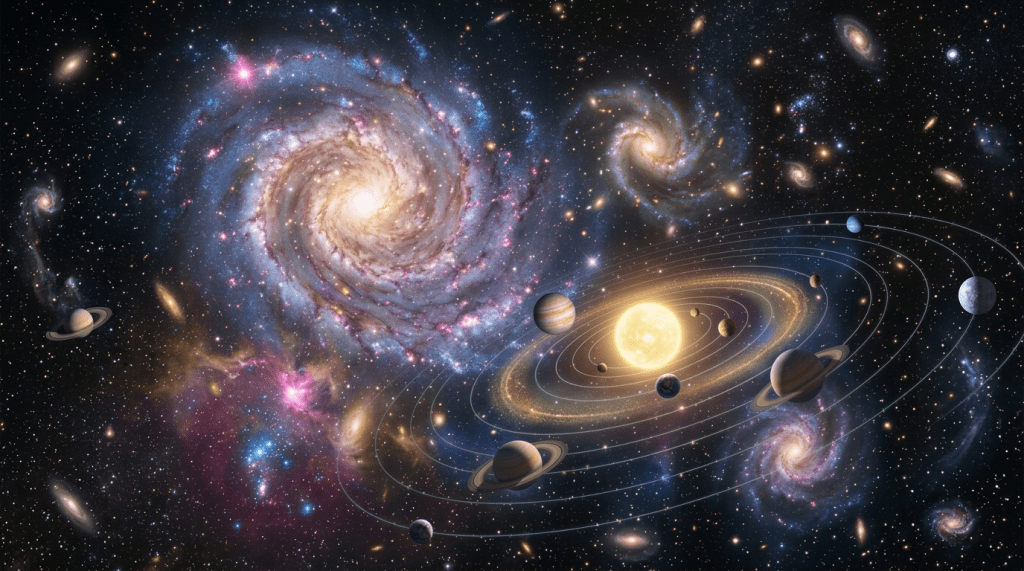
The universe is governed by a handful of fundamental forces—the strong nuclear force, the weak nuclear force, electromagnetism, and gravity. These forces operate with exquisite consistency throughout the observable universe.
From a theological perspective, the fact that gravity works today exactly as it did yesterday and millions of light-years away can be seen as a reflection of God’s faithfulness. Science, itself, depends upon the assumption that nature behaves consistently; without that assumption, scientific inquiry would be impossible. These things all flow from God’s character, from His faithfulness.
“You have established the earth, and it stands fast. By your appointment they stand this day.” (Psalm 119:90-91)
The physical constants of the universe appear to lie within narrow ranges that permit complex matter, stars, chemistry, and life. Without them, no life would exist in the universe – we would not exist.
Even small changes in the gravitational constant, the cosmological constant, the ratio of proton to electron mass, the strength of the strong nuclear force, and many other constants that apply in our universe would prevent life-supporting structures from forming. Many people have noted the many constants set to various parameters in the universe that together make it possible for life, observing that a slight difference in any one of those many parameters would make life in the universe impossible.
“Our whole Universe is governed by just six numbers, set at the time of the Big Bang. Alter any one of them at your peril, for stars, planets and humans would then not exist.”
Recipe for the Universe, by Sir Martin Rees, Astronomer Royal (in First Science, 1999)
“The laws of science, as we know them at present, contain many fundamental numbers, like the size of the electric charge of the electron and the ratio of the masses of the proton and the electron…. The remarkable fact is that the values of these numbers seem to have been very finely adjusted to make possible the development of life. For example, if the electric charge of the electron had been only slightly different, stars either would have been unable to burn hydrogen and helium, or else they would not have exploded…. Nevertheless, it seems clear that there are relatively few ranges of values for the numbers that would allow the development of any form of intelligent life.”
A Brief History of Time, by Stephen Hawking (Bantam Books, 1988)
Life, itself, would not be possible without the many, exquisitely fine-tuned parameters that exists in our universe. These finely-tuned constants are not only evidence of design; they display God’s faithfulness in the ordered creation.
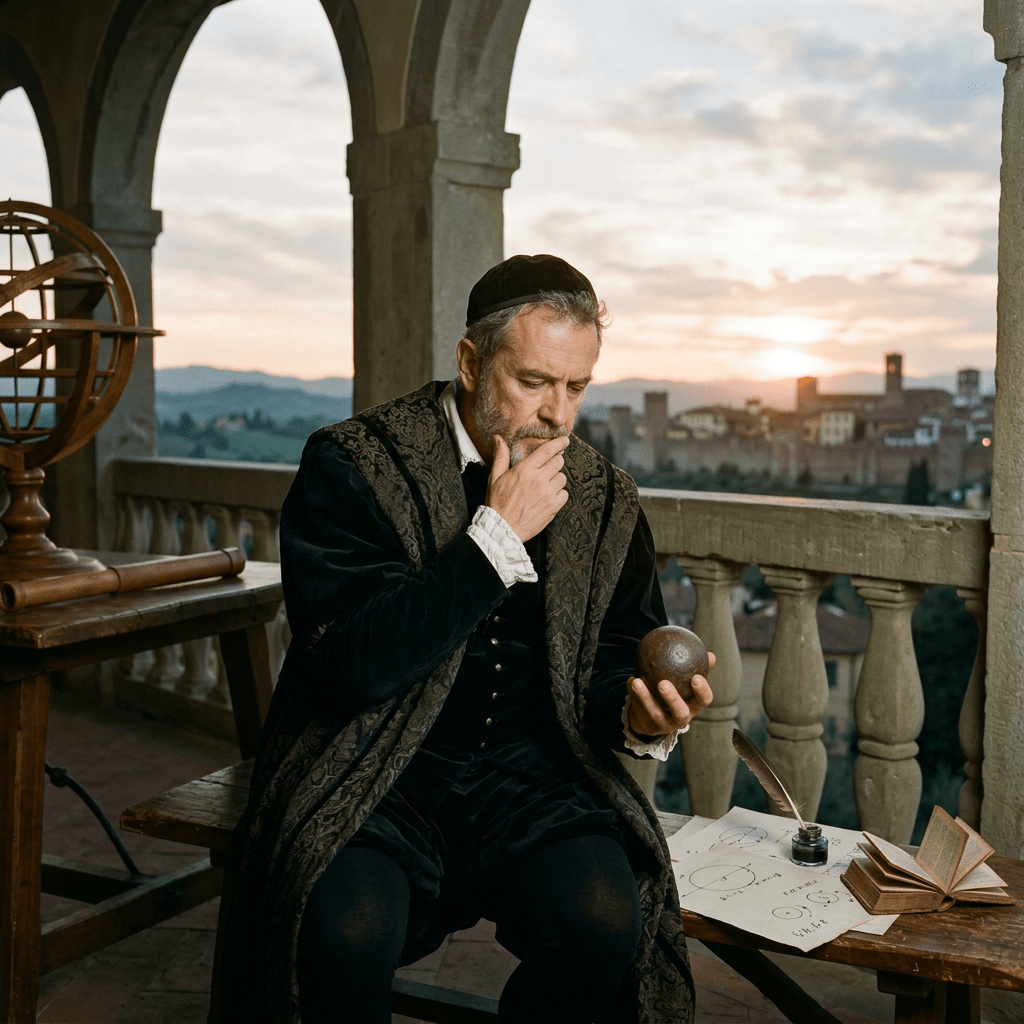
The movements of planets, moons, and stars are so regular that eclipses can be predicted centuries in advance. Johannes Kepler was able to map out astronomical events in 1627 – like planetary positions, eclipses, and conjunctions – with such amazing precision that his timeline still holds true today.
Ancient peoples often viewed the heavens as chaotic or governed by capricious deities, but modern astronomy reveals that they operate in such extraordinary order that we can predict their precise occurrence in time far in advance of them happening. This reliability reflects God’s faithfulness despite the ways in which the universe seems chaotic at times.
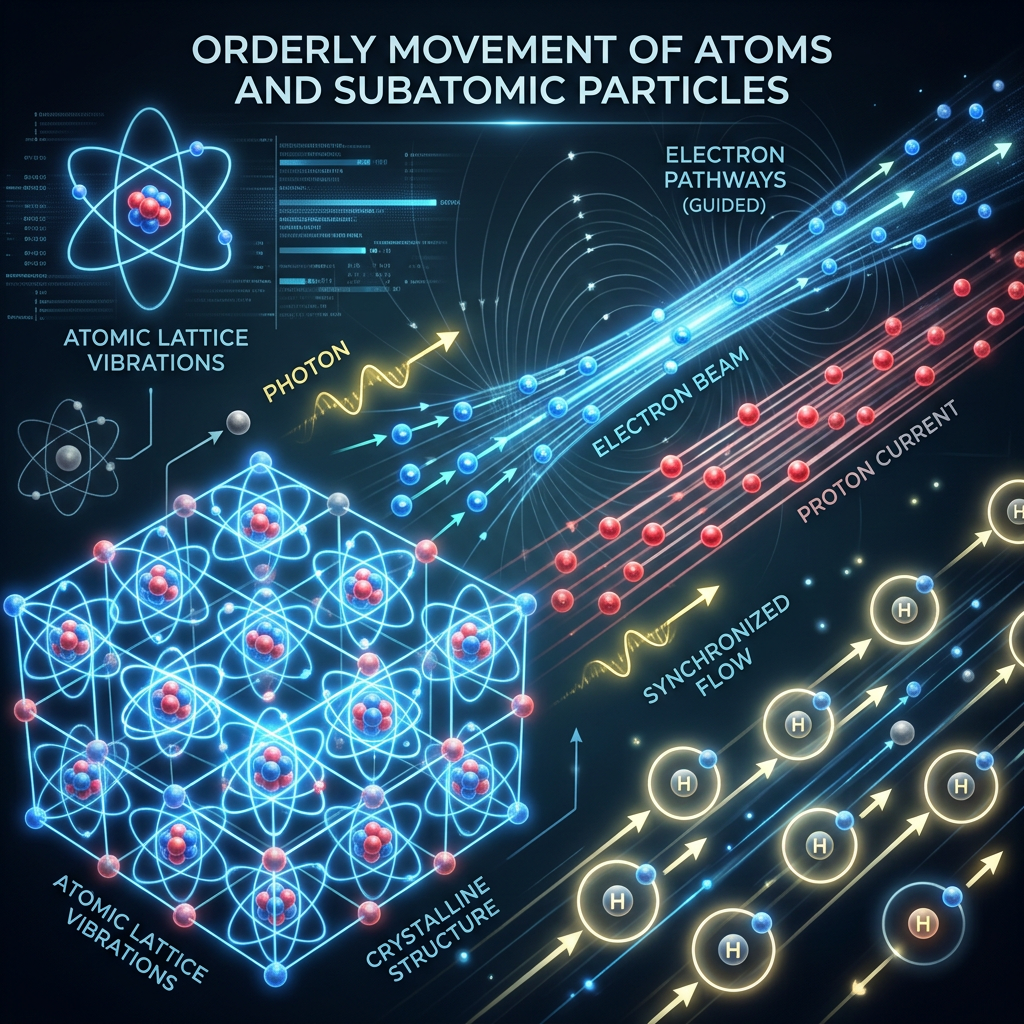
Atoms are stable because physical laws operate consistently. Electrons occupy predictable energy levels. Chemical bonds form according to dependable principles. As a result water remains water, carbon forms complex molecules, and biological systems function reliably. Every living thing depends on this atomic stability, and atomic stability reflects the faithfulness of God.
One of the great mysteries of science is that mathematics so accurately describes the physical world. Albert Einstein famously said, “The eternal mystery of the world is its comprehensibility.” That 2 + 2 always equals 4, and the “miracle of the appropriateness of the language of mathematics for the formulation of the laws of physics” (Eugene Wigner) is something we can quite literally count on.
Mathematics and its correspondence to the laws of physics reflects a rational Creator whose orderly wisdom is embedded in creation. Without the order and reliability of mathematics and it correspondence to the natural world, the universe would not be intelligible, predictable, or dependable. The reliability of mathematics reflects a faithful God.
Fundamental principles like the conservation of energy, the conservation of momentum, and the conservation of charge govern nature. These laws hold true across the universe and throughout time. Rather than a world that randomly gains or loses order, we find a cosmos operating according to stable principles that reflect a good and faithful God.
Science explains the biological and ecological mechanisms behind agriculture, but the regularity itself remains remarkable. Earth’s orbital stability, axial tilt, climate systems, water cycle, and photosynthesis all contribute to the dependable rhythms that make civilization possible. These dependable ecological mechanisms also speak of the faithful character of God.
Light from distant galaxies reveals that the same chemistry operating on Earth operates billions of light-years away. Hydrogen behaves the same everywhere. This suggests a universe governed by one coherent order rather than many competing principles.Theologically, this resonates with biblical monotheism: one Creator, one creation, one sustaining will. One God whose character includes faithfulness.
The Sun has provided a relatively stable energy output for billions of years. Modern astrophysics shows that stars are governed by highly regular nuclear processes. Earth’s habitability depends on this sustained stability. A small increase or decrease in solar output over long periods would dramatically affect life. From our perspective we view this regularity as the sun “coming up” every morning.

Jesus used the sun as an example of God’s common grace – a picture of his faithfulness – even to people who do not acknowledge Him. Jesus used the rain falling on the just and the unjust as another example of God’s common grace. Evaporation, condensation, precipitation, and runoff operate continuously across the globe. Science explains these mechanisms, but the regularity of the process is remarkable in its ability to sustain life throughout human history.
The Bible’s concept of God’s faithfulness is not merely that He keeps promises to individuals. It is also that He sustains the created order. Jeremiah uses the regularity of creation as an analogy for God’s covenant faithfulness:
“If you can break my covenant with the day and my covenant with the night, so that day and night will not come at their appointed time, then also my covenant with David my servant may be broken…”
(Jeremiah 33:20-21)
In other words, Scripture points to the very features that science studies—the regularity of nature, the consistency of physical processes, the stability of the heavens—as visible testimonies to God’s enduring faithfulness. Science does not prove that theological conclusion, but it continually uncovers new dimensions of the order, reliability, and intelligibility of creation that Christians acknowledge as fitting expressions of the faithful character of God.
All God’s creation operate on law and order that reflects the faithfulness of God. Human beings – His crowning creation – have a choice. We can choose to be faithful as God is faithful for the benefit of those who depend on us. Or we can choose to be faithful only to our own ends. We honor Him when we are faithful as He is – when our yes means yes, and our no means no.


What a rich meditation on faithfulness. I loved the connection between God’s unchanging character and the stability we see throughout the universe. It gives such a sense of awe at God’s sustaining power.
LikeLiked by 1 person