God Meets Us Where We Are: But Will You Know Him When You Meet Him?

If your eyes are unhealthy, your whole body is full of darkness


About 5 years ago, I wrote God Meets Us Where We Are. I was impressed then (and I still am) that God who created the Universe stoops to come to us. I was also impressed that finding God is not so much about our seeking, but about our opening up to God Who is ever present to us, but never overbearing.

God seems hidden to many people. If we do not really want to see Him as He is and to embrace Him for Who He is, we may never know He is “there” at all.

When we act contrary to God’s character, our sin hides God from us. (Isaiah 59:1-2) The Prophet, Micah, says God “hides his face” from people, even when they cry to Him, because of the evil, the bad, the harm we do. (Micah 3:4)

The “evil” Micah is talking about in this chapter is injustice – the way we treat other people. The “leaders of Jacob” to whom he was talking were taking advantage of their own people for their own benefit. When people do that, they will cry out to God, but God will not respond.

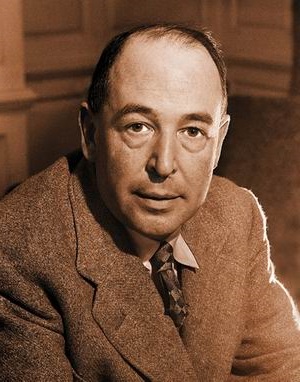
CS Lewis called God the Great Interferer in his autobiographical book, Surprised by Joy. He didn’t want God to exist. He didn’t want to be interfered with. “He wanted to be left alone, and unconsciously knew that if he denied the existence of some Ultimate Authority, then he himself would be that very authority in his own life. Thus, he could live his life according to his own desires.” (Christ the Great Interferer)

When we live to satisfy our own desires, often at the expense of others, we act out of character with God, and we are blinded by the thrust of our own actions from seeing God. He allows our conduct to separate us and hide us from Him because God does not reward our bad behavior.

“The eye is the lamp of the body. If your eyes are healthy, your whole body will be full of light. But if your eyes are unhealthy, your whole body will be full of darkness. If then the light within you is darkness, how great is that darkness!”

Matthew 6:22-23

God desires us to know Him as He is and to desire to be like Him. When we acknowledge our wrong ways (sin) and turn (repent) from them, God is quick to meet us “there”. When we confess our sins, He is just and faithful to forgive us! ( 1 John 1:9)

That is what He is waiting for, but we must come to Him honestly. He isn’t handing out “get out of jail cards” for free. He wants us to desire Him and to desire to be like Him; He isn’t interested in appeasing your conscience for the moment so you can feel better about what you have done and what you will do in the future.

God has given us each other as the testing ground. As Micah indicates, how we treat others determines whether God is hidden to us. Jesus said as much in the Parable of the Sheep and the Goats. “‘Truly I tell you, whatever you did for one of the least of these brothers and sisters of mine, you did for me,'” (Matt. 25:40) and “‘Truly I tell you, whatever you did not do for one of the least of these, you did not do for me.’” (Matt. 25:45)

It seems to me that God designed the world as He did because God desires relationship with people who desire Him, and He provides us a testing ground for that relationship in other people. God will not force Himself on anyone who does not want to know Him – at least for the time being.

There will come a day when our lives end in the natural course or by circumstance that God does not control. Having set His universe in motion, He rarely interferes. Too much interference would frustrate His purposes.

There will also come a day when the time for human seeking is over, when this Project Earth has come to its appointed end, when the time for ultimate redemption and the perfection of God’s purposes is at hand. At that time – when all people see “the Son of Man coming in a cloud with power and great glory” (Luke 21:27) – it will be too late for any seeking

As the Apostle Paul said, “I tell you, now is the time of God’s favor, now is the day of salvation.” (2 Corinthians 6:2) The writer of Hebrews repeats three times for us: “Today, if you hear his voice, do not harden your hearts.” (Hebrews 3:7-8; 3:15; and 4:7)

God is with us now, and the time of His favor – to seek Him and find Him – is now. There are no guarantees for anyone. In fact, the only guaranty is that our time will end: either at our own natural or untimely death or when day of the Lord comes and the time for choosing is over. Do not harden you heart. Now is the day of your salvation.


How Does the Tower of Babel Fit into God’s Plan for People to Love Him and Love Our Neighbors?

Our frustration, toil and separation from other people are not contrary to the purposes of God, but part of the plan.

The story of the Tower of Babel is included in Scripture for a reason, right? So, Why is it there? How does the tower of Babel fit into God’s redemptive plans and purposes?

These are questions we should think to ask. In fact, Scripture is designed, according to Hebrew thinking, to invite us to ask questions.

Western thinking might assume that we just take things on faith and don’t ask questions. Or the opposite: take it at face value and dismiss it when we find problems (“contradictions”) in the text. The biblical texts, however, are inherently Hebrew (“eastern”) in their assumptions, and we lose something if we do not understand that.

God wants us to seek Him, and that includes asking questions of Scripture, wrestling with it, and finding answers to our questions. We don’t exhibit a lack of faith when we find “problems” in Scripture and ask questions. Our faith propels us forward to wrestle with the text and seek answers through study, prayer, and the guidance of the Holy Spirit.

We can hold to a high view of Scripture and admit there are “problems” in the text. Those problems can lead us to some real gems in the answers they reveal.

God desires us to seek him and find him, as Paul says to the philosophers in Athens. (Acts17:27) Jesus, of course, promised that those who ask, seek, and knock will be answered, will find, and the door will be open to them. (Matthew 7:7) Faith is evident when we use the problems we see as the springboard to seek answers.

I recently wrote an article on the Tower of Babel story exploring some of the questions it invites us to ask, and trying on answers that are suggested by a more eastern (Hebrew) mindset than most westerners might be adopt.

One question we might ask is: why is the story there to begin with?

We might assume the story is simply an explanation for how people became scattered all over the world in different language groups. If that is all we get out of the story, though, we miss the most important meaning. If we stop there, and assume there is no more to the story, we may be missing the most important part of the story!

A Hebrew (or eastern) mind always asks, “Why?”

I resonate with this basic practice incorporated into the BEMA Podcast because of a Jewish professor I had in college. He explained one day the difference between the western and eastern approaches to Scripture. He illustrated it with the following example.

If the universe consisted of a chair in a room, people with western minds and eastern minds would approach the room differently. The westerner would measure the height, width, depth and mass of the chair. He would weigh it and measure the distance of the chair from the walls and the ceiling. The easterner (the Hebrew) would start by asking, “Why is the chair here?”

In my previous article, I discussed how the story is a chiasm (a type of poetry). A chiasm puts emphasis on the middle verse. In this story, the emphasis falls on the people’s desire to “make a name for ourselves” because “otherwise we will be scattered over the face of the earth”. (Gen. 11:4)

Why were they concerned about being scattered? Why does God care? What is God doing in confusing their languages and scattering them?

For starters, God does not break into the story, yet, when they are making bricks. We might assume, therefore, that God isn’t threatened or concerned about their development of new technology. He doesn’t break into the story until they say they are going to build a tower to make a name for themselves.

We also need to be mindful, always, of context. The context here is that people are moving away from God, away from his plans. (Moving east.) God wanted them to multiply and fill the earth, but they wanted to put down roots in the plains of Shinar (Babylon), lest they be scattered, and build a tower to exalt themselves.

God’s plan was to have them “multiply and fill the earth”. This was the instruction from God to Adam and Eve. The people who built the Tower of Babel didn’t want to do that. They didn’t want to be “scattered”. They resisted, and they put down roots when they should have been filling the earth.

Building a tower to make a name for themselves, in this context, means wanting to pursue their own plans to achieve their own ends. The concern about being scattered suggests they knew they were doing their own thing contrary to God’s plans for them. They might have feared being scattered because it would disrupt their plans to exalt themselves.

Maybe they thought God couldn’t scatter them if they built a fortified tower. Maybe they were trying to make God deal with them on their own terms, in a location they established, by a structure by which they thought they could ascend to God and control where God met with them.

Of course, God did exactly what they feared, and scattered them a against their wishes by confusing their languages.

But why? Was God threatened by them?

Um…., no. God is sovereign. He created the heavens and earth, and He created these people. They were no threat to Him. So why did God scatter them?

I believe the answer lies partly in the fact that they were pursuing their own plans in exultation of themselves. God had other plans, and God frustrated their plans that were not in keeping with His plans.

That might all seem arbitrary unless we keep asking questions and seeking answers. Why were the peoples’ plans something God couldn’t abide? How did the peoples’ plans interfere with God’s plans?

What were God’s plans?

Continue reading “How Does the Tower of Babel Fit into God’s Plan for People to Love Him and Love Our Neighbors?”

To Be Known and to Fully Know God is the Great Purpose of Our Lives

To whom does God say, “Depart from me. I never knew you?”

Have you ever wondered who are the people to whom God may say, “I never knew you; depart from me”?[1] If you are like me, those words ring ominously. We might be tempted to gloss over them, because they are uncomfortable to consider, but there they are.

These words contrast with the verse that inspires this article, which informs the title to this blog piece. But first, I want to focus briefly on people whom God never knew. Jesus described them for us.

They are people who prayed to God, “Lord, Lord.” They are people who prophesied in God’s name. They are people who cast out demons and even did “mighty works” in God’s name. They are highly religious people, but they didn’t “do the will of the Father who is in heaven”. (Matt. 7:23)

What does that mean?

For starters, it means that religiosity is not a ticket to heaven. Public piety is not anything that impresses God; if anything, it may even be repulsive to Him.[2]

Power and influence and doing things that amaze people, even if done in God’s name, are not keys to heaven.  An eloquent speaker who can bring people to tears and repentance is not, thereby, assured of any place in God’s kingdom. The prophet and the teacher who speak the very word of God are not, by virtue of the gift of prophecy or knowledge, assured of eternity with God.

In the “Love Chapter” of the Bible (1 Corinthians 13), Paul says,

If I speak in the tongues of men and of angels, but have not love, I am a noisy gong or a clanging cymbal. And if I have prophetic powers, and understand all mysteries and all knowledge, and if I have all faith, so as to remove mountains, but have not love, I am nothing. If I give away all I have, and if I deliver up my body to be burned, but have not love, I gain nothing.”

1 Corinthians 13:1-3

These realities are at once sobering and liberating. Nothing we can “practice” or do will propel us into God’s heaven. We are saved by grace, though faith, of course (Eph. 2:8-9), but even faith that can move mountains is of no gain to us by itself.

And here is the kicker – not even sacrifice, not even the sacrifice of our own bodies, by itself gains us anything.

David knew this when he said, “For you will not delight in sacrifice, or I would give it; you will not be pleased with a burnt offering.” (Ps. 51:16)

Jesus said, “Greater love has no one than this, that someone lay down his life for his friends.” (John 15:13) Laying one’s life down might be considered a sacrifice, yes; but it done out of love it is more than merely a sacrifice. It isn’t the act itself that is important, but the motivation, the inspiration, the desire behind the act that matters.

Jesus is the ultimate example of love. When he sacrificed himself for our sakes, he didn’t do it to earn some heavenly brownie points. He gave himself for us out of love for us. He gave himself to us for our benefit. This is love, which focuses not one the benefit of the sacrifice to himself, but on the benefit for other another.

“For the letter kills, but the Spirit gives life.” (2 Cor. 3:6) Legalism and fundamentalism and dogmatism and doctrine and theology can never save a person. It doesn’t matter how much we do, or how much we know, or how accurate our understanding is when we have not love.

God, who we are to worship in spirit and truth (John 4:24), is love.[3] All the Law and the Prophets are summarized in this one statement: Love God above all things and love your neighbor as yourself. (Matt. 22:40) Thus, Paul says,

But if anyone loves[4] God, he is known by God.

1 Corinthians 8:3 ESV

This is the verse that got me thinking about these things today. If you love God, you are known by God. The people of whom God will say, “Depart from Me; I never knew you”, are people who don’t really love God. Their motivation was wrong.

Continue reading “To Be Known and to Fully Know God is the Great Purpose of Our Lives”

Keeping God’s Commands By Loving Him


“If you obey the commandments of the LORD your God that I command you today, by loving the LORD your God, by walking in his ways, and by keeping his commandments and his statutes and his rules, then you shall live and multiply, and the LORD your God will bless you in the land that you are entering to take possession of it.” (Deuteronomy 30:16)

This is the way the English Standard Version translates Deuteronomy 30:16, the verse of the day today in a Bible I use. I highlight the phrase that jumped out at me today, the one I have been contemplating since I read it this morning.

When I went looking for some deeper meaning, I found the other translations take it in a slightly different direction:

“For I command you today to love the LORD your God, to walk in obedience to him, and to keep his commands, decrees and laws….” (NIV)
“I command you today to love the LORD your God, to walk in His ways and to keep His commandments and His statutes and His judgments….” (NASB)
“I command you today to love the LORD your God, to walk in His ways, and to keep His commandments, His statutes, and His judgments….” (NKJV)

Only one the English Standard Version instructs us to obey the commandments of God “by loving the Lord….”.  Most of the time I believe we think about loving God by obeying His commands – not obeying God’s commands by loving Him. It’s a subtle difference, but it piqued my curiosity further.

I also discovered that the Hebrew word for love in this verse is “aheb”, which means (not surprisingly) “to love”. But it dawned me as I looked at the other verses in which that word is used that it seems to mean to love with affection. Abraham loved Isaac (Gen. 22:2); Isaac loved Rebekah (Gen. 24:67); Isaac loved Esau (Gen. 25:28)(more than Jacob); Rebekah loved Jacob(Gen. 25:28) (more than Esau); Isaac loved the “savory meat” that Esau provided (Gen. 27:4); and Jacob loved Rachel (more than Rachel’s sisters that his father-in-law insist he marry first) (Gen. 28:18).

Clearly, all of these uses of the word for love used in the commandment in Deuteronomy to love God imply a kind of personal affection, even to the exclusion of affection for other things (or people). Thus, we are commanded to have affection for God and to walk in His ways and keep His commandments: or, as the ESV translates, to obey God’s commands by loving Him (with affection).

The real light bulb moment today, though, wasn’t in the breaking down of this verse, but in its juxtaposition with my daily Bible reading, which is taking me currently through Numbers (after having left the detailed instructions about the Tent of Meeting in Leviticus). So many rules for the priestly duties of the Levites in connection with the Tent of Meeting and Ark of the Testimony and the altar where endless sacrifices were to be offered up have me wanting to get through these passages quickly!

And they have me asking, why? I know… they foreshadow the sacrifice of Jesus on the cross. “Without the shedding of blood, there is no forgiveness of sins.” (Lev. 9:22; Heb. 9:22) The writer of Hebrews tells us Christ has appeared, now, as the ultimate high priest, entering once for all into the holy places, securing for us eternal redemption. (Heb. 9:11-13) All the sacrifices commanded by God in Leviticus, Numbers and so on were just copies of heavenly things: “For Christ has entered, not into the holy places made with hands, which are copies of the true things, but into heaven itself, now to appear in the presence of God in our behalf.” (Heb. 9:24)

All the many sacrifices offered by the Levites at God’s commands as God’s chosen people wandered in the wilderness, carrying with them the Tent of Meeting and all of its accouterments, were just copies of the one sacrifice, “once for all at the end of the ages to put away sin by the sacrifice of himself.” (Heb. 9:26)

As I read through these passages in the Old Testament, I find myself asking, “Why?” as if I were one of them, not knowing anything about the plans of God that were devised before the foundation of the world. What were they thinking as they did these things?

Continue reading “Keeping God’s Commands By Loving Him”

CS Lewis on the “True Myth”

All myth is an attempt to shine light on truth. True Myth is the ultimate Light shining on the ultimate Truth. 

The Areopagus in Athens

“Now the story of Christ is simply a true myth: a myth working on us in the same way as the others, but with this tremendous difference that it really happened: and one must be content to accept it in the same way, remembering that it is God’s myth where the others are men’s myths: i.e. the Pagan stories are God expressing Himself through the minds of poets, using such images as He found there, while Christianity is God expressing Himself through what we call ‘real things’. Therefore it is true, not in the sense of being a ‘description’ of God (that no finite mind could take in) but in the sense of being the way in which God chooses to (or can) appear to our faculties. The ‘doctrines’ we get out of the true myth are of course less true: they are the translations into our concepts and ideas of that which God has already expressed in a language more adequate, namely the actual incarnation, crucifixion, and resurrection. Does this amount to a belief in Christianity? At any rate I am now certain (a) That this Christian story is to be approached, in a sense, as I approach other myths. (b) That it is the most important and full of meaning. I am also nearly certain that it really happened….”


This quotation is from CS Lewis in a letter to Arthur Greeves: from The Kilns (on his conversion to Christianity), 18 October 1931. It captures the thought process of CS Lewis at the point in time when he was becoming convinced of the truth of Christianity.


If you have read much of what I write, you would easily notice that I quote and reference CS Lewis often. He resonated with me in my faith journey that began in college, and he continues to resonate with me.

He is cited by more diverse groups of people than any Christian thinker, perhaps, in the 20th Century. He had a unique way of approaching things from unique points of view, often pulling fresh ideas from the dusty tomes of ancient literature. His concept of myth and True Myth is one such point (though the source is actually JRR Tolkien).

Some might consider his frequent allusions to ancient, pagan myth heretical. Some might even confuse his love of pagan myth with New Age belief, but he flatly rejected the occult. He was orthodox in unorthodox ways, but his creative approaches to orthodoxy were refreshing and thought-provoking.

We don’t have to look any further than the ultra-orthodox, Apostle Paul, to find some common ground with CS Lewis. When Paul was in Athens, some Epicureans and Stoics he met in the marketplace brought him to the Areopagus to address an erudite Greek crowd. In that address, Paul referenced an altar inscribed “To An Unknown God” and quoted pagan writers when he said:

“in him we move and live and have our being”.

Acts 17:26 (quoting a line from Cretiga, by Epimenides of Knossos)

“For we are indeed his offspring ”

Paul quoted the Cretan philosopher, Epimenides, also in Titus 1:12. Paul knew enough about pagan philosophy and poetry that he could quote from pagan works multiple times in his writings and addresses.

Paul quoted the pagan philosopher to express a spiritual truth about our lives in Christ, and Paul quoted the pantheistic poet, Aratus, to convey a theistic principle about God. (See Acts 17:22-28 – Quoting the Philosophers?) Paul connected with the people “where they were,” using language and references from the culture they understood to convey something about God.

Paul was well-read in the literature of his culture, and he used pagan philosophy and poetry to introduce people to the Gospel. This is exactly what CS Lewis does in in his own writing. Through his deep knowledge of pagan myth, he recognized strands of truth, and he recognized the difference between “man’s myth” and “God’s myth (the the “True Myth”).

In using the term, myth, Lewis is talking about story and narrative. Many stories and narratives convey a modicum of truth. CS Lewis observes that most myth from around the world contains some elements of truth, and Lewis insisted we shouldn’t be surprised by this – because truth is universal.

The difference between myth and True Myth, according to Lewis (and Tolkien), is that all other myth is a shadow of the True Myth. All myth is an attempt to shine light on truth. True Myth is the ultimate Light shining on the ultimate Truth.

All myth conveys truth through storytelling. True Myth isn’t just another story, though; it is “the” Story. It isn’t “just” myth, but reality, because “it really happened,” as CS Lewis said.

The True Myth is the Gospel. God, the Creator of the universe and everything in it, created man in His own image as His crowning creation. Then, God became a man, injecting Himself into His own creation, in order to communicate His very heart to us and to rescue us from going our own way by revealing the ultimate purpose for which God created us – to have loving relationship with God, our Creator.

Continue reading “CS Lewis on the “True Myth””