What Is Due Process, and Why Does It Matter for Christians?

Any first year law student knows the importance of due process as the basic structure of American law


The news waves are buzzing with reports of summary deportations with a mixed reaction of angst and anger on the on hand and zeal on the other hand. Social media is overtaken by the reports and the opposite reactions in a vortex of swirling vitriol.

I am as guilty as the next person of the desire to post knee-jerk reactions, I realize we need cooler heads to prevail if we are going to find a positive way forward as a nation.

The same swirling vortex of reaction is evident in the Church, even in the evangelical church, which is my “tribe”, and the same need for cooler heads to prevail exists. We also need biblical grounding and direction if we are going to maintain any sense of unity in Christ.

The latest news involves the visit to the White of El Salvadoran President, Nayib Bukele. The staged meeting of the two presidents comes in the wake of the mass deportation on March 15, 2025, of hundreds of men to a notorious Salvadoran prison known for its harsh and inhumane treatment of prisoners.

The deportations happened so fast that an emergency motion filed in court and an emergency order blocking the deportation came too late as the plane rushed off the runway just as the order was handed down. The White House maintained that every one of the several hundred men were violent criminals, though about half of them had no criminal records, and none of them received even a cursory hearing.

On April 10, 2025, the matter made its way up to the US Supreme Court in lightning fast fashion (for the court system), and the Court weighed in. (See Kristi Noem, Secretary, Department of Homeland Security, et al. v. Kilmar Armando Abrego Garcia, et al.) The appeal was prosecuted by the government to overturn the trial court injunction to block the deportation.

Homeland Security insisted to the trial judge that the plane had already left the runway when the order was issued. According to the Supreme Court, however, “The United States acknowledges that Abrego Garcia was subject to a withholding order forbidding his removal to El Salvador, and that the removal to El Salvador was therefore illegal,” suggesting that the order was in place before the plane took off.

The court found further that “[t]he United States represents that the removal to El Salvador was the result of an ‘administrative error.’” Thus, Homeland Security admits they made a mistake in deporting him. One of the reasons for “due process, which I will get into, is to avoid such mistakes.

Nevertheless, Homeland Security justifies the action taken by claiming that Abrego Garcia “has been found to be a member of the gang MS–13, a designated foreign terrorist organization, and that his return to the United States would pose a threat to the public.” They maintain they have done nothing wrong.

The subject of this post is due process, so I will ignore some of the other elements of this case, such as the Supreme Court’s affirmation of the order to facilitate the return of Abrego Garcia, the fact that the decision was 9-0, and Donald Trump’s insistence this was a victory for him (perhaps because he got away with it with no repercussions – yet).

While the Supreme Court remanded the matter back to the trial court for clarification, the Court did weigh in on the substance of the issues in various ways. The Supreme Court said:

  • “The order properly requires the Government to “facilitate” Abrego Garcia’s release from custody in El Salvador and to ensure that his case is handled as it would have been had he not been improperly sent to El Salvador.”
  • “To this day, the Government has cited no basis in law for Abrego Garcia’s warrantless arrest, his removal to El Salvador, or his confinement in a Salvadoran prison. Nor could it.”
  • The government is bound by a 2019 order effectively granting Abrego Garcia legal refugee status in the United States.
  • “Instead of hastening to correct its egregious error, the Government dismissed it as an ‘oversight.’”
  • The government’s request to be able to allow them to leave Abrego Garcia in El Salvador is based on “no reason recognized by the law.”
  • “The only argument the Government offers in support of its request, that United States courts cannot grant relief once a deportee crosses the border, is plainly wrong.”
  • “[T]he Government must comply with its obligation to provide Abrego Garcia with ‘due process of law,’ including notice and an opportunity to be heard, in any future proceedings.”
  • “Federal law governing detention and removal of immigrants continues, of course, to be binding as well. See 8 U. S. C. §1226(a) (requiring a warrant before a noncitizen ‘may be arrested and detained pending a decision” on removal)….”
  • “In the proceedings on remand, the District Court should continue to ensure that the Government lives up to its obligations to follow the law.”

These are direct quotes from the Supreme Court ruling. As you should be able to discern easily, this is not a victory for the Trump Administration, and it is not a vindication of what they have done (and continue to do) in detaining, arresting, imprisoning and deporting people without due process.

Continue reading “What Is Due Process, and Why Does It Matter for Christians?”

A Christian Lawyer’s Thoughts on Rights, Law & Justice: the Orientation of a Believer

Biblical justice for the common person is more about what you do than about how you are treated


We live in a world punctuated with individual rights and laws that allow redress for nearly every possible wrong that might be conceived under the sun. American litigiousness is notorious, perhaps, because of this expansive construct of individual rights.  

Laws are intended to set parameters on human activity according to a basic set of societal values that are calculated to promote human flourishing. When we feel we have been unjustly or unfairly treated, we have the authority granted by our laws to assert our rights to obtain justice.

We roll our eyes at the frivolous lawsuits held up for the amazement and ridicule of a curious public, but many real injustices and real wrongs still occur in our modern world. People are still people, and we don’t always do right be each other.

Actual malicious intention is exhibited in the never ending scams perpetrated on elders and other unsuspecting victims. They get more and more sophisticated as time goes by. These scams target the most vulnerable people in our community, and these scammers intentionally rob people of millions (maybe even billions) of dollars every year.

People also do wrong against others less intentionally. Either through negligence (not caring enough to protect others from our actions or failures to act) or through protecting ourselves to the detriment of others. Injustices and wrongs are a part of every day life, unfortunately.

The legal systems of civilized societies exist to provide recourse in a controlled way that preserves order and achieves some measure of justice, however slowly those wheels turn. The alternative is the wild west where justice happens as quickly as a finger on a trigger or the time it takes to tie a noose. Such “justice” is often little more than a power wielded by the strong over the weak.

We are sometimes conflicted by these things, especially in the circumstances of egregious injustice. Hitler is the ultimate example. We want justice to be swift and unforgiving. We are willing to forgo the protocols intended to safeguard our system of justice when we feel the ends justify the means.

We would never want to be on the other side of that equation, though, especially if we didn’t do it! Beyond that, I like to say that no person really wants justice when we stand before God, because God’s strict justice would be unrelenting and unforgiving. It allows for no mercy, when what we really want (and need) from God is His mercy!

Fortunately, we have a God who is merciful and slow to anger. (Exodus 34:6) He is “compassionate and gracious … and abounding in mercy.” (Psalm 103-8) God desires to be merciful to us rather than to demand our sacrifice (Hosea 6:6), and He desire us “to act justly and to love mercy”. (Micah 6:8)

When we think of justice, we might immediately think of criminal justice and the punishment for committing crimes. We might immediately think of God’s justice and punishment for unrepentant sinners.

Biblical justice, however, focuses more on doing right by people (acting justly), and it is intimately connected to loving mercy. In the biblical system of justice, judgment without mercy is meted out only to the one who has shown no mercy (James 2:13), and that should change the way we view justice.

Continue reading “A Christian Lawyer’s Thoughts on Rights, Law & Justice: the Orientation of a Believer”

The Danger of Being Too Set in Our Interpretation of What God Requires and What He Is Doing

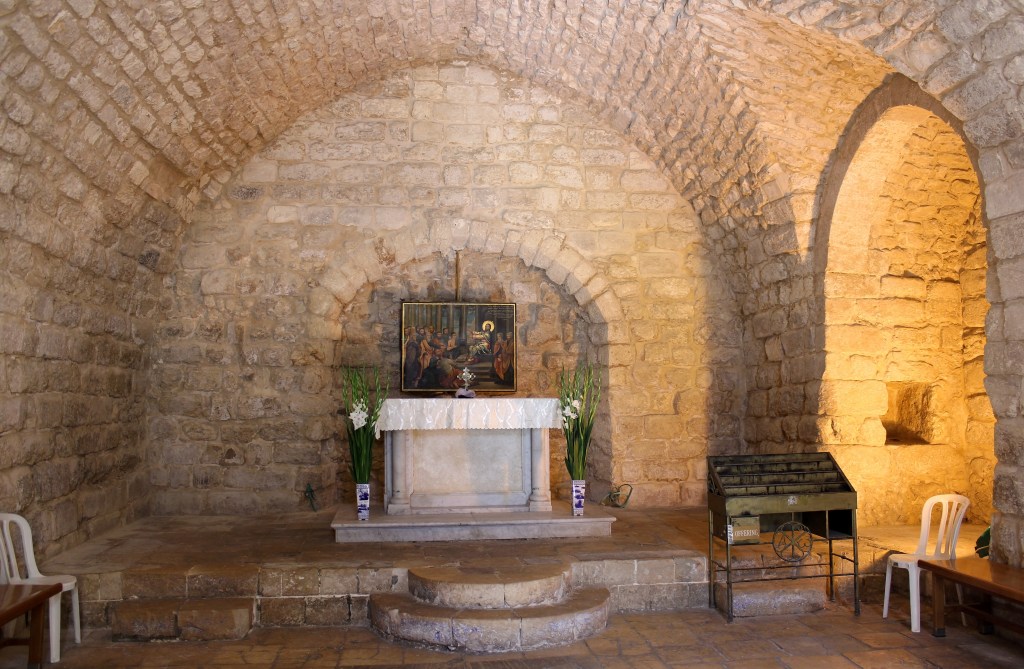
The synagogue church in Nazareth old city, Israel

While visiting in Kansas City with my son, daughter-in-law, and granddaughter recently, I attended church with them. The sermon from Luke 13 included the statement, “The entrance to the kingdom is different than we expect.” The statement came after Jesus healed a crippled woman on the Sabbath.

A synagogue leader was indignant because Jesus paused his teaching one Sabbath day to call a woman forward. This was unusual on its own, but what Jesus did next drew criticism from the synagogue leader.

This woman had been bent over with a crippling condition for 18 years. Jesus called her upfront, and he healed her on the spot. Cause for celebration, right?

The synagogue leader didn’t think so. The act of calling a woman to the front of the synagogue – while he was teaching – was bad enough form, but the leader of the synagogue drew the line and took exception to the healing.

It’s hard to wrap our modern heads around this scene, but we don’t observe the Sabbath like first century Hebrews did. The Sabbath was sacred. It was commanded by God. To avoid violating God’s command, the religious leaders went into great detail about the things a person could not do (lest it be considered work, in violation of God’s command).

I am not sure that healing was actually on that list of things one cannot do, but it probably also wasn’t on the list of things a person could do. Perhaps out of an abundance of caution, the synagogue leader stepped up and asserted his authority, telling the crowd that they were welcome to come and be healed on any day of the week, except for the Sabbath. (Luke 13:10-14)

We look back on this scene with little real appreciation of the weightiness of the Sabbath rules. We also know (spoiler alert) that Jesus is God in the flesh! The synagogue leader didn’t have a clue.

Should we imagine that he would stand in front of God, telling the people gathered around God that they cannot be healed by God on that day because of the Sabbath if he knew who Jesus was? I kind of doubt it!

It seems absurd to us twenty centuries later, but we can’t be so sure we would have known exactly who Jesus was in that moment. The disciples didn’t know! They were still weren’t’ sure up to the point of his resurrection. John the Baptist wasn’t sure when he sent a messenger to ask Jesus about it. We should probably assume that we might have known either.

We don’t have a robust or strict religious tradition on the Sabbath like first century Hebrews did, but we have other sacred doctrines. Different groups may have different sacred doctrines, and we are capable of being so locked in on our sacred doctrines that we might sometimes fail to grasp at times exactly who God is.

If we hold reflexively to our views, and do not allow for the possibility that reality may be more than we perceive, we run the risk of failing to understand or appreciate God, even as we stand in His very presence. Or worse, we might be responsible for inhibiting other people in their relationship to Him!

That synagogue leader didn’t appreciate that God in the flesh stood before him on that day and miraculously healed a poor woman of a crippling condition that oppressed her for 18 years. Instead of rejoicing with her and marveling at God’s love for her and people like her, he fixated on the Sabbath rule (as he understood it) and took offense.

He completely missed the significance of what Jesus did and it’s implications because he was set in his understanding of the Sabbath rules. He was unwilling to let go of his understanding and expectations to accept and embrace what Jesus was doing. This is a common theme in the New Testament if you pay attention to it.

We probably can’t stress enough the need for finite beings like us to be humble and open to having our views and expectations expanded as we encounter new things. Our expectations are set by our understanding, and our expectations can become obstacles to truth if we don’t understand clearly the things we know (or think we know). Jesus said,

“The eye is the lamp of the body. If your eyes are healthy, your whole body will be full of light. But if your eyes are unhealthy, your whole body will be full of darkness. If then the light within you is darkness, how great is that darkness!”

Matthew 6:22-23

This is a warning to all who seek to encounter Jesus. Beware of misunderstanding him! Do not be so quick to jump to conclusions. Hold your doctrines, especially your pet doctrines, loosely. Our understanding of great traditions, like strict adherence to the Sabbath rules, can be warped just enough that we fail to recognize and understand the reality of God and His purposes.

“[W]e may find in Holy Scripture passages which can be interpreted in very different ways without prejudice to the faith we have received. In such cases, we should not rush in headlong and so firmly take our stand on one side that, if further progress in the search for truth justly undermines this position, we too fall with it. We should not battle for our own interpretation but for the teaching of Holy Scripture. We should not wish to conform the meaning of Holy Scripture to our interpretation, but our interpretation to the meaning of Holy Scripture.”

St. Augustine of Hippo, De Genesi ad litteram Vol 1 Ch 19)

Church: Caught in the Middle of the Immigration Crisis

The southern Mexican/American border at San Antonio, TX

Preston Sprinkle recently interviewed John Garland and Dr. Rebecca Poe Hays on the subject of immigration in episode #95 of Theology in the Raw. John Garland pastors a church in San Antonio Texas where he is immersed in ongoing immigration issues. Dr. Poe Hays is Assistant Professor of Christian Scriptures at Baylor University.

The San Antonio area is home to several immigration prisons. Being in San Antonio means the immigration crisis is a daily reality for Pastor Garland, and his church has embraced its position in the world. For that reason, the media often comes to him for stories they can publish on immigration.

When they interview him, he says, they usually are looking for a story that fits a particular narrative. Garland says that most people doing stories on immigration have already developed their narratives when they come to him for an interview. Thus, they are typically looking for a story that fits that narrative.

That characteristic of the media is true on both sides of the political fence. Because of the media focus on certain narratives, Garland estimates that only about 5% to 10% of what we read in the news on immigration describes an accurate picture of what is happening.

Most news stories on immigration are developed according to prefabricated narratives.

One story that the news media doesn’t tell is that it involves the Church. In Garland’s personal experience, the Church is on both sides of the immigration crisis, and the Church is caught in the middle.

When there is crisis, there is often confusion. Soldiers talk about the confusion in the “fog of war”. When we experience crisis in our personal lives, we often lack the clarity, need the clarity that comes from counseling from others who can provide us perspective.

That clarity often comes from people who “have been there” and have wrestled deeply with the struggles we experience. John Garland is someone who “has been there”.

We don’t see in most media reports that the majority of the people coming across the southern border are Christians. Garland speaks from personal experience when he says,

“[The immigrants] are our Christian brothers and sisters, and 85% of them over these last seven years are evangelical Christians…. They sing the same songs as we do.”

The people that Garland and his church serve at the border read Scripture with each other and pray together every night. They worship and serve God. They seek a better life for themselves and their families. They seek safety and freedom.

Garland says that the immigration crisis is very much a 21st century version of the exodus of freedom seekers to the New World.

“This is not a political story, really. That is happening on the news…. It’s a story of the pilgrim church and how we, as a church in America, are receiving the pilgrim church, a persecuted pilgrim church.”

Garland has experienced this reality on both sides of the border. He has spent time in Central America where he watched Christian leaders being driven out by violence and persecution.

In San Antonio, his church is receiving pastors, social workers and Christian community leaders escaping the dangerous and volatile environments they have left behind as a last resort. Garland says,

“This story doesn’t fit into any of the prescribed political narratives that you are generally going to get from the news.”

In the remainder of this blog piece, I will relate the narratives that Garland has categorized in his dealings with the media. He says they boil down to three categories that are reflected in the questions he is asked over and over again.

Continue reading “Church: Caught in the Middle of the Immigration Crisis”

Tracing the Origin of Natural Law & Equal Rights in Western Thought

The law of loving your neighbor as yourself written on the tablet of the heart by God

In Chapter 9 of Tom Holland’s book, Dominion: the Making of the Western Mind, he traces the idea of natural law back to 1150 AD when a lawyer named Gratian compiled the first canon of law in the west. His work (the Decretum Gratiani, as it came to be called) was derived from Scripture and the writings of the early church fathers. It was an attempt at harmonize those two sources into a comprehensive whole.

The original notion of natural law came from the Stoics: “The Stoics believed that the fundamental moral principles that underlie all the legal systems of different nations were reducible to the dictates of natural law.” Gratian syncretized the Stoic notion of natural law (the law of nature) by attributing it to divine origins. This law, which God desires to write on men’s hearts, can be summarized as the law of loving your neighbor as yourself.

Holland observed that for a millennia Christianity existed without “what Muslim lawyers had long taken for granted – a comprehensive body of written rulings supposedly deriving from God Himself”. Holland is struck by the contrast of the Christian notion that God “wrote His rulings on the human heart”.

Holland first picks up that theme in his book with Saint Augustine of Hippo in Chapter 5. Hollands description of Augustine’s words – that “God writes His laws on the heart,” and, therefore, “Love, and do what you like” – is a theme Holland traces as he finds it in the history of western thought.

Thus, Holland observes that Gratian opened his Decretum Gratiani with the statement that all law can be summed up in a single command: love your neighbor as yourself. Gratian called this idea “natural law”, summarized by the statement, “all souls are equal in the sight of God”. Gratian further identified this principal as the foundation stone of true justice.

Holland mistakenly attributes these ideas to Paul (“Paul’s authority on this score was definitive…. [e]choing the Stoics”). but the important point is that Gratian’s syncretism of the law was a decisive departure from earlier ages:

“Much flowed from this compilation that earlier ages would have struggled to comprehend. Age old presumptions were being decisively overturned – that custom was the ultimate authority, that the great were owed a different justice from the humble, that inequality was something natural and to be taken for granted.”

This is the central theme of Holland’s book – “How the Christian Revolution Remade the World” (its alternate title). His book is an attempt to trace back the roots of modern notions, such as the idea that people have “equal rights” stemming from natural law (“inalienable rights”) that fundamentally inform modern, western thought.  

Holland notes that these ideas do not flow out of Greek or Roman philosophy or law. They were are much foreign to the world of classic Greco-Roman thought. They are definitively Christian – Judeo-Christian – in their origins.

Holland, of course, is an atheist. He comes to these conclusions through his study of western civilization. He is an “outsider” to Christianity, which perspective makes his observations so interesting – the that he picks up on the novelty of these ideas as being a distinctively Christian departure from classical Greco-Roman thought.

He also wrote Dominion coming off the heels of writing a similar work on the history of Islam. The contrast was striking for him. Whereas Islamic scholars attempted to proscribe laws for every detail of human life, including things like how to brush your teeth and dog ownership, Christians distilled law down to a single phrase – love your neighbor as yourself – and rested in the confidence that God writes His laws on people’s hearts (“not in ink” as Augustine said). The influence of Holland’s awareness of that contrast is striking.

It shouldn’t be surprising, coming from his perspective, that Holland doesn’t get things exactly right. When Augustine focused on love, he wasn’t championing anything new, and Paul was not the source of the notion that the law can be summed up in the phrase, love your neighbor as yourself or the belief that God writes His laws on human hearts. While he might attribute these things to Paul and Augustine, the history is much older and deeper than that.

Continue reading “Tracing the Origin of Natural Law & Equal Rights in Western Thought”