The Entrance to the Kingdom of God Is Both Narrower and Wider Than We Might Expect

On the one hand, Jesus seemed to be saying that virtually no one was able to enter the kingdom of God….

Revelation of Jesus Christ, Jerusalem of the Bible

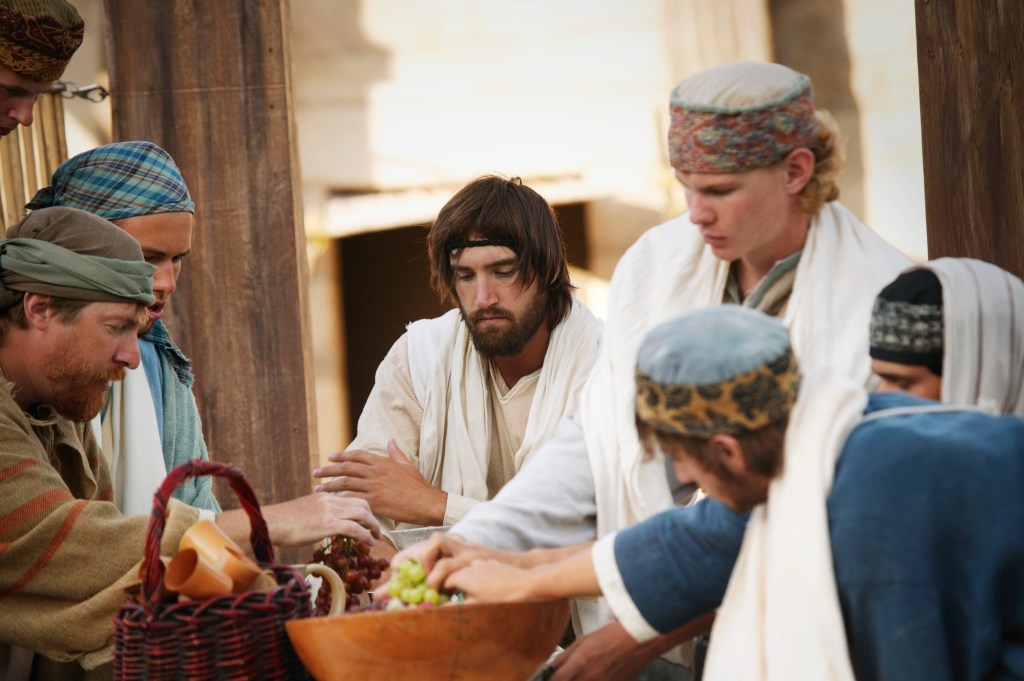
Some local Hebrews in the First Century asked Jesus whether the people entering the kingdom of God would be few. They were not likely thinking of all the people in the world. They were likely focusing on themselves, the Hebrews who identified as God’s people when they asked that question.

I get the impression that the questioner might have believed what Jesus was preaching. He (or she) may have been picking up on some clues that God’s standards are much higher than he might have once believed, and that many (even of the Hebrews) might not meet that standard.

Indeed, this seems to be the point Jesus intended to make in the famous Sermon on the Mount. He said, “You have heard it said, ‘Don’t commit adultery.’ I tell you that anyone who looks with lust at a woman has already committed adultery in his heart! Jesus said, “You have heard it said “Don’t commit murder.’ I tell you anyone who is angry at his brother has murdered him in his heart!” (See Matt. 5:21-48)

Jesus ratcheted up the standard. He upped the ante. If you walked away from this message without thinking you don’t measure up, you missed the point!

Paul the Apostle would later say, “All have sinned and fallen short!” You have to read the whole message to get to the ultimate point – that we do not measure up, and we never will measure up, but God has provided a way for us into His kingdom nevertheless. (See Romans 3:21-26)

On the one hand, Jesus seemed to be saying that virtually no one was able to enter the kingdom of God. On the other hand, God seemed to be swinging the gate wide open to anyone and everyone.

When Jesus answered the question I opened with, he didn’t really answer it. He said, “Strive to enter through the narrow door. Because many will seek to enter, and the door will be shut to them.” (Luke 13:24)

Did Jesus affirm that the people entering the kingdom of God would would be few? Not really. He didn’t say many would enter either. He focused the questioner’s attention on the questioner himself.

Jesus often did that. Why are we concerned about everyone else in the world when God gave us responsibility for ourselves, and no one else?

We aren’t ultimately even responsible for our own children, as they make their own choices and go their own ways. We have some influence over them which can be good or bad, but they ultimately are responsible for themselves.

Consider, again, the audience: they were First Century Hebrews. For many centuries, their ancestors lived with the identity that they, alone, were the people of God, chosen by Him, and destined to be His people. These are the people to whom Jesus made the following statement:

“There will be weeping there, and gnashing of teeth, when you see Abraham, Isaac and Jacob and all the prophets in the kingdom of God, but you yourselves thrown out. People will come from east and west and north and south, and will take their places at the feast in the kingdom of God. Indeed there are those who are last who will be first, and first who will be last.” (Luke 13:28-30)

Maybe it was a genuine, sincere, and humble question. Maybe the question was posed by a elitist with an elitist attitude seeking confirmation of his elite position in the world.

We don’t know, and it doesn’t really matter because the answer is the same: Jesus came for the Hebrews, and he came for everyone else. God became flesh and came for “his own” people (John 1:11), and He came for the whole world. (John 3:16-18)

However, only those who receive Him are the people who are considered His children (John 1:12-13) who will become the kingdom of God. The invitation stands:

“I stand at the door and knock. If anyone hears my voice and opens the door, I will come in and eat with that person, and they with me.” (Rev. 3:20)

Can it be that the entrance to the kingdom of God is both narrower than expected and wider than expected?

Continue reading “The Entrance to the Kingdom of God Is Both Narrower and Wider Than We Might Expect”

Why Should We Not Want to Make a Deal With God?

If you are bargaining with God for some immediate relief in your life, your view of God is too small.

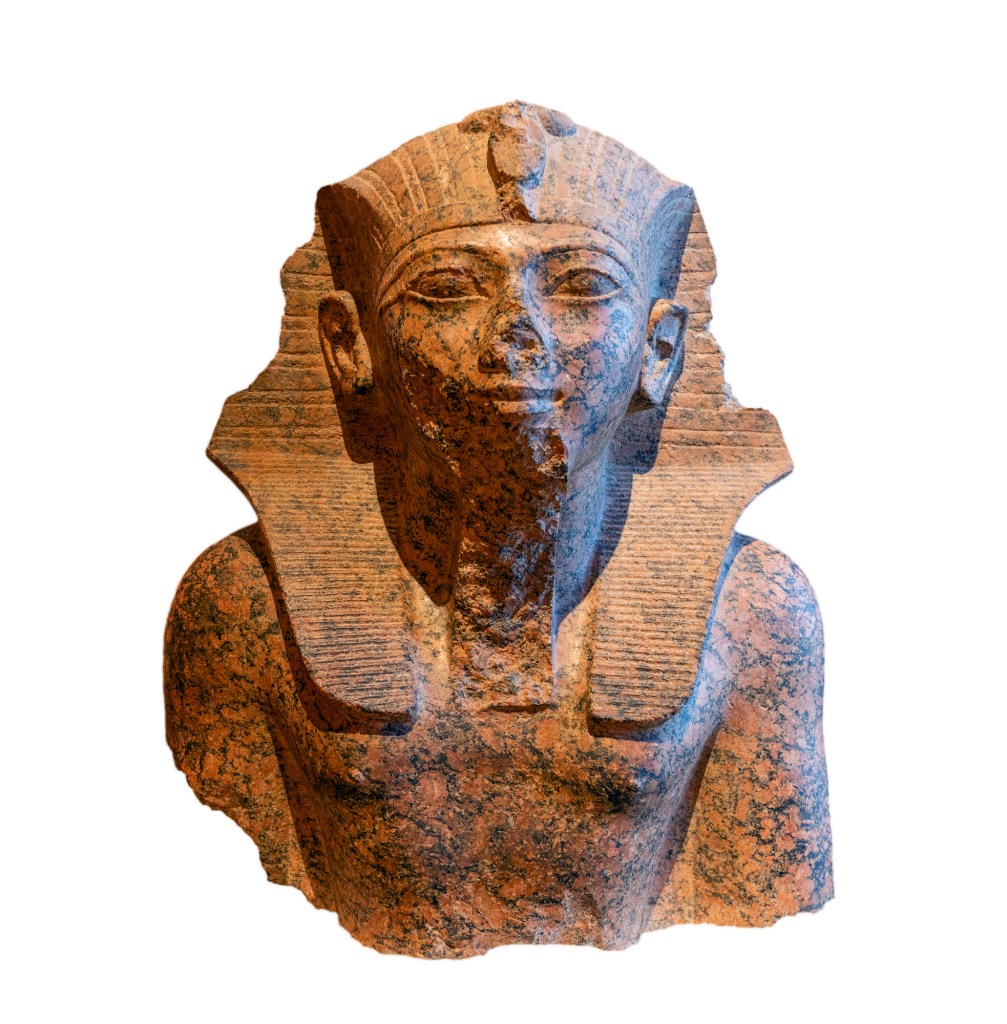
Photo by Peter Avildsen

I have been reading through parts of Exodus. Today, I continued reading about Moses and Pharaoh. Pharaoh hardened his heart to the plea of Moses to let the Israelites travel three days into the wilderness to meet with God, and Pharaoh did not take the signs Moses performed to heart.

Up to this point, Pharaoh’s magicians matched all the signs Moses and Aaron performed, so apparently didn’t take those signs seriously. Aaron threw his staff to the ground, and the magicians did the same. It didn’t matter that Aaron’s staff swallowed up the magicians’ staffs. The magicians matched Moses and Aaron sign for sign, and Pharaoh paid no heed to them.

Moses turned the water of the Nile to blood. Pharaoh’s magicians did the same, “and Pharaoh’s heart became hard”, it says. (Ex. 7:22) He turned and walked away into his palace, and he didn’t take it to heart.

Aaron stretched out his arm with his staff and caused frogs to emerge all over the land. The magicians did the same, and Pharaoh was not moved, at least not right away.

Later, Pharaoh asked Moses and Aaron to “Pray to the Lord to take the frogs away…, and I will let your people go….” (Ex 8:8) Moses did it, “But when Pharaoh saw that there was relief, he hardened his heart and would not listen….” (Ex. 8:15)

Moses responded by having Aaron summon a plague of gnats. This time the magicians could not duplicate what Moses did, and they said to Pharaoh, “This is the finger of God.” But, “Pharaoh’s heart was hard….” (Ex. 19)

Notably, the Pharaoh’s heart became hard, or he hardened his heart, after the previous displays. After the plague of flies, however, the Pharaoh’s heart was hard.

Pharaoh’s heart was already hard at this point. He had been hardening his heart all along, but Pharaoh’s heart was already hard by the time Moses and Aaron summoned the plague of flies and the plague of flies “ruined the land”.


Even though Pharaoh’s heart was hard at that point, “Pharaoh summoned Moses and Aaron and said, ‘Go, sacrifice to your God here in the land.'” (Ex. 8:25)

Sometimes even people with hard hearts toward God will have moments in which they seem to believe, or seem to repent, but there is no heart change. They desire to be delivered from their dire circumstances, but nothing more. It isn’t really a true change of heart, and it doesn’t last.

Moses insisted that the people be allowed to leave the land and go into the wilderness, but “Pharaoh said, ‘I will let you go to offer sacrifices to the Lord your God in the wilderness, but you must not go very far. Now pray for me.”’ (Ex. 8:28)

People often make deals with God. People bargain for relief from the pain or difficulty that brings them finally to God as a last resort, but they turn to God out of desperation, and they don’t really mean to keep their part of the bargain. When people are “forced” to the point of praying to God as a last resort, they may not come willingly, and their hearts many not be changed if relief is all they want.

This was the case with Pharaoh:

“Then Moses left Pharaoh and prayed to the Lord, and the Lord did what Moses asked. The flies left Pharaoh and his officials and his people; not a fly remained. But this time also Pharaoh hardened his heart and would not let the people go.” (Ex. 8:‬30‭-‬32)

Pharaoh didn’t understand that the God of Moses and Aaron is the God who gives all people life and breath. He saw “their” God as a means to an end: a possible solution to the immediate relief he desired. Pharaoh didn’t perceive God as his God too!

We are often tempted in the same way to view the Bible, church, and God Himself as a means to our owns temporary ends. We aren’t looking down the road. We don’t appreciate that the universe, this earth, our world and our very beings are wholly dependent on God!

Once we get the relief we want from the immediate difficulty we are facing, it’s easy for us to harden our hearts again. Once we are out of trouble, we resort back to a hard heart and a stiff neck. There is no lasting change.

This is a human tendency we all have. All people can be “religious” at times. Many people go to church on Sunday, or once in a while, maybe on special holidays, but they live in Egypt the rest of the time.

We can be religious in the same way that we might carry a lucky rabbit’s foot or consult a medium. We want something. We want good fortune and good health, but we don’t want to change.

God should not have to make a deal with you. If you are bargaining with God for some immediate relief in your life, your view of God is too small, and you are missing the mark!

Continue reading “Why Should We Not Want to Make a Deal With God?”

What We Can Learn from the Letter to Diognetus

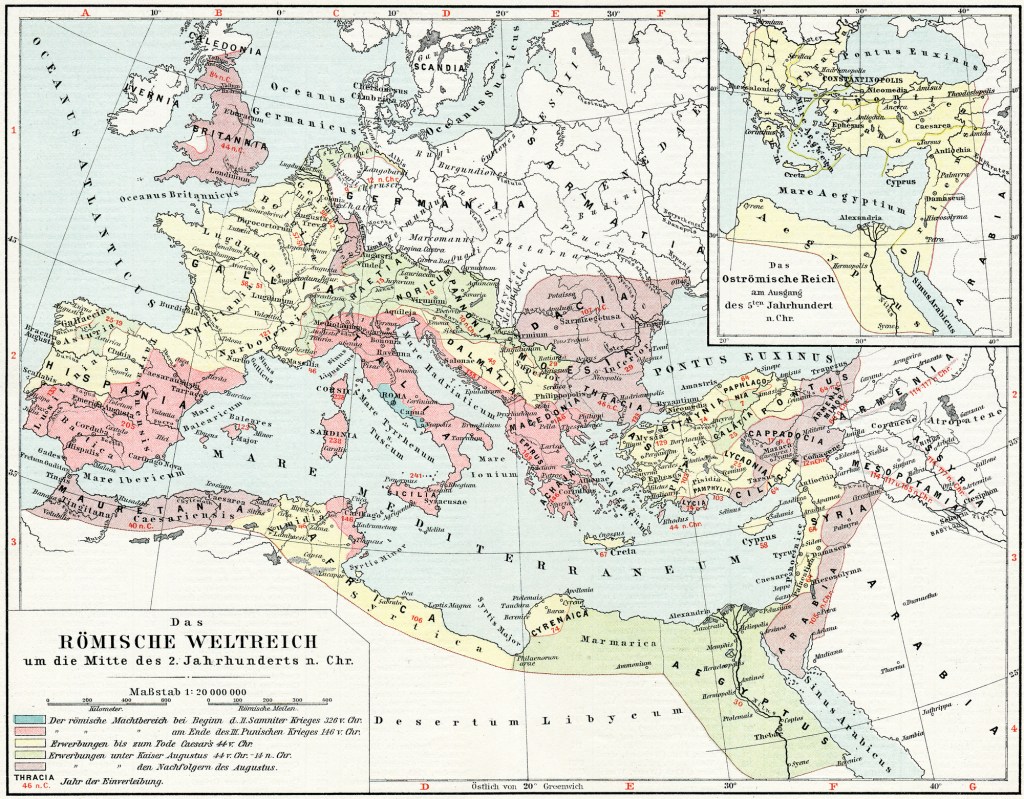
Map of the Roman Empire, 2nd century AD. Publication of the book “Meyers Konversations-Lexikon”, Volume 7, Leipzig, Germany, 1910

Fellow blogger Joel Edmund Anderson wrote a short summary of the Letter to Diognetus on his blog, Resurrecting Orthodoxy (March 19, 2022). This is part of his series on early church fathers.

I feel like we tend to believe that we have advanced from our peers centuries ago, and I am ever skeptical of that advancement. I tend to believe the writer of Ecclesiastes:

What has been will be again,
    what has been done will be done again;
    there is nothing new under the sun.

Ecclesiastes 1:9

Yes, we have made great technological advancements, but how different are people, really? I direct your attention to the Ukraine where Russian bombs fall on hospitals, schools and people fleeing a war with very questionable motivations.

Lest we be too smug, more people died at the hands of despotic rulers in the 20th Century than all the previous centuries combined.

But, I don’t want to preach, and I don’t exempt myself from my personal indictment. I am not exempt. People are still people, and we have a tendency to do bad things.

On this point, though, I like reading the thoughts of ancient minds to remind myself of the ways in which we tread the same ground. The Letter to Diognetus is a good example, and I commend the article I have linked for your consideration.

Joel Edmund Anderson observes that the Letter to Diognetus is the first communication (in records we have) attempting to explain Christianity to pagans. It was written early, around 130 AD, and it distinguishes Christianity from Judaism and from paganism.

Who is Diognetus? What was the occasion for the letter? Was the letter sent unsolicited? Did Diognetus inquire about Christianity? Was it the product of a discussion? Who wrote the letter? We don’t know.

I imagine the letter wasn’t unsolicited. Writing utensils and parchment, papyrus or whatever medium was used then not in abundant supply in the 2nd Century. Writing was an effort.

That the letter was preserved speaks, perhaps, to the way the letter was received. Whoever received this letter thought it was valuable enough to keep it and preserve it.

As I read the summary of the letter today, though, I am interested in several points made in the letter and how they relate to us 19 centuries later.

Continue reading “What We Can Learn from the Letter to Diognetus”

We Prepare for the End Times Simply by Being Faithful and Diligent Daily

Interior of Winchester Cathedral in Hampshire – United Kingdom. Photo taken on 6th of May 2019

In my daily Bible reading today, I read through Luke 17. While I have been reading through the Gospels, the kingdom of God has been the theme that has caught my eye. I have meditated and written on the kingdom of God a few times recently in my latest trip through the Gospels in chronological order.

Today, I read the following:

“When he was asked by the Pharisees when the kingdom of God would come, he answered them, ‘The kingdom of God is not coming with something observable; no one will say, ‘See here!’ or ‘There!’ For you see, the kingdom of God is in your midst.’”

Luke 17:20-22 CSB

The Pharisees asked Jesus about the Kingdom of God. This was their orientation. They looked back on David the king and all the kings of Israel and on a future Messiah who would reestablish the throne of the Davidic Kingdom. They were predisposed to think this way for tens of generations.

The response Jesus gave them wasn’t what they expected or what they hoped for. If Jesus was the Messiah, as some people were claiming, he would certainly reestablish the ancient kingdom in short order. Or so they thought.

What did he mean that the kingdom wasn’t coming with something observable?! What good would a kingdom be that could not be seen? What kind of a kingdom would that be?

At the same time, if they could get past their assumptions driven by their long-awaited expectations and listen to what Jesus was saying, they would focus on the statement: “For you see, the kingdom of God is in your midst!” Present tense!

In many of the parables Jesus spoke about the kingdom, he paints a picture of the kingdom as something like leaven that makes bread rise or a small seed like a mustard seed that grows up into a large bush that can hold many birds.


These parables suggest that the kingdom of God does not come with pomp and circumstance in impressive form. It is more like salt and light, things that we take completely for granted, which we either can’t live without or which enhance or flavor and preserve and sustain us in ways that we might not even appreciate.

“The kingdom of God,” Jesus said, “is in our midst”, but we are apt to miss it if we do not appreciate what he means. Kingdoms have a king, of course, and Jesus is that king, but he is not a king now in the common sense of the word. He has not (yet) established an earthly kingdom, but a “heavenly one”.

Just as God created all that is seen from what is unseen, Jesus has established the kingdom, for now, through what is unseen. He invites us into His kingdom. It’s a gift offered to us. (Eph. 2:8)

The kingdom is nothing we can earn. (Eph. 2:9) We can’t be born into it; we don’t receive it as a privileged offer; we aren’t selected to receive the offer. (John 1:12) The kingdom is offered freely to all who respond by faith and enter into it.

The kingdom of God is experienced through relationship with God, the Father, through the mediation of Jesus, the Son, and the in-dwelling of the Holy Spirit. We live out the kingdom of God in community with other believers and our interactions in the world. If we are true ambassadors of God’s kingdom, people will be attracted to our salt and light – or repelled by it as they who rejected Jesus were repelled.

The kingdom of God is demonstrated on earth now through lives of people who have given themselves over to its king, through the lives of people who follow Jesus, who have taken up their crosses, who have given up their lives, and who have devoted themselves to becoming like their Lord and savior. Where two or more gather to pray in Christ’s name, he is there.

This is the good news of the gospel that Jesus proclaimed to the poor, the freedom he proclaimed to the prisoners, the recovery of sight to the blind and the freedom to the oppressed. The kingdom of God is here and now openly available to all who would submit to Jesus Christ as Lord and King. But, Jesus also spoke of the future.

As Jesus often did with his closest disciples, he shared with them more intimate details that were not shared with the crowds at large:

“Then he told the disciples, ‘The days are coming when you will long to see one of the days of the Son of Man, but you won’t see it. They will say to you, ‘See there!’ or ‘See here!’ Don’t follow or run after them. For as the lightning flashes from horizon to horizon and lights up the sky, so the Son of Man will be in his day. But first it is necessary that he suffer many things and be rejected by this generation.”

Luke 17:22-25

As believers, we can take solace and guidance from these words. The disciples were not prepared for what was to come – the ugly public condemnation, humiliation, and dominance of Roman authority over the Messiah, the king of God’s kingdom. They were not prepared for his suffering and death at the insistence of many of God’s own people.

The darkness of the world threatened to snuff out the light of God’s kingdom in them, and the darkness of today’s world does the same in us. Jesus warned them, and the warning stands for us, that the world would treat them (and us) the same way it treated him.

Jesus knew his followers would mourn for him and long for his return. This is a challenge for all true believers in Jesus Christ. We long for him to be with us, to return to earth. To right the wrongs and wipe away the tears.

We are tempted, therefore, to focus our attention on trying to determine when he will return. We are tempted to speculate and fixate on it. Indeed, people have written books and developed theologies about it. We even have a word for it: eschatology.

Many people over the years have claimed to figure it out and predict when he will return, but Jesus warned against us doing that. Jesus said no one will know the day or hour. Christ will return when he returns. His return will be unmistakable, but first came the business of suffering and dying.


Of course, Jesus suffered and died 2000 years ago now. We are tempted to think that times are different, but I believe Jesus was talking both about the present time and the future. His words to the disciples when he was anticipated his own imminent suffering and death provide us guidance still today.

Continue reading “We Prepare for the End Times Simply by Being Faithful and Diligent Daily”

The Group Affiliations the Apostles Had and What It Might Mean for Us

When I look at American expressions of Christianity today, I wonder if we demonstrate the right way to follow Jesus.

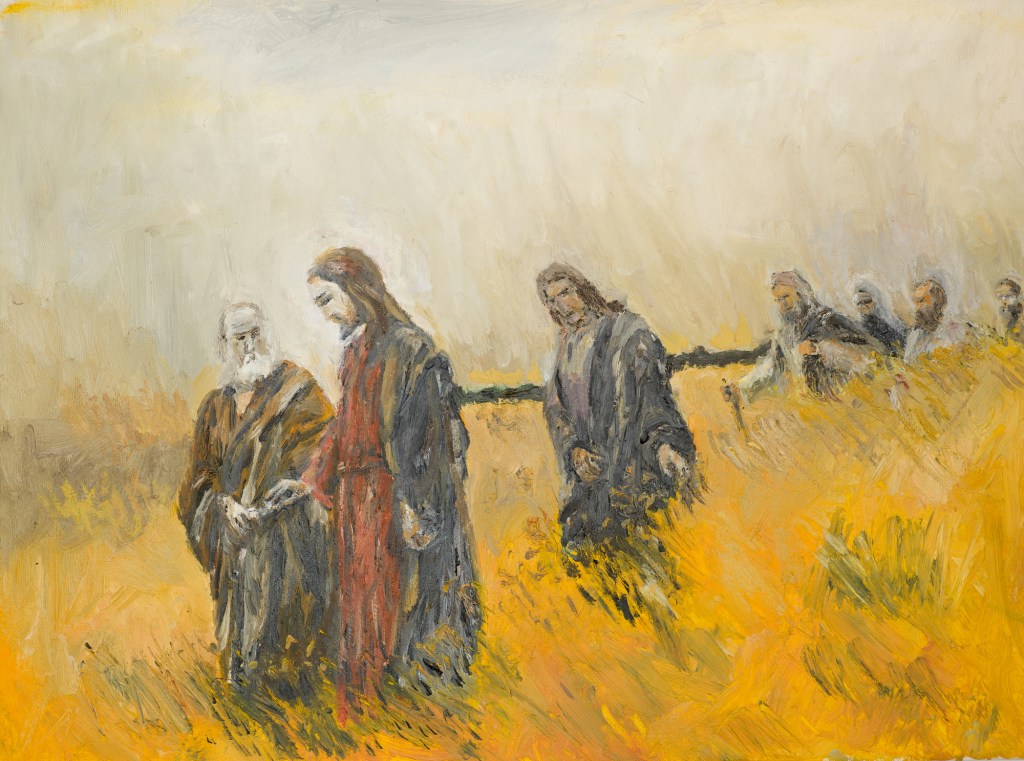
Oil painting illustrating Jesus Christ and his disciples on a meadow

I have spent some time lately considering the various influential groups of people in the time of Jesus and the orientation of those groups toward Jesus. I have wondered why Jesus seemed to pick on the Pharisees more than the other groups, especially since they seemed most aligned with him and had the most in common with him.

As I researched and thought about the various groups of Jewish influencers in the First Century in relation to Jesus, I began to think about the apostles, and their connections to these groups. I am always mining for insight as I read Scripture, and today my mind turns toward the relationship of the twelve apostles to those same groups of First Century, Jewish influencers.

We don’t know much about the background of the twelve disciples, except that most of them were “common” men of generally humble means. One disciple was identified with the Zealots (Simon, the Zealot, also known as Simon the Canaanite). Matthew, the tax collector, might have been Herodian (or may have been viewed as one).

We really don’t know about the group affiliation of the other disciples, at least not from the explicit text. They seem to have been ordinary people with no distinct association with particular groups. They did not seem to be closely associated with any of the five groups Jewish leadership groups in First Century Judea.

Even Simon, who is known as the Zealot, probably left his group behind to follow Jesus. Just as Matthew left behind his livelihood (tax collection) to follow Jesus. Of course, Simon (Peter) and Andrew dropped their fishing nets to follow Jesus, as did the brothers, James and John. It’s no stretch, therefore, to imagine that Simon, the Zealot, would have similarly “dropped” or left behind his affiliation with the Zealots to follow Jesus.

In fact, the theme of leaving behind your group seems to run throughout the teaching and example of Jesus. Jesus said, “[E]veryone who has left houses or brothers or sisters or father or mother or children or lands, for my name’s sake, will receive a hundredfold and will inherit eternal life.” (Matt. 19:29)

He called Peter and Andrew and James and John away from their profession of fishing. He called Matthew, the tax collector, away from his profession of tax collecting. I think it’s fair to assume that Jesus called Simon, the Zealot, away from the Zealots to follow him.

The theme of leaving behind family, livelihood and group identity runs deep in Scripture, all the way back to Abram (as Abraham was originally known) when God called Abram to leave his country, his people, and his father’s household and go to the land God would show him. (Gen. 12:1)

Hebrews 11 commends Abraham for the example of faith demonstrated in responding to God’s call and leaving behind the familiarity of all the things that typically identify people and their place in the world. Abraham and all the people of faith commended in Hebrews 11 demonstrated a kind of faith that made them “aliens and strangers on earth”.

Jesus called the rich young ruler to walk away from his wealth. (Matt. 19:16-30) Jesus told Nicodemus, the Pharisee, that he would have to be born again to see the kingdom of God. (John 3:3) Nicodemus was born into an enviable position in his community and may have winced at the thought of needing to be “born again”.

The kingdom of God is something I have been mulling over for many weeks, and months. It’s a theme I have written about often lately, and it has occupied a prominent place in my meditations lately.

The five main groups of Jewish influencers in the First Century had one thing in common – they were operating on a spectrum of influential relationship to the political structures and religious structures in their world. They were invested and embedded into their positions, and identities, with the people with whom they affiliated – like the partisanship and critical group affiliations we have today.

Along came Jesus, however, and he called people “out of the world”. (John 15:18-19) Jesus called people to leave their lives, and identities, and associations behind to follow him. I believe he is still calling people to the same allegiance today.

We don’t know much about the backgrounds and affiliations of the twelve disciples, perhaps, because they did just that. They left those things behind to follow Jesus. They became known, simply, as disciples of Jesus. They were, simply, Christ followers.

I am interested in these things because of what it means for us. If we would be disciples of Jesus and Christ followers, how do these things translate to our lives in the 21s Century?

Continue reading “The Group Affiliations the Apostles Had and What It Might Mean for Us”