A Rational Explanation for Miracles: God in the Gaps

A contemplation based on human agency and the ability manipulate natural causes to generate beneficial effects.


In Episode 20 of the Christian Atheist Podcast (Ethics (Part 3): the Origin on Ought), John Wise focuses on a primary difference between human beings and animals. Though humans beings are animals, human beings are qualitatively different than other animals in rational capacity, and the rational capacity of humans allows humans to exercise agency over the natural world. This unique human capacity to exercise rationality through agency is the focus of my thoughts today.

Human beings exercise their agency and rational capacity to change and redirect the laws of nature. Other animals can do this in very primitive ways, but the human capacity to manipulate nature through human agency, rationality, and ingenuity is light years beyond what other animals can do.

Of course, humans cannot do things that defy the laws of nature. Rather, human beings use their understanding of those natural laws to manipulate them.

Wise observes that the human ability to manipulate the laws of nature includes the ability to separate cause from effect to acheive a desired result. For instance, human beings have learned to breed various types of plants and animals to achieve results imagined by humans which would never likely have occurred in the natural world left to random, natural processes.

Human beings can exercise their rationality to imagine different effects and to manipulate causes to achieve those desired effects. In this sense, human imagine the effects they desire to achieve, and they manipulate the causes in the natural world to achieve natural effects by design that the natural world would not obtain randomly.

The world seems to act randomly, unless agency acts upon the world. The examples of agency acting on the world to achieve results that would not obtain without such agency are legion. All of human endeavor is replete with examples of agency imagined and initiated by humans to obtain designed effects that we desire.

Human beings are able to produce effects that would never have occurred in the natural world but for human agency manipulating the natural processes. In other words, human input redirects the natural processes to produce results that would not have occurred if the natural processes were left alone.

Our ability to separate cause from effect to achieve desired ends that would not occur in the natural world by manipulating those causes to achieve the effects we desire is an example of supranatural agency in the world. In other words, we are in and of the natural world, and we use our knowledge of the natural world to manipulate natural causes to create natural effects.

We do not suspend the laws of nature or violate the laws of nature to accomplish our desires ends. We use the laws of nature to achieve our desired ends – albeit, ends that would not have occurred but for our intervention.

Ocean liners and skyscrapers are things that do not occur through the laws of nature, but for human agency. Even so, human agency des not suspend or violate the laws of nature to create them. Human agency uses the laws of nature to create them.


These observations are a model for understanding God. The fact that laws of nature act in very rational ways that are predictable and dependable suggests design. The way the laws of nature act suggest an intelligent agency that set them in motion just so. We would call that intelligent agent God.

If God created the laws of nature, He would certainly know how to manipulate natural causes to achieve His desired effects. God would have much greater capacity than us to manipulate natural causes to achieve desired effects. Exponentially so!

Many skeptics, like David Hume, reject the idea of miracles because they assume that miracles violate natural laws. The foundational premise of Hume’s logic, though, is false. The God that created the natural laws would not need to suspend or violate those laws to obtain desired effects. God could manipulate natural causes to achieve His desired effects without the need to “suspend” or “violate” natural laws just as we do.

God’s knowledge of those natural laws and the possible effects that can be achieved through the manipulation of them is certainly greater than ours. Exponentially greater.

Many people have called phenomena they didn’t understand miracles, but subsequent discoveries about the way the natural world works have provided explanations to us of natural laws and how they work that we didn’t previously understand. Once we understand the laws at work on those phenomena, we no longer call them miracles.

A primitive intelligent being might think that human beings are violating natural laws to fly airplanes, for instance. We know this is not true, but a more primitive being may not understand the principles of natural laws being manipulated to achieve the end of flying a heavy chunk of metal through the air.

Just as we manipulate natural causes to create effects that do not occur naturally, God may do the same. Thus, what we call miracles may be nothing more than the manipulation of natural causes by God to achieve effects that would not ordinarily occur in nature without the involvement of an agent.

Just because the primitive being does not know the principles being manipulated does not mean that a violation of natural laws has occurred. In this same way, a human being, who is certainly a more primitive intelligent being than God, may not be able to know or understand the principles of natural laws being manipulated by God to achieve a result that we call a miracle.

We call occurrences miracles that we cannot explain based our understanding of natural laws. But our measure of understanding is constantly changing. For this reason, modern people often say they no longer believe in miracles (and, by extension, God). Experience shows that many things we didn’t previously understand we now understand, and they assume, then, that we will find explanations in the natural laws to explain all the things we do not presently understand.

I note that this belief is not necessarily warranted, nor can we prove it. People who make this assertion do it on the basis of faith in the human ability to know and understand the world.

Further, our mere understanding of the way natural laws work, does not negate the need for intelligent agency to achieve desired ends. It isn’t enough for us to think something up; we must exercise our agency to act on the laws of nature to achieve our desired ends. Our understanding doesn’t create anything.

Imagine Aristotle seeing a pilot entering into a Boeing 737 and taking off into the air. Aristotle did not know enough about the law of gravity or aerodynamic lift to generate a good explanation based on the natural laws that were understood at the time. He may have called it a miracle because it defied explanation to him based on the level of knowledge he had.

The more often Aristotle might have seen a Boeing 737 takeoff, the less likely he might have considered it a miracle, even if the phenomenon still defied natural explanation to him. In fact, we still don’t really understand aerodynamic lift. (See No One Can Explain Why Planes Stay in the Air, by Ed Regis, Scientific American, February 1, 2020)  
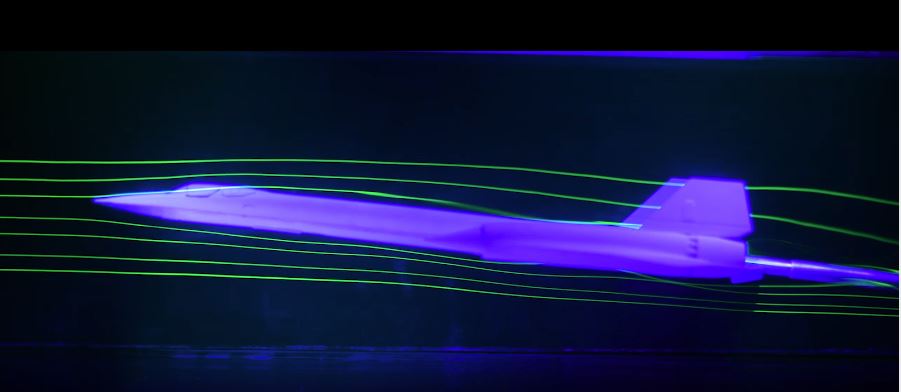
No One can Explain Why Planes Fly in the Air, Scientific American, Feb. 1, 2020

It is such a common phenomenon today, however, that we take it for granted even though we don’t completely understand it. Understanding that such a thing as aerodynamic lift occurs allows us to manipulate it, even if we don’t fully understand it.

Even if we think we fully understand natural laws, we probably don’t. One big example is the Big Bang. We know what happened from the “point” of the Big Bang, but we know virtually nothing before that “point”. We also have no idea how life formed.

Even if we did know exactly how the first living cell or organism developed. Our ability to trace the process and understand it does not tell us how or why it developed in the first place.

More precisely to the point, our understanding doesn’t create anything (without exercising our agency to act on that understanding), and it doesn’t eliminate the need for agency in our world to achieve desirous (beneficial) ends.

In fact, our experience suggests just the opposite. Our experience tells us that fire happens only randomly and often destructively in nature. We have learned to create fire and use it beneficially by exercising our agency in light of our understanding of the causes of fire. Agency is required to manipulate the natural causes for beneficial effects.

Our own experience affirms this. If I leave may backyard to nature, nothing is likely to grow there that is particularly beneficial. I might find a wild strawberry plant or wild raspberry vine with very small fruit on it. If I am lucky. The vast majority of it will be weeds and undesirable plants.

If I plant a garden with seeds cultivated by human ingenuity over many years of gathering seeds from the right kind of plants and developing new, heartier and more fruitful plants, I can turn my backyard into a cornucopia of beneficial plants that will feed my family and my neighbors’ families. This kind of benefit requires my agency.

I have to plant it, water it, weed it, and maintain it with much care and intentionality. If I stop maintaining it, my garden will relatively quickly return to a tangle of undesirable plants that will choke out and eventually replace my desirable plants.

It requires my agency to develop a garden and to maintain it. Nature, left to its own devices, will not do that. This is our common experience.

If you like archaeology, as I do, you become aware that time and nature destroys all the improvements generated by human agency and endeavor over time. Whole cities are reduced to rubble over time, and rubble becomes overgrown with windblown sediments, scrub brush and weeds such that we do not even recognize that a city once existed there, but for some remnants we can find by digging up the site.

We have made much about evolution since Charles Darwin first championed it as a theory. Evolution (the gradual improvement of life forms over time (by whatever means it occurs)) runs counter to our common experience. The formation of life from nonlife (the complex from the simple) (by whatever means it occurred)) runs counter to our common experience.

Does that mean that evolution is not fact or that life did not arise from nonlife? Not necessarily, but our common experience does suggest that this did not happen by natural forces acting according to their laws. Our common experience demonstrates that complex, beneficial effects arising from natural causes occur through agency and intentionality.

Human endeavor obviously did not create evolution or the formation of life from nonlife. Most scientists concede the appearance of design in the mind-bendingly complex interaction of amino acids, DNA, epigenetic materials, mechanical processes and other features of a living cell. If evidence of design appears in the world that was not achieved through human agency, that fact leaves us with the suggestion that some other intelligent agency is at work in the world.

Continue reading “A Rational Explanation for Miracles: God in the Gaps” →
Understanding the Hiddenness of God: Insights on the Nature of and Mystery of God

God is not a physical being like we are in this material world

The “hiddenness of God” is a reality that causes some people to doubt the existence of God. If God is so great and so loving, why is He hidden to so many people? If God really exists, why isn’t God plainly evident to everyone? If God desires everyone to know Him, what’s the problem?

I have many thoughts about this dilemma, and I have written on the hiddenness of God many times before. Today, however, I want to highlight some thoughts that come through comments by an Australian YouTuber, Confident Faith, on a conversation between Jordan Peterson and Bishop Barron.

They discuss the nature of God – what kind of “being” God is. We naturally approach the idea of God from our human perspective. A person might wonder, “How can we even know what kind of a being God is?” Especially, if we are not even sure God exists!

But, we can know what kind of a “being” a God who could have created the Universe may be. Our reason suggests to us that a God who is capable of creating the time, space, and matter that comprises the Universe must be separate from and “other” than the reality of the Universe. Such a creating God must exist in a reality that is not contained within the Universe.

If we might think of the Universe as a box, we might say that boxes don’t simply for or create themselves. A box maker (who is not a box) creates them. Thus, we can intuit that Universes don’t form or make themselves. A Universe maker is required who is contained within a Universe.

If the box (or universe) is all we know, it’s hard to conceive of something outside the box (universe). It’s exceedingly hard for us to conceive of reality other than the basic units of time, space, and matter that comprise the physical Universe in which we live. Therefore, we have an exceedingly difficult time wrapping our minds around the idea of a Creator of those who is not contained within the reality of our Universe.

Even my attempt to describe the problem is inadequate, as the only reality we know is a physical one (comprised of that same time, space, and matter). For a God to have created those things and to have formed them into the Universe, that God would have to have been timeless, spaceless, and immaterial (not contained within that box), yet present with it.

I know that many people believe that a thing can create itself. Stephen Hawking famously said, “Because there is such a thing as gravity, the Universe can and will create itself from nothing.” This is a box creating a box analogy. Hawking is essentially saying that the substance that makes up the components of the box (Universe) self formed and self organized into a box (Universe).

I, personally, find it harder to believe that the Universe created itself than to believe that God, who exists “outside” time, space, and matter, created the Universe.

This fundamental difference in approach and perspective is the Continental Divide on the issue of the existence of God. A person who is unwilling or unable to consider anything “outside” the bounds of the time, space, and matter that comprise the Universe is going to be utterly incapable of “seeing” (grasping, conceiving, or even allowing for) the possibility of God.

But, this way of thinking is not foreign to any of us. In fact, it’s most natural for us to think this way, because all we know is the box (Universe) in which we live.

In dealing with this dilemma, Bishop Barron goes back to the ancient text in Deuteronomy when Moses asked God, who should I say sent me. Barron says that Moses was basically asking, “What kind of a being are you?” In doing this, Moses is trying to put God into categorical terms.

God’s response was, “I am who I am!”  God is saying that He cannot be categorized as we categorize things in this Universe. This response points Moses to outside the box (Universe). This means, says Barron,, “God is not a being, but Being, itself.”

If we follow down the path of Moses’s questioning, we inevitably end up as an atheist. If we insist on putting God into categorical terms, like the time, space and matter we can touch, see, feel, and measure, God remains a mystery. We can’t touch, see, feel, or measure God because He is not comprised of (or limited by) physicality (time, space and matter), and, therefore, God is not a categorical object in the world.

Augustine called God the “Prius” – the thing that is prior to being, itself. God is that upon which the categorical world depends. God is not the highest being (as we often conceive Him to be), the highest being is still just a being; rather, God is the essence of being.

I like the way Confident Faith wraps up these things. He says,

“God is not a physical being like we are in this material world. For example, humans, animals and plants are all physical beings in this physical world. However, the pitch of God’s existence is infinitely higher. He is not physical like we are. He is Spirit. God does not exist somewhere in this physical universe. You won’t find him hiding behind some distance galaxy way out on the known limits of the known universe. Likewise, you won’t find Him hiding somewhere in the subatomic realm. It’s foolish to expect or demand that God be found in this way…. God is not just one being among many in this world. God is the very source of being.”

We are finite; God is infinite. We are contingent and caused; God is non-contingent and uncaused. We are physical, but God is Spirit. Therefore, Confident Faith says,

“Taking these factors into account, it’s reasonable to hold that God’s existence in nature will always, to a degree, be a mystery or hidden from us.”

The hiddenness of God, therefore, is a function of the difference between a box maker and the things in the box. We are a “thing” in the box of this Universe, and God “outside” of it. We are constrained by our physicality, and God is not constrained by physicality because God is Spirit.

Our ability to grasp and to understand such a God, therefore, requires us to let ourselves think outside the box of this Universe. We have to be willing to think outside the box to be able to begin to gain some understanding of God.

I have embedded the short YouTube video on this subject below, but I will close with a few other passages in the Bible the speak profoundly of the nature of God. These passages reveal that God’s hiddenness has purpose, that God knew what He was doing in creating the world the way He did, and His “hiddenness” from us is part of that purpose.

“God is spirit, and those who worship him must worship in spirit and truth”

John 4:24

The God who made the world and everything in it, being Lord of heaven and earth, does not live in temples made by man, nor is he served by human hands, as though he needed anything, since he himself gives to all mankind life and breath and everything. And he made from one man every nation of mankind to live on all the face of the earth, having determined allotted periods and the boundaries of their dwelling place, that they should seek God, and perhaps feel their way toward him and find him. Yet he is actually not far from each one of us, for

“‘In him we live and move and have our being’;

as even some of your own poets have said,

“‘For we are indeed his offspring.’

Acts 17:24-28

Paul recognized in his address to Greek philosophers in the passage quoted above the “hiddenness” of God, such that we must “seek” Him and “feel [our} way toward Him”. I believe, as some have objected, that God could have made himself plainly evident to us, but He chose not to do that.

I believe the reason He chose not to reveal Himself plainly to us is to give us space to seek Him because we want to, not because we must. If God was plainly evident, what choice would we have?

I believe that God is not looking for automatons that are programmed to obey. God wants us to know Him and to love Him authentically. He does not desire that we merely believe in Him; He desires a reciprocal relationship with us. but A clue to this lies in the words of James:

Even the demons believe—and shudder!

James 2:19

The demons have no doubt that God exists, but they hate God, and they “bristle” at the thought of God!

In the event a person might be tempted to think that the hiddenness of god is unfair, we have these promises:

Ask and it will be given to you; seek and you will find; knock and the door will be opened to you. For everyone who asks receives; the one who seeks finds; and to the one who knocks, the door will be opened.

Matthew 7:7-8

 Behold, I stand at the door and knock. If anyone hears my voice and opens the door, I will come in to him and eat with him, and he with me.

Revelation3:20

God may be “hidden” to us, but He desires to be “found”. He promises that He will reveal Himself. We can’t be half-hearted about it, however.

 You will seek me and find me when you seek me with all your heart.

Jeremish 29:13

The Uncertain, Vital Value of Personal Experience with God

Atheists are not alone in being skeptical of personal experience. And with good reason, but….


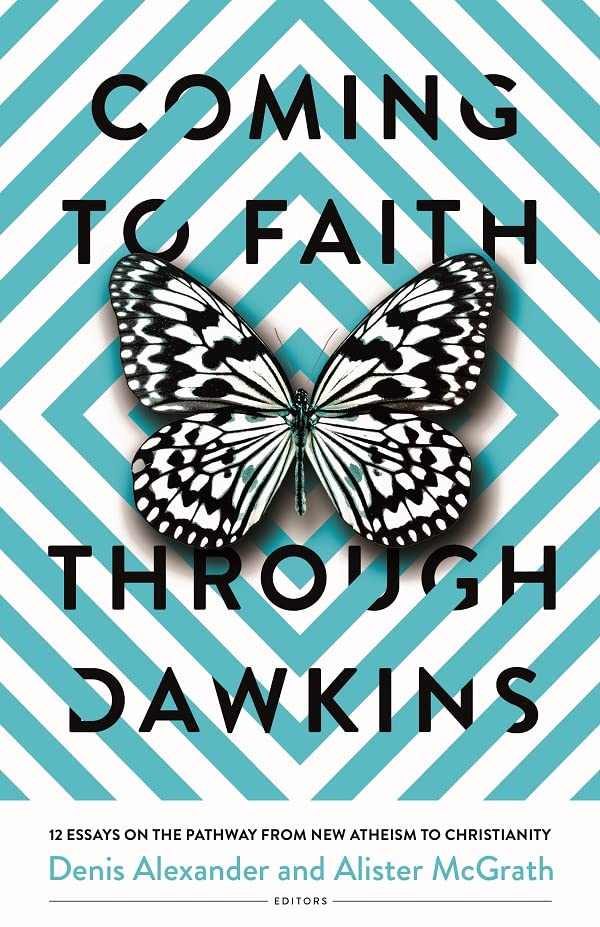
In a conversation on the Unbelievable? Podcast, Coming to faith through Dawkins – Part 2: Is there a new New Atheism?, Alex O’Connor (a/k/a the Cosmic Skeptic) commented about the book, Coming to Faith through Dawkins. He agreed that the most interesting aspect of the book is the prominence of story and experience, but he finds it unconvincing for the same reasons.

In case you don’t know, the book is a compilation of the stories of twelve people who were influenced by Richard Dawkins in their journeys from atheism to belief in the God of the Bible. Dawkins, of course, is one of the original (and most vocal) of the “new atheists. Thus, the title and subject matter of the book is ironic, intriguing, and not a little controversial.

O’Connor’s critique of the people whose stories are recounted in the book is that they seem to focus on their personal experiences. He says he is not convinced by the personal stories because they focus too much on personal experience and too little on syllogisms, rational arguments, and logical processes in their coming to faith.

This statement, as we shall see, is not a little ironic. O’Connor, though, expresses the modern western sensibility about personal experiences that are discounted and dismissed in favor of more objective evidence.

To be fair, many of the stories in the book recount the intellectual paths people trod on their way to faith, though the stories do not rigorously lay out the arguments, logic, and proofs. We shouldn’t be surprised by that, as the book focuses on peoples’ stories, and people’s stories are personal experiences.

Each of these journeyers from atheism to faith found problems, errors, bad philosophy, and nonsensical statements in Dawkins’s positions that led them to question his underlying assumptions (which were their underlying assumptions also). This, itself, was a rational process. The intellectual problems they saw in Dawkins’s positions made them skeptical of his skepticism.

O’Connor’s critique of the experiential nature of the stories might be discounted on that basis, but I want to focus on something else. This critique came up in the second of two segments. I want to go back to the first segment and contrast his critique with another statement O’Connor made to get to my point today. (See Coming to Faith through Richard Dawkins Part 1)


When asked what might convince him of the existence of God in the first segment, O’Connor said (without hesitation) that personal experience would be the most likely thing. Therefore, the critique O’Connor made in the second segment (complaining of the overly experiential nature of the stories) is ironic in light of O’Connor’s own admission that personal experience might be the one thing that could convince him that God exists (if he had such an experience).

This incongruity in O’Connor’s criticism about personal experience, and the value of personal experience in what we believe, is the thing I want to explore today. Atheists are not alone in being skeptical of personal experience. And with good reason. But personal experience is, nevertheless, vital to our human understanding of anything.

Continue reading “The Uncertain, Vital Value of Personal Experience with God” →

The Surprising Value of the Concept of Sin

The idea of sin makes people feel uncomfortable, and people blame sin for making them feel bad about themselves.


Many people bristle at the Christian idea of sin, and many people fault Christianity for its emphasis on sin. Richard Dawkins criticized Christianity in his book, The God Delusion, that it’s all about sin, sin, sin. His sentiment seems to be a popular one.

As a long-time Christian, I have a “robust” view of sin not just because I have robust respect for the Bible. I see sin in myself, and I see it in mankind, generally. I see it as a fact, like gravity, that makes sense of the foibles, failures, and futility of people and human systems I see in the world.

Not that people are incapable of doing good. Even who do not believe in God can do good. Even in doing good, though, I believe most of us do it good “selfishly” – because it makes us feel good; because of peer pressure; because we want people to honor us; because we want other people to be nice to us; or simply because of the utilitarian ideal that it makes the world a better place for me and my tribe to live in.

Most people, I assume, would be uncomfortable with my assessment. Maybe what I see in myself shouldn’t be “projected” onto other people. Maybe I am right, though. I wouldn’t believe it if I didn’t think it is a fair assessment.

I think one issue people have with the idea of sin is that they don’t know what to do with it. It doesn’t fit into an evolutionary paradigm that celebrates the progress of humanity from primordial ooze to ape to rational being.

Absent a cosmic redeemer, people have no “solution” for sin. Reject the One, and the other makes no sense. Many people don’t want a cosmic redeemer interfering with their self-determination (even people, ironically, who believe we have no self-determination, because we merely dance to our DNA).

People don’t see any “value” in sin. The idea of sin makes people feel uncomfortable. They blame the concept of sin for making them feel bad about themselves. When people measure their goodness against others, they either feel shame or self-righteousness, because they see themselves as better or worse than others.

People blame judgmental attitudes, intolerance, lack of empathy for others, and a host of other evils on the Judeo-Christian concept of sin.

On the other hand, do people who have rejected the Christian concept of sin stop feeling bad about themselves or stop being self-righteous? In my experience, no, they don’t.

Abandoning the idea of sin doesn’t seem to help people not feel bad about themselves, and it doesn’t stop people from being self-righteous. People still compare themselves to others. People still struggle with self-image, and some people still seem to think themselves morally superior to others even after rejecting the concept of sin.

The Christian vocabulary that includes sin has no place in alternative cultural constructs, like cultural Marxism, and the host of critical theories that flow from it. Judgment of others, however, is baked into those constructs, and virtue is signaled for group approval in ways that seem, to me, just as inimical as any bad church environment.

People are shamed and labor under judgmental attitudes perfectly well without the help of Christianity. In fact, I believe the shame and self-righteousness is even worse because other cultural constructs lack the Christian concepts of redemption, grace, and forgiveness.

But, I believe in sin simply because it makes sense of all my experiences and everything that I see in people and the world that is run by people. I have never thought of sin as a value proposition, other than to think that sinfulness is generally bad. I have certainly never thought of the idea of sin as good!

Until now.

Continue reading “The Surprising Value of the Concept of Sin” →

The Life and Death Reality of the Gospel

From hatred to love, from death to life

I murdered him for Allah but God raised him up to forgive me…. SHOCKING STORY OF REDEMPTION!! One for Israel: Israeli Arabs and Jews. United in the Gospel

The Gospel is a matter of life and death. The phrase seems cliché, even to a “religious” person. We believe it to be true, but the present reality of it may seem to be an abstraction. A non-religious person might understand the statement metaphorically and allegorically, but would subscribe little or no “weight” to it. Neither sense, however, captures the utter significance of the Gospel of Jesus Christ as it played out in the lives of people I want to introduce.

In the first story of a Muslim man who hated Christians and Jews, and in the second story of a Jewish woman who hated Muslims, the utter significance of the Gospel is brought home in a way that abstract ideas and allegorical concepts simply cannot accomplish. The Gospel is Living Water in a wasteland of hatred and death.

The first story of a Sudanese Muslim who hated everyone who was not Muslim will make your skin crawl as he describes a brutal, unprovoked attack by him and others against a Christian classmate that left the man broken, bleeding, and dying. He was unashamed and proud of what he had “done for Allah”.

An encounter with two Coptic Christians whose prayer healed his cousin as his cousin lay on his own deathbed opened his eyes to a new reality. When those Christians told him, “The real miracle is that God wants to change your heart,” the paradigms by which he had always viewed the world shifted forever.

The decision he made to embrace Yeshua cost him his family and life as he knew it. He became dead to them. They even performed a ceremonial funeral for him. The life that he formally knew was over, but the new Life he received was riches in comparison.

You will want to watch and listen to him tell his story in his own words, not just to describe this journey, but to listen to him tell the rest of the story about the man he left for dead. The power of the Gospel is so much more than a matter of mere metaphorical importance.

The second story comes from a Jewish woman who lived in a world in which Arabs “were the enemy”. She grew up in the midst of the complex political struggle in the Middle where all around her was war and death.

From her earliest memories, her world was unsafe. She was terrified of Arab people who lived in villages surrounding the settlement in which she grew up. The Arabic language was a reminder to her, when she heard it, of shooting, rocks flying and people dying. She learned to hate Arabs.

The Rabbis painted a picture of the God of the Bible as “a very cold and distant God, almost robot-like, a type of God that wouldn’t think twice before he would strike you down with a lightning bolt if you dared to tear a little piece of toilet paper on Saturday, which is forbidden in Judaism”. What she saw of God in the Bible, though, when she read it for herself, seemed different to her.

She grew up in a world of hatred and fear. When she was introduced to the God of love and hope, her world changed completely. She no longer hates or fears Arab people. She learned that the Lord of life is the God of Arabs and Jews alike.

These stories of people who grew up in environments that fostered hate against each others’ “tribes” show how the Gospel changes people so dramatically that those who once hated now love. Paul’s words are true of Jesus:

“But now in Christ Jesus you who once were far off have been brought near by the blood of Christ.  For he himself is our peace, who has made us both one and has broken down in his flesh the dividing wall of hostility….” (Eph. 2:13-14)