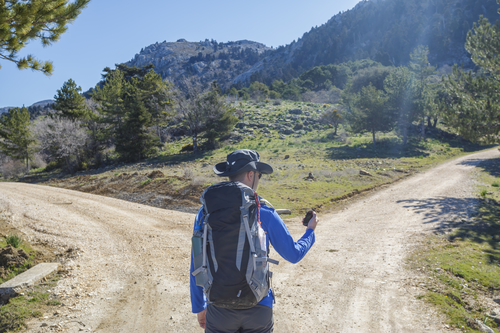
The plans of the heart belong to man,
but the answer of the tongue is from the Lord. Prov. 16:1
God expects us to make our plans. The ability to plan, to exercise choice, was given to us by God, who created us in His own image. But we do not control the outcomes. On the one hand, we do not control our own destinies. On the other hand, we are not left to our own devices.
The heart of man plans his way, but the LORD establishes his steps. Prov. 16:9
We have the responsibility to plan our ways, but God determines the outcomes. We can spend our entire lives planning our ways without any thought to God, who determines our outcomes. We have the ability to live as if God does not even exist, but we do not escape the One who establishes the course we actually take. We may have no choice in the outcomes, but we have choice in our planning.
To that extent, we could plan our ways with God in mind, seeking God’s wisdom, God’s purposes and God’s plans. Or we can choose to plan our ways without regard to God at all. God gives us that choice.
A man’s steps are from the LORD; how then can man understand his way? Prov. 20:24
The actual courses we take, however, are affected by the “circumstances” of our lives, the opportunities and obstacles that come our way, and the almost unlimited variety of influences, happenings and factors that ultimately determine the “steps” we take. This is just another way of saying that God establishes our steps.
Come now, you who say, “Today or tomorrow we will go into such and such a town and spend a year there and trade and make a profit”— yet you do not know what tomorrow will bring. What is your life? For you are a mist that appears for a little time and then vanishes. Instead you ought to say, “If the Lord wills, we will live and do this or that.” As it is, you boast in your arrogance. James 4:13-16
We don’t control our own way though we often think (presume) and act as if we do. God doesn’t frown on our plans. He made us with the capacity to plan our own ways, but we err (sin) if we fail to understand that we are not in control of the outcome of our plans. Our ability to freely plan our ways creates an illusion that we are the captains of our own destinies, but thinking and acting as if we actually do captain our own destinies is arrogance of the first order.
What is your life? For you are a mist that appears for a little time and then vanishes. James 4:14
Our lives are but a breath. (Job 7:7) Our lives are like clouds that appear and then vanish into thin air. (Job 7:9) Our days on earth are just a shadow. (Job 8:9) Our days are like the runner, fleeing away. (Job 9:25) Our days pass on like grass boats slipping downstream. (Job 9:26) Our lives are like a wind that passes and never returns. (Psalm 78:39) We are like flowers that bloom and quickly wither. (Job 14:2)
LORD, make me to know my end and what is the extent of my days; Let me know how transient I am. Psalm 34:9
Don’t presume about your life. Be mindful that life is short. Be aware that God is ultimately in control. God has his purposes. Pray and seek God and to understand His purposes. Make plans, but always be mindful of God and his plans and purposes. Invite God into your plans; seek for your plans to be harmonious with God’s plans.
We can live our lives on our own, going our own ways or we can live life in harmony with God and His ways. God gives us that choice, and we are responsible for the way we exercise that choice. At the end of our short days, as the bloom withers, what will be the outcome of our lives if we lived them our own ways?
The creed of this world lived our own way, apart from God, is I Did It My Way. We can do that. We can boast we did it our way. But, to what end?
As for me, when I think of the alternatives, when I consider the temptation to be the captain of my own soul, come hell or high water (as it is said), I think of the disciples complaining of the words of Jesus spoken to the crowds:
“This is a hard saying; who can listen to it?” (John 6:60)
Jesus didn’t change His message to accommodate His followers, and, as a result, “many of his disciples turned back and no longer walked with him”. (John 6:66)
In this context, Jesus turned to the twelve disciples and asked,
“Do you want to go away as well?” (John 6:67)
This is the question we all must face. This is point to which we all have or will arrive, either in this life, or when our days are done. How we respond to it is the ultimate choice we make or will make.
We don’t control when the light that is our life will go out. Our days are numbered, and they are in God’s hands. We don’t control when the choice to accept and follow Him can be made.
The plans of the heart belong to man,
but the answer of the tongue is from the Lord. Prov. 16:1
We make our choices, but God is the determining factor in our destiny. Will we choose to submit our selves, our plans, our destinies to God? Or will we go our own way.
When Jesus asked his disciples whether they wanted to go away too, as the others followers did when the message got difficult for them, Simon Peter answered for the group:
“Lord, to whom shall we go? You have the words of eternal life, and we have believed, and have come to know, that you are the Holy One of God.”
This, too, is my response. Though I often stumble, there is no other path for me. There is nothing else for me. There is nowhere else I want to be.
How about you?







 Navigating by Faith