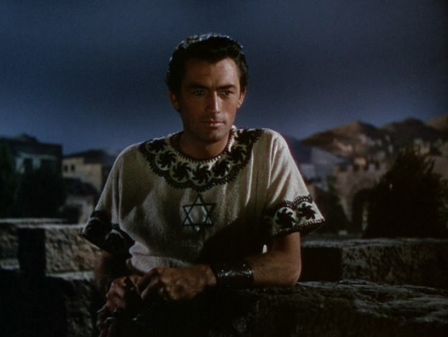
A friend of mine referred to the “sons of Issachar… who understood the times” recently when speaking of the evangelical support for Donald Trump. The reference comes from 1 Chronicles 12:32 where the “sons of Issachar” (descendants of the 9th son of Jacob) were described as men “who understood the times and knew what Israel should do”.
As I drifted near consciousness in my sleep last night, the phrase came back to me and ran through my head. I roused myself from a semi-conscious state and gave myself a reminder to look up the reference.
I followed up the next day. What does it mean? What does it mean for me? What does it mean in these times?
These were men who apparently understood the changing times in some unique way in a particular point in the history of Israel. The historical context was during the reign of King Saul when he became jealous of David and sought to kill him. David fled into the wilderness, taking with him other men who were loyal to him. As the various tribes learned of David’s plight and flight, they began to join David, including the sons of Issachar.
Whether they were in tune with God’s purposes or simply saw that Saul was loosing stature in their society, while David was gaining in influence, we don’t know. My friend assumed the former meaning.
God was in the process of rejecting Saul and announced (at least to David) that He was making David king. Saul pursued David to kill him. Instead of confronting Saul, the man God chose as King of Israel, David went into hiding. David could have rallied the men who joined him to form a coup and dethrone Saul, but he would not do that.
The initial surge of supporters who joined David included warriors from the tribe of Benjamin, Saul’s own relatives. (1 Ch. 12:2) Members of the tribe of Manasseh joined David even though their desertion of Saul could cost them their heads. (1 Ch. 12:19) Day after day, men came to David’s aid at a place called Ziklag. (1 Ch. 12:20-22)
If the sons of Issachar knew the times, one might assume that they were among the first to join David, but that assumption would be wrong. They were not the first. They weren’t even in the first wave. The 200 sons of Issachar joined David at Hebron, after many others already joined David.
God had rejected Saul as king, and it was only a matter of time for Saul’s demise. God was making a change, and David was the one God chose to replace Saul. We know today that David was also the man through whom God planned, eventually, to raise up the Messiah – the root of Jesse’s seed – Jesus. (Jesse was the father of David, and Jesus is from the line of David and Jesse.)
Saul’s reign had run its course. Saul was out of touch with God. His head had gotten too big. Pride had taken over, and he no longer bowed to God in his heart. He was losing his grip on reality and the kingdom God had given him.
We know the rest of the story, but the men who joined David surely didn’t. Maybe they just believed it was time for a change. How much they knew of or perceived of God’s role in this story is just conjecture. I think we might take for granted that they did, but we have the benefit of hindsight memorialized in Scripture. They lived it in real time.
As I read the story when I woke up in the morning, the number of the sons of Issachar who joined David struck me: 200 “chiefs” from the tribe of Issachar and all their kinsmen at their command. And, then I noticed something else.
Men from all twelve tribes of Israel joined David at Hebron, but only 200 “chiefs” from the tribe of Issachar were among them. Only 200 sons of Issachar actually joined David (though, perhaps, they represented all their kinsmen who were at their command).
The number of men identified from the other tribes were far greater in number, including 120,0000 men from Reuben, Gad and the half-tribe of Manasseh; 50,000 men from Zebulun; 40,000 from Asher; 1000 “captains” and 37,000 men “with shield and spear” from Naphtali; and 28,600 from Dan.
So, what’s the big deal about only 200 men from Issachar? Why does Scripture say of them (and not of anyone else) that they were men who understood the times and knew what Israel should do?
One answer that occurs to me is that the rest of the “sons of Issachar” were not men who understood the times and did not know what Israel should do. Maybe only the chiefs of that tribe understood the times. In contrast, 1000 captains were accompanied by 37,000 warriors from the tribe of Naphtali! It seems none of the warriors of Issachar were willing to join the 200 chiefs of Issachar.
Were the 200 chiefs of the sons of Issachar the only people from all the tribes who understood the times? It seems not. In 1 Chronicles 12:32, it states, “And of the children of Issachar, which were men that had understanding of the times, to know what Israel ought to do; the heads of them were two hundred; and all their brethren were at their commandment.”
Of all the tribes of Israel, the men of the tribe of Issachar who came to David’s rescue were the least in number. Only the leaders were mentioned (who understood the times). Does that mean that they were least in tune with God’s plan and purposes? I don’t know. (I should acknowledge that God often works through the least, the smallest, the most unlikely.)
The backstory to all of this is that Saul was chosen (by God) as king, but God only chose a king for the people because they wanted “a king like the other nations”. In demanding a king, the people were actually rejecting God. They were putting their trust in a king, rather than trusting God to be all they needed. (1 Samuel 8:6-9)
So how does all this inform me and other Christians today?
Continue reading “Who Were the Sons of Issachar? And What Might They Mean for Us Today?”