God’s Purpose from Babylon to the New Jerusalem

I am inspired today to try to attempt to trace the sweep and arc of God’s plan as revealed in the Bible.


God had a purpose when he created the universe and put man in the center of it. This is what the Bible tells us. I believe God’s plan was not thwarted by Adam and Eve eating from the fruit from the tree of the knowledge of good and evil. God’s plan was not thwarted by Cain killing Abel, and God’s plan was not thwarted by the Babylonians constructing a tower to their own glory.

God is patient and long-suffering. He created His universe and called it good, but His plan is and always has been to perfect His creation.

God gave us the ability to go our own way, but God’s purposes will be accomplished despite the freedom God gave us.

God gave us the ability to create our own kingdoms, but God’s purposes are to invite all people to embrace His kingdom. He provides the way freely as a gift, but our kingdoms often look better to us, and our ways seem right in our own eyes.

This is a very simplistic view of the whole sweep of Scripture, from beginning to end, which I believe we need to see so we don’t miss the forest for the trees. Of course, only God has perspective to see and to make sense of all the trees in that Great Forest. But, He gave us His word so we can begin to catch a glimpse of God’s great plans.

I want to focus on the big picture today, to survey the sweep and arc of God’s plan as revealed in the Bible, but I am not going to start with the creation of the universe or in the garden. I am going to start in Babylon. After all, we all live in a spiritual Babylon today.

We read in Genesis 11 that the world had one language and common speech. The people moved eastward, found a plain, and they settled there.

Recall that God instructed Adam and Eve to fill the whole earth. Their descendants settled in Babylon, however, and they remained there contrary to that instruction. They didn’t want to follow God’s plan; they wanted to follow their own plans.

The people came together to build a city for themselves and “a tower that reaches to the heavens” to “make a name for themselves.” This is a description of human beings choosing to go their own way, rather than God’s way.

They were afraid of being scattered over the face of the whole earth because that is what God wanted: for them to fill the earth. Because they resisted they were afraid..

The people were unified in going their own way against God. Their unity in going their own way was an obstacle to God achieving His purposes. For this reason, God confused their language, and they scattered over the whole earth.

People do not do well with differences. We isolate. We become group-focused. We despise others who are not like us, and we have inordinate pride in ourselves and our own kind. THIS is the story of human history.

It is also the story of God working His purposes in the world He created to achieve his ends. We may have trouble following it, but I think it will come into better focus if we jump quickly to the end. Then we will fill in the middle. All of this is just a brief snapshot of what God has revealed.

Continue reading “God’s Purpose from Babylon to the New Jerusalem”

What Is the Place of Christians in the World?

“By faith [Abraham] made his home in the promised land like a stranger in a foreign country; he lived in tents, as did Isaac and Jacob, who were heirs with him of the same promise.”

Apocaliptical scene to the Rome cityscape matte painting

I go back from time to time to the early “church fathers” for perspective. Most recently, I have focused on what we call The Epistle of Mathetes to Diognetus (the “Letter”). Even when translated from the Greek language in which it was written, the words and thoughts ring foreign to our American ears.

As I read this early Letter, I am impressed that Christians in the 21st Century have much to learn from 2nd Century Christians. They lived into the message of Jesus in ways that we seem to have long since forgotten

We don’t know who the author was. The Greek word, “mathetes“, merely means “student”. The person or ruling family to which the letter was written is also uncertain. We only know it was written in the early to mid 2nd Century.

The Church had grown slowly but steadily into the 2nd Century. Persecution ebbed and flowed around those early Christians, but they were more generally ignored and almost universally despised. In many ways, Christians were a complete oddity. They didn’t fit into the pagan (Greco/Roman) culture or the Jewish culture.

Christianity was centered in Jerusalem until the Roman war against the Jews and the destruction of the Temple in 70 AD. Christians scattered at that point, though Jerusalem remained one of many hubs of Christian life. The 2nd Century was a time of decentralization and spreading out throughout the Roman Empire and beyond – into areas of Africa and Asia, some of which were controlled by the Roman Empire, and some not.

According to the Letter, Christians were not physically, culturally, or linguistically distinguishable from the people in the many places in which they lived. They were distinguishable in other ways:

“But, inhabiting Greek as well as barbarian cities, according as the lot of each of them has determined, and following the customs of the natives in respect to clothing, food, and the rest of their ordinary conduct, they display to us their wonderful and confessedly striking method of life. They dwell in their own countries, but simply as sojourners. As citizens, they share in all things with others, and yet endure all things as if foreigners. Every foreign land is to them as their native country, and every land of their birth as a land of strangers.”

The Epistle of Mathetes to Diognetus
chapter 5

The most distinguishing feature of those Christians, according to the author of the Letter, was their “striking method of life”: they lived as strangers in their own countries. Though they were citizens in those countries, they “endure all things as if foreigners”.

We might be tempted to think that the “uprootedness” of early Christians was merely a product of rejection and persecution by non-Christians, but the Apostle Peter suggests otherwise: Christians are a “royal priesthood” and a “holy nation” who live as “foreigners and exiles” in this world. (1 Peter 2:9,11) This echoes the writer of Hebrews, who described all great people of faith as “foreigners and strangers on earth”. (Hebrews 11:13)

These passages in the New Testament epistles highlight a fundamental trait of Christians in the world at that time. But not just at that time; Jesus spoke to all his followers (including us) when he said, “[Y]ou are not of the world” (John 15:19), and, “My kingdom is not of this world.” (John 18:36)

How strange are these words and concepts to modern Americans! From the earliest days of our youth, we are taught about our freedoms and rights as American citizens. In contrast, 1st and 2nd Century Christians enjoyed some rights as citizens of the various countries in which they lived (maybe not as robust as the rights we enjoy), but they lived as if they had none. And, this was their “distinguishing “striking” feature as a people! It is what made them stand out.

They marry, as do all [others]; they beget children; but they do not destroy their offspring. They have a common table, but not a common bed. They are in the flesh, but they do not live after the flesh. 2 Corinthians 10:3 They pass their days on earth, but they are citizens of heaven.

the Epistle of Mathetes to Diognetus
chapter 5

Second Century Christians lived as if they were really not of this world. And, this “feature “striking method” of living was noticeable. They adapted and fit into their surroundings and culture wherever they lived, except for this one thing: they lived like they were not citizens of the countries in which they lived – even if they were actually citizens.

They were outsiders wherever they lived because they lived like citizens of heaven. They fit in wherever they went, but they stood out by their allegiance to loving God and loving others. How strange and foreign that may seem to us!

Continue reading “What Is the Place of Christians in the World?”

What It Means to Follow Jesus in Babylon

Live your lives, Increase and multiply. Seek the welfare of this world, BUT ALWAYS REMEMBER that this world is passing away

I tried to set the stage for what it means to follow Jesus in Babylon with a prior post: God’s Ways: a Primer for What It Means to Follow Jesus in Babylon. It is a kind of running start – a view from 40,000 feet. The purposes of God establish the context for understanding how we follow Jesus in Babylon.

Jesus, of course, did not live in Babylon during the 30-some years he walked the earth. I am speaking figuratively here. Jesus urged people to follow him, to live as he did and to “walk” as he walked – to be imitators of Jesus as he was an imitator of God the Father. We follow Jesus wherever we are.

Most people reading this blog don’t live in Babylon either, as in the ancient city. Rather, Babylon is symbolic of our lives in this world. Just as the exiles found themselves living as foreign people in a foreign land filled with foreign gods, followers of Jesus today are aliens and strangers in this world living among people who do not bow down to our God.

When Jeremiah wrote to the Jewish exiles in Babylon right after they were taken captive, right after they lost everything (their homes, their lives as they knew them, the Temple around which their community was organized), his words would have been difficult to receive.

“Thus says the Lord of hosts, the God of Israel, to all the exiles whom I have sent into exile from Jerusalem to Babylon….”

Jer. 29:4

That God “sent” them into exile would have been a painful reminder of all the warnings of the prophets leading up to the final siege of Jerusalem, captivity, and long march to Babylon. Jeremiah had their attention, though. The unthinkable that Jeremiah had long been predicting actually happened.

In that context, this is what he said:

“Build houses and live in them; plant gardens and eat their produce. Take wives and have sons and daughters; take wives for your sons, and give your daughters in marriage, that they may bear sons and daughters; multiply there, and do not decrease. But seek the welfare of the city where I have sent you into exile, and pray to the Lord on its behalf, for in its welfare you will find your welfare.”

eremiah 29:5-10

I don’t think we can emphasize enough the timing of these words: this was the very beginning of the exile. They just lost everything. They just got there. Their future was uncertain. Though they had some hope of returning to their homeland (because the prophets who warned them of the exile also predicted their return), their hope was faint at this point. 

I assume that most of the people reading this blog are not exiles, though many hundreds of thousands of people are refugees in this modern world. Even those of us who are not refugees are not “of this world” if we belong

In the rest of this blog, I will relate those words Jeremiah wrote to the exiled Jews in ancient Babylon to our lives in our modern “Babylon” today, and I will add in the warning, and the encouragement, that Jeremiah gave in the letter that are also instructive to us today. I believe Jeremiah’s words of instruction are how we should follow Jesus in Babylon.

Continue reading “What It Means to Follow Jesus in Babylon”

The Plans God Has for Us – Part III

Even in the midst of the very Judgment of God, God desires to bless us! He is every appealing to us to listen to Him and respond to Him. 


In the previous two blog posts on The Plans God Has for Us, we considered the fact that the often-quoted verse about the plans God us for us – plans to prosper us and to give us hope and a future (Jeremiah 29:11)[1] – should be viewed in historical context. (Part I) That historical context was the 900-year history of disbelief and disobedience of God’s people ending in 40 years of warning of impending judgment that culminated in the judgment coming to pass with the Babylonian conquest of Jerusalem and exile. (Part II) In this post, I will try to draw some conclusions in the application of this verse and relevance to our modern lives.

This letter was the message of God through the prophet, Jeremiah, to God’s people that He gave them at the very beginning of their exile. In this letter, God tells them that they will remain in exile for 70 years![2] In fact, this shocking statement – you will be here 70 years – is the statement that immediately precedes the famous verse we all know:

“’For I know the plans I have for you,’ declares the Lord, ‘plans to prosper you and not to harm you, plans to give you hope and a future.’”

In a sense, God is telling them, “I’ve got good news and bad news. The bad news is that I have imposed my judgment on you, and it will last 70 years. But the good news is that I have plans for you, good plans to prosper you and to give you hope and a future.

Thank about it: 70 years….

In an age in which the average life expectancy was about 35 years, that’s two generations! For the vast majority of the exiled people, this meant their lives would end in captivity. What kind of hope and future is that?!

The United States has been a country for less than 250 years, and our oldest ancestors in this country (unless you are Native American) go back only 400 years. The people of Judah had roots in their land going back almost 1000 years!

These were dire times, and this people had just lost everything. But even in the midst of this horrific circumstance, we need to look carefully at what God is saying. Just before announcing that this judgment thing is going to last 70 years, God gives them instructions:

“This is what the Lord Almighty, the God of Israel, says to all those I carried into exile from Jerusalem to Babylon: ‘Build houses and settle down; plant gardens and eat what they produce. Marry and have sons and daughters; find wives for your sons and give your daughters in marriage, so that they too may have sons and daughters. Increase in number there; do not decrease. Also, seek the peace and prosperity of the city to which I have carried you into exile. Pray to the Lord for it, because if it prospers, you too will prosper.’”[3]

Imagine the 40 years of warning and the weight of that impending doom on those who actually took it seriously. As with most things we fear, the fear is worse than the reality.

During this time of judgment in exile in Babylon, God says to them, basically, “Don’t despair! Go about your lives. Embrace the circumstances into which I have brought you. Live life. Make plans. Bless those around you, seek to better the community in which you find yourself, and I will bless you.”

Even in the midst of the very Judgment of God, God desires to bless us! He is ever appealing to us to listen to Him and respond to Him.

Continue reading “The Plans God Has for Us – Part III”

Carried Off to Babylon

We are half-hearted creatures, fooling about with drink and sex and ambition when infinite joy is offered us.

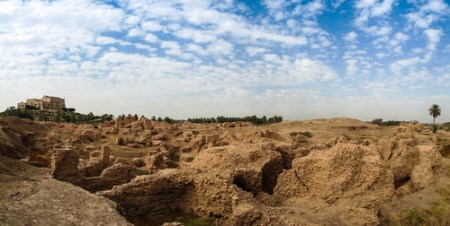
Panorama of partially restored Babylon ruins and Former Saddam Hussein Palace, Babylon, Hillah, Iraq

“Behold, the days are coming, when all that is in your house, and that which your fathers have stored up till this day, shall be carried to Babylon. Nothing shall be left, says the Lord.” (Isaiah 39:6 ESV)

This is a follow up blog piece to Here Today Gone Tomorrow. The story of King Hezekiah, and Isaiah Chapter 39, is, illustrative of our tendency to hold on to things in this world and in this life contrary to what God intends for us. Jesus speaks to God’s intention when he urges us to lay up our treasures in heaven, and not to focus on accumulating treasures on earth.

Hezekiah was a pretty good king as kings of Judah go. Many of those kings turned away from God to idol worship and other behaviors influenced by the pagan culture of the nations around them. These were the people who were never completely driven out of the Promised Land as God instructed. The people and their kings became corrupted by those influences and succumbed to them.

The descendants of Abraham, Isaac and Jacob split into two camps early on after the people rejected the rule of judges and wanted kings like the nations around them.  They split into the nation of Israel and the nation of Judah.

By the time King Hezekiah came around, the nation of Israel had been overrun, captured, and exiled to Babylon. During Hezekiah’s reign the people were hanging on by a thread, with the threat of Babylonian exile dangling like the sword of Damocles over the remnant, Judah, that remained in Jerusalem.

In Hezekiah’s fourteenth year as king, Sennacherib, the king of Assyria, attacked all the fortified cities of Judah and captured them, but for Jerusalem. King Hezekiah responded to this threat by turning to God. He prayed, and, as the story goes, 185,000 troops of the Assyrian king died in the camp overnight, sparing the City of Jerusalem from certain doom. (Isaiah 37)

Hezekiah turned to God when circumstances were dire and his death was imminent. Like most of us, though, the King was short-sighted. He focused on the immediate, protecting himself for the remainder of his short life.

Continue reading “Carried Off to Babylon”