Jesus Wept with Mary, Though He Knew the Joy to Come

We live in a world in which Jesus wept at the tomb of Lazarus, knowing that he was going to raise him from the dead.


NT Wright commented to Justin Brierley in the 39th episode of Ask NT Wright Anything, “We live in a world in which Jesus wept at the tomb of Lazarus, knowing that he was going to raise him from the dead.”

Jesus was able to identify with and feel the crushing sorrow and the intense grief that the family and friends of Lazarus felt. When Jesus saw Mary, the sister of Lazarus weeping, he wept too. (John 11:32-33) Jesus felt her grief, and it moved him to tears.

Jesus weeping at the tomb of his friend, Lazarus, of course, reveals his humanity, his empathy and the fact that he felt the range of human emotions that we feel in our own lives. Imagine God taking on our form and experiencing what we experience!

The most remarkable aspect of this story, for me, is that Jesus felt the grief of the loss of a loved one and was moved to tears even though he knew he was going to raise him from the dead. He wept with grief though he know that joy would follow the raising of Lazarus from the dead.

In this way, we see that God doesn’t minimize our grief and suffering. He is able to identify with it because he felt the crush of it as we feel it.

He felt the crush of human grief even though he knew the miracle he was about to perform.

Perhaps, Jesus was weeping for all the people who feel grief without assurance or confidence or hope. Surely, Jesus had more than merely hope. He knew that he was about to raise Lazarus from the dead, but he also realized that his friends, the friends and family of Lazarus, didn’t know or appreciate what he was about to do.

Even though Jesus told the friends of Lazarus that he was doing “to wake him up” (John 11:11), and he told Martha, “Your brother will rise again,” they didn’t fully understand or appreciate what Jesus was saying. (John 11:23) They didn’t feel the assurance or confidence or hope that Jesus had.

I imagine Jesus also thought in those moments of all the people in the world who mourn without assurance, confidence or hope in the face of death. This is the human condition, and Jesus fully embraced it. He fully felt the weight of it, and it caused him to weep with them.

Continue reading “Jesus Wept with Mary, Though He Knew the Joy to Come”

At the Curve of a Waterfall: Matter Flowing Through Us

Harrison Wright Falls at Ricketts Glen State Park by Chris A. Fraley

A person posed this question to N.T Wright: “If my body decays, and goes on to become reconstituted into plants and animals and things, what remains? What is essentially me?” NT Wright responded by noting, first, that Tertullian and Origen discussed this question in the 2nd and 3rd centuries, and CS Lewis picked up the same theme in the 20th century in his book, Miracles.

CS Lewis observed that fingernails, hair, skin and the entire the human body are in a constant condition of flux. “Bodies change their entire molecular kit once about every seven (7) years”, Wright noted.

I am not the same person physically that I was when I was born, or graduated from college at age 22, or graduated from law school at age 31 or when my last child was born when I was 39. I am not the same person, physically, at 60, as I was when I was 39.
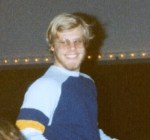
All of the molecules in my body have switched out many times over those years, yet I am still recognizably me. Maybe a bit larger, with gray hair and visibly aged from my mid-twenties, but I am still me even though none of the same molecules exist in my 60-year body.

NT Wright re-phrased the question in different ways: If a ship goes into a port and one year later, after all parts of it have been replaced, it goes into port again, is it the same ship? If my grandfather has a spade, and replaces the blade and handle several times, is it the still the same spade?

I don’t know about a ship or a spade, but as for me, I know that I am still me even though I don’t have a single molecule left over from my 22-year old self. I have more experiences; I have gained more memories. People can see in my body and mind some resemblance of the “me” they might remember.

Though memories aren’t physical things I can show anyone, I can describe them, and people who share those experiences with me can recognize them. Those nonphysical memories are undeniably “part” of “me” – things I have picked up along the way in addition to the extra weight in my physical body.

CS Lewis says that people are like the curve in a waterfall. They have continuity of form but discontinuity of matter. Matter pours through us. The “us” matter pours through is the real thing – not the matter.

On this day six (6) years ago, Facebook informs me that I posted this quotation from CS Lewis:

“You don’t have a soul. You are a Soul. You have a body.”

I don’t know if CS Lewis is exactly right, but he is getting at the same idea – that we are something more than our physical selves. We aren’t reducible to our physical selves. Our physical selves aren’t even made up of the same molecules that once existed in us. Not one molecule remains from my 22-year old self – yet my self remains.

This mystery is extended in the death and resurrection of Jesus. Through Jesus, God promises to give us new bodies. Our bodies will be changed, Scripture says, but each one of us will remain the same person and be recognizable. Biblical scholars say we will be more fully us then we were before.

In a sense, it’ will be the opposite of the saying about a sick person who is “just a shadow of himself.” Except, the perspective will be reversed. We will see that our bodies were just a shadow of what we will become. Wright says there is a “real you” that is much more like you, vividly more like you, then you are now.

Getting around to attempt an answer to the question posed, NT Wright says, “Nowhere in the New Testament does it describe a soul leaving a body and going to heaven.” What does he mean?

Continue reading “At the Curve of a Waterfall: Matter Flowing Through Us”

The Linguistic Origins of Modern Drumming

We have the Civil War to thank for modern rock music


I am going off my beaten path here today, though music is certainly a beat I follow. Music is a universal language. Music is a creative gift from our Creator who made us in His image. We reflect Him, therefore, in the creation of music.

Music is mathematical and linguistic, even in its essence. I didn’t previously know, for instance, that drumming has an “alphabet” of 26 rhythms. I did know that drummers in the Civil War (and I assume previous wars) played a key role in their battalions. They weren’t just there to boost moral; they were the communicators on the battlefield, signalling the orders from the generals and commanders to their troops in the heat of the battle.

These things are discussed in the video embedded below on the originals of the shuffle – a type of pattern that mimics a train passing by on a track, and a basic backbone of most modern music. Marcus Petruska takes time in this video to talk about “the debt we all owe to the Civil War drummers”.

He goes into some detail about how drums (and bugles) were used to communicate commands in the fog of war to the troops in the battle. Those various beats used to communicate to troops in war became the percussion vocabulary that informs modern music – the 26 rudiments of drumming. It’s a bit mind blowing to think that we have the Civil War to thank for modern rock music!

These two subjects, music and the Civil War, meeting at the confluence of drumming resonate deeply with me because my great great grandfather was a drummer in the Civil War. He enlisted with the 40th Illinois Infantry that was organized by Stephen G. Hicks, a lawyer in Salem, Marion County, Illinois, and commissioned on July 24, 1861. He was part of Company “F” from Franklin County, Illinois, comprised primarily of farmers.

Continue reading “The Linguistic Origins of Modern Drumming”

Francis Collins on Proof of God: The Options are Simple

Which position requires more faith? The existence of God? Or the existence of a multiverse?


Francis Collins is the former director of the National Human Genome Research Institute where he spearheaded the Human Genome Project. He is now director of the National Institute of Health. He is a member of the Institute of Medicine and the National Academy of Sciences and has received the Presidential Medal of Freedom and the National Medal of Science.

He graduated from the University of Virginia with a Bachelor of Science degree in Chemistry. He graduated as a Doctor of Philosophy in physical chemistry from Yale University. Then he earned a Doctor of Medicine degree from University of N. Carolina at Chapel Hill.

Francis Collins is best known for his work in sequencing and mapping the human genome. He has been involved in the discovery of genes associated with various diseases. Most recently, Francis Collins was announced as the 2020 Templeton Prize winner.

“The Templeton Prize is an annual award granted to a living person, in the estimation of the judges, ‘whose exemplary achievements advance Sir John Templeton’s philanthropic vision: harnessing the power of the sciences to explore the deepest questions of the universe and humankind’s place and purpose within it.’” The Templeton Prize exceeds the value of the Nobel Prize each year and is awarded to recognize progress toward research and discoveries about spiritual realities. (See Wikipedia)

The early trajectory of his life would not have predicted a Templeton Prize in his future. Francis Collins grew up on a small farm, in a non-religious home of parents he describes as hippies. He was home schooled through 6th grade. He loved science despite his more artsy upbringing, but any notions of the possibility of a God were wiped from the ledger of possibilities for him by the time he entered graduate school.

Francis Collins was an atheist, and he didn’t give God or religion much thought until sometime after his doctoral degrees were completed and he was working in the field of medicine. He was challenged one day by a cancer patient to support his view that God didn’t exist. While he was convinced of his position, he realized his position was based on assumptions he had not explored.

Collins realized he hadn’t really considered the evidence, or lack thereof. He had not come to his position in a scientific way.

The scientist in him recognized that he should know why he didn’t believe in God. He understand at that point that he could not hold that position with integrity without considering the contrary evidence. Thus, he set out to inform himself.

Along the way, he came to the conclusion that his original position wasn’t as tenable as he supposed. Reluctantly he came to believe that God is the best explanation for all the evidence he understood through science.

Francis Collins was in his late 20’s when he found himself a believer, and specifically a believer in the Christian concept of God. (A little bit of his story is captured in Inspiration or Artifice? Faith and Reason) That position has informed his life work ever since.

Francis Collins recently sat down (remotely) with Justin Brierley, the Unbelievable? Podcast, host, to discuss faith and science. I will embed the YouTube video of the interview at the end of this article, focusing on the question: what evidence of God is most compelling? (But the whole interview is worth a listen.)

Continue reading “Francis Collins on Proof of God: The Options are Simple”

Maker of the Universe

He made the forest whence there sprung the tree on which His body hung


The Maker of the universe,
As Man for man was made a curse.

The claims of Law which He had made,
Unto the uttermost He paid.

His holy fingers made the bough,
Which grew the thorns that crowned His brow.

The nails that pierced His hands were mined
In secret places He designed.

He made the forest whence there sprung
The tree on which His body hung.

He died upon a cross of wood,
Yet made the hill on which it stood.

The sky that darkened o’er His head,
By Him above the earth was spread.

The sun that hid from Him it’s face
By His decree was poised in space.

The spear which spilled His precious blood
Was tempered in the fires of God.

The grave in which His form was laid
Was hewn in rocks His hands had made.

The throne on which He now appears
Was His for everlasting years.

But a new glory crowns His brow
And every knee to Him shall bow.

By Phil Keaggy