God is the Fulfillment of the Desires He Built into Us

We all have a conscience and a desire and need for the cleansing of our consciences.


“Have mercy on me, O God, according to your steadfast love; according to your abundant mercy blot out my transgressions. Wash me thoroughly from my iniquity, and cleanse me from my sin!” Psalms 51:1-2 ESV

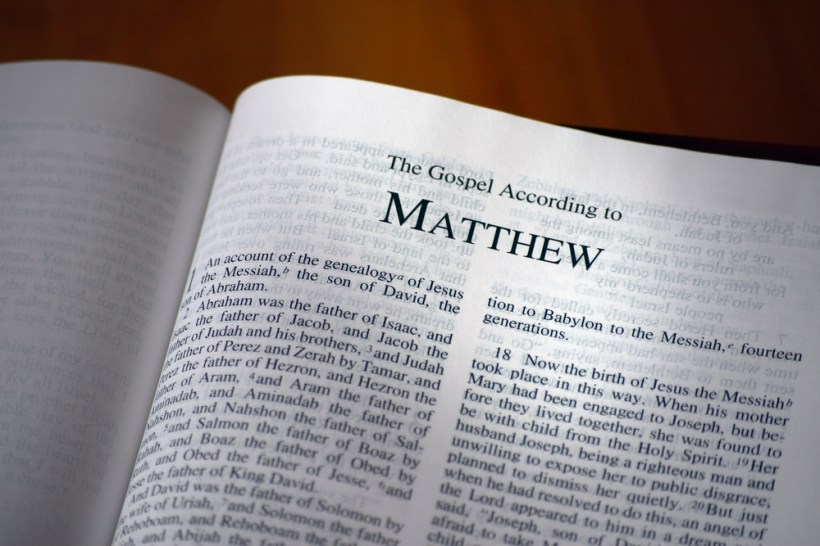
I have written about how we can’t throw out the Old Testament and accept the New Testament in its place, as modern sensibilities might suggest. (See, for instance, Jesus and the “Old Testament God”) The Old Testament is the seed for the New Testament. Everything revealed in the New Testament was first revealed in the Old Testament. The Old Testament finds its fulfillment in the New Testament.

It seems that 21st Century people tend to want to view “the Old Testament God” as something different from the God revealed in the New Testament by Jesus, but Jesus affirmed the Old Testament.  Jesus says that the Old Testament also anticipates and points toward him.

“And beginning with Moses and all the Prophets, he explained to them what was said in all the Scriptures concerning himself.” Luke 24:27

The Bible verse of the day quoted above was prayed by David in Psalm 51. David expressed the desire of all of us when he asked God to have mercy on him, to “blot out” his transgressions, to wash away his iniquity and to cleanse him from his sins. We all have a conscience.

We all have failed our own consciences (let alone God’s standards), and we need cleansing and redemption. This is a deep longing within each one of us.

At the same time, we have the capacity to ignore our consciences and to deny that desire for cleansing and redemption. If we do that too often and too long, our consciences become callous and dull; the desire for redemption diminishes; and we no longer have the sensitivity God built into us that drives us toward Him.

C S Lewis talks about how our desires and our needs have a correlative reality in something that fulfills those desires and needs. He observes that we hunger, and there is food to meet that hunger; we thirst, and there is water to quench that thirst; we have sexual desires, and there is conjugal love we have with another person that fulfills that desire.

The satisfaction is only temporary, however. We have longings for more lasting satisfaction. That those desires are only temporally met and satisfied, says Lewis, suggests that there is something else, something more.

We also have a deeper and more fundamental longing within us to know God and to be known by God, for relationship with God and for eternal life. CS Lewis says that the reality we know, the satisfaction of temporary longings and desires, is some evidence of a more fundamental and satisfying reality that will fulfill our enduring and deepest longings.

The ancient writer of Ecclesiastes was, perhaps, thinking along these same lines when he said that God put eternity into our hearts, yet not so much that we know very much about it:

“He has made everything beautiful in its time. He has also set eternity in the human heart; yet no one can fathom what God has done from beginning to end.” Ecclesiastes 3:11 NIV

Continue reading “God is the Fulfillment of the Desires He Built into Us”

The Roots of Modern Ethics in the Ancient Near East

Of the origins of monotheistic religion and ethics.

Jerusalem: The Temple Mount from the time of the Second Temple

When I was in college, the first class I took was World Religions. Though I graduated with an English Literature major, I also had enough credits to be a Religion major. I didn’t need the dual major. I only took the religion classes because they interested me.

I also became a believing Christian during my college years. It was a transition that took place between that World Religion class and the summer between Sophomore and Junior years. It’s a long story that I might tell in detail some time, but the point for now is that I did a lot of reading and thinking about these things in those years and in the decades since. It doesn’t make me a theologian, but I have more than a passing interest.

Early on I learned that the creation story and flood story in Genesis, among other things, have counterparts in other religions, including other religions in the same area of the world – the Ancient Near East. Phoenicians, Assyrians, Persians, and other people groups had similar myths that have been uncovered from that general time period.

I learned that Zoroastrianism shared attributes similar to the ancient Hebraic view of the world, including the idea a singular creator God, a dualistic cosmology of good and evil, the ultimate destruction of evil, judgment after death, etc. The scholarly understanding when I was in college was that Zoroastrianism predated Hebraic thought and influenced it.

It occurred to me at the time, not having any reason to doubt what I was taught, that Abraham may have been particularly open to his encounter with God if, indeed, he had lived in an area of the world and in a time in which there was this kind of influence. It made some sense. He was the right guy in the right place with the right influences setting the table for an encounter with God, the Creator of the world. Perhaps, Abraham brought the influence of monotheistic Zoroastrians into the pagan, polytheistic world of Canaan.

Recently I did some research on Zoroastrianism. Wikipedia acknowledges that Zoroastrianism has “possible roots dating back to the second millennium BC”, though the “recorded history” of Zoroastrianism dates back only to the 5th Century BC. (Wikipedia). The conjecture that Zoroastrianism dates back further to the second millennium BC is has no present support in the historical record.

If we date the accounts of Abraham and his descendants according the biblical chronology and references, that history goes far back into the second millennium BC, but the consensus of modern archaeologists and theologians reject that dating in favor of first millennium BC dating. (See Wikipedia, for example) Modern scholars don’t take the Bible at face value. In fact, they presumptively dismiss the Bible as historical record.

Scholarly views are not universal on this issue, of course. Not by a long shot. Modern archaeological and written evidence exists to suggest that the modern consensus is wrong about the timeline for the life of Moses, the Exodus and other things. (See for instance Patterns of Evidence: The Moses Controversy) The Patterns of Evidence theory is that historians and archaeologists who assume a particular timeline for certain events are not apt to see the evidence for those events if they occurred in a different timeline.

The Patterns of Evidence thesis is that evidence for the events described in the biblical narrative is there if we use the right timeline and look for them in the right time periods. Specifically, the biblical accounts of Moses, the Exodus, and entry into the land of Canaan are apparent in the archaeological record and historical data on the biblical timeline (second millennium BC), but they are not evident in the first millennium timeline applied by modern, skeptical scholars.

Certain archaeological finds, like the Ebla Tablets, also raise questions about the modern scholarly consensus. The importance of “looking” in the right places according to the right timelines is explored in Timing the Walls of Jericho.

Back to Abraham, though. He was reportedly from the area of Ur (in modern southwest Iraq), which is quite a distance from the area of Canaan (later Judea) where he ended up – about 1600 miles in fact. In Ur, he may have come in contact with Zoroastrians and similar influences. That idea intrigued me in college, and it still does. So I revisit that thought journey again today.

Continue reading “The Roots of Modern Ethics in the Ancient Near East”

On Acknowledging and Transcending Evil – A Message to the Church

The Nazi party came to power in a Christian nation, and church leaders participated in the Rwandan genocide. How do we deal with that?

CIRCA 1933: Rare German vintage cigarette card from the 1933 Der Staat der Arbeit und des Friedens album, Part 2, Picture 155.

As often happens with me, disparate things I have read recently gel together in ways that provide insight. One of those things I read a number of weeks ago. It was a piece written about the effect of Christianity (or lack thereof) on Nazi Germany. I don’t have a citation anymore.

The other piece I read today, I Met the Man Who Killed My Entire Family, by Katelyn Beaty, Christianity Today (Aug. 2017), summarizing an interview with Immaculee Ilibagiza about her experience with the Rwandan genocide. Aside from the harrowing details and utterly transformative reality of real forgiveness, this statement jumped off the pages at me:

“United Nations tribunals have found many church leaders guilty of murdering neighbors or aiding Hutu in hunting down Tutsi and moderate Hutu.”

How could that be?! About one million people were killed in Rwanda, a country about the size of Maryland, and “the Church” was not only complicit in the killings by looking the other way; it was directly involved!

That is a hard reality for believers to accept, but we must not look away. We must confront it: Church leaders, not just people who sat in the pews, were directly involved in the Rwandan genocide.

We might be tempted to discount the conclusions of the United Nations, which is not a particularly faith-friendly institution, but I think that is a mistake. I felt the same way reading the account of the Christian influence in Nazi Germany.

To be sure, some of the conclusions of the author of the article about Nazi Germany were unfair and (I believe) misinformed, but that doesn’t mean he spoke no truth. I came away having to acknowledge that I can no longer claim that the Nazi influence in post-World War I Germany was grounded solely in atheism.

Reality is more complicated than that, and we (the church) need to be careful of glossing over painful realities that don’t fit into how we see ourselves.

The recent exposure of the problem of sexual abuse among Southern Baptist churches is another example. We can’t turn a blind eye to evil in the church just because it doesn’t line up with the way the church ought to be. Truth is truth, and we most not run from it.

If something doesn’t line up with the commands of Christ to love others as ourselves and the litmus test, “they will know us by our love”, we should be all the more vigilant to acknowledge the short falling and be quick to respond appropriately. Especially if the failure is found in the Church!

I think part of the danger, as we might learn from Nazi Germany, is that we see ourselves as the “good” people. We tend to think that evil is “out there”. “Other” people are evil. Certainly, not us!.

The church is just as susceptible to this thinking as anyone… maybe even more so!

I believe the Gospel message is hurt more by our silent refusal to acknowledge evil, even when it might arise “in the church”, than it would be by quick and candid acknowledgment and appropriate response. I think we do the Gospel a disservice when we fail to acknowledge evil in the church when we find it, and by failing to acknowledge it we become complicit with it.

Continue reading “On Acknowledging and Transcending Evil – A Message to the Church”

On the Near-Death Experience of an Atheist and Speculation on Its Effect

Whatever our experiences, our beliefs often win out. Our beliefs are not always divorced from what we want to be true, though they may be (by the same token) disconnected from reality. 


The subject of near-death experiences is a deep rabbit hole I have come to find out. I have listened to a number of testimonies recently of people who have had near-death experiences. Trying to make some sense of them led me to look up what Gary Habermas has to say about them. Habermas has been involved in the research of near-death experiences (NDEs) for a couple of decades.

This blog piece follows a summary of what Habermas says about NDEs. (See Habermas on Near-Death Experiences) I am picking up here where I left off about the near-death experience of the famous atheist, Sir Alfred Jules (AJ) Ayer, that is self-described in the article, What I Saw When I was Dead. This piece explores beyond the suggestions Habermas makes (that NDEs may be influenced by worldview) and gets behind the public persona of Ayer after his NDE.

To the extent that Ayer is “arguably the most influential 20th century rationalist after Bertrand Russel“, his encounter with a seemingly irrational near-death experience is interesting indeed.

Continue reading “On the Near-Death Experience of an Atheist and Speculation on Its Effect”

Gary Habermas on Near-Death Experiences

Many accounts of near-death experiences can’t be explained by the involvement of the central nervous system.


I have recently watched a number of recollections of near-death experiences (NDEs). I also recently listened to a lecture by Gary Habermas, who has studied NDEs for more than a couple of decades. He notes that NDEs have been known for millennia. Some scholars speculate that Plato ‘s Myth of Ur is about a real NDE. There are even near-death experiences recorded in Scripture.

I had no idea NDEs were so common. Habermas says Americans, alone, have reported about 8,000,000 NDE experiences, and they occur around the world in all cultures.

Many NDEs could be made up, though there are many similarities among the reported NDEs. Just listening to a dozen or so of them I could identify the similarities. NDE accounts often don’t fit with worldviews, including the Christian worldview.

Naturalists, however, have the most difficult position in respect to NDEs. Naturalism is the premise that the universe is comprised of nothing but material things: matter, motion, time and space. They hold to a position that no transcendent or supernatural reality exists.

How do we deal with NDEs? How do we account for them?

Continue reading “Gary Habermas on Near-Death Experiences”