The Elijah Complex and the Whisper of God

We may have an Elijah complex when we think we are the only ones following God.

BRESCIA, ITALY – MAY 23, 2016: The painting Prophet Elijah Receiving Bread and Water from an Angel at Chiesa di San Giovanni Evangelista by Alessandro Bonvicino-Moretto

Do you identify with Elijah? Do you squirm thinking about his zeal? Do you feel guilty about not sharing the Gospel with your neighbor? Then, maybe a new look at Elijah may resonate with you.

We know Elijah for his zeal for Yahweh in a time when the culture and national leaders were rebelling against God. Sound familiar?

Elijah is famous for challenging the Israelite king, Ahab, and his rebellious wife, Jezebel, and all of the prophets of Baal and Asherah that were commissioned by that royal pair. He felt like he was the only one standing for God in a world that wanted him to shut up and go away.

Some of us may feel like Elijah, while many others of us may feel guilty that we are not like Elijah. He is a pillar of the faith, right?

Yes, of course, he is! As I read through these passages, though, I am seeing something I didn’t catch before. For one thing, I get the feeling that Elijah probably wasn’t a fun guy to be around.

He certainly didn’t go along with the crowd. He wasn’t known for his diplomatic tact. (To put it mildly) He said what was on his mind, and he didn’t pull any punches.

These characteristics of Elijah begin to give us an idea of what he is like. They also point toward a more human side of Elijah that I hadn’t noticed before, which is why I want to dive deeper into the story of Elijah and the prophets of Baal.

Elijah is famous for challenging 450 prophets of Baal to an Ancient Near Eastern duel of the gods. It was Elijah against all the prophets of Baal; Yahweh against Baal in a cosmic duel with mortal consequences for the losers.

This is the way Elijah rolled. No holds barred!

Elijah challenged the prophets to sacrifice a bull on an altar without setting fire to it, letting Baal or Yahweh, as the case might be, consume the sacrifice directly. Which one would show up?! The stakes were high. If Yahweh didn’t show, Elijah was toast!!

Elijah offered to let the prophets of Baal go first. (A bit of showmanship?) They cut up the bull; they placed it on the altar; and they did their ritual thing to entice Baal to come out of whatever stone he might live under … but nothing happened.

Elijah taunted them. (He was not a master of subtlety!) He egged them on to shout louder and offered the following “helpful” comments (paraphrased by me):

  • Maybe your god is daydreaming”;
  • Maybe he fell asleep and you need to shout louder; and
  • Maybe he is relieving himself, and he will be back in a minute!

Elijah’s taunting wound those prophets up into a religious frenzy. They cut themselves with knives, and swords, and spears until they bled everywhere … but still nothing happened.

When their time was up, all eyes turned to Elijah.

I imagine the anticipation in the crowd rivaled a Las Vegas audience watching Siegfried and Roy walk a full grown tiger onto the stage. Elijah let the expectation mount as he built his own altar. The atmosphere was electric. The crowd was undoubtedly hoping for more action than the prophets of Baal gave them.

I can imagine the smug look on Elijah’s face and the brash confidence in his demeaner as he instructed volunteers from the crowd to pour water on the offering. Elijah was nothing if not dramatic!


Lest we forget, they were in the middle of a long draught. Elijah didn’t just have them sprinkle water. Three times Elijah instructed his helpers to fill up the jars, and pour them out on the bull, the wood, and the altar until it was soaked and water pooled in the trench around it.

Anticipation hung like a funnel cloud overhead as darkness loomed over the mountaintop stage. The expectant crowd, the exhausted prophets recovering from their failed ordeal, and Ahab sat poised on the edge of their proverbial seats.

In the flash of a moment, fire came down from heaven. Like a galactic flamethrower, the fire was so fierce it completely consumed the bull, the wood, and the altar itself!

Nothing remained but hot, smoldering ash.

Yahweh showed up as Elijah said he would! Elijah was vindicated!

But that wasn’t enough for him. With freshened zeal fueled by the powerful demonstration of God’s power, Elijah provoked the excited crowd to grab the cowering prophets of Baal and march them down the mountain where they were slaughtered in the valley below.

Elijah was at the height of his prophetic career. Elijah may have thought, “Not even Moses presided over such a powerful demonstration of God’s awesome power!” Elijah was on top of the world!


It’s hard to imagine greater faith and boldness or a more decisive display of God’s power. Perhaps, the only thing more amazing than all of that was Jezebel’s response:

She was not… impressed… at all.

When Ahab raced to deliver the news to Jezebel, his haughty audacious wife didn’t even hesitate. She ordered death to Elijah with ice in her veins.

Elijah must have been thinking, “What’s a man of God got to do?!” (Never mind that the crowd seemed properly convinced.) If his greatest act of faith couldn’t turn the hardened hearts of Ahab and Jezebel, nothing would! He had done his absolute best, and it wasn’t enough.

Have you ever felt that way? Have you ever felt like nothing you do, or can do, makes any difference? Have you ever come to the place that you have done your best, and your best wasn’t good enough? Have you ever felt like you are the only one who stands for God?

Have you ever gotten mad at God for not defending you for standing up for Him? Then, read on.

Continue reading “The Elijah Complex and the Whisper of God”

What Are We Missing in the Story of the Garden of Eden?

Why did God place the tree of the knowledge of good and evil in the garden and forbid Adam to eat it?


Once again, I am reading the epic of Eden by Sandra Richter. She takes the orthodox, traditional position that Eden was perfect, man fell, bringing God’s creation down with him, and God is redeeming man with creation so that man will live forever in perfection, again, after redemption is complete. I am indebted to her and other scholars, and I greatly appreciated her book.

I wrote recently, on the question, Was the Garden of Eden Really Perfect? With due respect to Sandra Richter, I am leaning in the direction of no, the Garden of Eden wasn’t perfect. I explain my thinking in the article linked in this paragraph, and today I want to explore something that may be missing from the traditional narrative (at least as I understand it).

Today, I am posing some questions that occur to me as I continue to read through Sandra Richter’s fine book. Why did God place the tree of the knowledge of good and evil in the garden? Did God know men would eat from it? What is the point of the fall and the long road back to redemption?

I don’t claim to have all the answers, or at least not all the right answers. We may not know, and may never know, the answers in their nuanced details. I think that is ok, though we should strive to know as best as we can.

Maybe some things are not meant for us to know; or at least we are not meant to know that we know. We have a strong tendency to become proud and self-righteous and to start relying on our own understanding, rather than remaining humble before God and our fellow man.

Yet, I think God wants us to seek to understand. “It is the glory of God to conceal things, but the glory of kings is to search things out.” (Proverbs 25:2) Thus, my article today is an attempt at better understanding God’s redemption story and searching out these things.

Surely, God had purpose in placing that tree in the garden, right? God is sovereign and all-knowing, right? Thus, I think the questions I pose today are good for us to consider.

Continue reading “What Are We Missing in the Story of the Garden of Eden?”

Lessons from Moses of Faith, the Lack Thereof and the Purposes of God

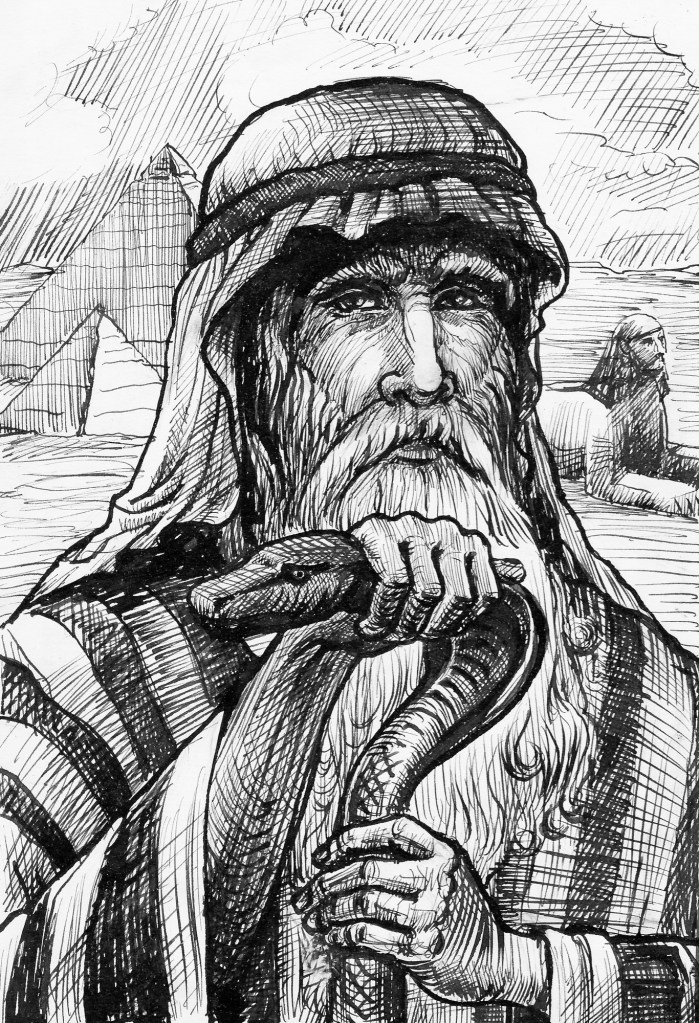
Moses knew better, but his own emotions got the best of him.

Egypt, Sinai, Mount Moses: view from road on which pilgrims climb the mountain of Moses

The passage in Numbers 20:1‭-‬13, which I quote below (in the NIV), has puzzled me in the past. It didn’t sit well with me, and I figured I simply didn’t understand it well.

As with many things I don’t understand well, I often “shelve” them for later consideration. Later is now, as I have just read through the passage again in my yearly journey through the Bible. This is the setting:

“In the first month the whole Israelite community arrived at the Desert of Zin, and they stayed at Kadesh. There Miriam died and was buried.”

Miriam, the sister of Moses and Aaron, had just died. Not much is said about her death, but Moses and Aaron must have been grieving. That grief on top of resistance from the Israelites they were trying to lead according to God’s direction, and the harsh circumstances of the desert must have weighed heavily on them.


“Now there was no water for the community, and the people gathered in opposition to Moses and Aaron. They quarreled with Moses and said, ‘If only we had died when our brothers fell dead before the Lord!'”

I believe their “brothers” who “fell before the Lord” refers to Korah who led a rebellion against Moses. (Numbers 16) Korah challenged Moses and his right to lead the Israelites, because Korah was not happy with his clan’s roll in caring for the Tent of Meeting. In challenging Moses, he was basically saying, “Who put you in charge?!”

Instead of confronting Korah directly, Moses set up a test before the people to allow God to identify who was in charge. When Korah and his clan burned incense, the ground rumbled, and Moses told the people to back away from Korah and his tribe of rebels as the ground swallowed them up.

Not long afterward, the wanderings of the Israelites brought them to the Desert of Zin, where the Israelites became so angry and distraught about the conditions in the desert that they wished they died with Korah in rebellion against God. The desert conditions must have seemed pretty inhospitable. Moses was losing the hearts of the people, and they were turning against him. Again! The people said:

“‘Why did you bring the Lord’s community into this wilderness, that we and our livestock should die here? Why did you bring us up out of Egypt to this terrible place? It has no grain or figs, grapevines or pomegranates. And there is no water to drink!’” 

Of course, Moses was God’s man. That fact was demonstrated graphically in the Korah situation, but they continued to take their dissatisfaction over their circumstances out on Moses. Instead of God, they blamed Moses for their situation. When Moses and Aaron the assembly of the people, the made a beeline for the entrance to the tent of meeting where they “fell facedown”, and “the glory of the Lord appeared to them.”

Moses and Aaron knew the score. They knew that the people were really finding fault with God, not Moses or Aaron. They were intimate enough with God to know that God was not to be trifled with.

When the glory of God appeared to them, they should have been emboldened to stand resolute on their confidence in God’s direction. They should not have doubted that God was with them. Right?

Of course, the Israelites should not have doubted that God was with them, either. God’s visibly demonstrated Himself to them over and over again. His visible presence went with them in a pillar of cloud by day and fire by night. They had seen the demonstrations of the power and holiness of God at the Red Sea, at Mount Sinai and in the ground swallowing up Korah and his band of rebels.

What more did they need to see to understand that God was with them?

Yet, they did not trust that God had their back. God gave them manna every morning, and God gave them so much meat when they demanded meat that it came out of their nostrils. Yet, they continually grumbled and complained and wished they were back in Egypt.

Something had to be done to put down the unrest!

“The Lord said to Moses, ‘Take the staff, and you and your brother Aaron gather the assembly together. Speak to that rock before their eyes and it will pour out its water. You will bring water out of the rock for the community so they and their livestock can drink.’” (Emphasis added)

The instructions were simple and pretty clear: take the staff and speak to the rock.

“So Moses took the staff from the Lord’s presence, just as he commanded him. He and Aaron gathered the assembly together in front of the rock and Moses said to them, ‘Listen, you rebels, must we bring you water out of this rock?’” 

Moses started out all right. He took the staff as he was commanded, but things begin to go off the rails after that. Moses was obviously perplexed that the people were so angry, and he might have been taking it personally. Instead of speaking to the rock, Moses turned and spoke to the people, and he was full of wrath for them in that moment.

It’s hard for me to blame Moses for feeling this way. I am sure I would take it personally also. It was personal!

The people were obstinate. What more could Moses do to demonstrate that God put him in charge?! Yet, they continued to challenge Moses and blame him for their unsatisfactory conditions.


Moses knew better, but it seems his own emotions got the best of him. He took their opposition personally, and his anger led him to forget God’s instructions to him:

“Then Moses raised his arm and struck the rock twice with his staff. Water gushed out, and the community and their livestock drank.”

The result was good, right?

But, Moses didn’t do exactly what God commanded him. God told him to speak to the rock. Instead, Moses spoke to the people, and Moses struck the rock with his staff. These clues pop when God responds:

“But the Lord said to Moses and Aaron, ‘Because you did not trust in me enough to honor me as holy in the sight of the Israelites, you will not bring this community into the land I give them.'”

I have long thought that the punishment didn’t fit the crime. Perhaps, I didn’t understood the significance of these things. God’s response seemed harsh in light of the faithfulness of Moses before Pharaoh, in receiving and delivering the Ten Commandments, and in putting up with the grumbling, and complaining, and obstinance, and waywardness of the Israelites, but maybe I was missing something.

Keep in mind that Moses grew up in luxury and privilege in Pharaoh’s household. The Israelites were “his people”, but only by genetics. Moses put up with a lot with these people he didn’t grow up with and didn’t even know very well. It seemed to me that Moses had been pretty faithful to God but clearly, his disobedience to God was more significant than I have appreciated.

Continue reading “Lessons from Moses of Faith, the Lack Thereof and the Purposes of God”

What Does It Mean that the Word of God Was Inspired by God and Received and Passed on By Men?

The Bible, itself, doesn’t claim to be one hundred percent, word for word, accurate (or even inerrant). The closest we get to a statement like that is that it is “God-breathed” (inspired), and that the people who were “inspired” by God received that inspiration and passed it on.


The written word of God was so important to the Jewish culture that scribes were a distinguished, respected and critical role in Jewish society. The importance of the painstaking process and precision with which they copied Torah, the Prophets and Writings was embedded into the foundation of Jewish culture going back to Moses.

Moses produced the Ten Commandments etched in stone. Those stone tablets were carefully placed into the Ark of the Covenant, carried with the nation of Israel as they traveled through the desert, and kept with ritual attention to detail in the most sacred place in the Tent of Meeting in the middle of their camp wherever they came to rest.

Scribes who carefully and painstakingly copied Scripture were still honored at the top of Hebrew culture in the First Century when Paul, also known as Saul of Tarsus, was alive. Paul was trained as a Pharisee of Pharisees under Gamliel, the most respected Pharisee of his day.

For that reason, I find it interesting, to say the least, the way Paul described the process by which the word of God was given by God to the people. He would have been intimately acquainted with the disciplined, careful and thorough way a scribe would copy Scripture. Yet Paul says,

“All Scripture is God-breathed and is useful for teaching, rebuking, correcting and training in righteousness, so that the servant of God may be thoroughly equipped for every good work.”

2 Timothy 3:16-17

God-breathed, or inspired, is the way Paul described how people received God’s word and passed it on. If Paul wanted to convey the idea of verbatim dictation from God, as Muhammed claimed with the Quran, he would have likely described the process like a scribe painstakingly copying the text, but he didn’t.

Paul was intimate with the way scribes copied the scriptural text, but he didn’t describe the way people received God’s Word and passed it on that way. Paul, himself, received God’s Word and passed it on. That message he received from God and passed on has become scripture! Yet, he didn’t describe the process like a scribe copying verbatim.

I wrestled with what inspiration means in recent articles here and here. Given the way people like Paul described the way Scripture was conveyed and received, it is likely he didn’t mean verbatim dictation from God. If he meant verbatim dictation, he would have described the process more like a scribe copying scriptural text.

Instructive are the other ways Scripture is characterized in the New Testament. Peter, for instance, wrote the following in his second epistle:

“But know this first of all, that no prophecy of Scripture becomes a matter of someone’s own interpretation, for no prophecy was ever made by an act of human will, but men moved by the Holy Spirit spoke from God.”

2 Peter 1:21 (NASB)

Peter says that the prophecy was not initiated by human agency. People didn’t choose to prophesy; they were moved by divine agency. They didn’t interpret what they were moved to communicate; they simply communicated what they received.

The Greek word translated “moved” in this text is φέρω (pheró), meaning “to bear, carry, bring forth”. It has the same connotation as the idea of a conduit or conduction.

If Peter meant to say that the Word of God was “dictated” and copied down verbatim, like the scribes copied Scriptures, he would have likely used a word related to “scribe”, but he described a different kind of process. I think we have to assume that Paul’s inspiration is similar to Peter’s conduction.

Neither one used the well-known analogy of a scribe merely copying what was written, though Peter clarifies that the message prophets received and passed on was not interpreted by them. They passed it on with integrity and, presumably, accurately. Still, that is not the same thing as verbatim dictation.

Paul describes his own encounter with the risen Christ in this way. He says:

“For I would have you know, brothers and sisters, that the gospel which was preached by me is not of human invention. For I neither received it from man, nor was I taught it, but I received it through a revelation of Jesus Christ.” 

Galatians 1:11 (NIV)

Paul uses the same language in his first letter to the Corinthians when he says:

“For I handed down to you as of first importance what I also received….”

1 Corinthians 15:3 (NASB)

But what does it mean that the writers of Scripture were inspired, moved by God, did not initiate, or interpret or invent it. What does it mean that they passed on what they received?

If they didn’t take “dictation” from God, what does it mean that God inspired men and moved men with a message, and they passed on what they received?

Continue reading “What Does It Mean that the Word of God Was Inspired by God and Received and Passed on By Men?”

Why Did Jesus Weep When He Thought about the Future of Jerusalem?

I don’t often comment on the free will/predestination conundrum. If I had to “pick a side”, I would err on the side of free will. It’s a conundrum because the Bible includes verses and passages that seem to support free will and verses and passages that seem to support the idea of predestination.

Some people say this is an example of contradictions in the Bible. Some people land on one side or the other, seemingly ignoring or explaining away the verses that suggest otherwise.

I say it’s a paradox. A paradox is “a seemingly absurd or self-contradictory statement or proposition that when investigated or explained may prove to be well founded or true.” A paradox may appear to be a contradiction, but it turns out to be true, and noncontradictory.

How are man’s free will and God’s preordainment true? I don’t honestly know. That we human beings think that we must figure everything out, or it cannot be true, is frankly an arrogant thought, finite creatures that we are. At the same time, we are not completely unreasonable to seek some explanation or understanding.

If you expect, now , that I will give one, I have to apologize in advance. I do have some thoughts about it and will explore them in one of those verses that affirms the free will of men:

“As he approached and saw the city, he wept for it, saying, ‘If you knew this day what would bring peace — but now it is hidden from your eyes. For the days will come on you when your enemies will build a barricade around you, surround you, and hem you in on every side. They will crush you and your children among you to the ground, and they will not leave one stone on another in your midst, because you did not recognize the time when God visited you.’”

Luke 19:41‭-‬44 CSB

Continue reading “Why Did Jesus Weep When He Thought about the Future of Jerusalem?”