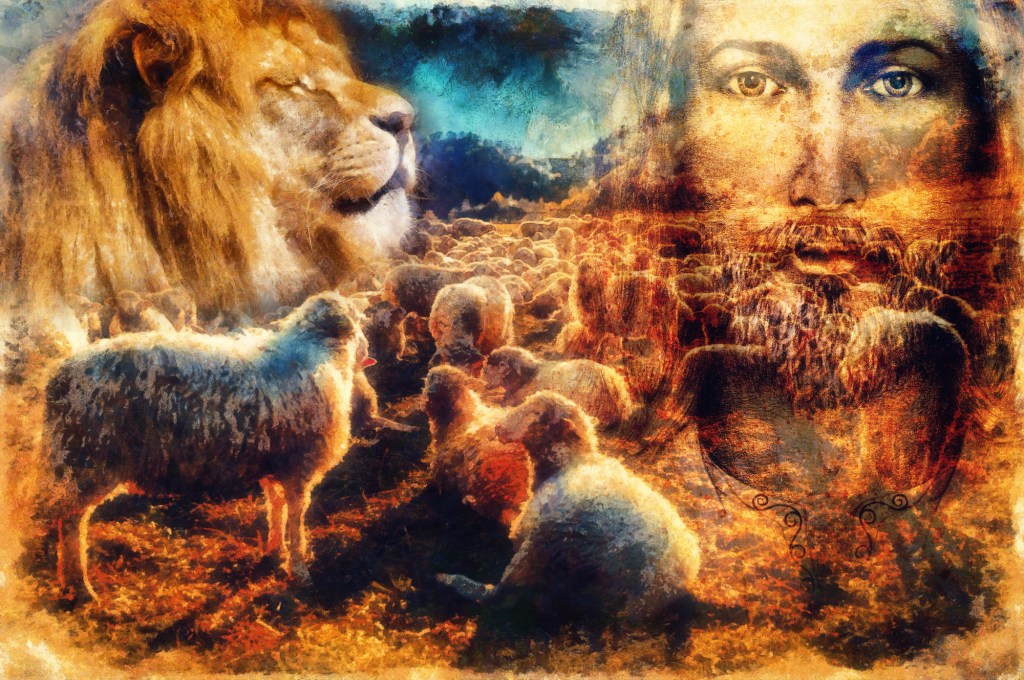
God Meets Us Where We Are: But Will You Know Him When You Meet Him?

If your eyes are unhealthy, your whole body is full of darkness


About 5 years ago, I wrote God Meets Us Where We Are. I was impressed then (and I still am) that God who created the Universe stoops to come to us. I was also impressed that finding God is not so much about our seeking, but about our opening up to God Who is ever present to us, but never overbearing.

God seems hidden to many people. If we do not really want to see Him as He is and to embrace Him for Who He is, we may never know He is “there” at all.

When we act contrary to God’s character, our sin hides God from us. (Isaiah 59:1-2) The Prophet, Micah, says God “hides his face” from people, even when they cry to Him, because of the evil, the bad, the harm we do. (Micah 3:4)

The “evil” Micah is talking about in this chapter is injustice – the way we treat other people. The “leaders of Jacob” to whom he was talking were taking advantage of their own people for their own benefit. When people do that, they will cry out to God, but God will not respond.

CS Lewis called God the Great Interferer in his autobiographical book, Surprised by Joy. He didn’t want God to exist. He didn’t want to be interfered with. “He wanted to be left alone, and unconsciously knew that if he denied the existence of some Ultimate Authority, then he himself would be that very authority in his own life. Thus, he could live his life according to his own desires.” (Christ the Great Interferer)

When we live to satisfy our own desires, often at the expense of others, we act out of character with God, and we are blinded by the thrust of our own actions from seeing God. He allows our conduct to separate us and hide us from Him because God does not reward our bad behavior.

“The eye is the lamp of the body. If your eyes are healthy, your whole body will be full of light. But if your eyes are unhealthy, your whole body will be full of darkness. If then the light within you is darkness, how great is that darkness!”

Matthew 6:22-23

God desires us to know Him as He is and to desire to be like Him. When we acknowledge our wrong ways (sin) and turn (repent) from them, God is quick to meet us “there”. When we confess our sins, He is just and faithful to forgive us! ( 1 John 1:9)

That is what He is waiting for, but we must come to Him honestly. He isn’t handing out “get out of jail cards” for free. He wants us to desire Him and to desire to be like Him; He isn’t interested in appeasing your conscience for the moment so you can feel better about what you have done and what you will do in the future.

God has given us each other as the testing ground. As Micah indicates, how we treat others determines whether God is hidden to us. Jesus said as much in the Parable of the Sheep and the Goats. “‘Truly I tell you, whatever you did for one of the least of these brothers and sisters of mine, you did for me,'” (Matt. 25:40) and “‘Truly I tell you, whatever you did not do for one of the least of these, you did not do for me.’” (Matt. 25:45)

It seems to me that God designed the world as He did because God desires relationship with people who desire Him, and He provides us a testing ground for that relationship in other people. God will not force Himself on anyone who does not want to know Him – at least for the time being.

There will come a day when our lives end in the natural course or by circumstance that God does not control. Having set His universe in motion, He rarely interferes. Too much interference would frustrate His purposes.

There will also come a day when the time for human seeking is over, when this Project Earth has come to its appointed end, when the time for ultimate redemption and the perfection of God’s purposes is at hand. At that time – when all people see “the Son of Man coming in a cloud with power and great glory” (Luke 21:27) – it will be too late for any seeking

As the Apostle Paul said, “I tell you, now is the time of God’s favor, now is the day of salvation.” (2 Corinthians 6:2) The writer of Hebrews repeats three times for us: “Today, if you hear his voice, do not harden your hearts.” (Hebrews 3:7-8; 3:15; and 4:7)

God is with us now, and the time of His favor – to seek Him and find Him – is now. There are no guarantees for anyone. In fact, the only guaranty is that our time will end: either at our own natural or untimely death or when day of the Lord comes and the time for choosing is over. Do not harden you heart. Now is the day of your salvation.


The Way of Righteousness and the Holy Command: The Way

We escape the corruption of the world by the way of righteousness and the sacred command. But, what if we lose the way and don’t know the sacred commandment?


I started this short series focusing on the second epistle of Peter where Peter warns his readers about false prophets with “eyes full of adultery”, greed, and depravity who are slaves to their own sin. These people seduce the unstable and entice others by appealing to the lustful desires of the flesh. Peter says,

It would have been better for them not to have known the way of righteousness, than to have known it and then to turn their backs on the sacred command that was passed on to them.

These are fearful words of warning. Anyone who might feel enslaved to sin has likely felt angst when reading this words.

In the previous article, I note that the actions Peter describes are the fruit of people who have “known the way of righteousness” and the “sacred [holy] command” and have turned their backs and walked away. The fruits are the symptoms, not the cause.

The important thing for us, therefore, is to know the way of righteousness and the holy commandment, and not to turn our backs on them! In this follow up to that introductory article, I will focus on the way of righteousness.

Continue reading “The Way of Righteousness and the Holy Command: The Way”

The Way of Righteousness and the Holy Command: the Holy Command

We escape the corruption of the world by the way of righteousness and the sacred command. But, what if we lose the way and don’t know the sacred commandment?


I started this short series with a passage from 2 Peter 2:20-21:

If they have escaped the corruption of the world by knowing our Lord and Savior Jesus Christ and are again entangled in it and are overcome, they are worse off at the end than they were at the beginning. It would have been better for them not to have known the way of righteousness, than to have known it and then to turn their backs on the sacred command that was passed on to them.

They “they” who escaped the corruption of the world only to be entangled in it again are the false prophets Peter accuses at the beginning of the chapter of introducing “destructive heresies” and “denying the sovereign Lord who bought them.” (2 Pet. 2:1) Peter says these false prophets are like dogs returning to their vomit. (v. 22) Seducing the unstable (v. 14) and appealing to the lustful desires of the flesh, they entice “people who are just escaping from those who live in error.” (v. 18)

In the introductory article, I note that the words of judgment Peter unleashes on these false prophets might lead to a concern that we could one of those unstable ones who are enticed and entrapped. Those who struggle with sins that so easily entangle us might easily feel condemned in this tirade.

The solemn warning that such ones are better off not knowing Jesus. than knowing the way of righteousness and turning their back on the sacred command is enough to send a shiver down the spine. The actions Peter describes, however, are the fruits of turning away from the sacred command. These fruits are not the problems in themselves, but the symptoms of disconnecting from the way of righteousness and the sacred command.

In the second article, I explored the way of righteousness. The way of righteousness is the way of Jesus, who is the Way! Knowing Jesus and knowing the way of righteousness is the same thing.

The way of righteousness means embracing and walking in light of his sacrifice on the cross by which we are justified and we are considered righteous before God the Father. It means trusting in Jesus and the grace of God the Father. It means ceasing from our striving to earn the way and the pride that goes with our achievement.

The way of righteousness means following Jesus and maintaining relationship with Jesus, who is our Living Water, our Bread of Life, and the Vine in which we have become the branches (extensions of him). Knowing the way of righteousness and turning from the sacred command is to disconnect and to go our own way.

But what is the sacred command? This was my big question as I read through this passage recently, and this question is ultimately what motives me to write this short series.

I admit, that I wasn’t sure as I read through this passage. I should have known, because Jesus was pretty clear about it. But, I didn’t. I had lost sight of it. It’s so easy to lose sight of what’s important in the turmoil in the world that often spills over into my own heart.

Continue reading “The Way of Righteousness and the Holy Command: the Holy Command”

Is Merely Believing In Jesus Enough?

Jesus said that many people will say to him on the day of judgment, “Lord, Lord”, but he will tell them that he never knew them.


I follow a daily Bible reading plan every year. In most years I read through the Bible from beginning to end, but this year I am focusing on the New Testament only. Today, I came across this rather innocuous verse that prompts my thoughts:

Now when he was in Jerusalem at the Passover Feast, many believed in his name when they saw the signs that he was doing. But Jesus on his part did not entrust himself to them, because he knew all people. 

John 2:23-24 ESV‬

Though I was raised Catholic, a combination of evangelical people who shared the Gospel with me led me to a real, authentic belief in God and surrender to Jesus “as my Lord and Savior” (as the saying goes). I can’t say that I didn’t believe in God before that time (intellectually), but God didn’t mean anything to me before then. I had no relationship to God, and the existence of God carried no relevance in my life.

As a young Christian, I put great weight on simply believing in Jesus, which was what was emphasized to me. It seemed to me that believing in Jesus was all a person needed to do to be saved, and everyone who believed in Jesus was OK. I think that is still fundamentally true, but it is not the whole truth.

I was grateful, of course. Belief in Jesus changed my life! I recognized the changes deep within me, which I believe is indicative of being born again. My eyes were opened, and now I could see!

Many years later, however, it doesn’t seem quite so simple. Examples of people who go to church, and claim to be Christian, but who don’t act anything like Jesus, are legion. This hypocrisy among the people who call themselves Christian is a common reason why people say they don’t go to church any more. Many people don’t live what they believe.

Of course, we are all hypocrites to some extent. None of us live up to God’s standard. (Nor do we even live up to our own, lower standards, if we are being completely honest.)

There are differences in degrees. Some people are more like Jesus than others. The Bible acknowledges that we must all grow in our knowledge of God, and the Bible recognizes that sanctification is a process.

In my own life, I experienced some relatively instantaneous changes in me, especially in my attitudes, in what I was drawn to, and in my understanding (like a light bulb turning on). I also continued to struggle with habits of thought and action, some of which dog me still to this day.

We want simple formulas. Romans 10:9 says, “[I]f you confess with your mouth that Jesus is Lord and believe in your heart that God raised him from the dead, you will be saved.” ( ESV) This literally says that believing in our hearts and confessing with our mouths that Jesus is Lord is all that is necessary for salvation.

I believe in that “formula” with all my heart. BUT – at the same time – it is is not quite so simple. Jesus said, “Many will say to me, “Lord! Lord!”

We might have a tendency to view the “Romans Road” as a kind of magic formula that makes a person a Christian, but it doesn’t exactly work like that. Anyone can mouth those words with no change in their inner reality. It’s not enough to confess with your mouth, a person must believe in his/her heart.

Anyone can confess that “Jesus is Lord”. The confession must come from a real and authentic belief in the heart that results in a change to be assured it has real substance.

This change is not something we can manufacture. It occurs organically from the inside out. The change may not even be immediately noticeable. This is because the change results from God working inside us, not by our efforts to conform, but by His regenerative work in us. It may take a while to bear fruit on the outside.

People look at the outward appearance (confession), but God judges the heart. (1 Samuel 16:7) People may claim to be Christian, especially in the United States where being Christian can provide social, political, or other capital, but that doesn’t mean everyone who claims to be a Christian is an authentic believer and follower of Jesus.

Jesus said that many people will say to him on the day of judgment, “Lord, Lord”, but he will tell them that he never knew them. (Matt. 7:22) Jesus said that some of these people will even prophesy, cast out demons, and perform miracles in his name, but, they are not true believers. (Matt. 7:23) (If you want to hear the personal stories of people who recognize that they were once “false converts”, I am providing a link to their stories here.)

Continue reading “Is Merely Believing In Jesus Enough?”

God’s Purpose from Babylon to the New Jerusalem

I am inspired today to try to attempt to trace the sweep and arc of God’s plan as revealed in the Bible.


God had a purpose when he created the universe and put man in the center of it. This is what the Bible tells us. I believe God’s plan was not thwarted by Adam and Eve eating from the fruit from the tree of the knowledge of good and evil. God’s plan was not thwarted by Cain killing Abel, and God’s plan was not thwarted by the Babylonians constructing a tower to their own glory.

God is patient and long-suffering. He created His universe and called it good, but His plan is and always has been to perfect His creation.

God gave us the ability to go our own way, but God’s purposes will be accomplished despite the freedom God gave us.

God gave us the ability to create our own kingdoms, but God’s purposes are to invite all people to embrace His kingdom. He provides the way freely as a gift, but our kingdoms often look better to us, and our ways seem right in our own eyes.

This is a very simplistic view of the whole sweep of Scripture, from beginning to end, which I believe we need to see so we don’t miss the forest for the trees. Of course, only God has perspective to see and to make sense of all the trees in that Great Forest. But, He gave us His word so we can begin to catch a glimpse of God’s great plans.

I want to focus on the big picture today, to survey the sweep and arc of God’s plan as revealed in the Bible, but I am not going to start with the creation of the universe or in the garden. I am going to start in Babylon. After all, we all live in a spiritual Babylon today.

We read in Genesis 11 that the world had one language and common speech. The people moved eastward, found a plain, and they settled there.

Recall that God instructed Adam and Eve to fill the whole earth. Their descendants settled in Babylon, however, and they remained there contrary to that instruction. They didn’t want to follow God’s plan; they wanted to follow their own plans.

The people came together to build a city for themselves and “a tower that reaches to the heavens” to “make a name for themselves.” This is a description of human beings choosing to go their own way, rather than God’s way.

They were afraid of being scattered over the face of the whole earth because that is what God wanted: for them to fill the earth. Because they resisted they were afraid..

The people were unified in going their own way against God. Their unity in going their own way was an obstacle to God achieving His purposes. For this reason, God confused their language, and they scattered over the whole earth.

People do not do well with differences. We isolate. We become group-focused. We despise others who are not like us, and we have inordinate pride in ourselves and our own kind. THIS is the story of human history.

It is also the story of God working His purposes in the world He created to achieve his ends. We may have trouble following it, but I think it will come into better focus if we jump quickly to the end. Then we will fill in the middle. All of this is just a brief snapshot of what God has revealed.

Continue reading “God’s Purpose from Babylon to the New Jerusalem”