Some Consolation in the Biblical Illiteracy of Modern American Christians


This piece I post not without some trepidation. I throw it out into the blogosphere nevertheless. For what it is worth.

I was listening to a podcast this morning by an atheist, turned Christian apologist, who commented that an “overwhelming number” of American Christians do not know what scripture says about key issues, including salvation. The comment stood out to me, so I googled it.

I found a Lifeway article that doesn’t focus on Christians, per se, but on Americans generally[1]. (We’re supposedly a Christian nation, right?) The article focused not on the content, but on how much of the Bible people have read. While the article didn’t focus on people who call themselves Christians, it began to paint the picture.

A whopping 53% of the people polled had read no more than “several passages” or “a few stories”. Twenty three percent (23%) had read no more than “only a few sentences”, and ten percent (10%) of the people polled hadn’t read a single word of the Bible.

I am not completely surprised, though I would love to see the percentage of those people who have a strong opinion about what the Bible says.

About fifteen percent (15%) of the people polled said they had read “at least half” of the Bible. Another twelve percent (12%) said they had read “almost all of it. Only twenty percent (20%) of the people polled said they had read all of the Bible, but only nine percent (9%) had read all of it more than once.

Clearly, we are not very Bible literate as a nation, though we have strong opinions on what we think the Bible says. That goes for people who have strong positive opinions and strong negative opinions.

Interestingly, I found an article written by a well-known atheist that suggests most Christians don’t understand the fundamentals of their faith.[2] He concludes, “This survey shows that a lot of people take on a particular religious label, not because they have a full understanding of what that faith believes, but for other more superficial reasons. Maybe their parents raised them in it. Maybe they were led to that religion by a friend. Maybe they attended a service and found it welcoming and inspiring.” Anecdotally, I see some truth in that statement.

It’s not just atheists making that observation. An article by the Barna Group, a Christian organization, finds that most churchgoers have “never heard of” the Great Commission.[3] Another article commenting on a similar survey concludes that most Americans are heretics and claims the results show that even “those who wear Christianity on their sleeve” … “Christmas-treed the survey, espousing all kinds of unorthodox views”.[4]

I found many articles by Christian leaders expressing concern about Bible illiteracy among people who consider themselves Christians (calling it a big problem[5], a scandal[6] a crisis[7] and an epidemic[8]), so it seems there truly are an “overwhelming number” of American Christians who do not know what scripture says about key issues – to circle back to where I started. And, where do I get off this feedback loop?

Continue reading “Some Consolation in the Biblical Illiteracy of Modern American Christians”

Comparative Views on Pain and Suffering

What we have in Christianity is a God who is separate from His creation, but He isn’t detached. He is intimately engaged even with our suffering.


I studied World Religions in college at a time when I was searching. Buddhism was attractive to me at the time. (I have written on this before in Lured by Buddha but Taken By Christ and Reflecting Back On the Path I Have Traveled, among other places.) Perhaps, the reason that I think about the comparison of Christianity to Buddhism (in particular) is that I was attracted to Buddhism once, so I am interested to read or listen to what others have to say about it.

Though I eventually gave my life to Jesus Christ and vowed to follow Him, that decision was made in the environment of a secular college. My new found faith was challenged from the start. I engaged in a constant measuring of that belief against competing views early on, and that habit of measuring Christian belief against competing worldviews continues to this day.

Though we are all susceptible to confirmation bias, I strive to put my faith to the test. While I have held tightly to “mere Christianity”, I have held loosely to denominational doctrines, peripheral views and political positions, among other things. I have “evolved” in my thinking on evolution and science, and I have spent the better part of 4+ years deconstructing my political views at age 60 (now), to identify just a couple of area sin which my views have changed.

I also have spent much time wandering in my own wilderness. I have not always been a faithful follower.  Though I have had many reasons to turn aside and have nearly been undone by my own proclivity toward sin, I have not found any worldview or way more compellingly true then what I have found in following Christ.

Since I became a believer in Jesus, I have always been keenly aware of the intersection of belief and unbelief, probably because of the environment in which I became a Christian. I was confronted from the beginning by alternative and opposing views, and testing Scriptural text against alternative and opposing views has become a force of habit.

As I do, I am reminded of certain signposts along my journey, benchmarks of enlightenment – the light bulb moments in my journey – that have marked my way. I am reminded of them again when they pop up in front of me from time to time.

I came across one reminder of an old signpost this week. It was in a letter to Justin Brierley, host of the Unbelievable? Podcast, that he read on the air. The writer of the letter commented on a discussion about Christianity in India and the native religion of India, Hinduism. Brierley read the letter, prefacing it with the questions: “Which worldview offers the most satisfactory explanation [for pain and suffering], and which worldview offers the most opportunity for healing?”

Below, I will recite from the letter verbatim and make a few comments on the the dramatically different ways in which Christianity and Buddhism  (and Hinduism) approach suffering: Continue reading “Comparative Views on Pain and Suffering”

Keeping God’s Commands By Loving Him


“If you obey the commandments of the LORD your God that I command you today, by loving the LORD your God, by walking in his ways, and by keeping his commandments and his statutes and his rules, then you shall live and multiply, and the LORD your God will bless you in the land that you are entering to take possession of it.” (Deuteronomy 30:16)

This is the way the English Standard Version translates Deuteronomy 30:16, the verse of the day today in a Bible I use. I highlight the phrase that jumped out at me today, the one I have been contemplating since I read it this morning.

When I went looking for some deeper meaning, I found the other translations take it in a slightly different direction:

“For I command you today to love the LORD your God, to walk in obedience to him, and to keep his commands, decrees and laws….” (NIV)
“I command you today to love the LORD your God, to walk in His ways and to keep His commandments and His statutes and His judgments….” (NASB)
“I command you today to love the LORD your God, to walk in His ways, and to keep His commandments, His statutes, and His judgments….” (NKJV)

Only one the English Standard Version instructs us to obey the commandments of God “by loving the Lord….”.  Most of the time I believe we think about loving God by obeying His commands – not obeying God’s commands by loving Him. It’s a subtle difference, but it piqued my curiosity further.

I also discovered that the Hebrew word for love in this verse is “aheb”, which means (not surprisingly) “to love”. But it dawned me as I looked at the other verses in which that word is used that it seems to mean to love with affection. Abraham loved Isaac (Gen. 22:2); Isaac loved Rebekah (Gen. 24:67); Isaac loved Esau (Gen. 25:28)(more than Jacob); Rebekah loved Jacob(Gen. 25:28) (more than Esau); Isaac loved the “savory meat” that Esau provided (Gen. 27:4); and Jacob loved Rachel (more than Rachel’s sisters that his father-in-law insist he marry first) (Gen. 28:18).

Clearly, all of these uses of the word for love used in the commandment in Deuteronomy to love God imply a kind of personal affection, even to the exclusion of affection for other things (or people). Thus, we are commanded to have affection for God and to walk in His ways and keep His commandments: or, as the ESV translates, to obey God’s commands by loving Him (with affection).

The real light bulb moment today, though, wasn’t in the breaking down of this verse, but in its juxtaposition with my daily Bible reading, which is taking me currently through Numbers (after having left the detailed instructions about the Tent of Meeting in Leviticus). So many rules for the priestly duties of the Levites in connection with the Tent of Meeting and Ark of the Testimony and the altar where endless sacrifices were to be offered up have me wanting to get through these passages quickly!

And they have me asking, why? I know… they foreshadow the sacrifice of Jesus on the cross. “Without the shedding of blood, there is no forgiveness of sins.” (Lev. 9:22; Heb. 9:22) The writer of Hebrews tells us Christ has appeared, now, as the ultimate high priest, entering once for all into the holy places, securing for us eternal redemption. (Heb. 9:11-13) All the sacrifices commanded by God in Leviticus, Numbers and so on were just copies of heavenly things: “For Christ has entered, not into the holy places made with hands, which are copies of the true things, but into heaven itself, now to appear in the presence of God in our behalf.” (Heb. 9:24)

All the many sacrifices offered by the Levites at God’s commands as God’s chosen people wandered in the wilderness, carrying with them the Tent of Meeting and all of its accouterments, were just copies of the one sacrifice, “once for all at the end of the ages to put away sin by the sacrifice of himself.” (Heb. 9:26)

As I read through these passages in the Old Testament, I find myself asking, “Why?” as if I were one of them, not knowing anything about the plans of God that were devised before the foundation of the world. What were they thinking as they did these things?

Continue reading “Keeping God’s Commands By Loving Him”

The Remarkable Consequence of Ritual Cleansing

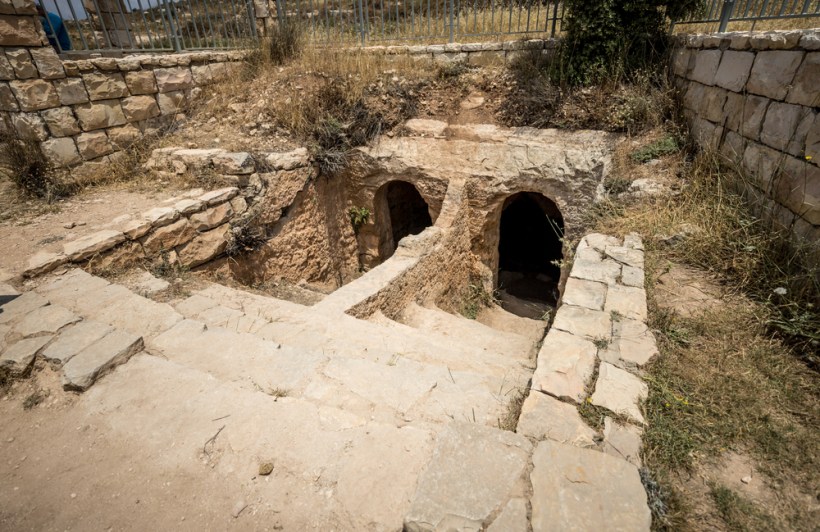
Ritual Baths along Way of the Patriarchs or Way of the Fathers. The name is used in biblical narratives that it was frequently traveled by Abraham, Isaac and Jacob. Samaria, Israel

I am reading through the Bible again this year, but I am reading it in chronological order using the You Version Bible app.  I am not sure how old I was when I realized that the books of the Old Testament are not in chronological order and that events in one book overlap events in other books. But that isn’t the point of this blog piece.

I am in Leviticus right now. The struggle is real! So many laws! So many times the text goes over the same things, or so it seems, but I am trying to maintain focus, and I am asking the Spirit for help in understanding what is going on, what God is saying, what He is foreshadowing, etc.

The last couple of days I have been reading the instructions for all the various types of offerings (animal sacrifices if we want to be blunt), and I have just gotten into laws for ceremonial cleansing for various “leprosies” and other “unclean” conditions. It can seem so mundane, archaic, maybe even naive and unenlightened to a modern mind.

For instance, it doesn’t take too long to figure out that all kinds of skin conditions were labeled leprosy. When we read in the English Standard Version about leprosy in houses, we realize that it’s probably talking about mold. (Some translations call it mold in fact.) The vocabulary and understanding of the Bronze Age mind was limited. It’s no wonder the Richard Dawkins of the world, reading these passages with a 21st Century mind, scoff at first blush.

But, underneath that temptation to scoff is a heavy dose of pride and lack of appreciation for what God is doing in the information and instruction that He was inspiring Moses to write in these passages. God was speaking to them in their language and according to their understanding to set the stage for a global plan that would be unveiled over many centuries and millennia that, even now in the 21st Century, is unfolding and being revealed.

Jesus is the key that unlocks the door to the Old Testament Scriptures.

I don’t claim to have all the answers or all the insights, though I am reminded of the words of Jesus to the Pharisees: “You study the Scriptures diligently because you think that in them you have eternal life. These are the very Scriptures that testify about me, yet you refuse to come to me to have life.” (John 5:39-40)  For the scoffer, Jesus might have said, “You don’t study the Scriptures because you think that they are mythical superstition that has no life. Those Scriptures testify about me, and you refuse to come to me to have life!”

Jesus is the key that unlocks the door to the Old Testament Scriptures. But, I still struggle sometimes to find the relevance, significance or meaning in some of these passages. I’ll be honest. I am sure I’m not alone.

One thought comes back to me today as was I reading about the ceremonial cleansing rituals. A thought that goes back many years, but with a new twist today. It has occurred to me before that many of the cleansing laws, laws about what animals they can eat and not eat, and so on, acted like in place of our modern knowledge of germs, disease and other health dangers that the people in that time simply didn’t know. I have long been struck by that thought, but I had never made the additional connection that strikes me with significance today.

Continue reading “The Remarkable Consequence of Ritual Cleansing”

The Difference Is In What We Do


These were the words I read this morning when I opened my Bible app:

“So then, as we have opportunity, let us do good to everyone, and especially to those who are of the household of faith.” (Galatians 6:10 ESV)

As I think about this exhortation from Paul, I realize that our faith is meant to be manifested in doing good. It also occurs to me that, maybe, we have gotten the emphasis wrong.

I can understand how it happened. Common people didn’t have the Scripture to read for themselves. The church had gotten corrupted by power and wealth. Priests sold indulgences and turned faith into a religion of required observances and superstitious piety.

John Wycliffe and others made Scripture available to the common people, and Martin Luther and the people he inspired rediscovered the that salvation is received by faith. It’s a matter of grace, not of works, lest any man boast.

These things were inspired by the Holy Spirit at the time, but we always flirt with the danger of settling into religious ruts that prevent us from appreciating and considering the whole counsel of God. Western Protestantism has tended for centuries to accept the stuffy air of an academic, heady faith that gets too little exercise in the “good works, which God prepared beforehand, that we should walk in them”.[1]

This is the progression: We are “saved through faith”; this is not our own doing; “it is the gift of God, not a result of works, so that no one may boast”.[2] But we can’t stop there. We have to realize the truth of the very next statement: “For we are his workmanship, created in Christ Jesus for good works, which God prepared beforehand, that we should walk in them.”[3]

We are saved by faith, not by works, in order for us to do the good works God prepared for us to do.

We are saved by faith, not by works, in order for us to do the good works God prepared for us to do.

Paul’s words in Galatians and the entire thrust of Scripture suggest that the hallmark of Christian faith is the good that we do that flows out of the salvation we received by faith.

Continue reading “The Difference Is In What We Do”