The Remarkable Consequence of Ritual Cleansing

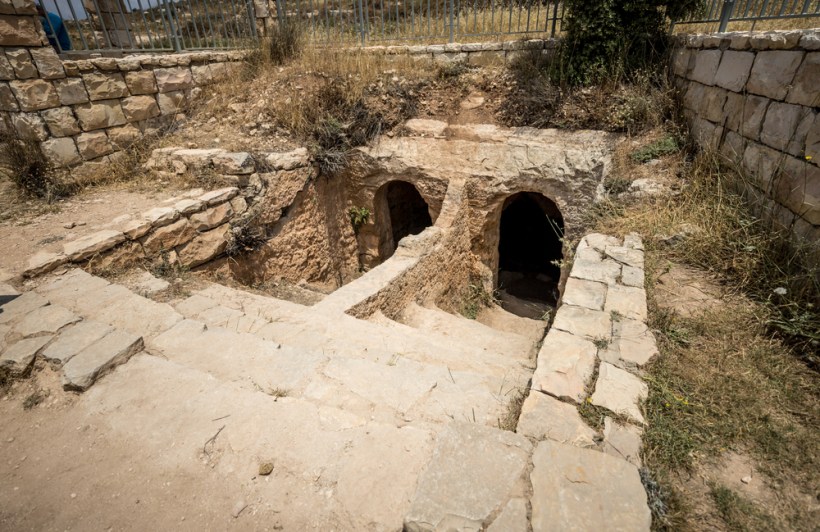
Ritual Baths along Way of the Patriarchs or Way of the Fathers. The name is used in biblical narratives that it was frequently traveled by Abraham, Isaac and Jacob. Samaria, Israel

I am reading through the Bible again this year, but I am reading it in chronological order using the You Version Bible app.  I am not sure how old I was when I realized that the books of the Old Testament are not in chronological order and that events in one book overlap events in other books. But that isn’t the point of this blog piece.

I am in Leviticus right now. The struggle is real! So many laws! So many times the text goes over the same things, or so it seems, but I am trying to maintain focus, and I am asking the Spirit for help in understanding what is going on, what God is saying, what He is foreshadowing, etc.

The last couple of days I have been reading the instructions for all the various types of offerings (animal sacrifices if we want to be blunt), and I have just gotten into laws for ceremonial cleansing for various “leprosies” and other “unclean” conditions. It can seem so mundane, archaic, maybe even naive and unenlightened to a modern mind.

For instance, it doesn’t take too long to figure out that all kinds of skin conditions were labeled leprosy. When we read in the English Standard Version about leprosy in houses, we realize that it’s probably talking about mold. (Some translations call it mold in fact.) The vocabulary and understanding of the Bronze Age mind was limited. It’s no wonder the Richard Dawkins of the world, reading these passages with a 21st Century mind, scoff at first blush.

But, underneath that temptation to scoff is a heavy dose of pride and lack of appreciation for what God is doing in the information and instruction that He was inspiring Moses to write in these passages. God was speaking to them in their language and according to their understanding to set the stage for a global plan that would be unveiled over many centuries and millennia that, even now in the 21st Century, is unfolding and being revealed.

Jesus is the key that unlocks the door to the Old Testament Scriptures.

I don’t claim to have all the answers or all the insights, though I am reminded of the words of Jesus to the Pharisees: “You study the Scriptures diligently because you think that in them you have eternal life. These are the very Scriptures that testify about me, yet you refuse to come to me to have life.” (John 5:39-40)  For the scoffer, Jesus might have said, “You don’t study the Scriptures because you think that they are mythical superstition that has no life. Those Scriptures testify about me, and you refuse to come to me to have life!”

Jesus is the key that unlocks the door to the Old Testament Scriptures. But, I still struggle sometimes to find the relevance, significance or meaning in some of these passages. I’ll be honest. I am sure I’m not alone.

One thought comes back to me today as was I reading about the ceremonial cleansing rituals. A thought that goes back many years, but with a new twist today. It has occurred to me before that many of the cleansing laws, laws about what animals they can eat and not eat, and so on, acted like in place of our modern knowledge of germs, disease and other health dangers that the people in that time simply didn’t know. I have long been struck by that thought, but I had never made the additional connection that strikes me with significance today.

Continue reading “The Remarkable Consequence of Ritual Cleansing”

The Difference Is In What We Do


These were the words I read this morning when I opened my Bible app:

“So then, as we have opportunity, let us do good to everyone, and especially to those who are of the household of faith.” (Galatians 6:10 ESV)

As I think about this exhortation from Paul, I realize that our faith is meant to be manifested in doing good. It also occurs to me that, maybe, we have gotten the emphasis wrong.

I can understand how it happened. Common people didn’t have the Scripture to read for themselves. The church had gotten corrupted by power and wealth. Priests sold indulgences and turned faith into a religion of required observances and superstitious piety.

John Wycliffe and others made Scripture available to the common people, and Martin Luther and the people he inspired rediscovered the that salvation is received by faith. It’s a matter of grace, not of works, lest any man boast.

These things were inspired by the Holy Spirit at the time, but we always flirt with the danger of settling into religious ruts that prevent us from appreciating and considering the whole counsel of God. Western Protestantism has tended for centuries to accept the stuffy air of an academic, heady faith that gets too little exercise in the “good works, which God prepared beforehand, that we should walk in them”.[1]

This is the progression: We are “saved through faith”; this is not our own doing; “it is the gift of God, not a result of works, so that no one may boast”.[2] But we can’t stop there. We have to realize the truth of the very next statement: “For we are his workmanship, created in Christ Jesus for good works, which God prepared beforehand, that we should walk in them.”[3]

We are saved by faith, not by works, in order for us to do the good works God prepared for us to do.

We are saved by faith, not by works, in order for us to do the good works God prepared for us to do.

Paul’s words in Galatians and the entire thrust of Scripture suggest that the hallmark of Christian faith is the good that we do that flows out of the salvation we received by faith.

Continue reading “The Difference Is In What We Do”

21st Century Reflections on 2nd Century Description of Christians

Rome, Italy. Trajan Markets, built in 2nd century AD by Apollodorus of Damascus in the time of Emperor Trajan

The following descriptions of Jews contrasted with Christians in the Roman Empire inspire my thoughts today:

“Rome respected Judaism because the religion was ancient and enduring. Jews had survived opposition for over a thousand years and, in spite of that opposition, had spread throughout the Roman Empire and beyond.… Roman authorities did not require Jews to venerate the gods (say, through sacrificial offerings in local temples) or to serve in the military, and Romans viewed and used at least some local synagogues as civic centers, which implies that Judaism served the larger Roman public, however modestly. Jews were far more integrated into Roman society than it might at first appear.

“…. Jews worshiped one God, Yahweh, to whom they were exclusively devoted; followed a rigorous set of ethical and religious practices; and refused to participate in pagan rituals and festivals. They observed a way of life that set them culturally apart. The Jewish rite of circumcision kept Romans who were attracted to Judaism from wholesale conversion. Jewish kosher laws required that Jews shop in their own stores, their dress codes made them noticeable, and their commitment to marry only fellow Jews prevented them from assimilating into Roman culture.”


“Christians appeared to live like everyone else. They spoke the local language, lived in local neighborhoods, wore local styles of clothing, ate local food, shopped in local markets, and followed local customs. ‘For Christians cannot be distinguished from the rest of the human race by country or language or custom. They do not live in cities of their own; they do not use a peculiar form of speech; they do not follow an eccentric manner of life.’ At a surface level Christians appeared to blend in to Roman society quite seamlessly.

“Yet they were different, too, embodying not simply a different religion but a different—and new—way of life. ‘They live in their own countries, but only as aliens. They have a share in everything as citizens, and endure everything as foreigners. Every foreign land is their fatherland, and yet for them every fatherland is a foreign land.’ They functioned as if they were a nation within a nation, culturally assimilated yet distinct at the same time. ‘Yet, although they live in Greek and barbarian cities alike, as each man’s lot has been cast, and follow the customs of the country in clothing and food and other matters of daily living, at the same time they give proof of the remarkable and admittedly extraordinary constitution of their own commonwealth.’”[1]

This is the fascinating description of Christians from an anonymous letter writer in the Second Century to Diognetus, a Roman official, which the writer of the book from which the excerpt is taken compares to the Roman view of the Jews in the same time period. The comparison inspires a number of thoughts that are worth exploring.

Continue reading “21st Century Reflections on 2nd Century Description of Christians”

An Intriguing Interview with Dr. Hugh Ross

When we try to rely on science, alone, to answer the big questions, we can’t do it without sneaking philosophy into the equation.


In this age in which fake news seems to dominate the public domain, how do we know what is really true? How can we trust any news? That is a legitimate question today, one that people in my generation didn’t ask as often as we have to ask now.

Skepticism that was once the esoteric tool of elite, fringe intellectuals is now, perhaps, as often used as a hammer in the intellectual toolkit of the common person. What years of intellectualism was not able to accomplish has been achieved in less than a generation by the constant barrage of biased and untrustworthy “news outlets” in the Internet age.

Such an atmosphere of skepticism might cause despair of ever knowing, or being able to know, what is really true. Perhaps, the only thing we can trust is skepticism itself. That is the forlorn cry of a post-modern age.

Many people have retreated to science and what can be known about the world that we observe with our five senses. Science seems like the only protector of truth in a world that can’t be trusted without concrete evidence.

Some people even hold to a position that science is the only way we can know the world: the five senses are the only way to know truth. These people discount psychology, sociology and “soft” sciences, and they largely dismiss philosophy (and theology most of all).

Some people even take the position that science is the only way of knowing truth, and philosophy, therefore, is no longer needed or even useful (because it can’t be trusted).

At that moment, however, if we are paying attention at all, we realize that the person who says this is actually asserting a philosophical position! The scientist who rejects philosophy on this basis has cut off the limb he hangs on, and he doesn’t even realize it. Not even science, then, is the safe harbor we wish it was.

Frankly, mathematics might be the only certain way of knowing things, if the truth be told, but mathematics doesn’t tell us anything about the most important questions that people ask. Why are we here? Where does life come from? Is there purpose to life?

We try to rely on science, alone, to answer these big questions, but we can’t do that without sneaking philosophy (or theology, heaven forbid) into the equation. What we observe with our five senses can’t answer those questions without the help of philosophy and theology.

That leaves us with the more difficult talk of synthesizing and harmonizing all the ways we analyze truth and reality, including science, psychology, sociology, philosophy, theology, etc. It would be more convenient and may seem like an easier task to eliminate one or more of those disciplines from the mix, but we would be missing nuances of truth and reality in the process.

In the end, the best we can do is strive for honesty, integrity, objectivity, knowledge, understanding and humility in our efforts to understand the nature of reality and truth. Humility is important because it recognizes and factors into the equation the fact that we are finite creates with limited perspective and capacity.

With that introduction, I am providing a link to an interview with Dr. Hugh Ross who has spent his life trying to synthesize and harmonize what he knows about science (which is a lot) with philosophy and theology. I like him because of his humility and commitment to science, logic and understanding.

Continue reading “An Intriguing Interview with Dr. Hugh Ross”

Significance in the Way Christianity Spreads

Islam rivals Christianity in its “travel” around the world. But the spread of Islam looked different than the spread of Christianity.

Os Guinness talks about differences between Christianity and other religions in an interview with Justin Brierley a few years ago. He made a statement that Christianity is the only “traveling religion”.

He observed that Hinduism began in India and remains primarily in India. Buddhism began in India and remains primarily in India and Eastern Asia. Islam began in the Middle East and remains primarily in the Middle East. Christianity, however, began in the Middle East. Then it moved to Europe; and then it moved to North America; and now Christianity is growing fastest in Africa and Latin America and Asia.

While I think Guinness overstates the case little bit, he got me thinking about the how the major world religions have spread. For instance, Islam, which rivals Christianity in numbers, grew very rapidly during the life and immediately after the death of Muhammad. It spread throughout the centuries into Europe and down into Africa and more recently across Southern Asia.

Islam rivals Christianity in its “travel” around the world, but the spread of Islam happened very differently than the spread of Christianity. This is the significant fact, in my opinion – not so much that Christianity has traveled through all the world like no other religion. (Though it has.)

Continue reading “Significance in the Way Christianity Spreads”