Unveiling the Mystery of the Hiddenness of God

Why would God be hidden to us?


I have been meditating on the hiddenness of God lately and leaning into the mystery of God’s hiddenness. I am intrigued by it. The Bible is forthright about the hiddenness of God.

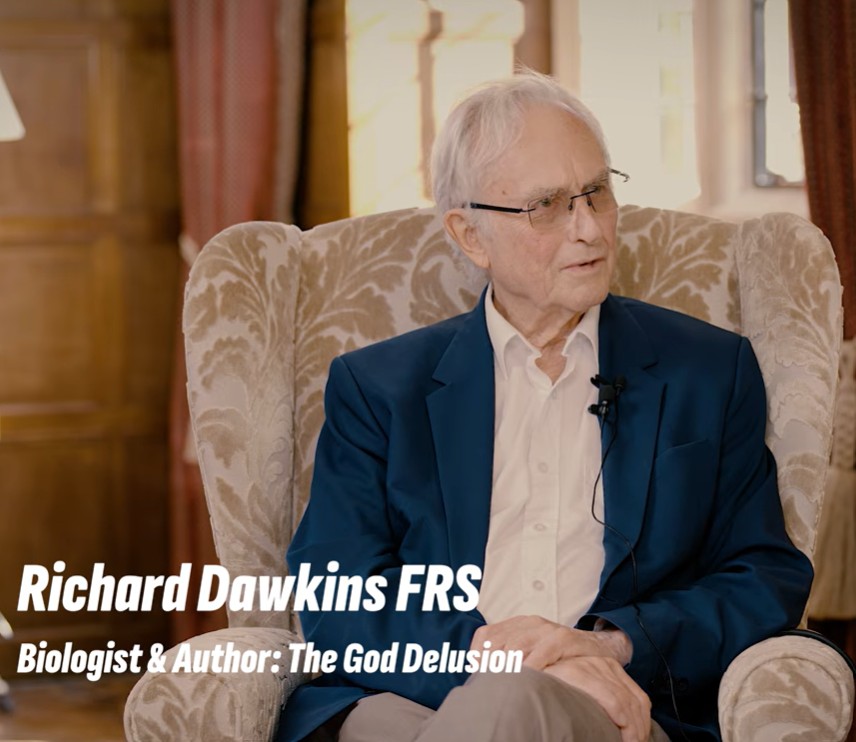
As I think about the hiddenness of God, the mind of the skeptic plays in my ear: “How do you know God exists? Why does God seem hidden? Maybe it’s because He doesn’t exist!” Believing in a “hidden” God is belief without evidence; it’s belief in the teeth of the evidence (as Dawkins says).

My response is that we all have faith in our basic assumptions about reality. The scientist assumes only matter and motion. He sees evidence for things like gravity and neutrinos, and dark matter and dark energy that cannot be seen. The scientist reasons to the best explanation for the things that cannot be seen in order to make sense of the reality in the world, and he does so within the “limitations” of materiality.

Science, after all, is the study of the material world. That is is the scope of science as it is defined in the modern world. Science is based on what is quantifiable, measurable, observable, and reproducible.

When I do theology or philosophy, I also start with assumptions. I start with an assumption, or a theory if you like, that God exists. The proof of God, however, is necessarily different than scientific proof.

God is not a substance in the universe to be quantified, measured, observed, or reproduced in the way we can study the natural world. He is not a component of the universe. He is not comprised of matter and motion like the universe. God is not a principle of physics that can be observed in its regularity and tested by its regularity.


If God exists and created the universe, He is separate and apart from the universe. That does not mean that God is not present in some way; it means that He is not present in the same way that you and I are present. Rather, God is transcendent. He is imminent (near in some way), but not contained within the creation.


God also must have agency to have determined to create. We understand the necessity for agency by our own agency. This makes sense of the question: why is there a universe; why is there something, rather than nothing.

For the life of me, I can make no sense of the assertion that a universe can create itself. What kind of voodoo magic is that? That conclusion is based on an assumption that matter and motion is all that exists, but we cannot prove that assumption.

To say that God must have agency is not to be anthropomorphic about it but to reason to the best explanation based upon what we know, which is our own agency and the way we conduct ourselves in the world. Where does a universe come from? The simple answer is that it comes from a creator who has agency, who has intentionality, and the ability to will and to act according to His purpose and design.

Where does intricate, fine-tuned complexity that is complex to the nth degree come from? It comes from a mind, from a creator who conceives a plan and then implements it. We know that from the way human beings create things. Where did we get that capacity? Like things produce or reproduce like things.

We know that the universe is “winding down”. That is what the law of thermodynamics tell us. Entropy is the rule. This means the universe is not getting more complex; it is breaking down, evening out, cooling, and becoming less complex over time.

Over course, this is occurring over a very, very long period of eons, so (perhaps) there is enough energy in the universe for complexity to form in areas of the universe even while entropy is working its very long way toward the inevitable heat death of the universe as a whole.


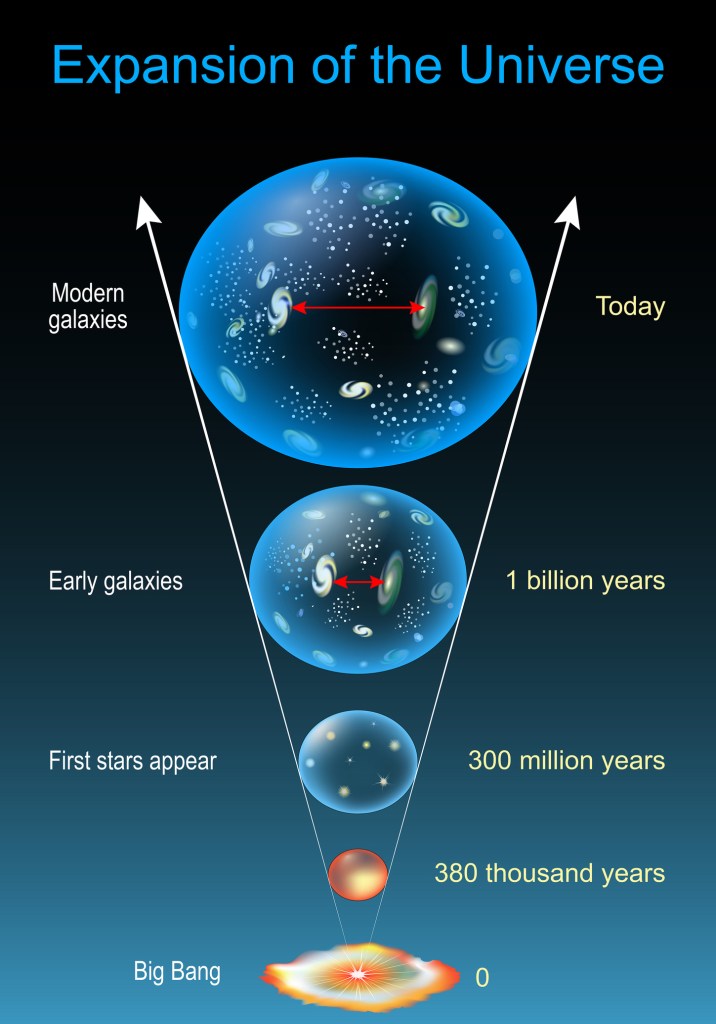
Maybe, but where did the energy come from to cause the so-called Big Bang? What triggered the universe to begin to begin with?

No one can explain that who doesn’t believe in a “Big Banger”, a Creator. It is the best explanation that we have. It makes the most sense of the reality that the Universe had a beginning.


The multiverse doesn’t solve the “problem” of a beginning. It just kicks the can back down the road further. What triggered the multiverse into being? It’s an endless regression.

The Christian (Jewish and Muslim) conception of God is that God is the timeless, eternal being who always existed and was never created who chose to trigger the universe (or multiverse) into existence.

This, frankly, makes much more sense than a past eternal, non-sentient universe that just poofed life into existence. How do you get life from nonliving matter? What animates that matter?

But the questions don’t stop there. What triggers consciousness from inert, non-conscious matter? How do the fundamental “building blocks” of matter develop consciousness? It’s a complete mystery, and there is no mechanism known to modern science to explain it – other than the brute fact that human beings and (to some lesser degree) animals (and maybe plants) are conscious beings.

Consciousness is proven by the sheer fact that we are conscious of ourselves. It seems to “reside” in or be attached to the brain, but the brain by itself is not consciousness. The brain is a perfect, intricate receptacle for consciousness, but the brain and consciousness are not perfectly coexistent. They are not the same things, and science has no adequate explanation for that.

Because these things suggest looking outside the limitations of the material world for our answers, we have theology and philosophy, which can be “scientific” loosely in method and approach, but defies the limitations of scientific inquiry.

That doesn’t mean that theology and philosophy should be divorced from science (or that science should be divorced from theology and philosophy). All reality must ultimately cohere harmoniously, or we cannot call it reality.

But, I have digressed (only slightly) from the point, which is the mystery of the hiddenness of God.

Continue reading “Unveiling the Mystery of the Hiddenness of God”

An Exploration of God’s Hiddenness in the Bible

The Bible on the hiddenness of God


Divine hiddenness is an argument suggesting that God does not exist. According to J.L. Schellenberg, if a perfectly loving God exists, He would desire a genuine relationship with every person He creates. A loving relationship requires, at minimum, awareness that God exists, so a perfectly loving God would make Himself known. Some sincere and willing people who want to know God are unable to find sufficient evidence that He exists to believe in Him. Therefore, either God does not exist or He is not perfectly loving.

I don’t buy it. I think the argument is flawed, but other people have provided robust responses to this argument, so I am not going to attempt to provide a counter argument here. I am also unconvinced that arguments are the best way to achieve understanding.

On that ground, I am intrigued by the hiddenness of God, and I am intrigued that the Bible is forthright about the hiddenness of God. The Prophet Isaiah says it plainly: “Truly, you are a God who hides himself, O God of Israel, the Savior.” (Is. 45:15)

The entire Book of Job is about God’s hiddenness. Job assumed that God existed and had blessed him until he lost everything. When Job sought God in the desperation of his circumstances, he lamented, “Behold, I go forward, but he is not there, and backward, but I do not perceive him… I cannot behold him.” (Job 23:8-9)

David, who is held up in the Bible as a man after God’s own heart, lamented the hiddenness of God at various times in his life: “Why, O LORD, do you stand far away? Why do you hide yourself in times of trouble?” (Psalm 10:1); “How long, O LORD? Will you forget me forever? How long will you hide your face from me?” (Ps. 13:1); and “My God, my God, why have you forsaken me?… I cry by day, but you do not answer.” (Ps. 22:1-2)

Those last words were famously echoed by Jesus on the cross. Imagine, Jesus, who demonstrated and expressed the deepest and most intimate relationship with the Father, experiencing the utter absence of God at the moment of his greatest need.

I saw early in a world religion class in college when I wasn’t a believer that the Bible purports to be about the unfolding story of God’s encounter and revelation of who God is to mankind. Elsewhere, I have written about how God found in Abram a man who was able to grasp that the God of the universe is not like the gods of the provincial tribes and nations with which Abram was familiar. (For example, Abraham, Isaac and Paradigm Shift; and The Story of Abraham and Isaac Revisited: Introduction)

The revelation of God unfolded slowly as God needed to dispel notions of divine arbitrariness, capriciousness, brutality, and uncaring of the gods that Abram and ancient humanity understood. The gods of human imagination are no gods at all, and God is noting like ancient Near Easterners imagined.

While it is true that God is completely OTHER, the true God who made the heavens and the earth desires the benefit of and reciprocal relationship with the pinnacle of His creation. How does a God who is so completely OTHER than His creation communication Himself?

Consider a God who could make our universe with its vastness and detailed complexity down to the minutia of the precise intricacy of living cells and the unseeable building blocks of the physical world, like neutrinos, that are so small they can pass through your body and the core of the earth without hitting another particle. How does such a God who created such a world reveal Himself to finite creatures who live on a tiny planet in a tiny solar system among more stars, planets, and whole solar systems than such a creature can even imagine – how does such a God reveal himself to delicate, ephemeral creatures with limited perspective?

Continue reading “An Exploration of God’s Hiddenness in the Bible”

Understanding Pascal’s Wager

“The heart has its reasons of which reason knows nothing.”

Glen Scrivener argues that atheists misunderstand Pascal’s Wager in Episode number 595 of his Speak Life Podcast (Atheists Misunderstand Pascal’s Wager (and so do Christians) I think he is right, and it seems that Christians don’t really understand it, either. Me included … until now. Before we dive in, though, let’s review Pascal’s Wager.

Blaise Pascal starts with the premise that human beings can neither prove the existence of God, nor prove that God does not exist. This is a concession, perhaps, to the atheist, but the atheist stands in no better position in relation to proving that God does not exist.

If that is the reality, then whether to believe in God or not is crap shoot. If we can’t prove it one way or the other, are we any better off than a roll of the dice? Pascal says we are, and the truly rational person would choose belief in God based on what is known as Pascal’s Wager.

Believing in God potentially gains a person everything (eternal life, joy, meaning, etc.). If God exists, the believer hits the jackpot. Believing in God also has very little downside. Pascal supposes that a person might forego some pleasures that were not pursued or time and energy spent living out faith (more on that below), but a person is little worse off for believing in God if God does not exist.

On the other hand, a person who doesn’t believe in God loses everything if God does exist (eternal separation from God). Therefore, Pascal said, the rational thing is to believe in God, because the potential gain is infinite and the potential loss is minimal. Given that we cannot prove God one way or the other, the truly rational person would “wager” on God, says Pascal.

Christopher Hitchens calls Pascal’s Wager “religious hucksterism of the cheapest, vulgarist, nastiest kind,” and Alex O’Connor calls it “half-hearted ass-kissing just in case.” Richard Dawkins asks, “What is so special about belief?” And, “Why would God not look for something of more substance from us, like being good?”

The often deriding comments beg for some understanding, and Dawkins’s legitimate questions call for a response. Matt Dillahunty says, “Pascal’s wager is an apologetic argument that attempts to demonstrate that belief in God is warranted based on decision theory and probability.” But is it?

All of these comments and questions assume that Pascal’s Wager is an apologetic argument for God, and they find it woefully wanting in that respect. Even Christians assume it is an apologetic argument, also, but everyone who makes that assumption has missed the actual point of Pascal’s Wager.


Glen Scrivener’s summary of Pascal’s Wager taken from Graham Tomlin’s book, Pascal, The Man Who Made the Modern World, exposes the error people make in these assumptions. Pascal wasn’t attempting to assert a rational argument, defense, or proof of God. He was making a very different point altogether.


Pascal was a genius by any measure. He was a scientist, mathematician, geometer, physicist, philosopher, polemicist, and theologian. He invented probability theory; he proved the existence of the vacuum, laid the foundations of integral calculus, performed what is called the first proper scientific experiment, established the principle that made possible the hydraulic press, demonstrated that air has weight, and many other things.

Thus, Scrivener says, “If we think that Blaise Pascal was silly, that might not reflect on Blaise Pascal; it might be a sign that we have misunderstood him.” The podcast featuring Graham Tomlin linked above and embedded below does a great job explaining the misunderstanding. It is worth the 25 minutes to watch and listen, but I am going to summarize and add my own thoughts as I continue.


Continue reading “Understanding Pascal’s Wager”

Training in Godliness

Training in godliness may be a bit different than what you suppose.


Life is a journey, and each day is a leg in that journey. Proverbs says that a man makes his plans, but God directs his steps. Basically, God is ultimately in control, but we have something to say in the process. Where we end up depends on whether and how we align ourselves with God and HIs purposes.

The weekly reading for the small group I am in (and the subject of the sermon this coming Sunday) is 1 Timothy 4:7-10. That passage inspires my writing today as part of the leg of my journey that I call today. My focus will be the following two verses:

Have nothing to do with godless myths and old wives’ tales; rather, train yourself to be godly. For physical training is of some value, but godliness has value for all things, holding promise for both the present life and the life to come.

1 timothy 4:7-8 (niv)

I was fortunate today that I didn’t just set out to check off this reading for Wednesday night. I came at this reading with a more intentional and devoted mindset, which I suppose is appropriate for the topic. I can’t say that I always have the mindfulness to do that, but today I did.

I might otherwise have assumed I knew what “godless myths” are and what “godly” training is. I might have glossed over those phrases without really understanding what Paul is saying, but I realized as read them that I didn’t really know what he meant by “godless myths” and training to be “godly.”

Acknowledging this, I took one step back to read these verses in context. I read verse 6, which says:

If you point these things out to the brothers and sisters, you will be a good minister of Christ Jesus, nourished on the truths of the faith and of the good teaching that you have followed.

1 Timothy 4:6 (emphasis added)

Of course, then I had to step further back to see what Paul meant when he said, “If you point these things….” What things? The previously verses contain those “things”:

The Spirit clearly says that in later times some will abandon the faith and follow deceiving spirits and things taught by demons. Such teachings come through hypocritical liars, whose consciences have been seared as with a hot iron. They forbid people to marry and order them to abstain from certain foods, which God created to be received with thanksgiving by those who believe and who know the truth. For everything God created is good, and nothing is to be rejected if it is received with thanksgiving, because it is consecrated by the word of God and prayer.

1 Timothy 4:1-5

I am still not sure what “deceiving spirits” these people followed or what “teachings” Paul references here, but the fact that Paul calls these teachers “hypocritical liars” who taught ascetic religious practices (forbidding marriage and ordering abstinence from certain foods) is a clue. Affirming that God created everything good and receiving those good things with thanksgiving and prayer is another clue.


it seems that another clue lies in the use of the word, hypocritical,” which I learned recently was not meant in exactly the same way modern people think of it. We think of hypocrisy as saying one thing and doing another. The Greek word, ὑπόκρισις (hupokrisis), that we translate as hypocrisy literally means “to act under a feigned part.”


In other words, a hypocrite is an actor. A hypocrite according to the Greek meaning is someone playing a part, a person pretending to be someone or to know something than who or what they are.

As I considered these things, I realized that the Greek words translated into English as “godless myths” and training to “godly” might also give me a better understanding of what Paul is saying. When I dove into the Greek, the meaning became clearer, and it isn’t necessarily what I might have thought.

I might have answered, if someone pressed me, that godliness is how a person behaves. I might have said that godliness means doing right, living according to God’s rules, and conforming to biblical morality, but that isn’t what Paul is saying here. To be sure, godliness does bear the fruits of the Holy Spirit, but we should not confuse the fruit for the root.

Continue reading “Training in Godliness”

How Do We Know When a Person Is a False Messiah or False Prophet?

Jesus told us what to look for

“[I]f anyone says to you, ‘Look, here is the Christ!’ or ‘There He is!’ do not believe it. For false messiahs and false prophets will appear and perform great signs and wonders to deceive, if possible, even the elect.”

Matthew 24:23-24

This is a significant warning from Jesus about future times – our times. It’s easy to call out false messiahs and false prophets, and many have done that, but we should be cautious and careful in our understanding of what a false messiah or false prophet and, more importantly, how to spot one.

The Greek word translated a “false” in this passage is ψευδή (pseudés) meaning “false, untrue”, and “(by extension) erroneous, deceitful, wicked.” The word comes from the root verb ψεύδομα (pseudomai) meaning “to utter a lie or attempt to deceive by falsehood.”

The Greek word Χριστός (Christos), of course, means Christ – the Christ – as in Jesus Christ, but, it could mean more than that. Christos derives from the verb chrio (χρίω), which literally means “to smear or rub with oil.” It also means “to anoint” (especially for a divine purpose” and “(by implication) to consecrate to an office or religious service.”

Jesus used chrio when he said, “The Spirit of the Lord is upon me, because he has anointed me to proclaim good news to the poor.” (Luke 4:18) In more modern terminology, we might say that Jesus was appointed to proclaim good news to the poor. The “anointing” (the pouring of oil on a person) was symbolic of a person’s appointment to a position. In religious circles, we might use the word, “calling,” today.

The idea of anointing a person appointed by God for a particular office was practiced in the Old Testament as well. Samuel “took a flask of olive oil and poured it on Saul’s head”, and he said, “Has not the LORD anointed you ruler over his inheritance?” (1 Samuel 10:1)

Christos has a counterpart in the Hebrew word, מָשַׁח (mashach), meaning “to rub with oil, i.e. to anoint,” and “(by implication) to consecrate.” Hebrew kings, priests, and prophets were anointed in this manner as a way of recognizing their position (appointment). Thus, מָשִׁיחַ (Messiah), literally “Anointed One,” emerged from this practice.

The Greek word, Christos, is the equivalent of the Hebrew word, Messiah, of course. We tend to think only of Jesus Christ, “the” Messiah, when we use those terms, but anointing men for their offices was common practice in the Old Testament and New Testament times by Hebrews and by Greeks. Anyone who was anointed (appointed) for an office was an “anointed one.”


A false Messiah is one who falsely claims or acts as if he is anointed (appointed) for a particular role. The Hebrew word for Prophet (προφήτης (prophétés)) means speaking forth by the inspiration of God, so a false prophet would be one who falsely speaks as if by the inspiration of God.


Jesus uses the terms, false messiahs and false prophets (plural), to signify that many people would come claiming (or claimed) to be messiahs or prophets. He says, they will deceive many people and even the elect, if possible. Elsewhere, Jesus says they “will come to you in sheep’s clothing” and warns us to “Watch out!” (Matt. 7:15)

Is it possible for God’s children to be deceived? I would like to think not, but then why does Jesus warn us to “Watch out!”? Why does Jesus say false messiahs and false prophets might even deceive “the very elect”?

I don’t know if God’s children – the sheep who hear His voice – can ultimately be deceived by false messiahs and false prophets, but that doesn’t mean we could not be deceived at some point or for a time. It’s safe to say, I think, that Jesus would not have warned us at all if it wasn’t at all possible to be deceived to some extent.

At a minimum, Matthew 24:24 highlights the extreme danger and the potential for even believers to be swayed or confused by the powerful deceptions of false messiahs and false prophets. Peter warns us soberly that “there will be false teachers among you” (1 Peter 2:1), so we need to beware. But, how?

So far, we can say from the descriptor of false messiahs and false prophets that they are deceivers; they are not truly anointed for the purposes they or others claim; and they do not truly speak under inspiration from God. They deceive and lie, and that is what makes them dangerous. But, again, how will we know?

When God became man and came to His own people, they didn’t even recognize Him or receive Him. (John 1: 9-11) If God came in the flesh to people with whom God had a covenant for many hundreds of years, and they didn’t recognize Him, we should have the humility to admit that we might not recognize God always when He is active in our world, and for the same reason we might be fooled by false messiahs and false prophets.


What, then, are the clues that a messiah (one who seems to be anointed for a purpose, calling, position) or a prophet (one who purports or who is purported to speak by the inspiration of God) is false? Fortunately, the Bible gives us more information to go on.


Continue reading “How Do We Know When a Person Is a False Messiah or False Prophet?”