The Bible, Christ and Culture: Biblical Critical Theory as a Framework for Critiquing Culture

Letting the Bible frame and critique culture requires us to be aware of our cultural milieu


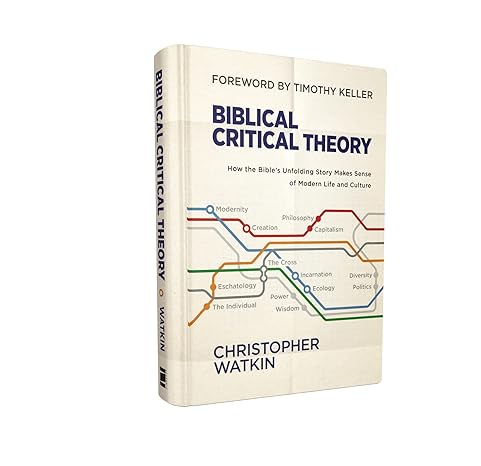
I am listening to a discussion of a new book by Christopher Watkin, Biblical Critical Theory: How the Bible’s Unfolding Story Makes Sense of Modern Life and Culture, dealing with culture on the Truth over Tribe podcast. Watkin’s premise for the book is that we should use the Bible to frame our critique of culture, but the reality often is that we frame and interpret the Bible through our cultural lens.

As an aside, I love the title of the book. “Critical theory” is part of our modern cultural vocabulary and milieu. Though many Christians recoil from the invocation of that term, it is the language of our times Watkins uses it to capture the attention, and he uses it as a springboard to take us back to the Bible, which I think is brilliant.


The discussion on the podcast focuses on the definition and meaning of culture, starting with the reality that culture pervades most of our lives and our thinking. Watkin notes that we see God working in and through cultural environments in the Bible, yet the thrust and message of Scripture is multicultural (and countercultural).

What appears to be exclusive is revealed to be inclusive. God works in the cultural milieu, but the message is not bound by it nor bound to it.

A multicultural theme is baked right into the fabric of Scripture, including the influence of three different languages that make up the biblical writings. This theme is borne out by the glimpse God gave John of the end of the Story. If we lift our eyes to see the horizon for all Christians off in the distance, this is what we see:

I looked, and there before me was a great multitude that no one could count, from every nation, tribe, people and language, standing before the throne and before the Lamb. They were wearing white robes and were holding palm branches in their hands.

Revelations 7:9

Our destination, the mansion with many rooms that Jesus spoke about, is filled with multicultural people worshipping God from every nation tribe and tongue crying out in unison, “Holy, Holy, Holy is the lamb!” From this we see that God does not negate culture or ethnic differences. (He confused our languages and scattered us after all.)

But, we also have to recognize that the trajectory of Scripture and God’s plan revealed in Scripture brings us to unity in Christ. Jesus broke down the walls of division (Eph. 2:14), and the thing that unites us is Jesus.

Watkin cautions that Scripture is not entombed in culture, but it takes root in culture. It spreads out to all cultures: Jesus told the disciples to spread the message in Jerusalem, Judea, Samaria, and to the ends of the earth. Thus, the Gospel speaks to all cultures, calls people out of all cultures, and provides the promise of redemption to all cultures.

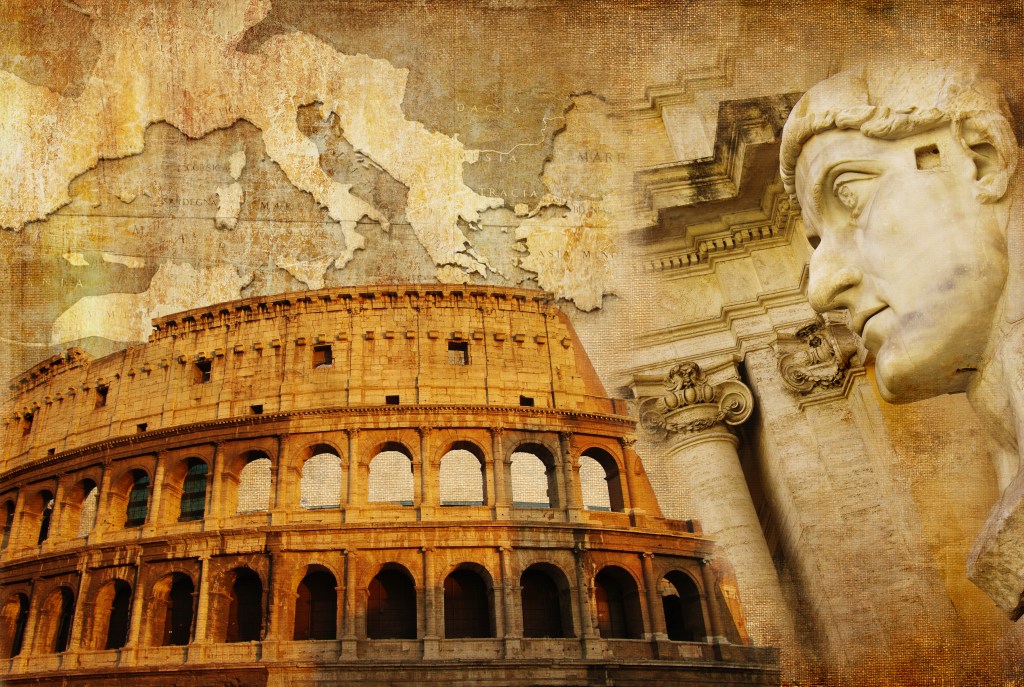
Indeed, Christianity began as a near, middle eastern movement which spread into the Roman Empire: north, south, east, and west. It spread into the culture of northern Africa and southern, central, and northern Europe, It spread to Asia minor and further east. This spread happened extremely quickly, within a generation of the death of Jesus, and it continues to spread today. The center of Christian growth today is predominantly in the southern Hemisphere.

The roots of Christianity go back to Abram, whose family heritage and land was rooted in the area known today as Iraq. Abram traveled west to Asia Minor, and then south into the Levant at God’s calling and this promise:

“I will make you into a great nation,
    and I will bless you;
I will make your name great,
    and you will be a blessing.
I will bless those who bless you,
    and whoever curses you I will curse;
and all peoples on earth
    will be blessed through you
.”

Genesis 12:2-3

The emphasis added is mine. From the beginning, God called Abraham to be a blessing to all peoples on the earth! Paul picked up on this theme when he said:

Understand, then, that those who have faith are children of Abraham. Scripture foresaw that God would justify the Gentiles by faith, and announced the gospel in advance to Abraham: “All nations will be blessed through you.” So those who rely on faith are blessed along with Abraham, the man of faith.

Galatians 3:7-9

and

 So in Christ Jesus you are all children of God through faith, for all of you who were baptized into Christ have clothed yourselves with Christ . There is neither Jew nor Gentile, neither slave nor free, nor is there male and female, for you are all one in Christ Jesus. If you belong to Christ, then you are Abraham’s seed, and heirs according to the promise.

galatians 3:26-29

Jesus is the seed (descendant) of Abraham through whom this promise is spread to all peoples of the earth. The center of Christianity began in the Middle East, but it quickly found cultural centers in northern Africa, Asia Minor, and southern and eastern Europe. For much of the history of the church, Europe became the center of western Christianity, but Christianity flourished in in all parts of the world.

Christianity and its roots grew up embedded in culture. Christianity was born at the crossroads of culture where east, west, north, and south met with overlays of Hebrew, Babylonian, Persian, Greek, Roman, and Egyptian influences (to identify the major ones). Thus, culture is part of the story

Watkin cautions, though, that people who are immersed in their own culture don’t realize how influenced they are by it. Like a fish in water compared to a bird in the air, we don’t recognize how different our cultural environment is compared to people in other cultural environments.


This is the challenge for us today, just as it was a challenge for all generations, in all times, and in all places before us. We need to be absorbed in Scripture and allow the Holy Spirit to critique and frame our culture through Scripture, and not the other way around.

Continue reading “The Bible, Christ and Culture: Biblical Critical Theory as a Framework for Critiquing Culture”

The Problem of the Intelligibility of the Universe

The Milky Way

The most incomprehensible thing about the universe is that it is comprehensible.” Albert Einstein

I am intrigued by the stories of peoples’ journeys, especially of their thought journeys. Some are more intriguing than others. The story of Pat Flynn fits squarely into the more intriguing category. (See the Side B Stories Podcast – Episode 78 – Science, Philosophy, and Reality – Pat Flynn’s Story)

Patrick Flynn has an educational background in philosophy. He embraced naturalism at an early age, but he encountered philosophical problems with naturalism when he read people like HL Menken and Frederick Nietzsche. These problems led him to seek answers that might provide a more coherent view of reality.

I am not going to try to summarize his whole story. You can listen to him describe his thought journey at the link in the first paragraph. I just want to focus on one aspect of his journey from atheism to theism.

Flynn’s journey took him from atheism to theism through the medium of philosophy. This process was intellectual for him, and not experiential. He became convinced of theism, first, before he even told his spouse, because he knew she was not particularly fond of religion.

He didn’t dive into Christianity after he became convinced of theism. He explored Eastern religions, first, perhaps because he had a good friend who was Indian. When the Eastern religions didn’t solve the philosophical problems posed by naturalism, he reluctantly began to explore Christianity.

One of the big issues Flynn had with atheism was the lack of explanation for the fact the universe is intelligible. Digging further, Patrick Flynn found that the fundamental, core commitments of science fit much better with theism than with atheism.

Continue reading “The Problem of the Intelligibility of the Universe”

Comments on Why God Became Incarnate and Died for Our Sins

Daniel Mann does a good job of explaining Why Christ, as God Incarnate, Had to Die for Our Sins. In reading his explanation, my mind goes to statements like God’s “transcendent love” and “total abhorrence for sin”, God’s “righteousness” and “divine forbearance” for sin, and the price that had to be paid “to satisfy God’s righteous character”.

Daniel describes his own reaction to these concepts formerly, as a non-Christian. He felt God was a “deceiving sadist” until one day he realized that Jesus was God incarnate, that God did not merely sacrifice a created being – God sacrificed Himself in human form!


Indeed, that is the central point of Christian belief, which is described beautifully and poignantly in Paul’s letter to the Philippians (2:5-8):

In your relationships with one another, have the same mindset as Christ Jesus:

Who, being in very nature [form of] God,
    did not consider equality with God something to be used to his own advantage;
rather, he made himself nothing
    by taking the very nature [form] of a servant,
    being made in human likeness.
And being found in appearance as a man,
    he humbled himself
    by becoming obedient to death—
        even death on a cross!

These things would be small consolation, also, if not for the victory on the other side of the cross (Phil. 2:9-11)

Therefore God exalted him to the highest place
    and gave him the name that is above every name,
that at the name of Jesus every knee should bow,
    in heaven and on earth and under the earth,
and every tongue acknowledge that Jesus Christ is Lord,
    to the glory of God the Father.

That Jesus was fully man and fully God incarnated into a man is key to the understanding of Christianity. That God is three “persons” in one is also key, as it provides some explanation how God can incarnate Himself into the form of a man and die (in human flesh), though God remains self-existent and eternal, the Creator (and not a created being).

Not that there is no mystery in this. I concede this is hard for creatures who are limited dimensionally to wrap our heads around these ideas.

Finally, it explains how (and why) death to Jesus in the flesh had no power over him. As God incarnate, death “could not hold him”. (Acts 2:24)

But, I am not writing to clarify these aspects of Christian doctrine. I want to focus on Daniel Mann’s personal revelation that Jesus was God incarnate, and his death was voluntary – God sacrificing Himself, and not God sacrificing some created being.

This realization made all the difference for him. When he really understood this distinction, he began to see the love of God that was demonstrated in that act of self-sacrifice – something God did not have to to, but He did it for us because He loves us.

Other people, I know, are not convinced. Indeed, if a person understands Jesus to be human only, and not God incarnate, the story makes no sense.

Another stumbling block is God’s “abhorrence for sin” and the need to satiate a “righteous” God. These Christian concepts are foreign territory for many people. Why, if God is so loving, does He demand sacrifices for sin?

Continue reading “Comments on Why God Became Incarnate and Died for Our Sins”

The Chicken or the Egg and basic Assumptions on Origins

The chicken and the egg question confronts the basic assumptions about life


Which came first? The chicken or the egg? This is a school child’s question, but sometimes the most profound questions about life and reality as we know it can be boiled down (to keep with the theme) to simple questions and simple propositions.

Spoiler alert: I am not going to take a position on the chicken/egg controversy. That was just a teaser. The questions I want to address are far more fundamental (though actually related).

The assumptions we make, even the greatest geniuses among us, are pretty simple at their core. And we can’t prove them. We have to take them on “faith”, yet we construct our view of the world and how it works on the basis of those assumptions.

Many people develop those assumptions from an early age without much critical examination. Though our basic assumptions are the filter through which we view everything, and we use those filters constantly to make critical examinations of the world around us, we rarely examine or critique those filters, themselves.

Because our assumptions are the basis on which we reason, do science, and live our lives, we tend to be reluctant to subject them to rigorous examination. Two of the most fundamental filters by which people see the world are diametrically opposed to each other: 1) the assumption that a divine being exists through which the universe was created, and 2) the assumption to no such divine being exists, and all that exists is physical matter and energy.

(A third view is that the divine “entity” is one with matter and energy, but this view can be lumped in with the view that all that exists is matter and energy since this third view equates the divine with matter and energy. Only the first view assumes that divine reality exists separate and apart from matter and and energy and caused it to come into being.

I note that many people try to mix and match these fundamental assumptions. The view that the divine is “one with” and undifferentiated from the matter and energy that makes up the universe is such an attempt, and it runs into problems as a result.)

The assumptions could not be more simply stated: either God exists, or God does not exist. We vigorously defend whichever of these two assumptions we have embraced. We cannot definitely prove either of these assumptions, but we are often loathe to subject them to critical examination.

That doesn’t mean that we don’t “test” them. In some ways, our daily lives are a continual test of those basic assumptions – consciously or unconsciously. As we live our lives, our assumptions are repeatedly put to the test as we apply the filters derived from our assumptions.

I think all people have encountered some disconnection between reality and their basic assumptions. I think we have all struggled with feeling like the world doesn’t make perfect sense – it doesn’t add up according to our assumptions. I submit that is the inevitable state of a finite being who doesn’t know what she she doesn’t know (and, perhaps, never will).

Human beings are nothing, however, if not resilient. We are good at ploughing forward with vague feelings of unease that our basic assumptions are not adding up. We may not always be conscious of this unease. Some people simply shrug their shoulders and resign themselves to it.

“Eat, drink, and be merry” (for tomorrow we die), is the attitude people often hold onto who have reached a state of mental and emotional confusion and resolved it with indifference. Life has a way of confronting that indifference, however, when loved ones die, injustice hits close to home, and the age old question, “Why?!” pushes to the surface like rocks in a New England yard after a hard rain.

I submit that our faith is revealed in the way in which we hold to those assumptions, believing that they will be vindicated, despite the incongruities between those assumptions and the reality that continually confronts us. We put our trust in those assumptions and plow forward, moving the rocks to the edges of our intellectual territory.

Frankly, what else is a finite being to do?

A friend of mine, when I posed the question about the chicken or the egg, said the answer is easy: the egg came first. I don’t know whether he was being facetious or serious, but his confidence illustrates the point that we have faith/trust in our basic assumptions. He can’t prove the egg came first, but he was confident in his assumption.

In the following presentation, Sy Garte unpacks the basic chicken and egg question about the origin of life. Sy Garte is a scientist, a biochemist, who is retired from a career in science. He is published in scientific journals, and he is very familiar with the challenge of unpacking those basic assumptions.

His father was also a scientist. He grew up in an atheistic household that was hostile to the idea of God. He assumed that no God exists, and the world consists only of matter and energy into his 40’s.

At that point, he changed his mind on his basic assumptions. It was science that led him to question his basic assumptions and, eventually, to examine them rigorously. He came away from that rigorous examination with a new set of basic assumptions that, he says, make much more sense of science and reality.

If you are interested in his story, he wrote a book about his journey from a purely materialistic view of the world to the view that God exists: The Works of His Hands: A Scientist’s Journey from Atheism to Faith. But that isn’t the subject of my writing today.

I write today on the subject of our basic assumptions, and how they affect the way in which we approach the world. I hope you will take the time to watch the following presentation, which demonstrates how those basic assumptions affect our thinking. The presentation is only about 27 minutes long with Q & A at the end.

He presents the chicken and the egg question in two syllogisms. The first one is the assumption he grew up with and which formed the basis of his views for over 40 years:

As noted above, he was led to reexamine his basic assumptions through science. First, it was physics that posed a challenge to his basic assumption that no God exists. Much later, his beloved biochemistry led him further down the path. The second syllogism is the one he know assumes:

I have often thought of the importance of perspective for finite beings such as humans. Our individual and collective perspectives are unique and fixed in time and space to a very small connection with the universe. We are parochial with our perspective, and we tend to be adverse to other perspectives breaking in on our little corners of the universe. But, the universe is vast, and we should not be so fearful or defensive as to shield ourselves from other perspectives.

The Best Explanation for a Finite Universe (or an Infinite Universe)

What if new evidence calls into question that the universe had a beginning?


The best scientific data and analysis that we have today leads to the conclusion that the universe we live in began a finite time ago. That understanding, however, was far from evident just 100 years ago. In fact, most scientists, then, believed the universe always existed (the Steady State Theory).

Evidence that suggested to the contrary, that the universe is expanding (and therefore had a beginning “point”), was not received enthusiastically. Even the people whose discoveries led to that conclusion resisted it. Einstein famously added a cosmological constant to his equations on general relativity to avoid that conclusion.

Such was the commitment in the scientific community to the “Steady State” theory: the theory that the universe always existed infinitely in the past.

Indeed, that evidence unfolded like a “big bang” that blew apart the previous scientific consensus. Thus, the “Big Bang Theory” theory of an expanding universe from a “point” of beginning was coined, perhaps, more for the effect it had on the scientific community than as a descriptor of the occurrence. (See Is the Big Bang finally Over?)

The evidence as it has unfolded since the discovery of the red shift on stars farther away from us (the first big clue that our universe is expanding) has continued to strengthen the so-called Big Bang Theory. The design of the James Webb Telescope is only the latest in a long line of evidence vindicating the “Big Bang Theory” that dramatically changed the paradigm of physics and cosmology.

Though the evidence continues to substantiate the view that our universe is expanding (and therefore had a beginning a finite time ago), I have often been aware that science is provisional. Just when we think we know something, something else comes along to change the paradigm. The recent history of physics and cosmology is a case in point.

A primary reason that the Big Bang Theory landed so hard in the scientific community is because it challenged more than the accepted science. It challenged the prevalent worldview of the scientific community since the Enlightenment.

Since the days of Darwin (and even before Darwin), people in the scientific community had been advocating for separating science from religion. When Darwin proposed evolutionary theory (natural “selection” acting on random changes), the scientific community was more than ready to use that “key” to unlock what they viewed as the “shackles” of religion.

The Steady State Theory, that the universe always existed infinitely in the past, was the natural assumption of scientists based on a worldview with no God and no religion at the center of it. Life was good for the proponents of naturalistic materialism until the specter of a beginning to our universe (and the real possibility of a “Beginner”).

That many people have managed to keep that specter at bay despite the strong evidence that gets stronger as time goes on that our universe is expanding is a testament to the faith some people have in naturalistic materialism. Never since before the Enlightenment, however, has science been so harmonious with the Bible and belief in God.

Even so, I have often wondered: what if the paradigm shifts again? What if new evidence is discovered to upset the apple cart again? What if that new evidence begins to cut against the grain of the Big Bang Theory and reinvigorates the Static State Theory?

What if the new evidence shows what Einstein and most other cosmologists and physicists believed 100 years ago? That our universe is past eternal; that it is not expanding after all; or that the earth is expanding, but that the expansion is not proof of a “singularity” (beginning)?

Indeed, this is what many preeminent scientists have been trying to prove since the scientific world conceded the evidence of the apparent expansion and singularity of our universe.

Would Christians, like myself, and other theists simply cling to faith without evidence? Would we cling to our faith “in the teeth of the evidence”, as Richard Dawkins has charged?

I wasn’t sure before today. As I was listening to Return of the God Hypothesis by Stephen C. Meyer on Audible, an answer to my question began to materialize. I will attempt to summarize it.

Continue reading “The Best Explanation for a Finite Universe (or an Infinite Universe)”