The Shining City, The Waning Light & the Howling Wolves

To those looking for a home that would be free


I became an adult in 1978. I actually met the first George Bush at a political rally in Iowa in 1980. I supported Anderson in the primary because of his anti-nuclear stance, but Ronald Reagan won the primary. The first presidential election I voted in was 1980 when Reagan was elected to the White House.

By 1989, I was in law school (married with three children). I don’t remember Ronald Reagan’s exit speech from the White House. Life was pretty full for me then, but I have heard it since then, and I read it again tonight. These words I have copied from that speech as it is published on the Ronald Reagan Presidential Library and Museum website:

“You know, down the hall and up the stairs from this office is the part of the White House where the President and his family live. There are a few favorite windows I have up there that I like to stand and look out of early in the morning. The view is over the grounds here to the Washington Monument, and then the Mall and the Jefferson Memorial. But on mornings when the humidity is low, you can see past the Jefferson to the river, the Potomac, and the Virginia shore. Someone said that’s the view Lincoln had when he saw the smoke rising from the Battle of Bull Run. I see more prosaic things: the grass on the banks, the morning traffic as people make their way to work, now and then a sailboat on the river.

I’ve been thinking a bit at that window. I’ve been reflecting on what the past 8 years have meant and mean. And the image that comes to mind like a refrain is a nautical one — a small story about a big ship, and a refugee, and a sailor. It was back in the early eighties, at the height of the boat people. And the sailor was hard at work on the carrier Midway, which was patrolling the South China Sea. The sailor, like most American servicemen, was young, smart, and fiercely observant. The crew spied on the horizon a leaky little boat. And crammed inside were refugees from Indochina hoping to get to America. The Midway sent a small launch to bring them to the ship and safety. As the refugees made their way through the choppy seas, one spied the sailor on deck, and stood up, and called out to him. He yelled, ‘Hello, American sailor. Hello, freedom man.’

….

The past few days when I’ve been at that window upstairs, I’ve thought a bit of the ‘shining city upon a hill.’ The phrase comes from John Winthrop, who wrote it to describe the America he imagined. What he imagined was important because he was an early Pilgrim, an early freedom man. He journeyed here on what today we’d call a little wooden boat; and like the other Pilgrims, he was looking for a home that would be free.

I’ve spoken of the shining city all my political life, but I don’t know if I ever quite communicated what I saw when I said it. But in my mind it was a tall, proud city built on rocks stronger than oceans, wind-swept, God-blessed, and teeming with people of all kinds living in harmony and peace; a city with free ports that hummed with commerce and creativity. And if there had to be city walls, the walls had doors and the doors were open to anyone with the will and the heart to get here.”

Ronald Reagan’s shining city is the United States of America that I grew up with. Tall and proud, blessed by God, and teeming with people in a grand melting pot from every nation in the world. The harmony and peace were not always evident, but freedom stood firm against any assault.

“And if there had to be city walls, the walls had doors and the doors were open to anyone with the will and the heart to get here.” My ancestors entered those doors at various times between the late 1700’s and late 1800’s with the will and heart to make better lives for themselves.

Many people come here today with the same hopes and dreams, but our windswept shores were rocked by 9/11, and “the freedom man” was cowered. We have retreated behind self-protective ideologies and our light is waning behind the walls of our fear.

Perhaps, my favorite band over the past several years or more is Watchhouse (formerly Mandolin Orange). I am a sucker for a good mandolin solo, and Andrew Marlin is a virtuoso of tasteful mandolin solos sprinkled effortlessly and seamlessly at the right times over compelling melodies, poignant harmonies and simple but profound lyrics.

One of my favorite Watchhouse songs is Wolves. It tells a new story. I will leave the embedded video of a live performance of the song with the lyrics to follow and some hope that we can find the harmony to our the values that once made us a better nation.

There she stands, so tall and mighty
With her keen and watchful eye
And the heart of a mother
Holding out her guiding light
It’s a hard road to travel
It’s old rock from end to end
The sun, it rises on her brow
And sets upon the great expanse

Everything’s so great, can’t get better
Makes me wanna cry
That I’ll go out howling at the moon tonight

There she stands, so tall and mighty
Her gaze facing the East
At her back our doors are closing
As we grin and bare our teeth
On the wind the wolves are howling
She cries to draw them near
Well turn around, turn around my darling
Oh, the wolves are here

Everything’s so great, can’t get better
Makes me wanna cry
But I’ll go out howling at the moon tonight
Yeah, I’ll go out howling at the moon tonight


To Obey Is Better Than Sacrifice

What is the obedience God desires from us?


I became a follower of Jesus in 1979, though I was a wild, untamed stallion when I was first confronted with the Lordship of Christ and verbally submitted to him. I wandered down my own paths in the year that followed, leading me to a breaking point and more complete surrender. (A cycle I have unfortunately repeated more than once.)

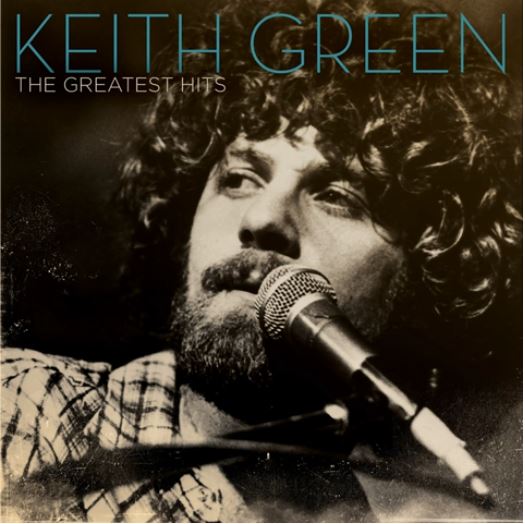
Over the following two years, I was about as surrendered to God as I have been my whole life. I was all in – or as all in as I was capable of being at that time, perhaps. During that time, I became a big fan of Keith Green. I even saw him in concert in Des Moines Iowa in 1981 or 1982. He died in a place crash within a year or two after that, and his impact and memory has faded.

When I saw him in concert, though, his radical Christian commitment had been a huge impact on me, and that impact carried with me beyond his death. Thus, my daily reading today recalls to my mind these lyrics by Keith Green:

To obey is better than sacrifice
I want more than Sundays and Wednesday nights
If you can't come to me every day
Then don't bother coming at all

Keith Green was a musical child prodigy who was radically saved by Jesus. He used his great musical talent and platform to become a prophet of sorts to young Christians at the time who wanted an authentic faith.

I was very drawn to a monastic, cloistered life at that age. The truth is that I had long been drawn to that kind of thing going back to the book, My Side of the Mountain, that I read in grade school (about a boy who leaves his parents to hollow out a summer home in the trunk of dead tree in the Catskills). I was already bent that way in my personality.

In a poignant moment in my senior year in college, I faced up to that longing and desire that ran deep in me, and I turned to follow Jesus into the messiness of human society. Jesus escaped to the mountains and the wilderness to be alone with God, but he always returned to the highways, and byways, and the public squares where people live.

Still, the Keith Green spirit of uncompromised obedience to Christ and Christ alone left an imprint on me. His prophetic insistence on radical commitment carried me forward in those early years of my journey with Christ.

Now, I find myself some 40+ years down a road that has taken many twists and turns. That road has taken me through long and winding wilderness areas that were darker than I care to dwell on. It has taken me to the other side of those dark times into the light of a new day, more weary and (hopefully) wiser for the experience. I am still following Jesus as best as I can, but I have a slightly different view of Keith Green’s words today. I hope I can give this the nuance it deserves.

Continue reading “To Obey Is Better Than Sacrifice”

Diving for Pearls in the stories of Dustin Kensrue and Mark Driscoll

Dustin Kensrue’s music is as good as ever, but it comes with the melancholy of what used to be.


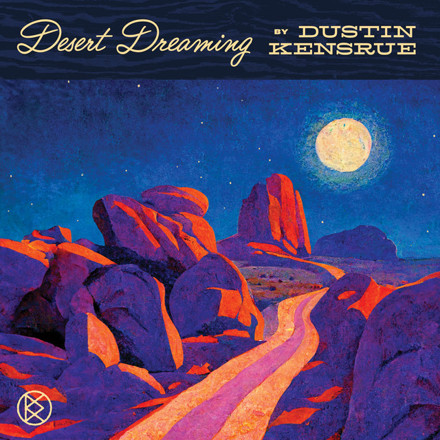
I recently spent some time listening to Dustin Kensrue’s new album, Desert Dreaming. I like his music, and the new album is good. The first song I heard, though, reminded me of the rumors that he has walked away from orthodox Christianity:

When I left town, I was swept up
With the visions of a man from Galilee
Along the way, I lost my bearings
I got swallowed up by sins of certainty

The heart of sedona

The words to this song triggered a desire to research the truth. Kensure was an impactful Christian musician who wrote the worship album of the year not to many years ago. I wondered, therefore, why he walked away (if indeed he did).


I learned that Kensrue was a former worship leader for Mars Hill, the failed church that rose to the heights of evangelical influence with many campuses, only to collapse with the failings of its erstwhile leader, Mark Driscoll.

Listening to the song, Heart of Sedona, off Kensrue’s new album, Desert Dreaming, gave me pause. The words seem to confirm the rumor, and the story seems all too familiar lately.

His music is as good as ever, but it comes with the melancholy of what used to be. Or maybe it never was. It’s hard to know how to process the deconstruction of someone else’s faith.

Given the back story (involvement in a failed church movement), I suspected his “deconstruction” (and many other artists who seem to have followed a similar path) may be symptomatic of some malady that has infected Evangelical Christianity.

My entre into Kensrue’s story begin with the article, It’s Not Enough: Dustin Kensrue’s Turning Away, which is where I learned that Kensrue was intimately involved in the toxic environment of the Mars Hill church movement led by Driscoll, a controversial and polarizing personality.

I had heard of the rise and fall of Mark Driscoll and the Mars Hill Church, but I did not jump on the curiosity bandwagon when people associated with Christianity Today produced the podcast, The Rise and Fall of Mars Hill. I only heard about it, and I had listened to a discussion of the podcast on another podcast. Therefore, I finally felt a need to hear it firsthand to gain some perspective.

The podcast describes the talent and bravado of Mark Driscoll, who was also polarizing and toxic and seemingly proud of it. Driscoll was staunchly reformed in his theology with a cultish personality and a flair for the dramatic. He attracted people on the edges of faith in the notoriously countercultural Seattle area. I summarized some of my thoughts on what I learned in Keeping It Real for the Church: Talent in Tension with Character)

I have also gone back, now, through the tweets highlighted in the article I noted above, and I have poured over Dustin Kensrue’s Twitter (X) feed to gain further insight. These things give me additional food for thought in considering the “deconstruction” of Dustin Kensrue as it relates to the American Evangelical Church.

Though I have spent considerable time researching these things, my thoughts remain preliminary and exploratory. I am not certain that I have gained sufficient perspective to be clear or certain of any conclusions, but all this seems to confirm my sense that the story is symptomatic of a problem with the American Evangelical Church.

In fact, the original article I found, itself, seems to be symptomatic of issues in the American Evangelical Church. These issues may also be reflected in current American culture, affected as it is by social media. I apologize for the length of this article, but I am afraid I do not do much more than scratch the surface here.

Continue reading “Diving for Pearls in the stories of Dustin Kensrue and Mark Driscoll”

That Wrecking Ball

The song, That Wrecking Ball, hits home particularly with me today as I listened to it for perhaps the 100th time


I love the music of Watchhouse, (fka Mandolin Orange). Watchhouse is Andrew Marlin and Emily Frantz (sometimes with a band). Their newest, Album, Austin City Limits Live, is a great example of their music.


I don’t always understand the meaning of all their songs and their lyrics, but I resonate with their music. I am not a lover of the postmodern theory of interpretation. I think that we should strive to understand the artist’s original meaning, but that doesn’t mean we can’t get our own meaning out of the songs written by other people

Artists like Bob Dylan seem to enjoy being purposely obtuse. Many musicians have written hit songs with gibberish for lyrics. Then, there is the Beatles tune, I Am the Walrus, that pushes this art to a more eloquent, absurdist extreme.

But songs that connect best with us, I believe, are the songs that have real meaning, and especially real meaning to us. We can even find that in a Bob Dylan song.

I am probably not being completely fair to him by saying he was purposely obtuse. I think he was going for meaning in most of his songs. It’s just that the meaning, perhaps, is not as easily articulable apart from the lyrics and the song.

Art often isn’t rational, in the sense of logical syllogisms. Few of us would likely call logic art. Artists often credit a muse inspired meaning that is not immediately clear, even to the artist. Artists sometimes channel inarticulable meaning into music and song.

I can understand the intuitive creativity of an artist, though I am not an artist. Artists have the ability to connect with people around the edges of the penumbra of their own understanding where the ability to articulate meaning becomes ineffable. Some artists have the gift of being able to communicate elegantly, clearly, and poignantly in their music.

Watchhouse is one of those artists. The song, That Wrecking Ball, hits home particularly with me today as I listened to it for perhaps the 100th time. (Not today. I have only listened to it a few times today.)

Continue reading “That Wrecking Ball”

Gospel Shoes

The art of music has a way of moving us and conveying messages that might not be as well received more directly and bluntly spoken

Blindfaller by Watchhouse

What business is it of mine to judge those outside the church? ….
God will judge those outside….

1 corinthians 5:12,13

Paul wrote these words to the Corinthians while urging them to deal with sexual immorality in the church that was so bad it would not have been tolerated by pagans. (1 Corinthians 5:1)

I am reminded of these words that Paul wrote as I listen to Gospel Shoes by the folk/Americana group, Watchhouse (formerly Mandolin Orange) from Chapel Hill, NC. This isn’t a “Christian” song written by people who profess to be Christian, but it speaks with poignancy, clarity, and tenderness. This version is particularly well done:

 Some set their heads to swimming, nothing to lose
Drift about their good times, slivers in their boots
Some walk the straight and narrow, only passing through
Trading this world over for a pair of gospel shoes

The opening stanza of the song contrasts the “pagans” of the world with the “Christians” (more or less). Andrew Marlin (the writer of the song) may put it another way. He might say that he is contrasting “normal”, average, typical people with “religious”, church-going people.

To be fair, the caricatures of religious people do not accurately describe most of the people in my church (or in any church I have gone to, for the most part). BUT, those caricatures do have some elements of truth to them about some people, or some segment of people, who are religious in our society.

Those who “set their heads to swimming, nothing to lose”, are living this life for all it can give them because they believe this life is all there is. They “drift about their good times” because they have no particular aim, meaning, or purpose. They are looking for whatever fun and pleasure they can get, though they accumulate “slivers in their boots”.

Those who “walk the straight and narrow, only passing through”, are the religious people, of course. They are people who profess to believe in a better life after death, “trading this world over for a pair of gospel shoes”.


The term, “gospel shoes”, finds some resonance in Isaiah:

“How beautiful on the mountains are the feet of those who bring good news, who proclaim peace, who bring good tidings, who proclaim salvation, who say to Zion, ‘Your God reigns!’”

Isaiah 52:7

The word, “gospel”, of course means “good news”. The feet are beautiful of those who say “God reigns!” because it is news of peace, good tidings, and salvation. Or so it should be. Paul says, our feet should be “fitted with the readiness that comes from the gospel of peace.”

Ironic, isn’t it? That Paul in talking about the “armor of God” includes “shoes” made of the “gospel of peace”. (Ephesians 6:15) It’s no wonder that we send mixed messages out into the world. But, that isn’t the “fault” of scripture; it’s our misunderstanding of it and of the upside down nature of the kingdom of God that Jesus preached.

The armor of God does not protect us against people (flesh and blood) but against dark spiritual forces. (Eph. 6:12) We are not intended to use the armor of God as a weapon against people.

Of course, some people often don’t want to hear about God. They don’t want to do be accountable, so the news of God is not “good” to them. The people who set their heads to swimming, who think they have nothing to lose and drift about the good times, however, are bound to gather slivers in their boots.

Drifting through life doing “whatever feels good” inevitably results in hardship and heartache. These are people, however, for whom God emptied Himself to become human in Jesus and for whom Jesus gave up his life, dying on a cross. He didn’t come to condemn them; he came to save them. (John 3:16-17)

Those slivers in their boots are problems that will fester and get worse. People often do not wake up to the folly of our youth until we have accumulated more hardship, difficulty, and pain than we can handle. And sometimes, those slivers cause problems that linger for a lifetime.

God who loves “those people” so much that He gave His son for them. He loves them no less than any religious person in the world, no matter how devout. Thus, God desires to reach them with His Gospel, the good news that there is a way for them to avoid the pain of their own doing and judgment that inevitably follows this life and enter into relationship with the God who created them and loves them.

As I recall Paul’s words to the Corinthians, I am struck that we often seem to have gotten things backwards. Instead of loving the world and seeking to reach them with the good news, we condemn the world and preach judgment.

Continue reading “Gospel Shoes”