A Rational Explanation for Miracles: God in the Gaps

A contemplation based on human agency and the ability manipulate natural causes to generate beneficial effects.


In Episode 20 of the Christian Atheist Podcast (Ethics (Part 3): the Origin on Ought), John Wise focuses on a primary difference between human beings and animals. Though humans beings are animals, human beings are qualitatively different than other animals in rational capacity, and the rational capacity of humans allows humans to exercise agency over the natural world. This unique human capacity to exercise rationality through agency is the focus of my thoughts today.

Human beings exercise their agency and rational capacity to change and redirect the laws of nature. Other animals can do this in very primitive ways, but the human capacity to manipulate nature through human agency, rationality, and ingenuity is light years beyond what other animals can do.

Of course, humans cannot do things that defy the laws of nature. Rather, human beings use their understanding of those natural laws to manipulate them.

Wise observes that the human ability to manipulate the laws of nature includes the ability to separate cause from effect to acheive a desired result. For instance, human beings have learned to breed various types of plants and animals to achieve results imagined by humans which would never likely have occurred in the natural world left to random, natural processes.

Human beings can exercise their rationality to imagine different effects and to manipulate causes to achieve those desired effects. In this sense, human imagine the effects they desire to achieve, and they manipulate the causes in the natural world to achieve natural effects by design that the natural world would not obtain randomly.

The world seems to act randomly, unless agency acts upon the world. The examples of agency acting on the world to achieve results that would not obtain without such agency are legion. All of human endeavor is replete with examples of agency imagined and initiated by humans to obtain designed effects that we desire.

Human beings are able to produce effects that would never have occurred in the natural world but for human agency manipulating the natural processes. In other words, human input redirects the natural processes to produce results that would not have occurred if the natural processes were left alone.

Our ability to separate cause from effect to achieve desired ends that would not occur in the natural world by manipulating those causes to achieve the effects we desire is an example of supranatural agency in the world. In other words, we are in and of the natural world, and we use our knowledge of the natural world to manipulate natural causes to create natural effects.

We do not suspend the laws of nature or violate the laws of nature to accomplish our desires ends. We use the laws of nature to achieve our desired ends – albeit, ends that would not have occurred but for our intervention.

Ocean liners and skyscrapers are things that do not occur through the laws of nature, but for human agency. Even so, human agency des not suspend or violate the laws of nature to create them. Human agency uses the laws of nature to create them.


These observations are a model for understanding God. The fact that laws of nature act in very rational ways that are predictable and dependable suggests design. The way the laws of nature act suggest an intelligent agency that set them in motion just so. We would call that intelligent agent God.

If God created the laws of nature, He would certainly know how to manipulate natural causes to achieve His desired effects. God would have much greater capacity than us to manipulate natural causes to achieve desired effects. Exponentially so!

Many skeptics, like David Hume, reject the idea of miracles because they assume that miracles violate natural laws. The foundational premise of Hume’s logic, though, is false. The God that created the natural laws would not need to suspend or violate those laws to obtain desired effects. God could manipulate natural causes to achieve His desired effects without the need to “suspend” or “violate” natural laws just as we do.

God’s knowledge of those natural laws and the possible effects that can be achieved through the manipulation of them is certainly greater than ours. Exponentially greater.

Many people have called phenomena they didn’t understand miracles, but subsequent discoveries about the way the natural world works have provided explanations to us of natural laws and how they work that we didn’t previously understand. Once we understand the laws at work on those phenomena, we no longer call them miracles.

A primitive intelligent being might think that human beings are violating natural laws to fly airplanes, for instance. We know this is not true, but a more primitive being may not understand the principles of natural laws being manipulated to achieve the end of flying a heavy chunk of metal through the air.

Just as we manipulate natural causes to create effects that do not occur naturally, God may do the same. Thus, what we call miracles may be nothing more than the manipulation of natural causes by God to achieve effects that would not ordinarily occur in nature without the involvement of an agent.

Just because the primitive being does not know the principles being manipulated does not mean that a violation of natural laws has occurred. In this same way, a human being, who is certainly a more primitive intelligent being than God, may not be able to know or understand the principles of natural laws being manipulated by God to achieve a result that we call a miracle.

We call occurrences miracles that we cannot explain based our understanding of natural laws. But our measure of understanding is constantly changing. For this reason, modern people often say they no longer believe in miracles (and, by extension, God). Experience shows that many things we didn’t previously understand we now understand, and they assume, then, that we will find explanations in the natural laws to explain all the things we do not presently understand.

I note that this belief is not necessarily warranted, nor can we prove it. People who make this assertion do it on the basis of faith in the human ability to know and understand the world.

Further, our mere understanding of the way natural laws work, does not negate the need for intelligent agency to achieve desired ends. It isn’t enough for us to think something up; we must exercise our agency to act on the laws of nature to achieve our desired ends. Our understanding doesn’t create anything.

Imagine Aristotle seeing a pilot entering into a Boeing 737 and taking off into the air. Aristotle did not know enough about the law of gravity or aerodynamic lift to generate a good explanation based on the natural laws that were understood at the time. He may have called it a miracle because it defied explanation to him based on the level of knowledge he had.

The more often Aristotle might have seen a Boeing 737 takeoff, the less likely he might have considered it a miracle, even if the phenomenon still defied natural explanation to him. In fact, we still don’t really understand aerodynamic lift. (See No One Can Explain Why Planes Stay in the Air, by Ed Regis, Scientific American, February 1, 2020)  
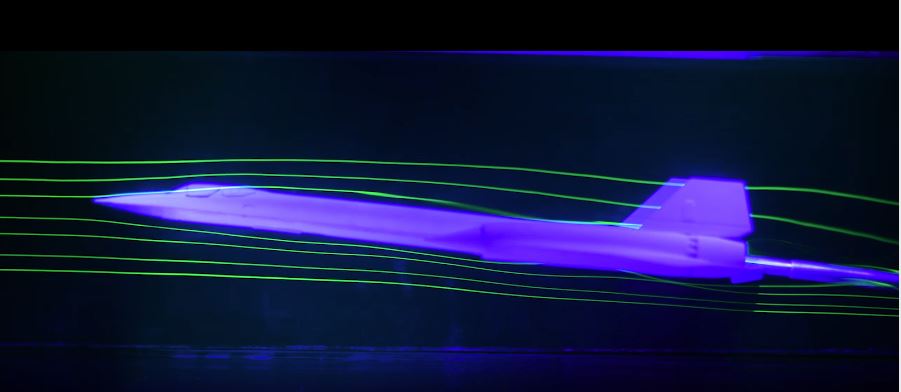
No One can Explain Why Planes Fly in the Air, Scientific American, Feb. 1, 2020

It is such a common phenomenon today, however, that we take it for granted even though we don’t completely understand it. Understanding that such a thing as aerodynamic lift occurs allows us to manipulate it, even if we don’t fully understand it.

Even if we think we fully understand natural laws, we probably don’t. One big example is the Big Bang. We know what happened from the “point” of the Big Bang, but we know virtually nothing before that “point”. We also have no idea how life formed.

Even if we did know exactly how the first living cell or organism developed. Our ability to trace the process and understand it does not tell us how or why it developed in the first place.

More precisely to the point, our understanding doesn’t create anything (without exercising our agency to act on that understanding), and it doesn’t eliminate the need for agency in our world to achieve desirous (beneficial) ends.

In fact, our experience suggests just the opposite. Our experience tells us that fire happens only randomly and often destructively in nature. We have learned to create fire and use it beneficially by exercising our agency in light of our understanding of the causes of fire. Agency is required to manipulate the natural causes for beneficial effects.

Our own experience affirms this. If I leave may backyard to nature, nothing is likely to grow there that is particularly beneficial. I might find a wild strawberry plant or wild raspberry vine with very small fruit on it. If I am lucky. The vast majority of it will be weeds and undesirable plants.

If I plant a garden with seeds cultivated by human ingenuity over many years of gathering seeds from the right kind of plants and developing new, heartier and more fruitful plants, I can turn my backyard into a cornucopia of beneficial plants that will feed my family and my neighbors’ families. This kind of benefit requires my agency.

I have to plant it, water it, weed it, and maintain it with much care and intentionality. If I stop maintaining it, my garden will relatively quickly return to a tangle of undesirable plants that will choke out and eventually replace my desirable plants.

It requires my agency to develop a garden and to maintain it. Nature, left to its own devices, will not do that. This is our common experience.

If you like archaeology, as I do, you become aware that time and nature destroys all the improvements generated by human agency and endeavor over time. Whole cities are reduced to rubble over time, and rubble becomes overgrown with windblown sediments, scrub brush and weeds such that we do not even recognize that a city once existed there, but for some remnants we can find by digging up the site.

We have made much about evolution since Charles Darwin first championed it as a theory. Evolution (the gradual improvement of life forms over time (by whatever means it occurs)) runs counter to our common experience. The formation of life from nonlife (the complex from the simple) (by whatever means it occurred)) runs counter to our common experience.

Does that mean that evolution is not fact or that life did not arise from nonlife? Not necessarily, but our common experience does suggest that this did not happen by natural forces acting according to their laws. Our common experience demonstrates that complex, beneficial effects arising from natural causes occur through agency and intentionality.

Human endeavor obviously did not create evolution or the formation of life from nonlife. Most scientists concede the appearance of design in the mind-bendingly complex interaction of amino acids, DNA, epigenetic materials, mechanical processes and other features of a living cell. If evidence of design appears in the world that was not achieved through human agency, that fact leaves us with the suggestion that some other intelligent agency is at work in the world.

Continue reading “A Rational Explanation for Miracles: God in the Gaps”
The Minimalest, Non-Factual, Argument for the Resurrection

Perhaps, the minimalest, non-factual argument in favor of the resurrection isn’t a factual argument at all, but a philosophical one.

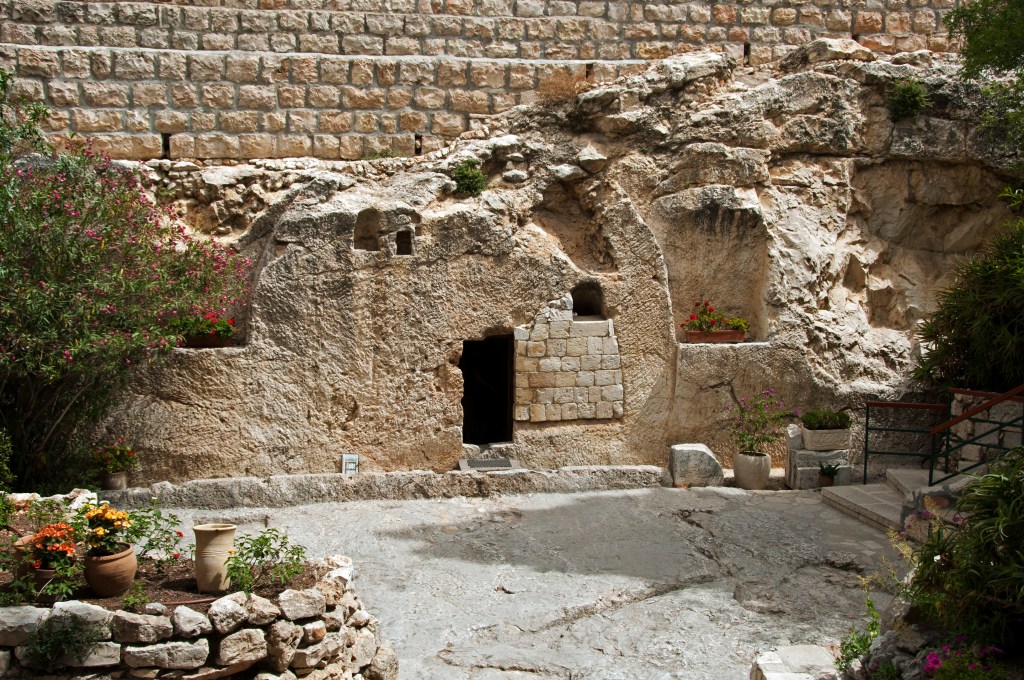
Thought to be the place of the resurrection of Jesus Christ in Jerusalem Israel

The title of this piece is tongue-in-cheek, a play on the “minimal facts” evidence for the resurrection made famous by Gary Habermas. I don’t really have a killer piece of evidence that uses fewer facts (or no facts) that trumps all other arguments. But, maybe I got your attention!

As often is the case, my inspiration comes from what someone said or wrote. In the podcast interview linked below, Mason Jones describes how he he decided to read through the Gospel accounts as an atheist who knew next to nothing about Christianity. He quickly caught on that the resurrection is the centerpiece of Christianity, so he focused his attention on that.

He researched the evidence for the resurrection. He googled arguments for the resurrection and arguments against the resurrection. Though he was an atheist at that time, he was willing to give the evidence that exists a chance. (Whether there was any, he didn’t know.)

As he considered the arguments and counterarguments, he found that the arguments against the resurrection didn’t address very well the arguments for the resurrection. They didn’t take them seriously.

Then he realized that the arguments against the resurrection only work if you start with the presupposition that the resurrection didn’t happen. Because it is impossible. Because people don’t come back to life. Ever.

If you take that presupposition out of the equation, thought Jones, the evidence favors the conclusion that the resurrection occurred, and the arguments against the resurrection loose their luster. If you want to hear the rest of Mason Jones’s thought journey from atheism to theism to Christianity in his own words, you can listen here.

Meanwhile, I want to spend a little time considering the presuppositions people make about the resurrection.

Continue reading “The Minimalest, Non-Factual, Argument for the Resurrection”

Be Careful Lest You Fail to Take What God Is Doing to Heart

Pharaoh did not take to heart a movement of God in his time.


In Exodus 7, we read that God moved in visible and compelling ways to convince Pharaoh to listen to the request by Moses to let the people go into the wilderness and be with God. Pharaoh was given demonstrative signs that God was behind the request, but Pharaoh was not swayed.

“Instead, he turned and went into his palace, and did not take even this to heart.”

Exodus 7:23 NIV

Pharaoh’s magicians answered Moses and Aaron with their own divination, and Pharaoh did not take the demonstration of the movement of God to heart. This is the character of hardness of heart. We see God move, but we have an answer to explain it away, and we do not take it to heart.

Pharaoh and Egypt are considered to be analogous to the world that does not know God, a world that has set itself against God. We don’t consider ourselves to be like Pharaoh or like Egypt.

When we do the same thing, however, we are no different. When we see God move, and we explain it away and do not take it to heart, we are no different.

The Pharisees, the religious leaders of God’s people, did the same thing. When Jesus performed miracles right in front of them, they explained it away. They said it was of the devil, and they did not take it to heart.

Be careful that you are not quick with an answer to explain away what God is doing and fail to take it to heart.

Do not be quick to explain away what is happening at Asbury University (and reportedly at other universities now, too). Do not be quick to dismiss it and miss what God is doing.

Take it to heart. Ponder it like Mary pondered what the angel told her: that she would give birth to Jesus. Be open to what God is doing, and what God wants to do in you.

The Pharaoh that didn’t take to heart what God was doing in his time lies entombed today like a stone. The God of Israel lives! Jesus, who was also entombed, rose from the dead and lives! The grave could not hold him, and he offers that same life to you!

How Did Jesus, the Exact Representation of God, Describe Himself and Demonstrate Who He Is?

I find myself contemplating often the words Jesus used to describe his purpose. Jesus gave us description immediately before he launched into his public ministry. This is the way it went down, and this is what he said:

“And he came to Nazareth, where he had been brought up. And as was his custom, he went to the synagogue on the Sabbath day, and he stood up to read. And the scroll of the prophet Isaiah was given to him. He unrolled the scroll and found the place where it was written,

“’The Spirit of the Lord is upon me,
    because he has anointed me
    to proclaim good news to the poor.
He has sent me to proclaim liberty to the captives
    and recovering of sight to the blind,
    to set at liberty those who are oppressed,
to proclaim the year of the Lord’s favor.’

‘And he rolled up the scroll and gave it back to the attendant and sat down. And the eyes of all in the synagogue were fixed on him. And he began to say to them, ‘Today this Scripture has been fulfilled in your hearing.’”

Luke 4:16-21

The famous announcement of his purpose came after John the Baptist piqued the interest of the local people, proclaiming, “Prepare the way for the Lord”. It came after John the Baptist challenged people to repent and be baptized.

The announcement took place after Jesus spent 40 days out in the wilderness being tempted by the devil. Jesus had not yet begun his “public ministry”, when he stood up to read in his home town synagogue from the words of Isaiah, the Prophet – words spoken about Jesus over 500 years before that day.

This was the announcement of what Jesus came to do. The Spirit was on him to proclaim good news to the poor, to proclaim liberty to the captives and recovery of sight to the blind, to set at liberty those who are oppressed, and to proclaim the year of our Lord’s favor.

It wasn’t just a prophecy to be fulfilled. It was the very purpose for which God emptied Himself and became a man incarnate. God came to reveal Himself in the material world, to reveal His very heart and His love for mankind.

This was the message that He was trying to convey over the many centuries through the one people who inclined an ear toward Him. But, they didn’t completely get it. They wandered and strayed in their devotion to God, and they mistook His law for nothing but a code of conduct that might earn them the favor of God.

They didn’t understand the relationship He desired to form with them. They didn’t understand His love for them or the singularity of His own devotion to them and the purposes He established for them before the foundation of the heavens and the earth.

They didn’t even recognize Him when He came to them, albeit emptied of all that would not fit into human form (Phil. 2:5-7) They didn’t recognize Him stripped of all His power, holiness and glory.

He did not come with pomp and circumstance. He came humbly in the form of a man just like them. His coming was barely a whisper. is arrival went all but unnoticed. Born in a humble setting to poor, common parents, he grew up in an area of Judea that was off the beaten path and not a little “backwards”.

His first 30 years of life were so unremarkable we know next to nothing about them. The first public stir that is recorded is the day he stood up and read from the Isaiah scroll, sat down, and announced, “Today this Scripture has been fulfilled in your hearing.”

People were so unready for anything extraordinary from Jesus that they marveled and asked each other, “Isn’t this Joseph’s son?” (Luke 4:22) Then, he seemed to provoke them (Luke 4:23-28), and they burned with anger at his audacity. (Luke 4:28)

It was an inauspicious start to his “public ministry”. He bombed in his hometown synagogue.

What he said of himself, however, is preserved for eternity. It is the key to understanding the heart and character of God revealed through Jesus, “the exact representation of His nature”. (Heb. 1:3) What Jesus said that day and what Jesus did is the best demonstration of God’s heart and character that we, as finite beings, might understand.

Continue reading “How Did Jesus, the Exact Representation of God, Describe Himself and Demonstrate Who He Is?”

How Do We Demand Signs and Miss What God is Doing in the World?

The Gospel records a three year period of time in which Jesus seemingly performed miracles, signs and wonders everywhere he went. Perhaps, the accounts in the Gospels give us an impression that doesn’t correspond to the reality because they recount the many miraculous things he did, but they don’t describe all the times in between.

It seems strange, given all the miracles, signs and wonders that Jesus did that the Pharisees and Sadducees came to Jesus one day to test him by asking him to show them a sign from heaven. (Matt. 16:1) Perhaps, they wanted him to do it on command, like a science experiment to prove himself.

Perhaps, they had only heard of the things Jesus did, but they hadn’t actually seen him do anything. Perhaps, they didn’t trust the accounts of the common people Jesus seemed to prefer to hang out with. They were more gullible and less discerning.

Attitudes like that haven’t changed much in 2000 years. The Sadducees and Pharisees were more learned. The Sadducees didn’t believe in supernatural occurrences, miracles or demons. The Pharisees did believe in those things, but they were skeptical. The two groups had very different worldviews, but they were aligned in their skepticism.

When these elite religious leaders asked Jesus for a private performance – “a sign from heaven” – he refused. And, he said this:

“An evil and adulterous generation seeks after a sign[i]; and a sign will not be given it, except the sign of Jonah.” 

(Matthew 16:4)

The fact that these two groups, one that believed in the supernatural and one that didn’t, were aligned in their skepticism suggests that their “problem” with Jesus was that he challenged their dogmas. They doubted the fact that he did miracles, signs and wonders because of the content of what he was saying.

And, Jesus seemed to revel in provoking them on those differences!

The Pharisees (who believed in the supernatural) determined that healing on the Sabbath is work and is, therefore, prohibited by the Law of Moses. They demanded that Jesus not heal on the Sabbath, but Jesus did it anyway. (Matt. 12:1-14)

Ironically, this healing that was done right in the Pharisees’ presence occurred four chapters before they came to Jesus and demanded a sign from heaven. They had seen a sign from heaven already and dismissed it out of hand because it went against their beliefs.

Jesus challenged their preconceived ideas and expectations. He challenged their authority to determine what is work in violation of the Sabbath and what isn’t. They watched Jesus heal a man with a shriveled hand, but they dismissed it because of what he taught that was contrary to what they believed.

God showed the Pharisees a sign (the healing of a man with a shriveled hand), but they were too focused on his violation of their understanding of Scripture and religious dogma to notice it for what it was.

This story illustrates the danger of our religious dogmas and preconceived ideas of what God should do and not do. Even when the evidence is staring us in the face, we can be tempted to ignore it, gloss over it, and explain it away in favor of how we interpret and understand Scripture.

Continue reading “How Do We Demand Signs and Miss What God is Doing in the World?”